Best Selling Products
Adobe Premiere Pro Account
99 USD

Capcut Pro 1 Year
39 USD
Copyright Adobe Lightroom Account
59 USD

MidJourney Account
29 USD
Autodesk All App Account Copyright
120 USD
Plugin Retouch4me
69 USD

Upgrade Duolingo Super
29 USD
Adobe Photoshop Copyright - Full App
120 USD

ChatGPT Plus Account (GPT-4)
16 USD
Windows 10 & 11 Pro Key
36 USD

Genuine Adobe Illustrator account
99 USD
Genuine Cheap Canva Pro
39 USD

Freepik Premium Account
59 USD
Upgrade genuine Capture One account
120 USD
Upgrade Genuine Office 365
49 USD
A Guide to Installing and Mastering Adobe Lightroom 2020 for Mac for Graphic Designers
Nội dung
- 1. Overview of Adobe Lightroom 2020 Mac Version
- 1.1. The concept and position of software in the Adobe ecosystem
- 1.2. Differences between Lightroom Classic and Lightroom Creative Cloud
- 2. Key Features of Adobe Lightroom 2020 Mac Version
- 2.1. Advanced Color Grading feature
- 2.2. Smarter Local Area Selection Tools
- 2.3. High-speed RAW file processing and panorama creation capabilities
- 3. System Requirements for Installation on macOS
- 3.1. Compatible operating system versions
- 3.2. Minimum and Recommended Hardware Standards
- 4. Detailed Steps to Install Adobe Lightroom 2020 on Mac
- 4.1. Step 1: Download the standard installer to your computer.
- 4.2. Step 2: Disable Gatekeeper to install software outside the App Store.
- 4.3. Step 3: Run the Adobe Lightroom installation file
- 4.4. Step 4: Apply the offline license activation tool
- 5. Experience the Ultimate Graphics Utility Library at Web Appvip.ai
- 6. Guide to Optimizing Lightroom Performance on a Mac
- 6.1. Enable hardware acceleration using the GPU.
- 6.2. Increase Camera Raw Cache Memory Capacity
- 6.3. Using Smart Previews when editing
- 7. Common Errors When Using and How to Fix Them
- 8. Conclusion
This guide shows you how to download, install, and optimize Adobe Lightroom 2020 for Mac to handle professional photo editing.
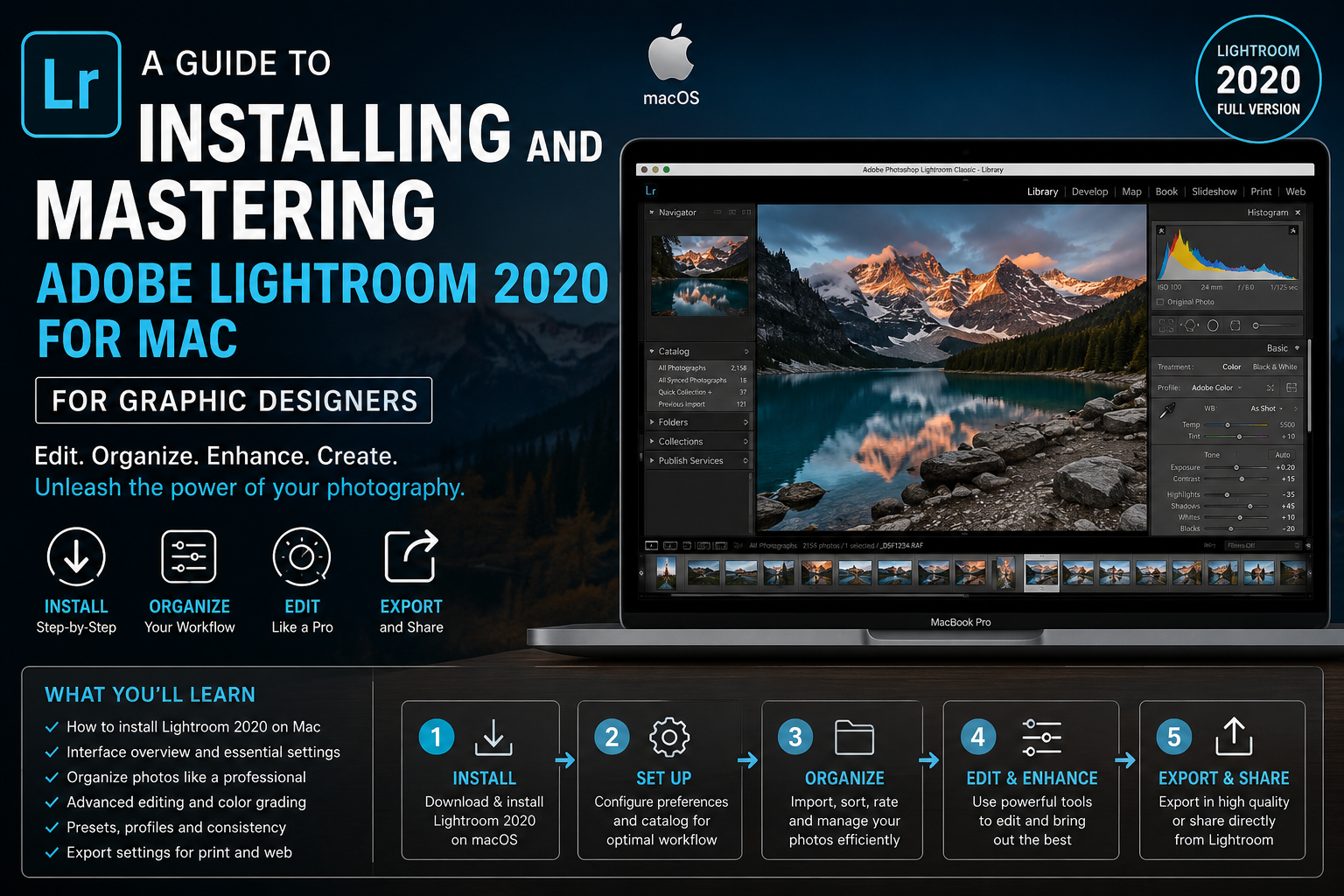
1. Overview of Adobe Lightroom 2020 Mac Version
The 2020 release marked a significant shift for Adobe in optimizing performance on Apple computers. The manufacturer focused on improving hardware processing speed, minimizing lag when working with large RAW files.
1.1. The concept and position of software in the Adobe ecosystem
Adobe Lightroom is a specialized tool designed specifically for managing, categorizing, and editing large quantities of digital images. Unlike Photoshop, which focuses on cropping and manipulating pixel details, Lightroom aims to optimize lighting, color, and build a scientific workflow. On Mac operating systems, this software takes full advantage of the display power of Retina screens to deliver absolute color accuracy.
1.2. Differences between Lightroom Classic and Lightroom Creative Cloud
Mac users need to clearly distinguish between these two variations of the tool to choose the one that best suits their work needs. Lightroom Classic focuses on storing data on local hard drives, boasts a comprehensive set of editing tools, and has a traditional interface suitable for studio photographers. Meanwhile, Lightroom Creative Cloud aims for flexibility by storing all data on a cloud platform, enabling quick data synchronization between MacBooks, iPads, and iPhones.
2. Key Features of Adobe Lightroom 2020 Mac Version
The significant algorithmic upgrades in this version deliver a superior photo editing experience, considerably reducing post-processing time for users.
2.1. Advanced Color Grading feature
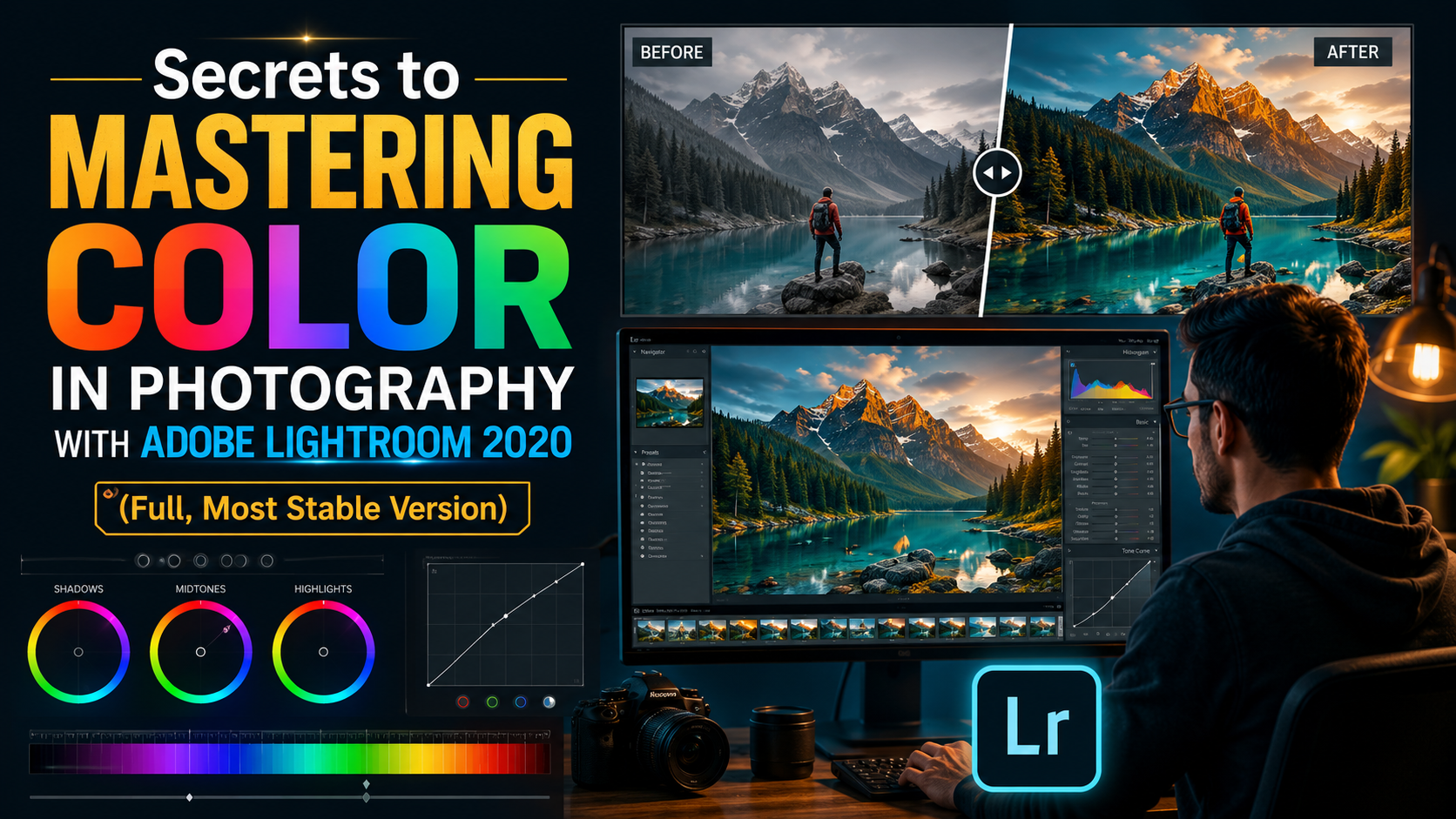
The Three-Way Color Wheels system, introduced in the 2020 version, allows users to independently manipulate shadows, midtones, and highlights. This tool provides cinematic color processing capabilities, making the application of artistic tones smoother and more natural compared to the old separation sliders.
2.2. Smarter Local Area Selection Tools
Fine-tuning small details on a face or a corner of a landscape is made easier thanks to the upgraded Brush and Radial Filter tools. The intelligent edge detection algorithm helps users precisely select the object to be edited without spilling onto unwanted surrounding areas.
2.3. High-speed RAW file processing and panorama creation capabilities
This version optimizes the multi-core architecture of the Mac processor, allowing dozens of high-resolution images to be stitched together into a single panoramic photo in just seconds. The processing of RAW files from modern cameras is also accelerated, enabling instantaneous brightening and detail recovery in dark areas without lag.
3. System Requirements for Installation on macOS
For the software to run smoothly and without errors during image export, your computer needs to meet minimum hardware and software standards.
3.1. Compatible operating system versions
The software requires macOS version 10.14 (Mojave) or 10.15 (Catalina) or later. Updating your operating system to supported versions helps ensure the stability of graphics drivers and minimizes the risk of the software crashing unexpectedly while you're working.
3.2. Minimum and Recommended Hardware Standards
The minimum RAM required to launch the application is 8GB, however, 16GB is recommended for smooth image processing. Regarding the processor, devices using Intel Core i5 chips or early Apple Silicon chips will perform well. Additionally, a minimum of 4GB of free hard drive space is required for installation, and more free space is needed for caching during image rendering.
4. Detailed Steps to Install Adobe Lightroom 2020 on Mac
The installation process on the Mac operating system requires users to follow the correct sequence to avoid system conflicts or license authentication errors from the developer.
4.1. Step 1: Download the standard installer to your computer.
Users should download the installation file in .dmg format from a reputable source. Before opening the file, ensure that your internet connection is disconnected to prevent the software from automatically sending authentication data to Adobe's servers during setup.
4.2. Step 2: Disable Gatekeeper to install software outside the App Store.
macOS has very strict security features, often blocking applications not from the App Store. You need to open the Terminal , enter the command `sudo spctl --master-disable` and press Enter, then enter your computer password to enable the option to allow installing applications from anywhere.
4.3. Step 3: Run the Adobe Lightroom installation file
Double-click the downloaded .dmg file to mount the virtual drive to your system. Next, open the Build folder , find and run the Install.app file to begin copying data to your Mac's Applications folder. This process takes approximately 3 to 5 minutes, depending on the speed of your SSD.
4.4. Step 4: Apply the offline license activation tool
After installation is complete, users should not open the software immediately but must access the folder containing the crack file (usually named Crack or Adobe Zii). Launch the tool, drag the Lightroom application icon from the Applications folder into the tool's interface so the system can automatically modify the source code files, completing the permanent license registration.
5. Experience the Ultimate Graphics Utility Library at Web Appvip.ai
The online platform appvip.ai was created as a comprehensive solution, providing the design community with a vast treasure trove of exclusive color filters (Presets), plugins, and in-depth documentation specifically for Adobe Lightroom 2020 Mac. On this platform, users can easily find pre-tuned presets created by leading photographers, transforming the colors of a wide range of portraits, landscapes, or wedding photos with just a click.
6. Guide to Optimizing Lightroom Performance on a Mac
Many Macs, even those with powerful configurations, experience slowdowns after a period of use. Reconfiguring the software settings can help maximize hardware performance.
6.1. Enable hardware acceleration using the GPU.
Access the Preferences menu, then select the Performance tab . Under Use Graphics Processor , change the setting from Auto to Custom and check all the boxes below. This forces the software to use the graphics card's power to handle image display instead of placing all the load on the CPU.
6.2. Increase Camera Raw Cache Memory Capacity
By default, the software only allocates a small amount of hard drive space for storing preview files. You should increase the Maximum Size setting in Camera Raw Cache Settings to between 20GB and 50GB.
6.3. Using Smart Previews when editing
When importing images into your library, check the " Build Smart Previews" box . The software will create ultra-small virtual image files for you to adjust the colors. When you export the image, the software will apply those parameters to the original file, ensuring a perfectly smooth scrolling experience.
7. Common Errors When Using and How to Fix Them
Running applications on older or newer macOS platforms can sometimes result in system errors that interrupt workflow.
-
Error "The develop module is disabled": This occurs when the software's permission file is scanned and disabled by Adobe's security system. The permanent solution is to disconnect from the internet, completely uninstall the old version using specialized software, and then run the activation tool again.
-
System freezes when exporting images in bulk: Exporting too many images at once causes RAM overload. You should divide the number of images to be exported into smaller batches of about 50, or close background applications that are consuming resources, such as web browsers, before submitting the image export command.
8. Conclusion
Choosing Adobe Lightroom 2020 for Mac is a sound investment for anyone seriously pursuing a career in professional photography and image processing. Correct installation, understanding the enhanced features, and knowing how to optimize performance will transform your Mac into a powerful digital workstation. Apply the knowledge shared to fully master the color space and enhance the quality of your artwork.















VIP Products



Best Selling Products
Adobe Premiere Pro Account
99 USD
Capcut Pro 1 Year
39 USD
Copyright Adobe Lightroom Account
59 USD
MidJourney Account
29 USD
Autodesk All App Account Copyright
120 USD
Plugin Retouch4me
69 USD
Upgrade Duolingo Super
29 USD
Adobe Photoshop Copyright - Full App
120 USD
ChatGPT Plus Account (GPT-4)
16 USD
Windows 10 & 11 Pro Key
36 USD
Genuine Adobe Illustrator account
99 USD
Genuine Cheap Canva Pro
39 USD
Freepik Premium Account
59 USD
Upgrade genuine Capture One account
120 USD
Upgrade Genuine Office 365
49 USD