Best Selling Products
Capcut Pro 1 Year
39 USD

ChatGPT Plus Account (GPT-4)
16 USD
Adobe Photoshop Copyright - Full App
120 USD

Freepik Premium Account
59 USD

Copyright Adobe Lightroom Account
59 USD
Autodesk All App Account Copyright
120 USD

MidJourney Account
29 USD
Genuine Adobe Illustrator account
99 USD
Upgrade Genuine Office 365
49 USD

Upgrade Duolingo Super
29 USD
Upgrade genuine Capture One account
120 USD
Plugin Retouch4me
69 USD
Genuine Cheap Canva Pro
39 USD
Adobe Premiere Pro Account
99 USD
Windows 10 & 11 Pro Key
36 USD
7–60 Seconds: What Is the “Golden Range” for YouTube Shorts in 2026?
Nội dung
Learn how to choose the right video length based on content type and audience behavior, helping increase completion rates and improve your chances of trending.
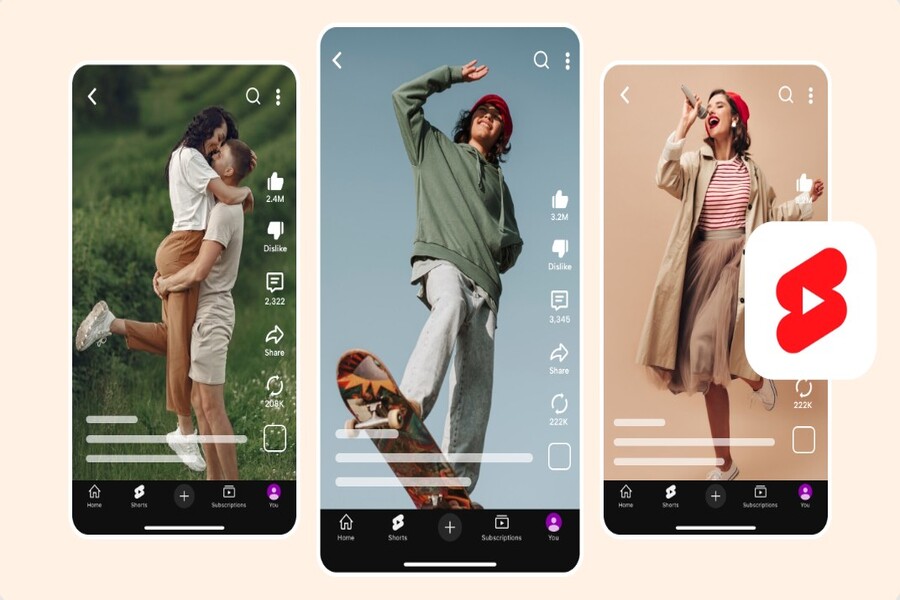
1. Why Video Length Matters
Video length directly affects how viewers interact with content and, consequently, how YouTube’s algorithm evaluates a video. In the Shorts environment, where users can watch hundreds of videos in just a few minutes, audience retention becomes a critical factor. A video that is too long without being engaging enough will cause viewers to leave before it ends, reducing its completion rate. Conversely, a video that is too short but offers little value may fail to make an impression and get skipped quickly.
YouTube’s algorithm pays special attention to metrics such as average watch time, completion rate, and replay frequency. Videos with high completion rates are often prioritized for broader distribution because they indicate genuinely engaging content. This creates an interesting paradox: the shorter the video, the easier it is to achieve a high completion rate, but if it is too short, it may not provide enough value or emotional impact. Therefore, the ideal length is not necessarily the shortest possible—it is the length that keeps viewers engaged from start to finish.
(1).jpg)
Moreover, duration influences how well viewers remember content. A well-structured video within an appropriate timeframe helps the message be fully absorbed, whereas a video that is too long or too short can reduce communication effectiveness. In an increasingly competitive environment, optimizing video length not only helps increase views but also contributes to building long-term relationships with your audience.
2. The Ideal Length for Different Types of Content
There is no universal formula for all Shorts videos because each type of content has its own duration requirements. For quick entertainment videos such as humorous situations or memes, a length of 7 to 15 seconds often delivers the best results. These videos need to create an immediate impact and end quickly to encourage viewers to watch multiple times, thereby increasing total watch time.
For videos that share tips or short educational content, a duration of 20 to 40 seconds is generally an ideal choice. This timeframe is sufficient to deliver a complete idea without overwhelming viewers. The key is to organize the content clearly, get straight to the point, and avoid unnecessary filler.
Meanwhile, storytelling videos or those with a scripted narrative may extend up to 60 seconds or more, provided the content remains engaging enough to retain viewers. These videos typically require more time to establish context and build toward a climax while maintaining a fast pace and avoiding dull moments.
.jpg)
Choosing the right duration not only improves video performance but also helps define the content style of your channel. When viewers become familiar with a certain rhythm, they are more likely to return and continue watching future videos.
3. Audience Retention Rate (The Deciding Factor)
A video may be carefully produced with strong visuals, audio, and ideas, but if it fails to capture attention within the first few seconds, there is a high chance the algorithm will reduce its distribution. This reflects a simple reality: in a high-speed content environment, user attention is a scarce resource and extremely easy to lose.
Retention rate depends not only on content quality but also on how video duration is structured. A well-built video feels seamless from beginning to end, without appearing stretched or padded. Conversely, just a few seconds of lost momentum can cause viewers to leave immediately. This is why pacing is critical, ensuring that every segment contributes to maintaining viewer interest.
Another important aspect is the ability to encourage rewatching. Short videos with a clear climax or unexpected ending often motivate viewers to watch again, either to understand the content better or simply to relive the experience. This is something the algorithm highly values because it increases total watch time without extending the video’s duration. In many cases, a 10–15 second video that gets replayed multiple times can outperform a longer video watched only once.
.jpg)
Additionally, retention rate is closely tied to the alignment between content and audience expectations. If the title or opening promises something that the content fails to deliver, viewers will quickly leave. On the other hand, when the content meets or exceeds expectations, viewers are more likely to stay longer and engage more. This highlights the importance of maintaining consistency between the title, opening visuals, and actual content.
To optimize retention, creators should focus heavily on video structure. The opening must be compelling enough to stop the viewer from scrolling, the main content should sustain engagement, and the ending should leave a memorable impression. Furthermore, removing unnecessary details, maintaining a brisk pace, and ensuring every second provides value will significantly improve performance. As retention improves, videos gain greater opportunities for wider reach and establish a stronger foundation for long-term channel growth.
4. How to Experiment to Find the Right Length
There is no fixed formula that works for every channel because different audiences have different preferences and viewing habits. Therefore, the best way to determine the ideal length is through experimentation. Creators can upload videos with varying durations and monitor the performance of each one to identify patterns.
Metrics such as completion rate, average watch time, and engagement levels provide clear insights into how viewers respond to content. Over time, you may discover specific trends, such as whether your audience prefers videos under 20 seconds or is willing to watch longer content.
.jpg)
The testing process not only helps optimize video length but also allows you to better understand the content style that works best for your channel. The key is to remain flexible and willing to adjust your strategy when necessary rather than relying on a fixed formula.
5. Common Mistakes When Choosing Video Length
One of the most common mistakes is intentionally extending a video to increase watch time in hopes of improving performance. However, if the content is not engaging enough to justify the extra duration, viewers will quickly leave, causing retention rates to drop significantly. This not only fails to help the video grow but can also lead the algorithm to view the content as lower quality.
On the other hand, making a video excessively short can also be problematic. Many creators aim for high completion rates by cutting content down to the point where it lacks information or depth. In such cases, the video may be watched to the end but fail to provide real value, giving viewers little reason to return or interact. This is particularly disadvantageous for long-term channel growth because content without value struggles to build audience loyalty.
Another common mistake is applying a single “length formula” to every video. In reality, each content type has unique characteristics and requires different durations. Forcing all content into the same timeframe can make videos feel rigid and prevent creators from fully realizing the potential of individual ideas. Successful creators tend to adjust video length based on the message they want to convey rather than squeezing every concept into a predefined format.
(1).jpg)
In addition, many people overlook data and rely solely on intuition when determining video length. YouTube provides numerous valuable metrics such as average watch time, retention rate, and engagement levels, yet not everyone takes advantage of them. Without performance analysis, creators struggle to understand what works and what needs improvement. As a result, mistakes are repeated and optimization opportunities are missed.
Another overlooked issue is the relationship between duration and pacing. A video may have a reasonable length, but if the storytelling pace is slow, lacks highlights, or contains too many empty moments, viewers will still leave early. This demonstrates that duration is only one part of the equation—the execution of the content is what truly determines the viewer experience.
To avoid these mistakes, creators should shift their perspective. Instead of asking, “How long should this video be?” they should ask, “How much time does this video need to deliver value as effectively as possible?” When content is built around audience experience and supported by real data, selecting the right duration becomes far more accurate.
In 2026, as competition continues to intensify, optimizing video length has become an important strategic factor. Rather than chasing a universal formula, creators should focus on producing valuable content that aligns with audience behavior. When every second of a video is used effectively, the chances of success increase significantly, helping you not only achieve higher view counts but also build a sustainable and growing YouTube Shorts channel.















VIP Products


Best Selling Products
Capcut Pro 1 Year
39 USD
ChatGPT Plus Account (GPT-4)
16 USD
Adobe Photoshop Copyright - Full App
120 USD
Freepik Premium Account
59 USD
Copyright Adobe Lightroom Account
59 USD
Autodesk All App Account Copyright
120 USD
MidJourney Account
29 USD
Genuine Adobe Illustrator account
99 USD
Upgrade Genuine Office 365
49 USD
Upgrade Duolingo Super
29 USD
Upgrade genuine Capture One account
120 USD
Plugin Retouch4me
69 USD
Genuine Cheap Canva Pro
39 USD
Adobe Premiere Pro Account
99 USD
Windows 10 & 11 Pro Key
36 USD