Best Selling Products
Adobe Photoshop Copyright - Full App
120 USD
Upgrade Genuine Office 365
49 USD
Windows 10 & 11 Pro Key
36 USD

MidJourney Account
29 USD
Upgrade genuine Capture One account
120 USD
Autodesk All App Account Copyright
120 USD
Freepik Premium Account
59 USD
Adobe Premiere Pro Account
99 USD
Genuine Cheap Canva Pro
39 USD
Genuine Adobe Illustrator account
99 USD
ChatGPT Plus Account (GPT-4)
16 USD
Upgrade Duolingo Super
29 USD
Capcut Pro 1 Year
39 USD
Copyright Adobe Lightroom Account
59 USD
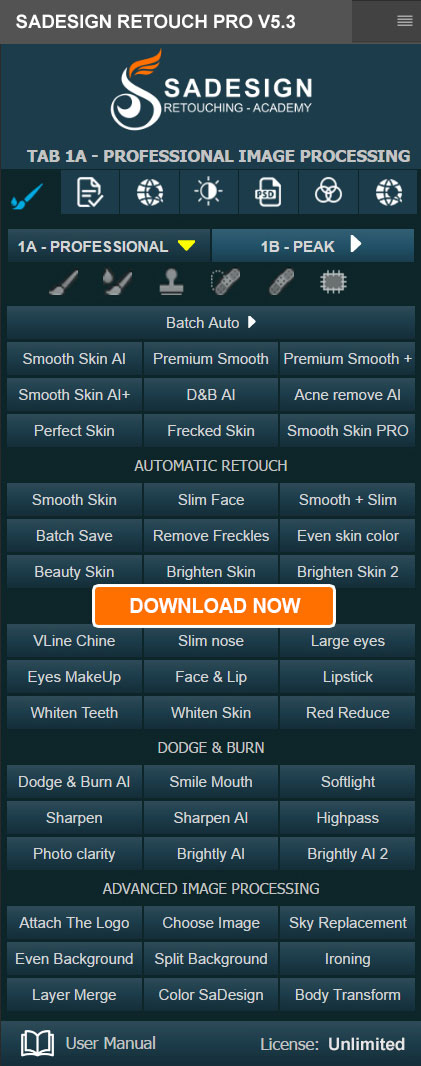
Plugin Retouch4me
69 USD
Google delivers a decisive blow, pulling users from ChatGPT to Gemini.
Nội dung
Google is changing the AI game by removing the biggest barrier: personal data. With its ability to transfer "memories" between chatbots, users can leave ChatGPT without having to rebuild it from scratch. This could be a major turning point in the AI competition.
1. Why are users reluctant to leave their familiar chatbots?
To better understand the importance of Memory Import, it's necessary to clearly recognize the nature of the relationship between users and modern chatbots like ChatGPT. Initially, the experience with AI is often "default," meaning the chatbot responds based on general training data rather than truly understanding the individual user. However, over time, through hundreds or even thousands of interactions, users gradually "reverse-train" the AI by editing questions, providing more detailed context, responding to answers, and shaping communication styles.
This personalization creates a sense of familiarity and "synchronized thinking," making chatbots an integral part of daily workflows. For example, a content creator might have optimized ChatGPT to write in their own unique style, while a programmer might have made the AI understand how they phrase technical problems. In this case, the chatbot is no longer a generic tool but a "personal assistant." This is an intangible but extremely valuable asset, as it cannot be measured solely by features or technical specifications.
However, this also creates a very real barrier when users want to switch to another platform like Google Gemini. The entire "learning history" of the AI is almost impossible to carry over, forcing users to start from scratch. It's not just about re-entering personal information, but also about fine-tuning how they interact. This is what's called the "switching cost," not in terms of money, but in terms of time, effort, and patience.
Furthermore, psychological factors also play a significant role. Once familiar with a chatbot, users develop a certain level of trust in its responses. Switching to a new platform means starting over, facing the possibility of unexpected responses. This creates a sense of "experience risk," leading many to choose the safer option of continuing to use the old tool.
Another often overlooked aspect is ecosystem integration. ChatGPT, or other chatbots, are often tied to work tools such as browsers, note-taking applications, or personal workflows. When switching platforms, not only does the chatbot change, but the entire workflow can be affected. This further increases the barrier, making the transition more complex than simply changing a single application.
All these factors combine to create a huge "force of inertia" that keeps users engaged. And that's why, for a long time, even though the AI market constantly sees the emergence of new products, users tend to remain loyal to the platforms they are already familiar with.
2. Memory Import on Google Gemini
The introduction of Memory Import on Google Gemini can be seen as a direct attempt to break the aforementioned "inertia." Instead of competing by requiring users to start over, Google chose the opposite approach: helping users bring their entire "digital memory" with them when migrating to a new platform. This is not just a useful feature but also reflects a shift in AI product design thinking, placing users and their data at the center.
Technically, Memory Import operates in two main ways. The first is information extraction via prompts. Users employ a special command within ChatGPT to request the system to summarize accumulated key information, such as preferences, habits, work style, and areas of interest. This is a smart approach because it leverages AI's contextual understanding to "self-describe the user." This data is then imported into Gemini to form the basis for personalization.
The second, more comprehensive approach involves exporting the entire chat history as a ZIP file and importing it directly into Gemini. This not only preserves information but also maintains context, allowing users to resume unfinished conversations or revisit previous interactions. This is a significant step forward as it brings the AI experience closer to a "continuous" concept rather than being fragmented across platforms.
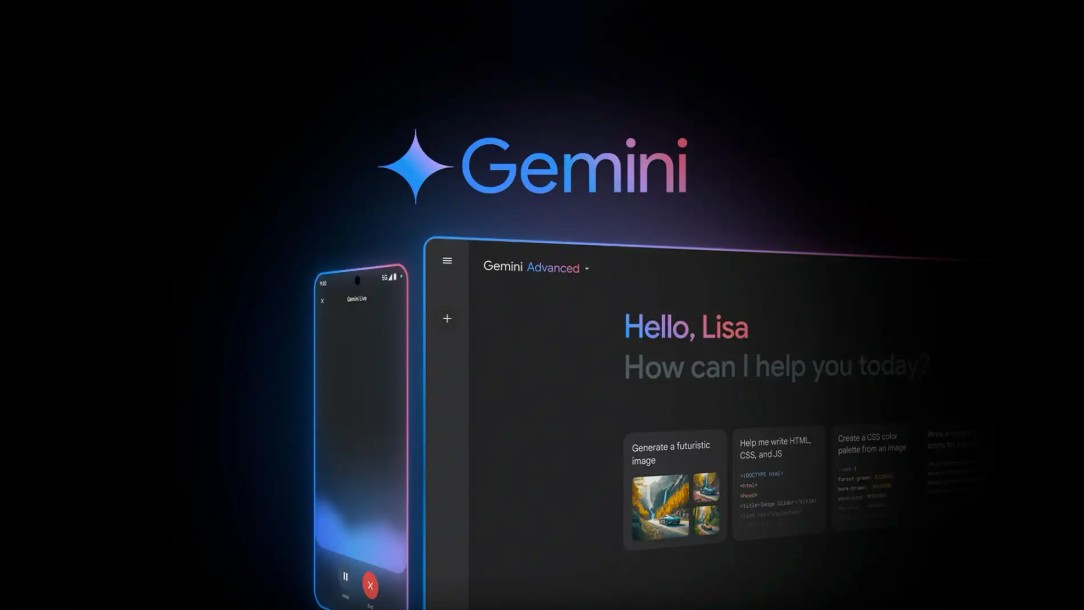
Another noteworthy point is how Google optimizes the user experience during this process. Instead of turning it into a complex technical procedure, Memory Import is designed to be simple and intuitive, suitable even for users without in-depth knowledge. This is crucial because if the transition process is too cumbersome, users will still be reluctant to switch despite the clear benefits.
But Memory Import doesn't stop there; it opens up a new direction for AI: the ability to "interconnect personal data." When data is no longer locked within a single platform, users can freely choose the tool that best suits their needs at any given time.
However, the greatest value of Memory Import lies not only in transferring data, but in significantly shortening the time to achieve an "AI-understanding" state. Instead of spending weeks or months on personalization, users can achieve similar results in just minutes. This is a key factor in reducing switching costs and strongly incentivizing users to experiment with Google Gemini as an alternative or supplement to ChatGPT.
3. Strategic implications in the AI race
From a broader perspective, Memory Import is not just a feature, but also a "statement" by Google in the AI race. For years, large tech companies have built closed ecosystems to retain users. The more data there is, the harder it is for users to leave, and this creates a long-term competitive advantage.
However, with Memory Import, Google is going in the opposite direction: opening up the possibility of moving data between platforms. This can be seen as a "game-breaking" strategy to attract users from competitors. When the switching barrier is removed, the deciding factor will no longer be "who retains users longer" but "who provides a better experience."
This also puts pressure on competitors like OpenAI. If users can easily switch to Gemini without losing data, they will be more inclined to experiment. To retain users, other platforms may be forced to develop similar features or drastically improve their experience. As a result, the entire AI industry will enter a new competitive phase, where power gradually shifts from providers to users.
4. Impact on user experience
From a user's perspective, Memory Import offers several clear benefits. First and foremost is convenience. Instead of spending weeks "training" a new chatbot, users can start immediately with a system that already understands them. This is especially important for those who use AI in their professional work, such as content writing, programming, or research.
Secondly, there's flexibility. Users are no longer tied to a single platform but can switch or combine different tools depending on their needs. For example, they can use ChatGPT for content creation and Gemini for real-time information searching, while maintaining consistency in their experience.
Thirdly, there's the feeling of control over the data. Knowing that their data is mobile gives users more confidence in investing time and effort into personalizing AI. This can drive the further development of AI applications in everyday life.
5. Challenges and limitations
Despite its many benefits, Memory Import also presents numerous challenges. One of the biggest issues is the incompatibility between AI systems. While data can be transferred, each platform's processing and response remain different. This can lead to a change in user experience, requiring time for users to adapt.
Furthermore, security and privacy issues also need to be taken seriously. Transferring data between platforms means that personal information can be shared more widely. Without appropriate protection mechanisms, the risk of data leakage or misuse is entirely possible.
Furthermore, not all data can be transferred perfectly. Complex contexts, lengthy conversations, or specific interactions may result in data loss or alteration during the import process. This shows that Memory Import is still in its early stages and needs further refinement in the future.
6. Future trends in the AI industry
The emergence of Memory Import can be seen as a sign of a larger trend in the AI industry: a shift from a closed to an open ecosystem. In the future, personal data could become a “mobile asset” that users can carry across different platforms.
This could also spur the formation of common standards for AI data, similar to how the internet developed open protocols to ensure compatibility. Users would then have more control, and technology companies would have to compete based on product quality rather than user retention.
Furthermore, this trend could also open up new business models where AI platforms collaborate rather than compete directly. Users could utilize multiple chatbots simultaneously, each playing a different role within their personal digital ecosystem.
In the future, as AI becomes an increasingly integral part of life, the ability to move data and personalize experiences will play a decisive role. And perhaps, in this race, the winner will not be the platform with the strongest technology, but the one that delivers the best experience and respects its users the most.







VIP Products
Best Selling Products
Adobe Photoshop Copyright - Full App
120 USD
Upgrade Genuine Office 365
49 USD
Windows 10 & 11 Pro Key
36 USD
MidJourney Account
29 USD
Upgrade genuine Capture One account
120 USD
Autodesk All App Account Copyright
120 USD
Freepik Premium Account
59 USD
Adobe Premiere Pro Account
99 USD
Genuine Cheap Canva Pro
39 USD
Genuine Adobe Illustrator account
99 USD
ChatGPT Plus Account (GPT-4)
16 USD
Upgrade Duolingo Super
29 USD
Capcut Pro 1 Year
39 USD
Copyright Adobe Lightroom Account
59 USD
Plugin Retouch4me
69 USD