Best Selling Products

Upgrade Genuine Office 365
49 USD

Genuine Adobe Illustrator account
99 USD

Upgrade genuine Capture One account
120 USD

Freepik Premium Account
59 USD

Windows 10 & 11 Pro Key
36 USD
Adobe Photoshop Copyright - Full App
120 USD

Upgrade Duolingo Super
29 USD
Autodesk All App Account Copyright
120 USD

Adobe Premiere Pro Account
99 USD

Capcut Pro 1 Year
39 USD

ChatGPT Plus Account (GPT-4)
16 USD

Plugin Retouch4me
69 USD

Genuine Cheap Canva Pro
39 USD

MidJourney Account
29 USD

Copyright Adobe Lightroom Account
59 USD
Tinder Uses AI to Select Profile Photos: How Do Users Benefit?
Nội dung
On-device AI technology is changing the way users build their dating profiles. No longer choosing photos based on intuition alone, every decision is now supported by data. The solution is both convenient and privacy-friendly.

1. Why is choosing a profile picture harder than you think?
On the surface, choosing a profile picture seems simple: just pick the one you like best. But in a digital environment like Tinder, "beauty" is no longer a personal criterion but a factor that depends on how others perceive it. A picture you love might not make the same impression on a stranger, especially when they only have a few seconds to make a decision.
The competitive pressure on dating platforms has turned photo selection into a psychological challenge. Users not only need to showcase themselves but also do so in a way that is accessible, understandable, and stands out from a sea of other profiles. This means the photo selection process is no longer simply about choosing aesthetics, but about choosing what is "effective."

Another factor that makes this difficult is the phenomenon of "selection overload." When there are too many images in the library, users easily become confused and uncertain. They may rely on intuition or the opinions of friends, but these methods often lack objectivity and do not accurately reflect the behavior of viewers on the platform.
It is at this point that AI begins to play its role. Instead of relying on emotions, AI uses data and machine learning models to evaluate images based on factors proven to influence attractiveness. This shifts the selection process from subjective to semi-objective, opening up a new and more effective approach.
2. AI on devices: Tinder's new direction.
A major differentiating factor in Tinder's strategy is the deployment of AI directly on devices instead of relying on cloud servers. This is not just a technical improvement but also reflects a shift in how tech companies approach user data.
When AI operates directly on the phone, the entire image analysis process takes place locally. This means that personal data, especially photos, doesn't need to leave the device. In a context where users are increasingly concerned about privacy and data leaks are becoming more common, this approach offers greater peace of mind.
Beyond security, performance is also a clear advantage. Direct processing reduces latency, allowing users to receive results almost instantly. The experience becomes smoother, unaffected by network speed or server infrastructure.
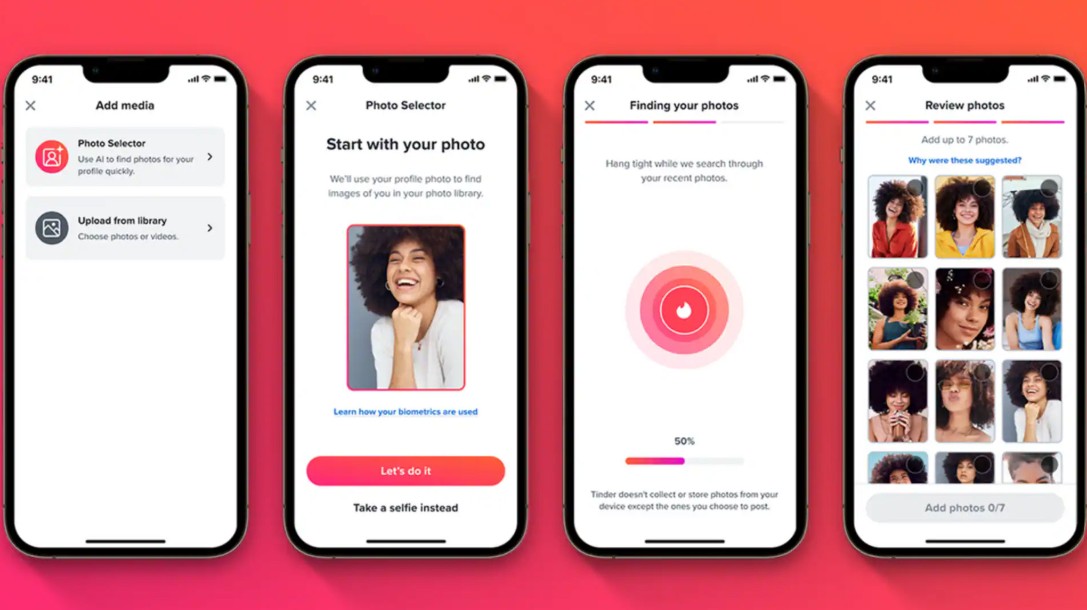
Notably, this direction also reflects a major trend in the technology industry: "decentralizing AI." Instead of concentrating all processing power in data centers, companies are gradually moving AI down to personal devices, where data is generated. This not only increases security but also opens up the possibility of deeper personalization, as AI can understand users in their own unique context.
3. How does the AI image selection process work?
Behind the seemingly simple user experience lies a complex and optimally designed processing sequence. Tinder's AI system operates in multiple steps to ensure that the final results are not only accurate but also relevant.
The first step is to scan the image library to identify photos containing faces. This is a crucial filtering step to remove irrelevant images such as landscapes, objects, or images with unclear subjects. This helps reduce the amount of data to be processed and focus on valuable content.
Next is the identity verification step. AI uses facial recognition models to ensure that the selected photos are actually of the user. This is especially important in weeding out group photos or photos with many people, which could cause confusion in profiles.
After identifying valid images, the system proceeds to assess their quality. Factors such as lighting, clarity, shooting angle, expression, and composition are all analyzed in detail. These models are trained on real-world data, allowing the AI to recognize characteristics related to attractiveness.
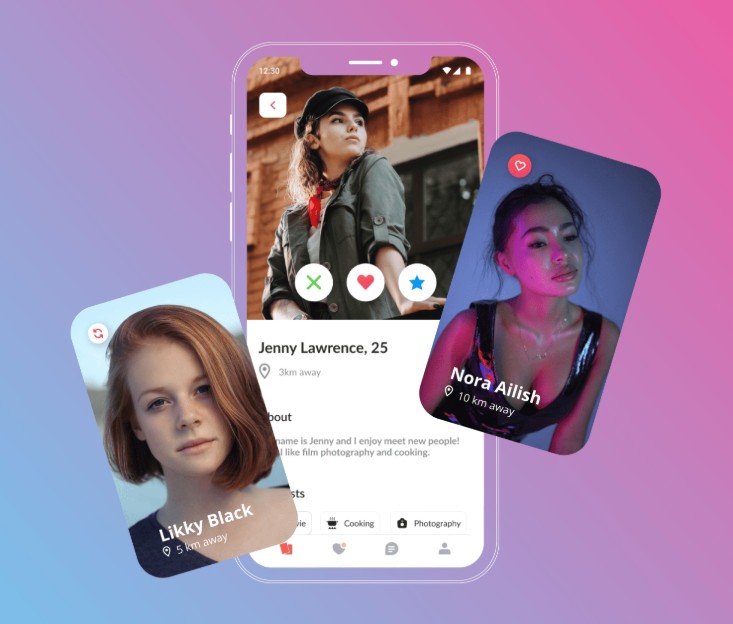
Finally, the AI will rank the photos based on their potential for interaction. This is the most important step, as the goal isn't just to select aesthetically pleasing photos, but to choose those that are likely to help users get more likes and connections. The result is an optimized list of suggestions, making it easier for users to make decisions without much trial and error.
4. What makes a photograph "valuable"?
One of the most interesting aspects of AI systems is their ability to "understand" what makes a photograph appealing. By analyzing data from millions of records, AI can identify common characteristics of successful photographs.
Lighting is a crucial factor. Bright, naturally lit photos tend to be more pleasing and trustworthy. Conversely, dark or noisy photos are often poorly received.
Facial expressions also play a significant role. A natural smile and clear eyes can create a friendly and approachable impression. These are elements that AI can recognize and evaluate.
Furthermore, composition and context also influence how others perceive you. A well-composed, uncluttered photograph will help viewers focus on the main subject.
It's worth noting that AI not only seeks perfection but also evaluates authenticity. Overly edited or unnatural photos may not perform as well as simple, genuine ones.
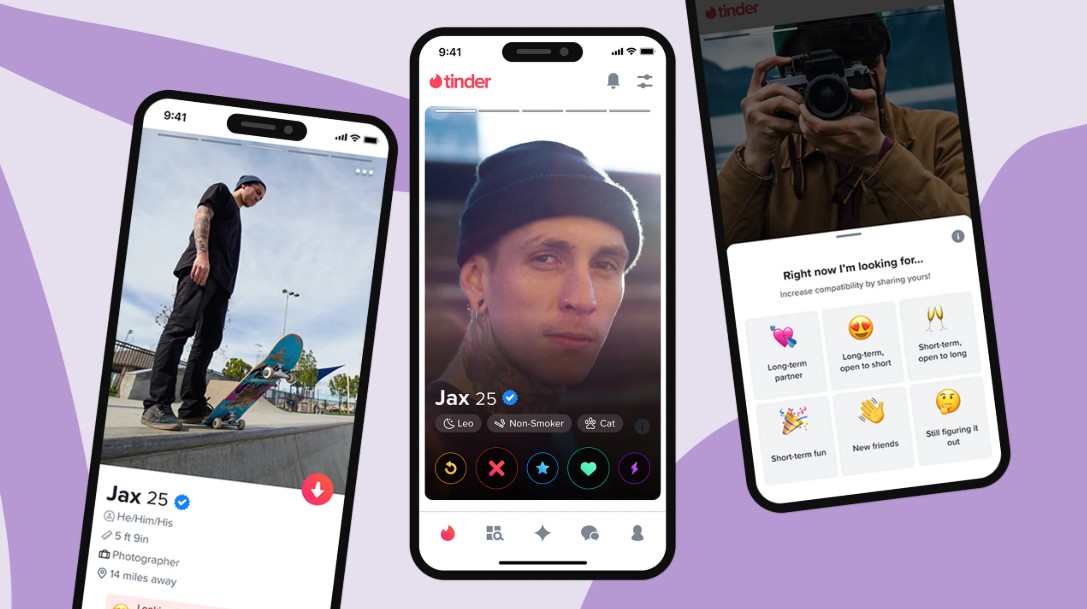
5. Privacy is our top priority.
Tinder has chosen a remarkable approach in designing its system based on the philosophy of "privacy-first," placing user control at the center from the very beginning.
Unlike traditional AI models that rely on servers, the entire image processing process is performed directly on the device. This means that personal photos do not need to be uploaded to external systems for analysis, thereby minimizing the risk of data leakage or exploitation. Biometric features such as faces are only used temporarily during processing and are deleted immediately after completion, instead of being stored long-term.
Another important point is transparency and choice. Users can view, edit, and fully decide on the suggested photo set. AI only acts as a suggestion; it does not automatically change the profile without consent. This helps maintain a clear line between "assistance" and "control," ensuring that technology does not interfere too deeply with individual privacy.
Furthermore, local processing reduces reliance on internet connectivity and increases response speed. This is a double benefit: it enhances the user experience and strengthens user trust.

6. Impact on the modern dating experience
Previously, profile creation was often a trial-and-error process, with users having to change photos multiple times to find the most effective option. Now, AI shortens this process by providing database-based suggestions, thereby improving profile quality from the start.
As more and more people use well-optimized photos, the entire ecosystem changes for the better. Users tend to interact more with profiles that are clear, authentic, and engaging. This not only increases the match rate but also improves the quality of conversations, as a better first impression is built.
Another notable impact is the shift in user behavior. With the support of AI, users tend to focus more on strategically building their personal image, rather than making random choices. This makes the profile creation process more "conscious," akin to building a personal brand in the digital environment.
In the long run, this technology could help reshape image standards on dating platforms. It's not just about choosing beautiful photos, but also about expressing oneself authentically, multifacetedly, and in line with personal goals. In this case, AI doesn't change people, but helps them better understand how they are perceived, thereby optimizing how they present themselves in the digital world.
The emergence of AI on devices for selecting profile pictures marks a significant step forward in how technology assists humans. Not only does it simplify a complex task, but it also provides a more objective and effective approach to building a personal image.



















VIP Products






Best Selling Products
Upgrade Genuine Office 365
49 USD
Genuine Adobe Illustrator account
99 USD
Upgrade genuine Capture One account
120 USD
Freepik Premium Account
59 USD
Windows 10 & 11 Pro Key
36 USD
Adobe Photoshop Copyright - Full App
120 USD
Upgrade Duolingo Super
29 USD
Autodesk All App Account Copyright
120 USD
Adobe Premiere Pro Account
99 USD
Capcut Pro 1 Year
39 USD
ChatGPT Plus Account (GPT-4)
16 USD
Plugin Retouch4me
69 USD
Genuine Cheap Canva Pro
39 USD
MidJourney Account
29 USD
Copyright Adobe Lightroom Account
59 USD