Best Selling Products

ChatGPT Plus Account (GPT-4)
16 USD

Plugin Retouch4me
69 USD

Windows 10 & 11 Pro Key
36 USD

Copyright Adobe Lightroom Account
59 USD

Capcut Pro 1 Year
39 USD

Upgrade genuine Capture One account
120 USD

Upgrade Genuine Office 365
49 USD

Adobe Premiere Pro Account
99 USD

Adobe Photoshop Copyright - Full App
120 USD

Genuine Adobe Illustrator account
99 USD

Genuine Cheap Canva Pro
39 USD

Freepik Premium Account
59 USD

Autodesk All App Account Copyright
120 USD

MidJourney Account
29 USD

Upgrade Duolingo Super
29 USD
Google Prepares to Launch 3D Avatar Creation on Gemini: How Will the XR Experience Change?
Nội dung
Google is developing a tool that allows users to create realistic 3D avatars from their own faces. This technology promises to elevate extended reality experiences. Could this be the future of digital identity?
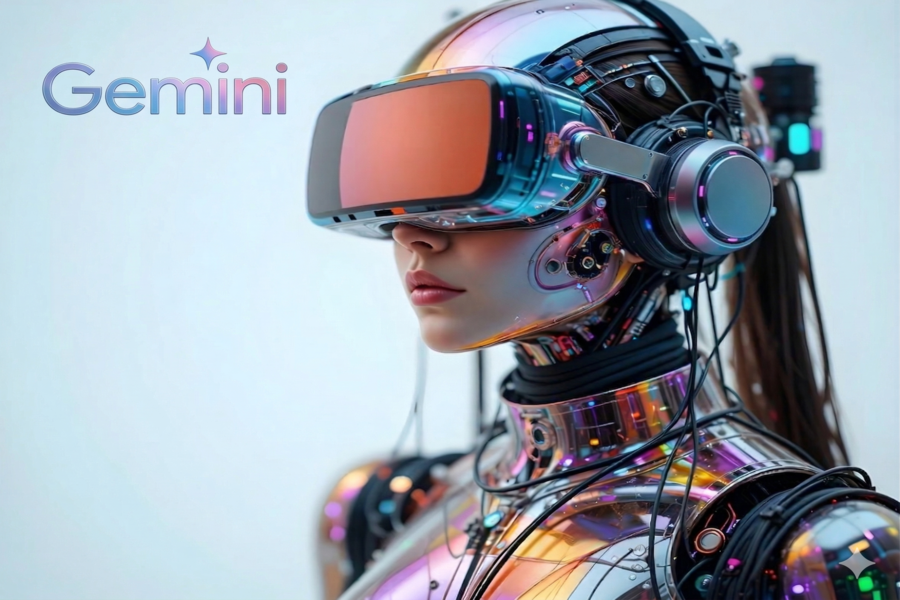
1. Why 3D Avatars Are Becoming an Inevitable Trend in the Digital Era
The rapid growth of the internet and social media platforms has made people increasingly accustomed to building personal identities in online spaces. However, traditional 2D avatars are gradually revealing their limitations, as they cannot fully convey users' emotions, gestures, and personalities. In this context, 3D avatars have emerged as an inevitable solution, offering a more vivid and authentic way of self-expression, especially as technologies such as virtual reality, augmented reality, and mixed reality continue to evolve rapidly. Users no longer simply want to “appear” online; they want to interact, communicate, and experience digital worlds in ways that closely resemble real life, creating a demand for highly personalized and adaptable digital representations.
3D avatars fill this gap by creating digital versions capable of expressing emotions, movements, and personal style in a visually engaging manner. This is particularly important in remote work environments and online communication, where emotional expression is often limited when relying solely on text or static images. The use of avatars not only enhances professionalism but also creates a more natural and approachable interaction experience, improving communication effectiveness. At the same time, the rapid growth of the creator economy and personal branding trends has further accelerated the adoption of 3D avatars as an essential tool for establishing unique identities in an increasingly competitive and personalized digital environment.
.jpg)
2. XR Technology and the Role of Avatars in Extended Reality Spaces
XR, short for Extended Reality, encompasses technologies that blend the physical and virtual worlds, including virtual reality, augmented reality, and mixed reality. Within this ecosystem, 3D avatars serve as a bridge that allows people to “exist” within digital spaces. When using XR devices, displaying a user's real image often presents limitations, especially in scenarios such as virtual meetings or communication within immersive environments. As a result, avatars have become a more effective and flexible alternative.
Today's technology platforms are increasingly focused on using avatars to realistically recreate users' faces, expressions, and even personal styles. This not only improves the overall experience but also creates a sense of natural communication, making users feel as though they are interacting face-to-face despite being in virtual environments. In XR, avatars are no longer just profile images; they become part of an immersive experience, enhancing engagement and interaction within digital spaces.
Furthermore, combining avatars with motion tracking, facial recognition, and real-time expression detection technologies significantly increases the realism of the experience. Users can express emotions through eye movements, smiles, and gestures, creating interactions that closely resemble those in real life. This is a key factor in transforming XR from a technological trend into a foundational platform for future communication, work, and entertainment.
.jpg)
3. Gemini and the Breakthrough in AI-Powered 3D Avatar Creation
Gemini is not only a multimodal AI model but also a central platform in Google's technology development strategy, particularly in personalizing user experiences and connecting people with the digital world. The integration of 3D avatar creation capabilities into Gemini demonstrates Google's ambition to build a comprehensive AI ecosystem where users not only consume content but also actively create and express themselves in more visual ways.
Under this development approach, users can create avatars by scanning their faces or recording guided videos, after which AI processes the data to generate highly accurate and personalized 3D models. Compared to traditional methods that are often complex and time-consuming, this process is significantly simpler, enabling virtually anyone to own a personalized avatar without requiring advanced technical knowledge. This represents an important step toward making 3D avatars accessible to the mainstream.
Beyond simple avatar creation, Gemini is expected to allow users to reuse their avatars across various contexts, including images, videos, and AI-generated virtual environments, ensuring consistency in building digital identities. Additionally, integrating avatars into AI content creation tools unlocks new opportunities, from personalized video production to interactive experiences. In the future, avatars may evolve beyond profile representations to become flexible “digital twins” that accompany users across a wide range of digital activities.
.jpg)
4. Real-World Applications of 3D Avatars in Daily Life and Work
In professional environments, particularly during virtual meetings and XR workspaces, avatars allow users to maintain a professional presence without keeping their cameras turned on at all times while still preserving privacy. Thanks to their ability to reproduce real-time expressions and gestures, avatars can also improve the naturalness and effectiveness of remote communication, reducing the sense of distance often associated with online work.
In education, avatars open the door to virtual classrooms where teachers and students can interact visually in three-dimensional environments, creating immersive learning experiences and enhancing knowledge retention, especially for subjects that require simulation, such as science, medicine, or engineering. In entertainment, avatars have become essential components of gaming and metaverse platforms, allowing users to build unique identities and experience virtual worlds in highly personalized ways. At the same time, content creators can use avatars to produce videos, images, or livestreams without appearing on camera, saving time while maintaining flexibility in personal branding.
In e-commerce, avatars can enable users to virtually try on products such as clothing and accessories using their own digital representations, leading to more informed purchasing decisions and reducing shopping risks. Additionally, the technology has the potential to expand into fields such as remote healthcare, where patients can interact with doctors in virtual environments, as well as customer service and marketing, where personalized experiences are becoming increasingly important.
.jpg)
5. Privacy and Ethical Challenges in Technology
Despite its clear benefits, 3D avatar technology also raises significant concerns regarding privacy and data security. Using facial data requires users to share highly sensitive biometric information that is both valuable and difficult to replace, increasing the risk of misuse if adequate safeguards are not in place. In an era where data is becoming one of the most valuable assets, controlling and storing personal information has become a major concern for users.
Furthermore, this technology increases the risks associated with identity impersonation and the advancement of deepfake technologies, as avatars can recreate individuals with remarkable realism. This makes distinguishing between authentic and artificial representations increasingly difficult while creating opportunities for fraud and misinformation. As a result, technology platforms must implement robust verification systems and strict controls to ensure user safety.
Ethical concerns are also becoming more prominent, including questions about avatar ownership, whether users retain full control over their data, and the consequences of using another person's likeness without consent. In addition, growing reliance on avatars may blur the boundaries between real-world identity and digital personas, potentially influencing social behavior and communication patterns.
Nevertheless, these challenges can be addressed through clear legal frameworks, strong security standards, and responsible technology use. When developed and managed appropriately, 3D avatars remain a highly promising technology that can reshape how people exist and interact within the future digital world.
.jpg)
The emergence of AI-powered 3D avatar creation technology on the Gemini platform represents not only a technical advancement but also a sign of a profound transformation in how people interact with digital environments. While many challenges remain—particularly regarding privacy and technology ethics—it is undeniable that 3D avatars are ushering in a new era of digital experiences. As AI and XR continue to evolve, the boundaries between the physical and virtual worlds will become increasingly blurred, and avatars will serve as the bridge that allows people to enter this new world naturally and with immense potential.





















VIP Products








Best Selling Products
ChatGPT Plus Account (GPT-4)
16 USD
Plugin Retouch4me
69 USD
Windows 10 & 11 Pro Key
36 USD
Copyright Adobe Lightroom Account
59 USD
Capcut Pro 1 Year
39 USD
Upgrade genuine Capture One account
120 USD
Upgrade Genuine Office 365
49 USD
Adobe Premiere Pro Account
99 USD
Adobe Photoshop Copyright - Full App
120 USD
Genuine Adobe Illustrator account
99 USD
Genuine Cheap Canva Pro
39 USD
Freepik Premium Account
59 USD
Autodesk All App Account Copyright
120 USD
MidJourney Account
29 USD
Upgrade Duolingo Super
29 USD