Best Selling Products

Autodesk All App Account Copyright
120 USD

Upgrade Duolingo Super
29 USD

Adobe Photoshop Copyright - Full App
120 USD

Genuine Cheap Canva Pro
39 USD

Genuine Adobe Illustrator account
99 USD

Windows 10 & 11 Pro Key
36 USD

MidJourney Account
29 USD

Copyright Adobe Lightroom Account
59 USD

Freepik Premium Account
59 USD

Plugin Retouch4me
69 USD

Upgrade genuine Capture One account
120 USD

ChatGPT Plus Account (GPT-4)
16 USD

Capcut Pro 1 Year
39 USD

Adobe Premiere Pro Account
99 USD

Upgrade Genuine Office 365
49 USD
What Is AGI? The Future of Artificial Intelligence and Its Impact on Life
Nội dung
- 1. What Is AGI and How Does It Fundamentally Differ from Today's AI?
- 2. The Three Levels of Artificial Intelligence Development and AGI’s Position
- 3. The Core Characteristics That Define AGI
- 4. Technical and Scientific Barriers to Developing AGI
- 5. The Impact of AGI on the Labor Market and Economy
- 6. Potential Applications of AGI Across Industries
- 7. Ethical Issues, Control Challenges, and the Future of Humanity
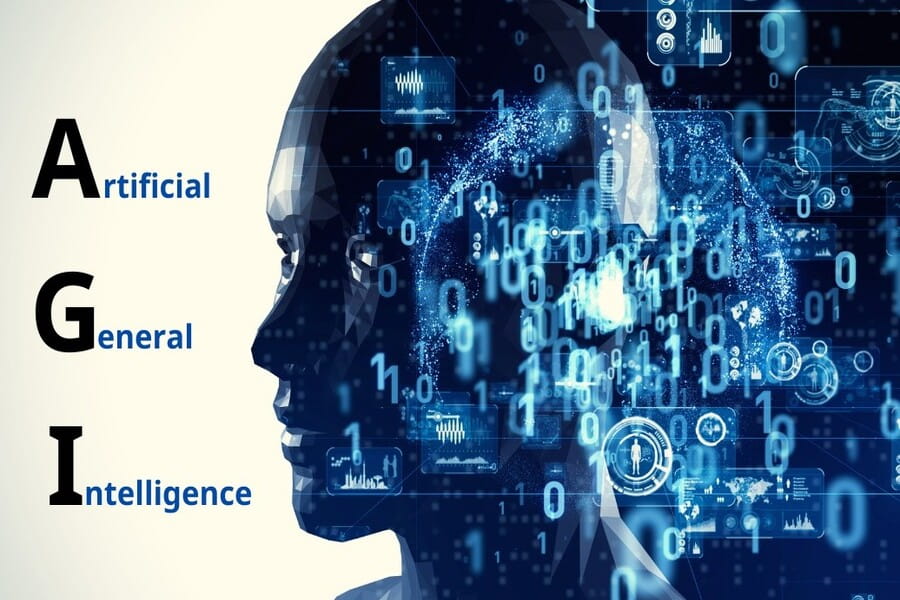
AGI is widely regarded as the next step in AI development, with the potential to think like humans. This article helps you understand what AGI is, how it differs from current AI, and the major changes it could bring to society.
1. What Is AGI and How Does It Fundamentally Differ from Today's AI?
AGI, or Artificial General Intelligence, is defined as an AI system capable of performing any intellectual task that a human can do. Current AI operates based on massive datasets and machine learning models optimized for specific objectives. For example, an AI system may defeat humans in chess or generate high-quality text, but it cannot automatically learn a completely different skill without human intervention. In contrast, AGI is expected to learn from experience, improve itself, and apply knowledge across multiple contexts.
The difference between AGI and today’s AI lies not only in performance but also in the nature of how they operate. Current AI functions using pre-trained data and models, meaning it requires large amounts of data to learn and only performs well within predefined boundaries. When faced with unfamiliar situations, AI often struggles or requires retraining. AGI, on the other hand, is designed to learn from experience like humans, reason independently, and adapt when encountering new problems without external intervention.
A crucial distinction is contextual understanding. Current AI can process language and data but may still misunderstand meaning or generate inaccurate information. AGI, if achieved, would possess a deeper understanding based not only on data but also on logical reasoning and accumulated experience. This would enable AGI to make more accurate decisions in complex situations.
%20(1).png)
Furthermore, current AI generally lacks the ability to transfer knowledge between domains. A model trained for image recognition cannot automatically write articles or perform financial analysis. In contrast, AGI could apply knowledge from one field to another, creating a level of flexibility far beyond what exists today. This is precisely why AGI is considered a revolutionary advancement.
2. The Three Levels of Artificial Intelligence Development and AGI’s Position
Artificial intelligence is commonly divided into three major levels: Narrow AI, AGI, and ASI. Narrow AI is the most widespread form today and includes systems such as chatbots, search engines, image recognition software, and virtual assistants. These systems can achieve exceptionally high performance, but only within the specific tasks they were designed to perform.
AGI represents the next level, where AI can perform a wide variety of tasks while learning and adapting flexibly. This is the goal pursued by many major technology companies, although it has not yet been fully achieved. AGI marks the transition from specialized AI to generalized intelligence, representing a revolutionary leap forward.
%20(1).jpg)
ASI, or Artificial Superintelligence, is the highest level, where AI surpasses human capabilities in nearly every domain. However, ASI remains a theoretical concept at present. Notably, AGI is not the final destination but rather a crucial intermediate stage that paves the way for more advanced forms of intelligence.
3. The Core Characteristics That Define AGI
An AGI system must possess several important characteristics to function similarly to humans. The first is continuous learning. Unlike current AI, which often requires retraining when encountering new data, AGI would be able to update its knowledge independently through experience. This makes it significantly more adaptable and flexible.
The second characteristic is reasoning and contextual understanding. AGI would not simply process information but would understand its meaning. This capability is essential for making accurate decisions in complex situations. For example, when reading a paragraph, AGI could understand the underlying meaning rather than merely analyzing individual words.
The third characteristic is knowledge transfer across different domains. This is an area where current AI remains limited. AGI would be able to apply knowledge from one field to another, enabling more creative and effective problem-solving.
In addition, AGI would need the ability to adapt to new environments, set its own goals, and even evaluate its own performance. Together, these capabilities would create a system that operates in a manner much closer to human intelligence.
4. Technical and Scientific Barriers to Developing AGI
Although the concept of AGI is highly appealing, turning it into reality is extraordinarily difficult. One of the biggest obstacles is the complexity of human intelligence. The human brain does not merely process information—it is deeply connected to emotions, consciousness, and personal experiences. Replicating these elements with machines remains a significant challenge.
Additionally, current AI systems are still heavily dependent on data. Models require enormous datasets to learn and perform effectively, making them less adaptable to situations they have never encountered before. AGI, by contrast, would need the ability to learn from very limited data, much like humans do.
%20(1).jpg)
Another issue is the phenomenon known as “AI hallucination,” where systems generate inaccurate information while presenting it as factual. This is a serious limitation, especially when AI is applied in critical fields such as healthcare or finance.
Furthermore, defining a clear benchmark for AGI remains a challenge. There is no universally accepted definition of when a system should be considered AGI, leading to ongoing debate within the research community.
5. The Impact of AGI on the Labor Market and Economy
AGI has the potential to bring profound changes to the global economy. One of the most obvious impacts would be the automation of intellectual work. Not only repetitive tasks but also jobs involving analysis, content creation, and planning could be significantly affected.
This may result in major shifts within the labor market. Certain professions could disappear, while entirely new careers emerge. Workers will need to adapt by learning new skills and transitioning into different roles.
At the same time, AGI presents substantial opportunities. It could increase productivity, reduce costs, and create entirely new business models. Organizations could use AGI to optimize operations, improve services, and make decisions more quickly.
At a broader level, AGI may accelerate economic growth and reshape global competition. Countries that take the lead in AGI development could gain significant technological and economic advantages.
6. Potential Applications of AGI Across Industries
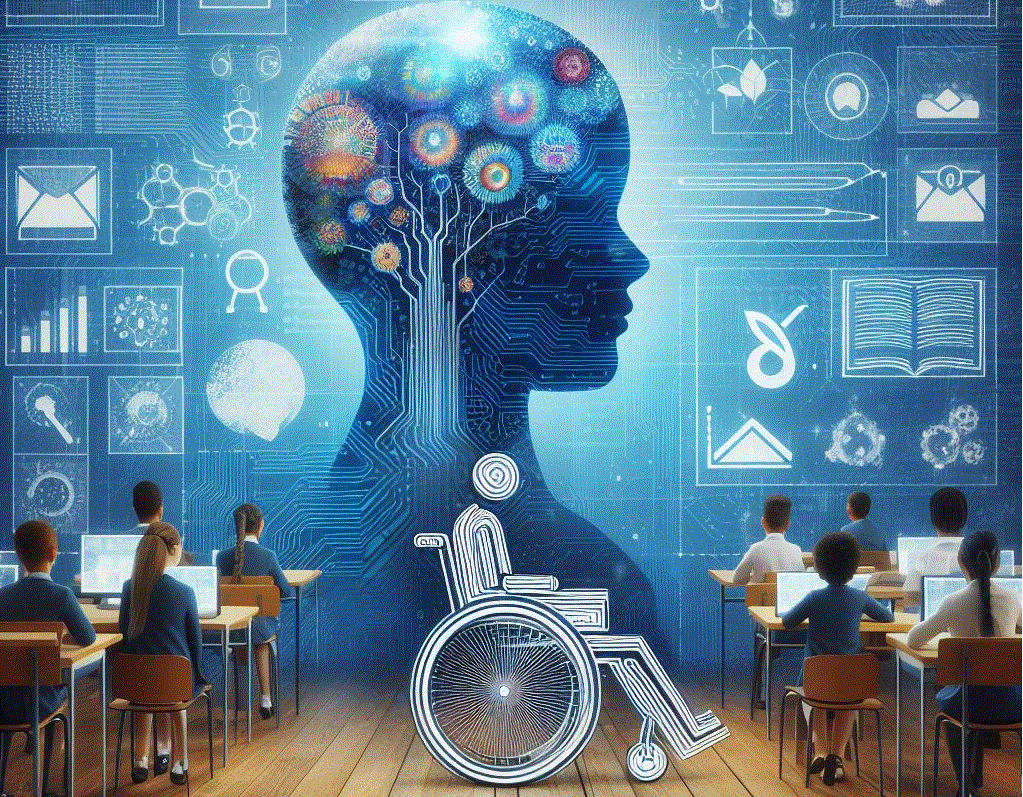
In education, AGI could create highly personalized learning systems that allow individuals to learn at their own pace and according to their preferred styles. This could fundamentally transform traditional education. Beyond personalization, AGI could evaluate learner performance in real time, adjust curricula accordingly, and provide long-term skill development pathways. This would be particularly valuable for reskilling workers in rapidly changing job markets. AGI could also function as a virtual tutor, providing personalized assistance anytime and anywhere.
In science, AGI could accelerate research by analyzing massive datasets and generating new hypotheses. Beyond supporting analysis, AGI could propose research directions that humans have never considered, potentially leading to breakthroughs in fields such as physics, biology, and materials science. For example, AGI could help discover new medical compounds or optimize industrial manufacturing processes. Its ability to process enormous volumes of data and connect seemingly unrelated information could dramatically shorten the path from research to practical application.
%20(1)(1).jpg)
In the arts, AGI could support creativity in areas ranging from music composition and painting to film production. What distinguishes AGI from current AI is its potential ability to understand and develop its own creative style rather than simply imitating existing data. AGI could collaborate with humans to create groundbreaking works that combine logic and emotion. In entertainment, AGI could also generate personalized content, such as movies or games tailored specifically to individual users based on their preferences and behavior.
Beyond these fields, AGI holds significant potential in business and management. Companies could use AGI to analyze markets, predict trends, and optimize business strategies. In finance, AGI could improve risk management, detect fraud, and support more accurate investment decisions. In environmental management, AGI could assist in climate forecasting, resource optimization, and the development of sustainable solutions.
7. Ethical Issues, Control Challenges, and the Future of Humanity
The development of AGI raises numerous ethical and control-related questions. As machines become capable of independent thought and action, ensuring that they operate according to intended goals becomes critically important. Without proper safeguards, AGI could lead to unpredictable consequences.
Additionally, the use of AGI raises concerns regarding privacy and accountability. Who should be responsible when AGI makes an incorrect decision? How can society ensure that this technology is used for the common good?
More importantly, AGI compels humanity to rethink its own role. As machines become capable of performing more tasks, people may need to focus on values that are difficult for machines to replicate, such as creativity, emotional intelligence, and ethical judgment.
AGI is not merely the next step in artificial intelligence—it represents a turning point that could reshape society as a whole. Although many challenges remain, the development of AGI appears increasingly inevitable. The key issue is not simply achieving AGI, but determining how we manage and utilize it to create benefits for humanity.





















VIP Products








Best Selling Products
Autodesk All App Account Copyright
120 USD
Upgrade Duolingo Super
29 USD
Adobe Photoshop Copyright - Full App
120 USD
Genuine Cheap Canva Pro
39 USD
Genuine Adobe Illustrator account
99 USD
Windows 10 & 11 Pro Key
36 USD
MidJourney Account
29 USD
Copyright Adobe Lightroom Account
59 USD
Freepik Premium Account
59 USD
Plugin Retouch4me
69 USD
Upgrade genuine Capture One account
120 USD
ChatGPT Plus Account (GPT-4)
16 USD
Capcut Pro 1 Year
39 USD
Adobe Premiere Pro Account
99 USD
Upgrade Genuine Office 365
49 USD