Best Selling Products

MidJourney Account
29 USD

Copyright Adobe Lightroom Account
59 USD

Genuine Adobe Illustrator account
99 USD

Capcut Pro 1 Year
39 USD

ChatGPT Plus Account (GPT-4)
16 USD

Upgrade Genuine Office 365
49 USD
Autodesk All App Account Copyright
120 USD

Adobe Premiere Pro Account
99 USD
Upgrade genuine Capture One account
120 USD

Upgrade Duolingo Super
29 USD
Genuine Cheap Canva Pro
39 USD

Windows 10 & 11 Pro Key
36 USD

Plugin Retouch4me
69 USD

Adobe Photoshop Copyright - Full App
120 USD

Freepik Premium Account
59 USD
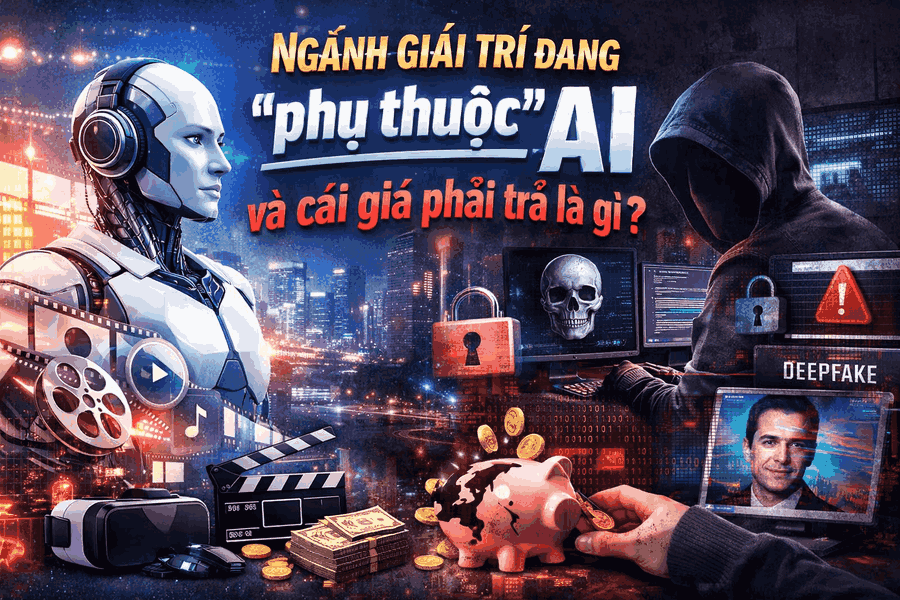
The Entertainment Industry Is Becoming “Dependent” on AI – What Is the Cost?
Nội dung
AI delivers outstanding efficiency, but it also makes systems more vulnerable. What should businesses and users prepare for in the face of this wave?
1. AI Is Reshaping the Entire Entertainment Industry
Streaming platforms, social networks, and digital content services all use AI to analyze user behavior and personalize experiences. Users no longer need to search for content manually; instead, they receive automatic recommendations based on preferences, viewing history, and even access times. This significantly increases engagement and usage duration while creating a content ecosystem that feels “tailor-made” for each individual.
AI is not limited to content distribution—it is also deeply involved in content production. In filmmaking, AI can assist with scriptwriting by analyzing audience preferences, identifying factors behind successful films, and recommending optimal content structures. Additionally, AI is used in post-production processes such as automated editing, color correction, visual effects generation, and even recreating actors’ faces through CGI technology. In the music industry, AI can compose melodies, arrange music, analyze market trends, and generate products aligned with mainstream tastes within a short period. This not only reduces production costs but also shortens time-to-market.
.jpg)
Another important aspect is how AI is changing the way content is marketed and distributed. Algorithms can predict trends, identify target audiences, and optimize promotional campaigns in real time. As a result, producers can reach the right audiences at lower costs while achieving higher effectiveness. However, dependence on AI also increases system complexity. When every process is interconnected through technology, even a small vulnerability can trigger a chain reaction that affects the entire ecosystem. This makes security a critical factor in the modern entertainment industry, where data and technology form the foundation of operations.
2. AI: A Double-Edged Sword in Security
AI provides powerful security capabilities through its ability to detect and analyze unusual behavior. Modern security systems can use AI to monitor traffic, identify intrusion attempts, and respond almost instantly. Unlike traditional methods based on fixed rules, AI can learn from data and continuously improve its threat detection capabilities. This is particularly important in the entertainment industry, where vast amounts of data are processed and systems operate around the clock.
However, these same capabilities can also be exploited by cybercriminals. AI can be used to automate attacks, from identifying security vulnerabilities to infiltrating systems with high precision. AI-powered attacks are not only faster but can also “learn” from failed attempts, becoming increasingly sophisticated and harder to detect. As a result, traditional security measures are becoming less effective.
.jpg)
One particularly concerning trend is the use of AI to create highly convincing impersonation attacks. Today’s phishing emails can be personalized using user data, making them far more believable than before. AI can also generate fake conversations, cloned voices, or deepfake videos designed to deceive users and businesses. In the entertainment industry, this can lead to artist impersonation, unauthorized content releases, or scams targeting fans.
The problem goes even further. AI increases both the scale and speed of cyberattacks. A single AI system can launch thousands of attacks simultaneously, far beyond human capabilities. This creates an uneven arms race between security systems and hackers, with both sides using AI to enhance their abilities. As a result, AI acts as both a “shield” and a “weapon,” making security challenges more complex than ever.
3. Risks from Data and AI Models
Data is the “fuel” of AI, but it is also the system’s greatest vulnerability. The entertainment industry collects enormous amounts of user data, including personal information, consumption behavior, viewing history, and even long-term entertainment habits. This data holds significant commercial value and can be exploited for various purposes. If compromised, the consequences extend beyond privacy violations and can seriously damage a company’s reputation.
Beyond data, AI models themselves have become attractive targets. Cybercriminals may attempt to access models to steal information or alter system behavior. For example, a recommendation engine could be manipulated to prioritize certain content, influencing user behavior and even shaping public opinion. This becomes especially dangerous as entertainment platforms continue to gain influence in society.
Another issue is data poisoning. This form of attack involves deliberately injecting misleading or corrupted data into the AI training process. When models learn from this data, they may generate inaccurate or biased results. In the entertainment industry, this could lead to inappropriate recommendations, degraded user experiences, or damage to brand image.
.jpg)
There is also the risk of data leakage from AI models themselves. In some cases, models may “memorize” training data and unintentionally reveal sensitive information when queried. This creates greater demands for model design, oversight, and governance. All these factors demonstrate that data and AI models are not only valuable assets but also critical vulnerabilities that require strict protection as the entertainment industry becomes increasingly dependent on technology.
4. Fake Content and Deepfakes in Entertainment
Deepfake technology is one of the most prominent—and controversial—applications of AI today. Through deep learning and advanced image and audio processing, AI can generate videos, images, and voices with near-perfect realism. In entertainment, deepfakes offer numerous creative opportunities, such as recreating deceased actors, de-aging performers, altering character appearances, or producing complex scenes without the costs associated with traditional production methods. The technology enables filmmakers and content creators to save time while expanding creative possibilities beyond human limitations.
However, the darker side of deepfakes introduces serious concerns. Artists and celebrities can have their images or voices impersonated to create unwanted content, harming their reputations and personal rights. In many cases, deepfakes are used to generate fake videos designed to attract views, spread defamation, or even support blackmail schemes. This not only impacts individuals but also undermines public trust in entertainment products.
.jpg)
Deepfakes are not limited to celebrity impersonation. They can also be used to spread misinformation on a massive scale. In the age of social media, a fake video can spread rapidly and cause significant harm before it is verified. This leaves the entertainment industry vulnerable to information manipulation, damaging brand image and audience trust.
Another major challenge is that identifying fake content is becoming increasingly difficult. As deepfake technology advances, ordinary users can no longer reliably distinguish real content from fake content through observation alone. This creates a “trust crisis” in the digital environment, where every piece of content can be questioned. For entertainment platforms, content verification and moderation have become significant challenges that require a combination of technology, review processes, and human oversight.
5. Solutions to Minimize Security Risks
The first step is building robust security systems from the ground up, including data encryption, multi-layer access controls, and continuous monitoring. Implementing high security standards helps reduce attack risks and effectively protect user data.
Alongside technology, people play an equally important role. Employees need cybersecurity training to recognize threats and respond quickly when incidents occur. In many cases, human error remains a leading cause of data breaches, making awareness and education essential. Companies should also establish clear risk management processes, including regular assessments and updates to security measures based on real-world conditions.
Another important direction is using AI to protect AI. Intelligent security systems can detect unusual behavior, predict threats, and respond in real time. This allows businesses to stay one step ahead of increasingly sophisticated attacks. However, implementing these solutions requires substantial investments in infrastructure and skilled personnel—resources that are not always accessible to every organization.
In addition, collaboration between businesses, technology organizations, and regulatory authorities is crucial. As threats become more complex and global in nature, no single entity can address all challenges alone. Cooperation in information sharing, developing common standards, and building regulatory frameworks can create a safer environment for the entertainment industry.
Finally, transparency and accountability are essential. Companies need to openly communicate how they use AI, how they collect and process data, and how they respond when incidents occur. This not only helps build trust with users but also establishes a foundation for sustainable long-term growth.
AI is bringing major changes to the entertainment industry, but it is also introducing increasingly complex security risks. To take advantage of AI’s benefits without suffering its negative consequences, the entertainment industry must adopt a balanced approach that combines innovation with effective oversight. Only then can AI truly become a driving force for sustainable development.



















VIP Products






Best Selling Products
MidJourney Account
29 USD
Copyright Adobe Lightroom Account
59 USD
Genuine Adobe Illustrator account
99 USD
Capcut Pro 1 Year
39 USD
ChatGPT Plus Account (GPT-4)
16 USD
Upgrade Genuine Office 365
49 USD
Autodesk All App Account Copyright
120 USD
Adobe Premiere Pro Account
99 USD
Upgrade genuine Capture One account
120 USD
Upgrade Duolingo Super
29 USD
Genuine Cheap Canva Pro
39 USD
Windows 10 & 11 Pro Key
36 USD
Plugin Retouch4me
69 USD
Adobe Photoshop Copyright - Full App
120 USD
Freepik Premium Account
59 USD