Best Selling Products
Upgrade genuine Capture One account
120 USD
Capcut Pro 1 Year
39 USD
Windows 10 & 11 Pro Key
36 USD
Upgrade Duolingo Super
29 USD

Freepik Premium Account
59 USD
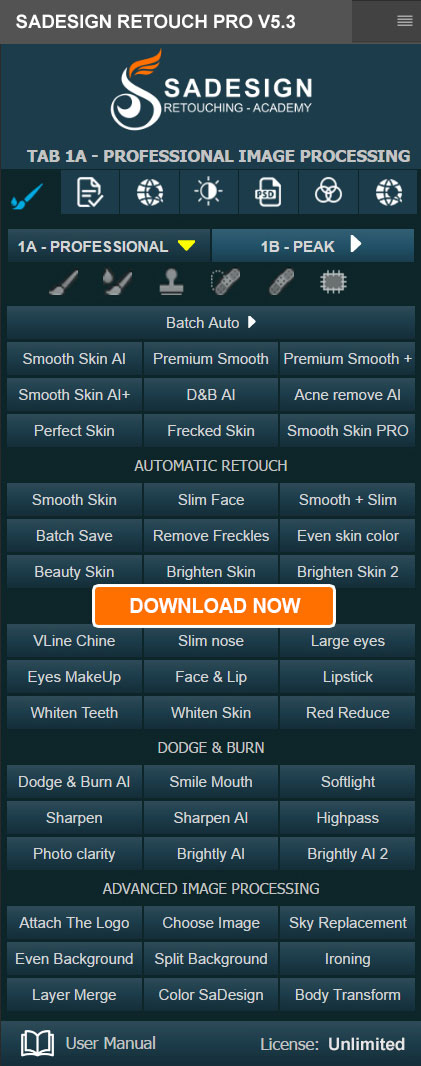
Plugin Retouch4me
69 USD
Upgrade Genuine Office 365
49 USD
Adobe Photoshop Copyright - Full App
120 USD
Genuine Cheap Canva Pro
39 USD

Copyright Adobe Lightroom Account
59 USD

MidJourney Account
29 USD
Adobe Premiere Pro Account
99 USD
Autodesk All App Account Copyright
120 USD
Genuine Adobe Illustrator account
99 USD

ChatGPT Plus Account (GPT-4)
16 USD
Illustrator and its improvements help designers work faster and more accurately.
Nội dung
- 1. Brand graphics
- 1.1. Creating a unique logo, symbol, and brand ecosystem.
- 1.2. Differentiating your business and personal brand.
- 2. Marketing and advertising
- 2.1. Impressive graphics for both the print and digital worlds.
- 2.2. Maintain image quality in all usage scenarios.
- 3. Digital drawing
- 3. Explore the features of Illustrator
- 3.1. Easy font management
- 3.2. Expanding Proliferation
- 3.3. Perfect color adjustment
- 3.4. Design with superior precision thanks to intelligent adhesion.
- 3.5. Turntable (BETA)
- 3.6. Master the drawing tablet with superior control.
With the new version of Illustrator, Adobe isn't chasing after "more features," but rather focusing on a core objective: upgrading productivity through a professional-grade control and responsive experience. These improvements aren't flashy or extravagant, but in real-world use, you'll notice one thing clearly: Illustrator is helping designers work less, with less repetition, and focus more on creative value.
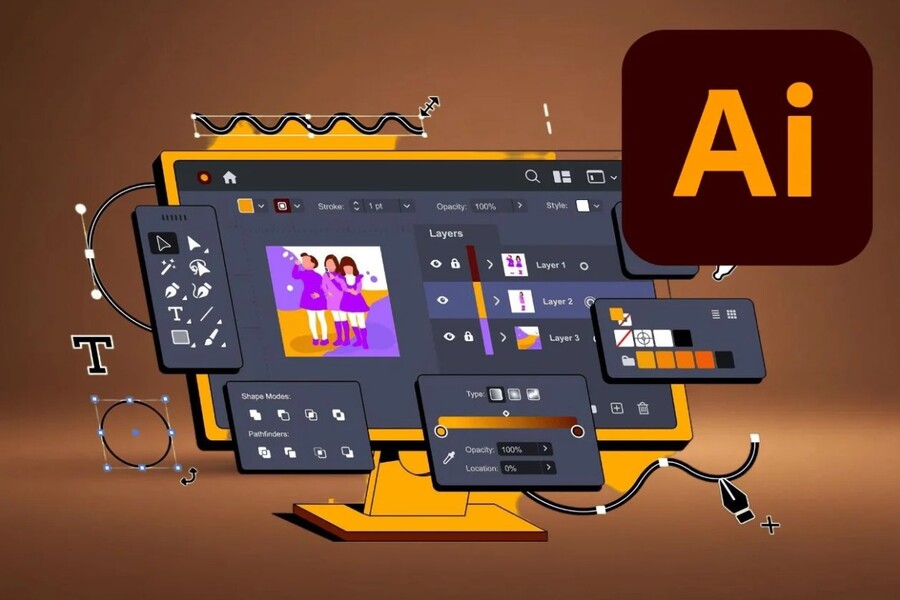
Illustrator and its improvements help designers work faster and more accurately.
Every detail in Illustrator is optimized for creative work. Its smooth responsiveness gives you better control over your work. The transition from sketch to finished product is seamless.
With the new version of Illustrator, Adobe isn't chasing after "more features," but rather focusing on a core objective: upgrading productivity through a professional-grade control and responsive experience. These improvements aren't flashy or extravagant, but in real-world use, you'll notice one thing clearly: Illustrator is helping designers work less, with less repetition, and focus more on creative value.
From the ability to expand vector artwork and add print margins with Expandable Generation, to the experience of absolute precision drawing thanks to the Pencil Tool with live preview, Illustrator is progressively eliminating the "bottlenecks" that once hampered the design process. And when tools are no longer barriers, creativity has the opportunity to develop to its full potential.
1. Brand graphics
1.1. Creating a unique logo, symbol, and brand ecosystem.
In the field of brand design, Illustrator is almost the default choice. It's no coincidence that most of the world's major logos are built on a vector platform. A logo not only needs to be aesthetically pleasing today, but also durable over time, easily scalable, easy to apply, and maintain consistency across all materials.
Illustrator gives designers absolute control over every line, every proportion, and every geometric relationship in a logo. From minimalist, highly symbolic icons to complex text logos with sophisticated typographic structures, Illustrator provides a precise enough working environment for every design decision to be well-founded.
The key point is that Illustrator doesn't just serve the "logo design" phase, but also accompanies the entire brand ecosystem development process. Once the logo is complete, designers can easily expand it into a set of icons, pattern systems, color guidelines, typography, and other practical applications without worrying about a decline in quality.
.jpg)
1.2. Differentiating your business and personal brand.
In an increasingly saturated market, differentiation no longer comes from "looking better," but from having a clearer identity. Illustrator plays a crucial role in helping designers realize that identity through professional design tools.
With Illustrator, you're not limited to pre-made templates. Every shape, every stroke can be built from scratch, allowing you to create unique artwork, designs, and typography. This is especially important for small businesses, startups, or freelancers, where branding is your biggest competitive advantage.
The ability to present designs on mockups of t-shirts, packaging, or physical products also makes the process of persuading customers more visual. A good design needs to be technically correct, but also emotionally persuasive, and Illustrator helps you tell that story completely.
2. Marketing and advertising
2.1. Impressive graphics for both the print and digital worlds.
One of the biggest advantages of vector graphics is its unlimited scalability. Illustrator fully exploits this advantage, allowing designers to create advertising materials that can appear at any size and on any platform while maintaining absolute sharpness.
From compact business cards, brochures, and posters to giant billboards and digital banners, an Illustrator file can be flexibly adjusted without having to start from scratch. This not only saves time but also ensures visual consistency.
With the new Illustrator, the scalability of artwork is taken to a new level thanks to Generating Scalability. Designers can resize layouts, add bleed areas for print, or experiment with different layout versions without breaking the original structure. This is a particularly valuable improvement for multi-channel advertising campaigns, where a design often needs to constantly "transform" to suit each touchpoint.
.jpg)
2.2. Maintain image quality in all usage scenarios.
In advertising, a good design is one that doesn't degrade in quality when changing context. Illustrator helps designers maintain that control thanks to its precise color management, clear layering system, and optimized file export tools for each purpose.
Whether for offset printing, digital printing, or LED screen display, Illustrator allows you to prepare files systematically, minimizing the risk of color discrepancies or technical errors. This is a key factor in helping designers work effectively with printing partners, agencies, and corporate clients.
3. Digital drawing
Digital drawing with Illustrator is unlike hand drawing or raster drawing. It requires a different mindset: a mindset of structure, geometry, and the relationships between elements. Illustrator provides a powerful set of tools that allows designers to master each anchor point and Bézier curve, thereby creating images that are both precise and expressive.
(1).jpg)
The ability to combine shapes, integrate Pathfinder, Shape Builder, and direct editing tools allows designers to build their work flexibly. You can experiment with colors, adjust lines, and change the layout without losing overall consistency.
The key is that Illustrator allows you to safely make mistakes. You can experiment, go back, and refine continuously until you achieve the perfect result. This is the foundation for creating bold yet not reckless artwork.
3. Explore the features of Illustrator
3.1. Easy font management
Fonts are the soul of graphic design, but they are also the source of many problems. Finding, experimenting with, and managing fonts used to be a time-consuming task for many designers. Illustrator's advanced font browser has subtly solved this problem.
Designers can quickly find the right font thanks to intelligent filters, live previews, and organized fonts into synchronized libraries across the entire Adobe ecosystem. When fonts are no longer a barrier, the creative process becomes more seamless, especially for branding projects that demand high consistency.
.jpg)
3.2. Expanding Proliferation
Expandable creation is one of the features that clearly demonstrates Illustrator's future direction. Instead of just "drawing within a fixed frame," designers can now expand the layout, add overflow, or explore new approaches without breaking the original design.
This feature is particularly useful in printing and advertising, where size and aspect ratio requirements frequently change. Illustrator no longer forces designers to start from scratch, but instead helps them adapt more quickly to real-world requirements .
.jpg)
3.3. Perfect color adjustment
Color is not just an aesthetic element, but also a tool for conveying emotions and messages. The new Illustrator brings smoother color transitions and presets that help designers control color transitions precisely down to the smallest detail.
The new Color Picker icon makes finding colors more intuitive and faster. Designers can focus on building a logical color palette, instead of wasting time on complex technical operations.
.jpg)
3.4. Design with superior precision thanks to intelligent adhesion.
Precision is crucial in vector design. Illustrator's smarter snap tool allows snapping to tangent lines or curved shapes naturally. Limiting snapping to the active canvas reduces visual clutter and improves focus.
These improvements may seem small in theory, but in practice, they help designers work faster and make fewer mistakes, especially on complex projects.
.jpg)
3.5. Turntable (BETA)
With Illustrator's Turntable (BETA) feature, designers can quickly rotate and view their work from multiple perspectives. This opens up great potential for illustration, product design, and character design.
Turntables are not just presentation tools, but also thinking tools, helping designers visually assess shapes and proportions before delving into details.
.jpg)
3.6. Master the drawing tablet with superior control.
Efficient drawing board management is crucial for productivity in large projects. The new Illustrator offers intelligent navigation, cleaner content management, and quick file export options.
.jpg)
When the workspace is optimized, designers can maintain high levels of concentration and avoid being distracted by visual clutter.
Improving your productivity with Illustrator isn't simply about learning a few new shortcuts or tools. It's a process of changing how you interact with the tool, how you organize your thoughts, and how you approach design problems.
The new Illustrator doesn't try to do everything for the designer. Instead, it creates an environment where technical skills are handled smoothly, precisely, and with minimal interference. When the tool becomes "invisible," creativity has the opportunity to be at the center.










VIP Products


Best Selling Products
Upgrade genuine Capture One account
120 USD
Capcut Pro 1 Year
39 USD
Windows 10 & 11 Pro Key
36 USD
Upgrade Duolingo Super
29 USD
Freepik Premium Account
59 USD
Plugin Retouch4me
69 USD
Upgrade Genuine Office 365
49 USD
Adobe Photoshop Copyright - Full App
120 USD
Genuine Cheap Canva Pro
39 USD
Copyright Adobe Lightroom Account
59 USD
MidJourney Account
29 USD
Adobe Premiere Pro Account
99 USD
Autodesk All App Account Copyright
120 USD
Genuine Adobe Illustrator account
99 USD
ChatGPT Plus Account (GPT-4)
16 USD