
Best Selling Products
Genuine Adobe Illustrator account
99 USD
Plugin Retouch4me
69 USD
Upgrade Duolingo Super
29 USD
MidJourney Account
29 USD
Genuine Cheap Canva Pro
39 USD
Autodesk All App Account Copyright
120 USD
Adobe Premiere Pro Account
99 USD
ChatGPT Plus Account (GPT-4)
16 USD
Capcut Pro 1 Year
39 USD
Upgrade Genuine Office 365
49 USD
Freepik Premium Account
59 USD
Copyright Adobe Lightroom Account
59 USD
Windows 10 & 11 Pro Key
36 USD
Upgrade genuine Capture One account
120 USD
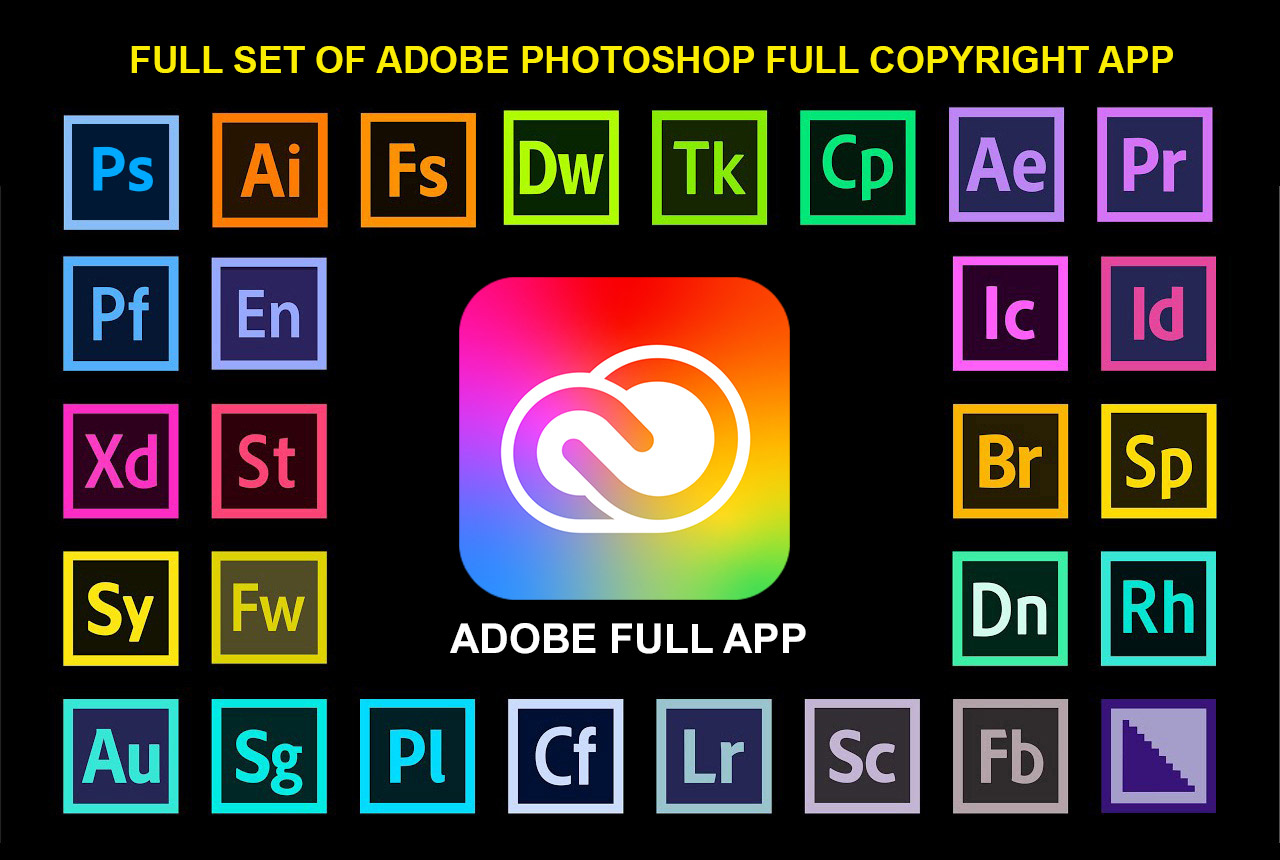
Adobe Photoshop Copyright - Full App
120 USD
What''s New in Grok 4.6? Performance, API Pricing, and How It Competes with GPT-5.6 Sol and Claude 5
Nội dung
- 1. What is Grok 4.6?
- 2. What's new in Grok 4.6?
- 2.1 More stable handling of long-running tasks
- 2.2 More effective context management
- 2.3 Create a more impressive web interface
- 3. Grok 4.6 performance across benchmarks
- 4. What advantages does Grok 4.6 offer when working with AI agents?
- 5. How much does API Grok 4.6 cost?
- 6. How does Grok 4.6 compete with GPT-5.6 Sol and Claude 5?
- 7. Should I use Grok 4.6?
- 8. Conclusion
The arrival of Grok 4.6 is attracting attention as its new AI model brings a host of improvements in reasoning capabilities, long-running task processing, and web interface development. More than just a power upgrade from its predecessor, Grok 4.6 targets professional users who need an AI capable of working with code, large documents, and multi-step tasks. So, what''s new in Grok 4.6, how does it perform in practice, is the API expensive, and can this model compete with GPT-5.6 Sol or Claude 5? Let''s explore the most noteworthy aspects of Grok 4.6 in the article below.

1. What is Grok 4.6?
Grok 4.6 is a new AI model developed on the Grok platform, strongly focused on reasoning and processing complex requests. The model can accept both text and images , while its output is currently primarily text-based. A notable feature is its ability to handle large amounts of information, especially when working with documents, codebases, or projects with multiple consecutive steps. Through its API, Grok 4.6 supports context windows up to 500,000 tokens , while the version used in Cursor is limited to 256,000 tokens. The model also allows for the selection of various thinking levels, from low to very high. The high level is set as the default, balancing processing speed and reasoning ability.
Thanks to these specifications, Grok 4.6 is not only suitable for general question-answering but can also become an assistant for programmers, researchers, or those who need to process large volumes of data.

2. What's new in Grok 4.6?
2.1 More stable handling of long-running tasks
One of the notable upgrades in Grok 4.6 is its ability to maintain consistency when performing multi-step tasks. Instead of trying to complete the entire requirement at once, the model tends to re-check the results and continue adjusting as needed. This is especially useful when working on large programming projects. For example, users might ask the AI to read the codebase, identify errors, suggest fixes, implement changes, and then re-check the results. In processes like this, the ability to remember previous decisions is crucial.
Grok 4.6 aims to be an AI agent capable of:
-
Track goals across multiple steps.
-
Use the same tool multiple times for the same task.
-
Check the results before finalizing.
-
Reduce instances of missing initial requirements.
-
Work better on long-term projects.
2.2 More effective context management
Grok 4.6 also improves the handling of work history. The API allows for the transmission of a summary of the inference process, and supports contextual compression so that long work sessions don't quickly exceed the token limit.
Specifically, using a fixed prompt_cache_key can help leverage cached data when executing agent loops. However, users still need to control the amount of data fed in because the compressed context still consumes tokens. This means that the 500,000 token window is a significant advantage, but it doesn't mean users can include every document without optimization. For long projects, breaking down documents, removing redundant information, and managing conversation history remain essential.
2.3 Create a more impressive web interface
Another feature that makes Grok 4.6 noteworthy is its ability to create web interfaces. The model can build layouts, animations, and interactive elements quite completely based on requirements using natural language.
This is a significant advantage for those who need to quickly create landing pages, product showcase websites, or prototypes. Instead of writing each line of HTML, CSS, and JavaScript themselves, users can describe their ideas and let AI generate the initial version. However, the quality of the interface still depends heavily on the input requirements. The more specific a prompt is about layout, colors, effects, and interaction behavior, the easier the result is usually to control.

3. Grok 4.6 performance across benchmarks
When evaluating Grok 4.6 , benchmarks are one of the most important factors. Compared to Grok 4.5, the new version achieved better results in all six published tests.
Grok 4.6 shows significant improvement over Grok 4.5. The increased scores across all criteria demonstrate improvements not only in theory but also in various task types. However, Grok 4.6 hasn't created a clear lead over its competitors. GPT-5.6 Sol still has an advantage in DeepSWE 1.1 and Terminal-Bench 3.0, while Claude Fable 5 scores higher in several other benchmarks. Therefore, simply looking at benchmarks isn't enough to conclude which model is best. Actual performance depends on the user's needs for coding, research, content creation, or building AI agents.

4. What advantages does Grok 4.6 offer when working with AI agents?
AI agents are becoming one of the key developments in current programming language models. Instead of simply answering questions, agents can independently plan, call tools, check results, and continue executing tasks. Grok 4.6 is well-suited to this approach thanks to its ability to call functions, perform web searches, search on X, execute code, RAGs, and support remote MCP.
Jobs that can make good use of this ability include:
-
Analyze and fix code errors.
-
Search for information on the web.
-
Read and synthesize the information.
-
Build a website prototype.
-
Automate multi-step processes.
-
Connecting AI with external tools.
-
Working with databases or private data sources.
The key point is that Grok 4.6 not only needs to generate the right answers but also needs to know what to do next . This is what allows an AI model to transform from a typical chatbot into a task-performing assistant.
5. How much does API Grok 4.6 cost?
In terms of cost, Grok 4.6 is relatively competitive considering its ability to handle large contexts. However, the cost will vary depending on the token amount and prompt length.
It's important to note that when prompts reach 200,000 tokens, the price applied to all requests will increase. Therefore, if building applications using APIs at a large scale, optimizing prompts and leveraging caching is crucial for budget control. Besides token costs, tools like web search, X-search, or code execution can also incur separate fees. Grok 4.6 Fast on Cursor isn't an entirely new model; it's primarily a prioritized processing mode with higher fees.

6. How does Grok 4.6 compete with GPT-5.6 Sol and Claude 5?
Comparing Grok 4.6 to other high-end models reveals that each product is pursuing its own strengths. Grok 4.6 excels in its large context window, tool usability, and AI agent orientation. Meanwhile, GPT-5.6 Sol demonstrates advantages in several programming and terminal-related benchmarks. Claude Fable 5 also achieved very noteworthy results in many agent and coding reviews.
Therefore, the choice of which model to use will depend on your needs:
-
Grok 4.6: suitable if you need to handle large contexts, use tools, and build agents.
-
GPT-5.6 Sol: worth considering for coding tasks and intensive terminal processing.
-
Claude 5: suitable for workflows requiring lengthy reasoning, coding, and agent interaction.
-
For average users: prioritize models with an interface, price point, and ecosystem that suit their usage habits.
In other words, Grok 4.6 is powerful enough to compete in the high-end AI segment, but it's not the superior choice in every situation.
7. Should I use Grok 4.6?
With improvements in inference, context, and AI agents, Grok 4.6 is a notable upgrade. In particular, the context window of up to 500,000 tokens via API gives the model more room to handle large documents and projects.
However, users shouldn't rely solely on benchmarks for selection. If the work primarily involves chatting, content writing, or handling simple requests, the differences between high-end models may not be significant. Conversely, for programming, research, or multi-step automation, the upgrades in Grok 4.6 will be more noticeable.

8. Conclusion
Grok 4.6 is demonstrating its ambition to directly compete with the most powerful AI models currently available. Compared to Grok 4.5, the new version significantly improves its ability to handle long-running tasks, manage context, use tools, and build web interfaces. The 500,000-token context window and the ability to connect multiple tools also open up many potentials for professional workflows. While it hasn't surpassed GPT-5.6 Sol or Claude 5 in every benchmark, Grok 4.6 remains a noteworthy option, especially for programmers and those looking to build AI agents. If you're looking for a model capable of handling long-running tasks, using tools flexibly, and working with large amounts of data, Grok 4.6 is definitely worth considering.








VIP Products
Best Selling Products
Genuine Adobe Illustrator account
99 USD
Plugin Retouch4me
69 USD
Upgrade Duolingo Super
29 USD
MidJourney Account
29 USD
Genuine Cheap Canva Pro
39 USD
Autodesk All App Account Copyright
120 USD
Adobe Premiere Pro Account
99 USD
ChatGPT Plus Account (GPT-4)
16 USD
Capcut Pro 1 Year
39 USD
Upgrade Genuine Office 365
49 USD
Freepik Premium Account
59 USD
Copyright Adobe Lightroom Account
59 USD
Windows 10 & 11 Pro Key
36 USD
Upgrade genuine Capture One account
120 USD
Adobe Photoshop Copyright - Full App
120 USD