Best Selling Products

Copyright Adobe Lightroom Account
59 USD

Freepik Premium Account
59 USD
Genuine Cheap Canva Pro
39 USD

MidJourney Account
29 USD

Genuine Adobe Illustrator account
99 USD

Windows 10 & 11 Pro Key
36 USD

Upgrade genuine Capture One account
120 USD
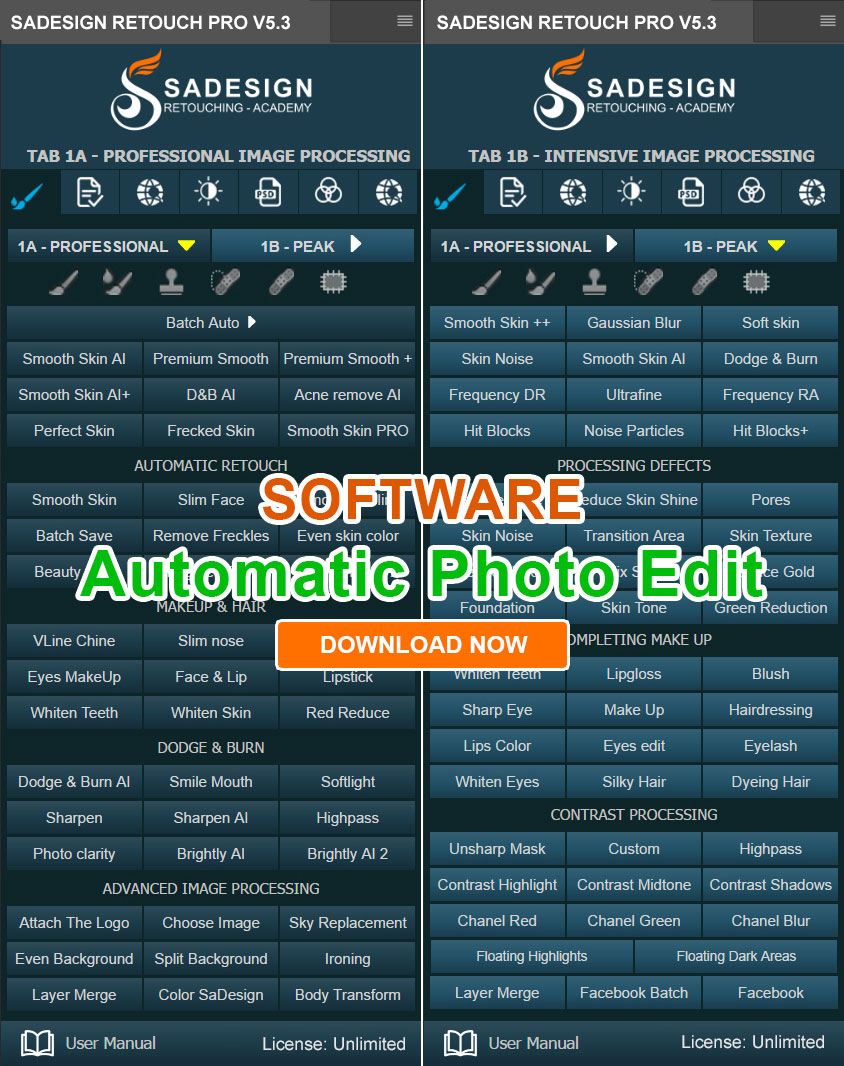
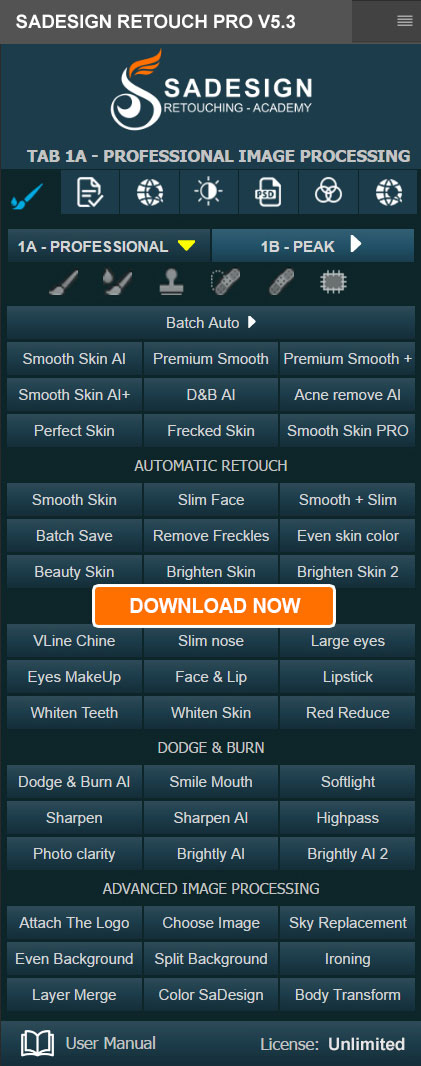
Plugin Retouch4me
69 USD

Adobe Premiere Pro Account
99 USD
Adobe Photoshop Copyright - Full App
120 USD
Upgrade Duolingo Super
29 USD

ChatGPT Plus Account (GPT-4)
16 USD
Upgrade Genuine Office 365
49 USD
Autodesk All App Account Copyright
120 USD

Capcut Pro 1 Year
39 USD
Discover the "hidden" secrets on Duolingo that few people know.
Nội dung
Duolingo has many special features hidden deep within the app. If you've ever wondered why some people progress so quickly, they might be using these very tips.

The world of language learning apps has changed dramatically over the past decade, and at the forefront, Duolingo is a prime example. With its cute blue owl icon, gamification-based learning style, and vibrant interface, Duolingo has shattered the image of traditional language learning as a dry and tedious process. It transforms hours filled with boring grammar rules and vocabulary lists into a fun, rewarding, and inspiring journey.
1. Learning a language becomes engaging with Duolingo.
What makes Duolingo so appealing is its unique blend of education and entertainment. Learners not only acquire language skills but are also encouraged through a system of experience points (XP), achievement badges, levels, and online tournaments. Each time you complete a lesson, you feel like you've "won a game," and that's what keeps you coming back every day.
However, despite Duolingo's user-friendly interface and accessible learning methods, not everyone knows how to fully utilize its features. Many people, after a few weeks of diligent study, begin to feel discouraged, lose interest, or even give up halfway through. The reason for this is largely not the app itself, but the learner's approach.
If you're at that stage, this article will help you rediscover your inspiration and find more effective learning methods. Below are proven tips and tricks to help you progress faster, learn more deeply, and most importantly, turn Duolingo into a powerful tool on your journey to mastering your favorite language.
2. Consistency
In any field of learning, perseverance is always a key factor. But with Duolingo, consistency not only helps you maintain motivation, but also directly impacts your ability to memorize and react to language. The app is designed based on the principle of "small habits every day," meaning you don't need to spend hours studying continuously, but only a short period of time, as long as it's consistent.
Imagine learning a language is like caring for a tree. If you water it every day, even just a little, the tree will thrive and grow strong. But if you forget to water it for days and then try to compensate by "pouring a bucketful of water," the tree might survive, but it won't grow well. Learning a language is similar: short, repeated lessons help your brain remember more deeply and form a more natural reflex.
Therefore, set yourself a fixed daily study goal, such as 15 minutes each day. You can squeeze in time while commuting, waiting for transportation, or before bed. Think of it as a "small ritual" in your day, not too burdensome but still ensuring your study routine isn't interrupted.
One great thing about Duolingo is its "streak" system: a series of consecutive study days. As long as you maintain your streak, you'll experience a small sense of pride each day and gradually form an unmissable habit of studying. Many users admit that they return to the app every night just to "keep their streak," but this actually helps them improve day by day without realizing it.
Consistency not only helps you remember better but also enhances your language reflexes. When you study regularly, your brain is constantly "language-activated," making reading, writing, listening, and speaking more natural. And after just a few months, you'll be surprised to find that you can understand and react more quickly to a new language.
3. Take advantage of your break time.
During your learning journey on Duolingo, there's a feature many users often overlook: Experience Boosts. These are special times when you can receive double experience points for each completed lesson.
If you pay attention, Duolingo will occasionally announce that "XP Boost is active for 15 minutes." This is the golden time to accelerate your progress. These times usually fall during off-peak study hours, such as early morning or late evening. When you study during these times, you not only accumulate more points, but also quickly climb the League leaderboard.

Additionally, you can proactively activate XP Boost by completing challenges or reaching certain XP milestones each day. Leveling up quickly not only motivates you but also unlocks many other exciting rewards. The feeling of seeing your XP progress bar jump up every second is what makes learners feel "satisfied" and excited to continue.
Consider these bonus hours as special opportunities for "breakthroughs." You don't need to study all day; just focus during those specific hours, and the results will be twice as effective. Taking advantage of these moments not only saves you time but also helps you progress further in your League journey, especially if you want to reach higher tiers like the Diamond League.
4. Participate in challenges.
One of the things that keeps Duolingo from ever getting boring is the gentle competition it offers. Duolingo regularly hosts weekly, monthly, or even seasonal challenges. Each challenge has its own rewards, ranging from XP points and badges to special items.
Challenges like "Friend Quest" or "XP Challenge" help learners feel less alone. When you complete goals with your friends, that feeling of joy makes learning feel more like a game than a chore.
Not only that, participating in the challenge also helps you cultivate discipline and intrinsic motivation. When you see yourself climbing the leaderboard, just a few points behind the leader, your natural competitive instinct will push you to study one more lesson, and then another. And so on, you study more than you realize without feeling forced.
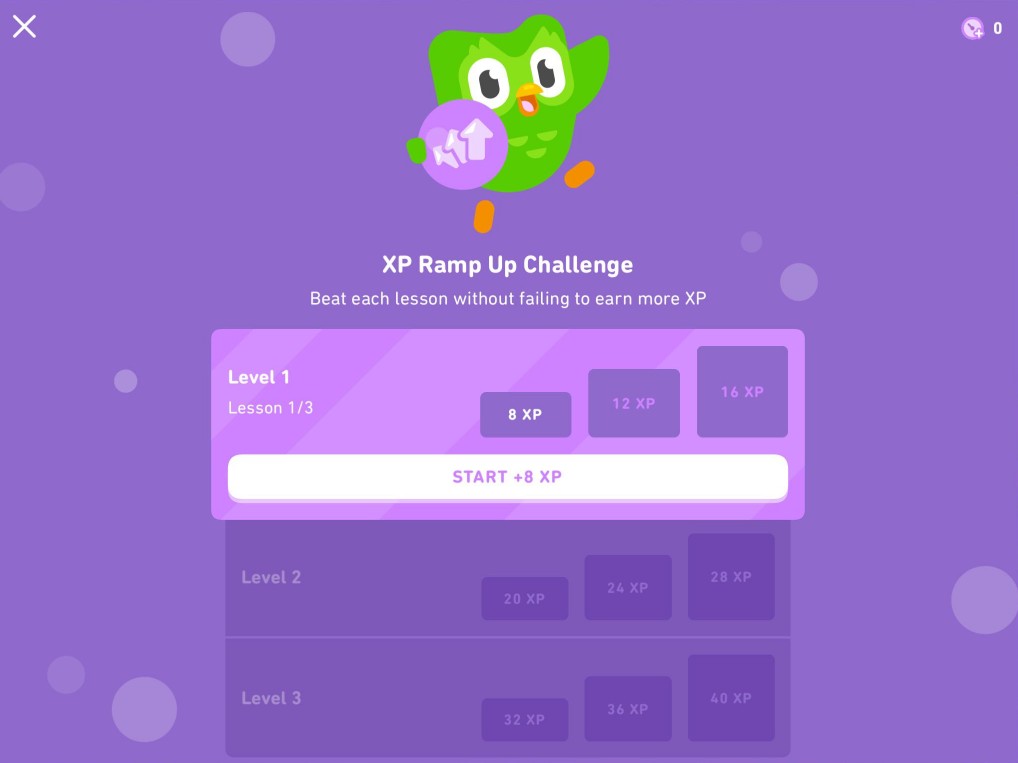
Competing on Duolingo isn't a stressful battle, but a fun and healthy competition. It helps you overcome procrastination and maintain positive energy. Set yourself small goals, for example, stay in the top 3 in this week's League, or complete a 7-day streak, and you'll find learning a language has never been so enjoyable.
5. Harness the power of the PC version.
Most users use Duolingo on their phones for convenience, but if you want to learn in depth and understand things more thoroughly, the desktop version is an indispensable tool.
Duolingo's web interface is not only spacious and easy to follow, but it also provides more detailed information than the mobile app. For example, when learning a new sentence, you can see a full grammatical explanation, understand why that structure is correct, and compare it to other examples. This is extremely important for languages with complex grammatical systems like German, Japanese, or French.
Furthermore, when studying on a computer, typing on the keyboard helps you improve your spelling and writing speed. For those learning languages with special characters (such as Spanish with accents or French with circumflexes), a computer keyboard allows for more accurate and faster typing.
Combining learning on your phone to maintain a habit and learning on your computer to delve deeper is a smart learning strategy. In the morning, you can do short lessons on your phone, and in the evening, you can open your computer to review grammar explanations or practice more difficult exercises. This combination allows you to be flexible and comprehensive, making the most of all Duolingo's features.
6. Practice pronunciation
One of the most important skills when learning a language is pronunciation. However, most learners underestimate this, especially when using apps. They focus on reading and writing, forgetting that speaking is the skill that allows you to truly "live" with the language.
Duolingo incorporates many pronunciation exercises, from reading individual words to reading complete sentences. Every time you see the microphone icon appear, take advantage of the opportunity to practice speaking. Don't just read silently – speak loudly and clearly, and try to imitate the intonation of native speakers. When you speak aloud, your brain activates both the listening and speaking areas simultaneously, making memorizing pronunciation more natural.
If you feel unsure, try recording your voice and comparing it to the sample in the app. Listening to your own voice is a very effective way to identify mistakes that you might not notice while speaking. Initially, your voice might sound "unfamiliar," but gradually, you'll feel yourself improving day by day.
Duolingo also has interactive listening and speaking practice within its stories. This is a great tool to help you understand the content while practicing your conversational reflexes. When you can start repeating lines naturally, that's a sign you've really made progress.
7. Participate in discussion forums.
Another unique aspect of Duolingo that many people haven't fully explored is its discussion forum. Each lesson includes a "Discussion" section where learners from around the world exchange ideas, explain concepts, and share experiences.
When you encounter a difficult sentence or complex grammatical structure, open the comments section; you'll find countless explanations from native speakers or other advanced learners. Often, these explanations are even clearer and more engaging than the official instructions.
Joining the forum not only helps you answer questions but also broadens your perspective on language and culture. You'll learn how native speakers actually use words in real life, and how it differs from the "textbook" translations.
In particular, if you're more confident, try answering other people's questions. Explaining your knowledge not only helps reinforce your memory but also makes you a more active learner. Many learners share that "helping others understand" has helped them progress faster than ever before.















VIP Products





Best Selling Products
Copyright Adobe Lightroom Account
59 USD
Freepik Premium Account
59 USD
Genuine Cheap Canva Pro
39 USD
MidJourney Account
29 USD
Genuine Adobe Illustrator account
99 USD
Windows 10 & 11 Pro Key
36 USD
Upgrade genuine Capture One account
120 USD
Plugin Retouch4me
69 USD
Adobe Premiere Pro Account
99 USD
Adobe Photoshop Copyright - Full App
120 USD
Upgrade Duolingo Super
29 USD
ChatGPT Plus Account (GPT-4)
16 USD
Upgrade Genuine Office 365
49 USD
Autodesk All App Account Copyright
120 USD
Capcut Pro 1 Year
39 USD