Best Selling Products
Upgrade genuine Capture One account
120 USD

MidJourney Account
29 USD

Copyright Adobe Lightroom Account
59 USD

Capcut Pro 1 Year
39 USD
Adobe Photoshop Copyright - Full App
120 USD

Windows 10 & 11 Pro Key
36 USD
Autodesk All App Account Copyright
120 USD
Upgrade Duolingo Super
29 USD

Freepik Premium Account
59 USD
ChatGPT Plus Account (GPT-4)
16 USD
Genuine Cheap Canva Pro
39 USD

Genuine Adobe Illustrator account
99 USD
Plugin Retouch4me
69 USD

Upgrade Genuine Office 365
49 USD

Adobe Premiere Pro Account
99 USD
Gemini vs Claude: Why is Google worried about falling behind in the AI coding race?
Nội dung
The AI race is entering a crucial phase where coding ability becomes a key criterion. Google is reportedly concerned that Gemini hasn't caught up with Claude, particularly in "agentic execution"—a factor that enables AI to automatically complete complex tasks. This article analyzes the causes, the impact on the software industry, and how AI is changing the role of programmers in the future.

1. When writing code becomes the main battlefield of AI.
It's no coincidence that programming has emerged as the most important evaluation criterion for modern AI models. Essentially, code is the language that controls the entire digital world. Every application, system, and platform, from social media and e-commerce to artificial intelligence, is built on a programming foundation. Therefore, if an AI can write code accurately, efficiently, and scalably, it's not just a support tool, but can become a true "productive agent."
This shift marks a progression from AI for content creation to AI for system development. While previously AI helped people save time writing emails, creating articles, or summarizing documents, it can now directly participate in the product development process. This has a much greater economic impact, as it affects how software is created, deployed, and operated.
Furthermore, programming is a highly structured and standardized field, making it an ideal environment for evaluating AI reasoning capabilities. A piece of code needs to be not only syntactically correct but also logical, efficient, and compatible with the system. These requirements force AI to “understand” the problem at a deeper level, rather than simply predicting the next word as in natural language processing. Therefore, good coding skills often equate to stronger reasoning abilities in the model.
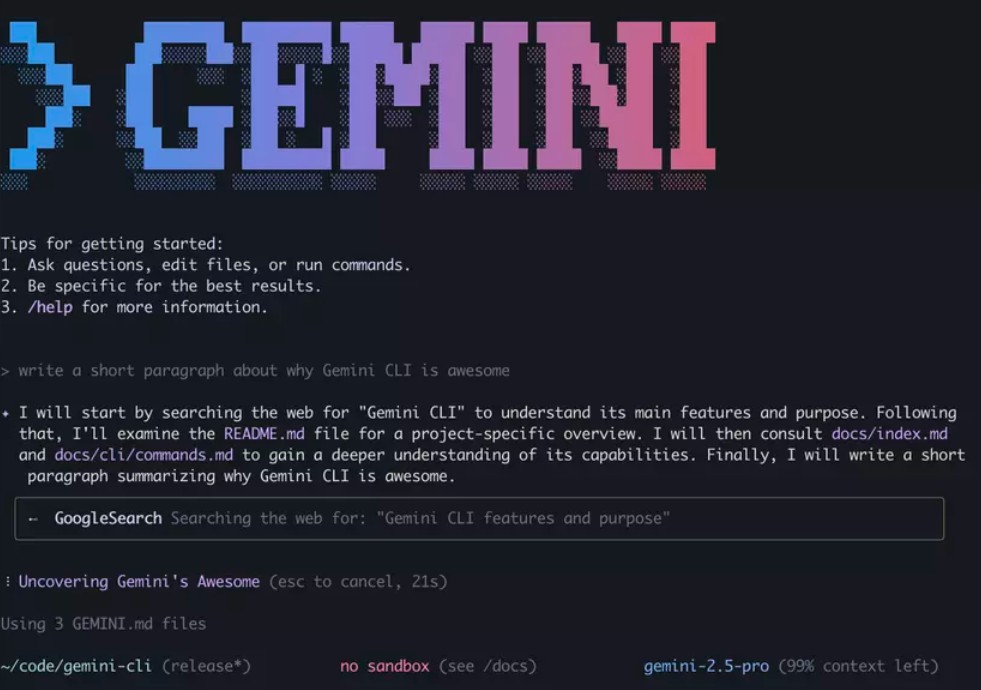
In this context, it's not surprising that major tech companies are focusing their resources on developing programmable AI. This is not only an attractive feature for users, but also a key to dominating the enterprise market, where real value is created.
2. The distance between Gemini and Claude
The fact that Gemini is said to be lagging behind Claude in coding ability reflects the reality that not all AI models are optimized for the same goal. Each system is built with different priorities, and this leads to differences in performance in specific areas.
According to many reviews, Claude demonstrates strength in tasks requiring long inference sequences and the ability to maintain complex context. This is especially important in programming, where a project often includes many interconnected components. Writing a single function isn't difficult, but to build a complete system, AI needs to understand the relationships between modules, handle dependencies, and ensure consistency. This is where Claude excels.
Meanwhile, Gemini is designed with a multi-modal approach, strongly integrating with the Google ecosystem. This gives it an advantage in areas such as image and video processing or combining diverse data. However, this very "versatility" sometimes prevents it from achieving deep optimization in a specific field such as programming.

The gap between the two models is not just a technical issue, but also a result of their development strategies. One focuses on depth, the other on breadth. However, in the current context, where programming is a key criterion, a lack of advantage in this area could put Gemini at a disadvantage in the overall competition.
3. "Agentic execution": the game-deciding factor.
"Agentic execution" refers to the ability of AI not only to respond but also to independently perform a series of actions to achieve a goal, marking a significant shift from passive to active AI. In programming, this means AI can analyze a problem, break down the task, select tools, write code, check for errors, and continuously repeat the process until the desired result is achieved, instead of just offering disconnected suggestions as before.
The core of this capability lies in its ability to maintain long-term context and make continuous decisions, allowing AI to function like an "automated programmer" capable of handling tasks from start to finish. As a result, the software development process can be significantly shortened, with many intermediate steps automated. If effectively utilized, the role of humans will gradually shift to guiding, monitoring, and evaluating results, rather than directly processing each line of code.
However, agentic execution also comes with challenges regarding reliability and control, as errors can be amplified through multiple automated steps if not closely monitored. Gemini's weakness in this area reveals a significant gap, while competitors are leveraging this advantage to create tools with higher practical value. This is also why Google considers improving this capability a top priority in the current AI race.
4. Google's response
Under pressure from the market, Google has taken clear steps to improve the situation. The establishment of dedicated teams and the requirement for engineers to use AI in complex tasks shows the company is adopting a "learning by doing" strategy. This is the fastest way to identify weaknesses and improve products.
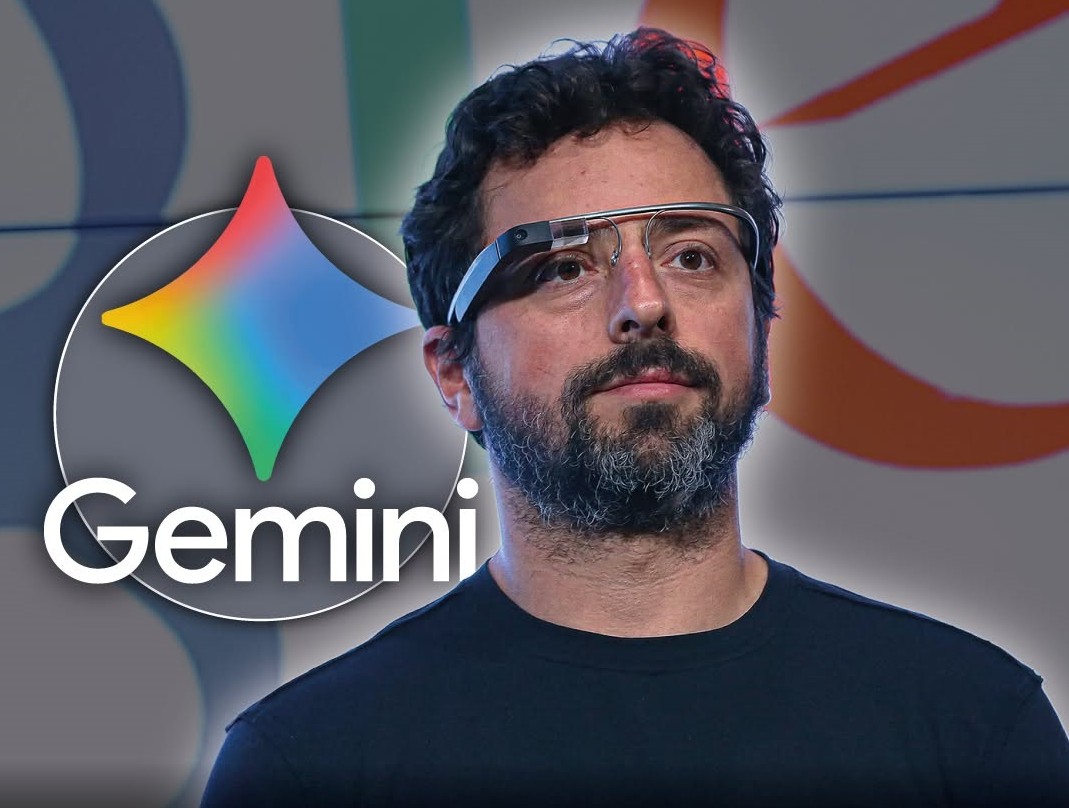
Furthermore, the direct involvement of senior leaders is also a crucial signal. In technology companies, the priority level of a project is often reflected in the level of interest from the leadership team. When top executives directly push for a project, it means that more resources will be allocated to the project, leading to faster development.
However, the biggest challenge is not just improving quality, but also speed. In the field of AI, delays can lead to a loss of competitive advantage in the long run. Once users and businesses become accustomed to an ecosystem, change becomes more difficult. Therefore, Google not only needs to improve Gemini, but also needs to do so quickly enough to retain users.
5. Impact on the software industry
The development of AI programming is fundamentally changing the software industry as technical barriers are gradually lowered, allowing even non-experts to participate in building digital products. Thanks to AI tools, transforming ideas into prototypes is much faster, making it easier for individuals and businesses to test, improve, and bring products to market at lower costs than before. This contributes to fostering innovation and accelerating digital transformation on a large scale.
However, this shift also puts considerable pressure on traditional programmers, especially those primarily engaged in repetitive tasks or those requiring little systems thinking. As AI takes over most basic tasks, the value of a programmer will no longer lie in simply "writing code" but in "solving complex problems." This forces them to continuously improve their skills, from architectural thinking and system optimization to the ability to work effectively with AI.
Furthermore, the structure of software development teams is also gradually changing. A small team, if it can effectively leverage AI, can achieve productivity equivalent to or even surpass that of previously larger teams. This widens the gap between individuals and organizations, and drives the emergence of new roles such as prompt engineers, AI output evaluators, or AI integration process designers for software development.

The software development process is no longer the same as before. AI can participate from requirements analysis and solution proposal to coding and testing, making the development lifecycle shorter and more flexible. However, this also raises new issues related to reliability, quality control, and accountability in case of errors, especially in critical systems.
For Google, this is a major challenge but also an opportunity to reshape strategy and drive innovation. For the tech industry, it's clear evidence that AI is not just a supporting tool, but is becoming a core part of the production process. In this context, the winner will not only be the company with the best technology, but the company that knows how to turn that technology into real value.

















VIP Products





Best Selling Products
Upgrade genuine Capture One account
120 USD
MidJourney Account
29 USD
Copyright Adobe Lightroom Account
59 USD
Capcut Pro 1 Year
39 USD
Adobe Photoshop Copyright - Full App
120 USD
Windows 10 & 11 Pro Key
36 USD
Autodesk All App Account Copyright
120 USD
Upgrade Duolingo Super
29 USD
Freepik Premium Account
59 USD
ChatGPT Plus Account (GPT-4)
16 USD
Genuine Cheap Canva Pro
39 USD
Genuine Adobe Illustrator account
99 USD
Plugin Retouch4me
69 USD
Upgrade Genuine Office 365
49 USD
Adobe Premiere Pro Account
99 USD