Best Selling Products

Freepik Premium Account
59 USD

MidJourney Account
29 USD

Copyright Adobe Lightroom Account
59 USD
Upgrade genuine Capture One account
120 USD
Upgrade Genuine Office 365
49 USD

Windows 10 & 11 Pro Key
36 USD
Capcut Pro 1 Year
39 USD
Autodesk All App Account Copyright
120 USD
Plugin Retouch4me
69 USD
Genuine Adobe Illustrator account
99 USD
ChatGPT Plus Account (GPT-4)
16 USD
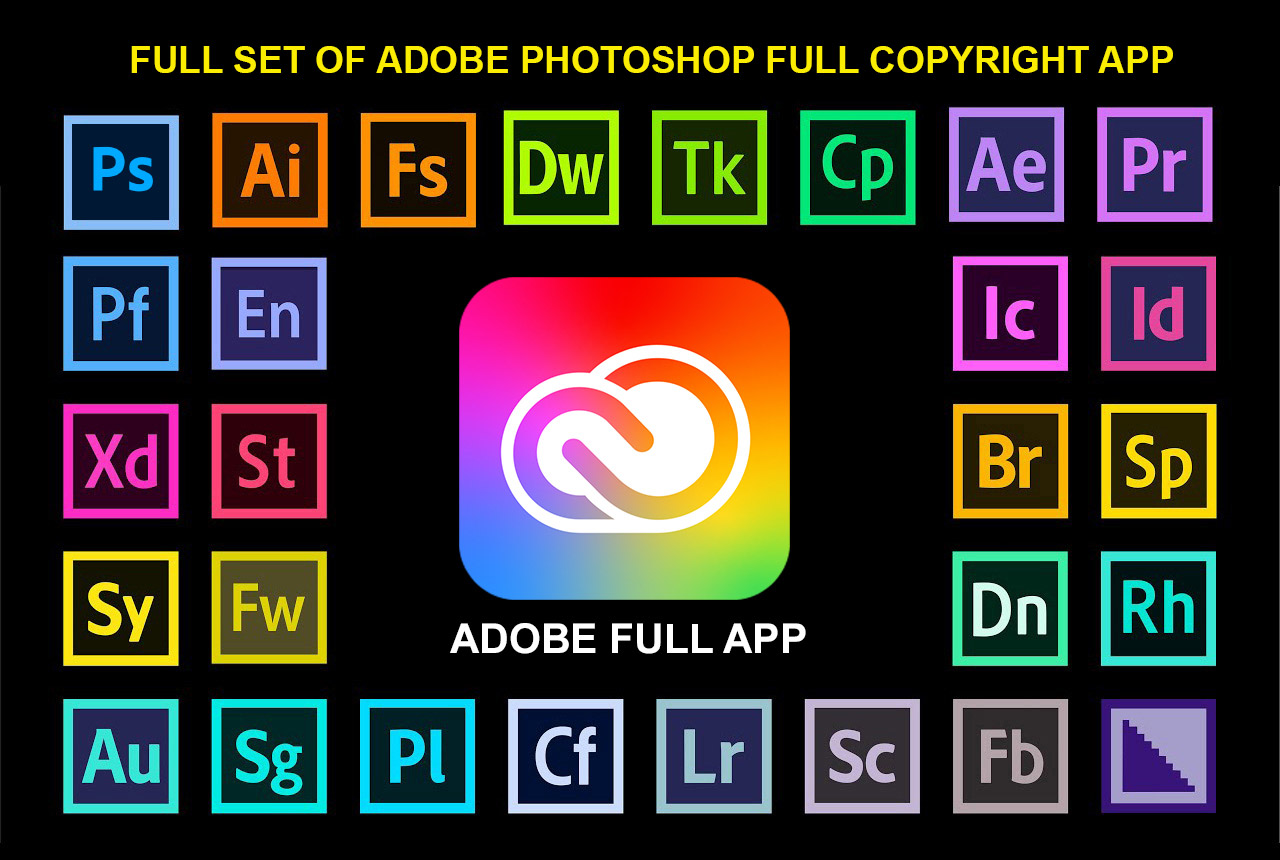
Adobe Photoshop Copyright - Full App
120 USD
Adobe Premiere Pro Account
99 USD
Genuine Cheap Canva Pro
39 USD
Upgrade Duolingo Super
29 USD
The AI Race 2026: Claude leads in code, Gemini dominates the ecosystem.
Nội dung
The competition between Claude and Gemini clearly reflects the polarization within the modern AI industry. One excels in programming and handling complex tasks, while the other boasts superior ecosystem and user accessibility.
1. Two philosophies of development: depth vs. breadth
The core difference between Claude and Gemini lies in their product development philosophy. Claude is built with the goal of becoming an AI system capable of deep reasoning, high accuracy, and a strong emphasis on safety. Its foundation is based on "Constitutional AI," allowing the model to self-regulate its behavior based on a set of predefined principles. This enables Claude to generate more consistent responses, minimize the risk of errors, and is particularly well-suited for complex tasks such as programming, analysis, or research. This philosophy reflects a "quality-focused" approach, where every output needs to meet the highest possible standards.
Conversely, Gemini is designed as part of Google's broader ecosystem. Instead of focusing on a few specialized capabilities, it aims to be a versatile AI that can assist users in a wide range of situations. From writing emails in Gmail, creating documents in Docs, processing spreadsheets in Sheets, to searching for information, Gemini is integrated to be present wherever users need it. This offers a huge advantage in terms of accessibility, as hundreds of millions of people can use AI without changing their habits.
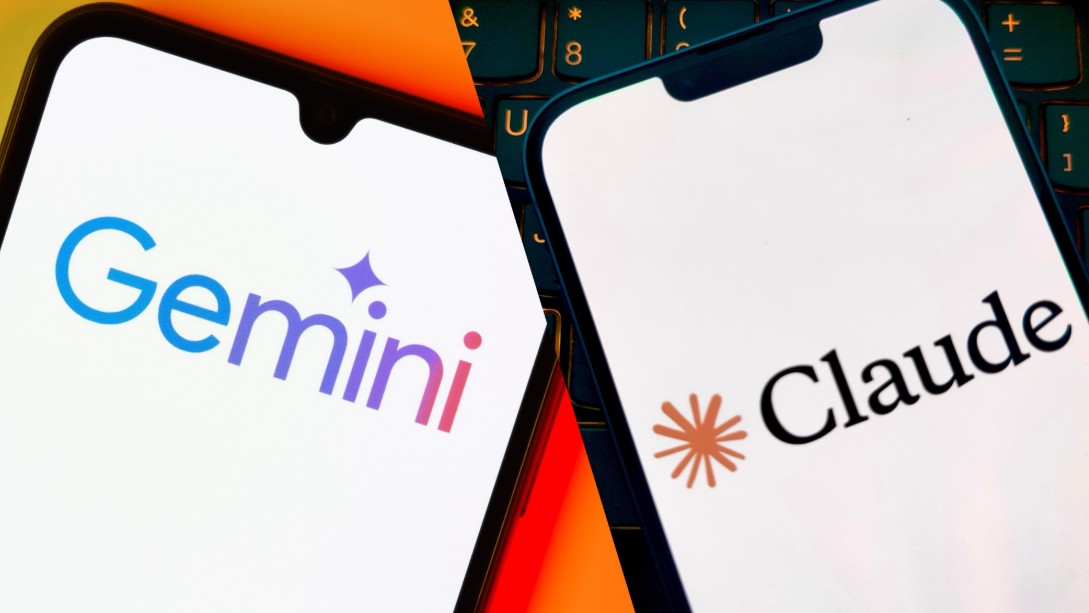
This difference reflects two distinct strategies: one focuses on depth and output quality, the other on breadth and scale of use. Claude is like a highly competent expert in certain areas, while Gemini is like a versatile assistant always ready to help in many situations. In reality, neither strategy is completely superior, as the value of each system depends on the specific needs of the user. However, this difference is the foundation that creates the performance gap in different fields.
2. Real-world performance: there are no “absolute winners”
When comparing the performance of Claude and Gemini, one thing becomes clear: there is no single "best" model for every situation. Modern benchmarks show that each system has its own strengths, reflecting its development philosophy. Claude excels in programming, especially in problems requiring multi-step reasoning and complex logic processing. Its ability to maintain context for extended periods and generate high-quality code makes it a top choice for programmers and technology companies.
Meanwhile, Gemini demonstrates strength in areas related to broad knowledge and scientific reasoning. Its ability to handle diverse topics, combine information from multiple sources, and provide quick answers makes it suitable for more general tasks. This is especially useful in everyday work environments where users need a flexible tool rather than a highly specialized one.
A notable point is that both systems have reached a very large context window, allowing them to process previously impossible amounts of lengthy data. This reduces the gap in "memory" capacity, making the main difference lie in how the models use information to reason. Therefore, instead of searching for an "all-powerful" AI, users are increasingly tending to choose tools suited to specific tasks. This indicates that the AI market is entering a mature phase where specialization becomes crucial.
3. Agency workflows and the future of automation
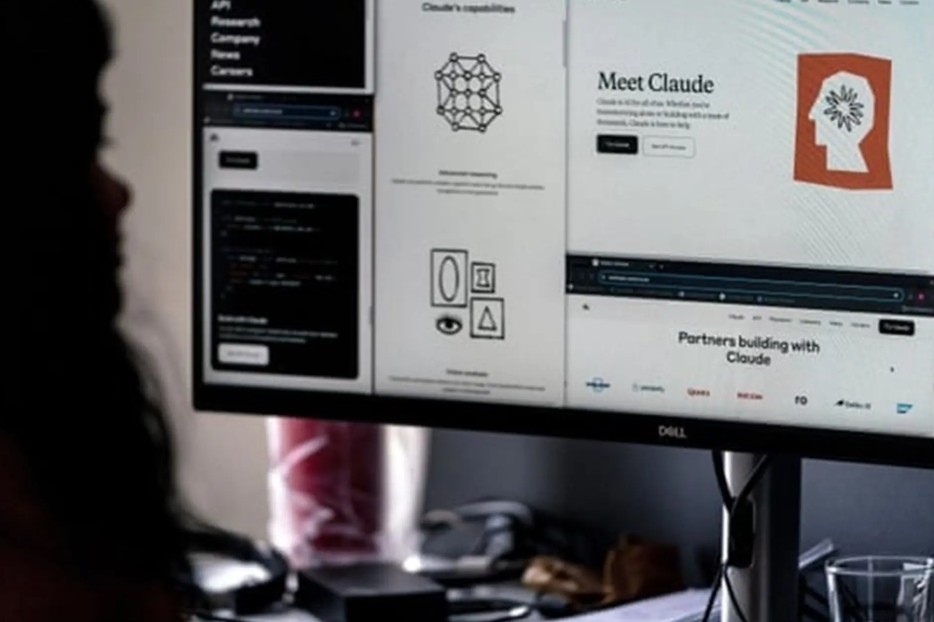
One of the most important factors differentiating Claude from Gemini is the ability to perform automated workflows, also known as agentic workflows. This is a major leap from traditional AI to actionable AI, where the system not only responds but can also independently execute a sequence of tasks to achieve a goal.
Claude stands out in this field thanks to its ability to integrate tools and maintain a continuous action loop. It can read source code, edit, test, and continuously improve it until the desired result is achieved. This transforms Claude from a support tool into a true "working agent," capable of participating in the software development process almost independently.
Conversely, while Gemini is capable of executing code and supporting multiple tasks, it lacks seamless automation of entire processes. It still functions primarily as an intelligent assistant, requiring continuous guidance from the user. This makes it more suitable for short-term or less complex tasks.
This difference has significant implications for the future of the technology industry. As AI can automate many steps in workflows, productivity will increase dramatically and the role of humans will change. However, this also poses challenges regarding control and reliability, as systems become increasingly autonomous.
4. Ecosystem and user experience
From an ecosystem perspective, Gemini clearly has a significant advantage. As part of Google, it's deeply integrated into products that billions of people use daily. This makes AI virtually "invisible," as users can leverage its power without needing to learn any new skills.
This experience offers immense convenience, especially for both general users and businesses. Being able to write emails, create documents, or analyze data all within the same environment saves time and increases work efficiency. This is an advantage that standalone systems like Claude struggle to compete with directly.
However, Claude offers a different experience, focusing on accuracy and deep processing capabilities. Claude users are typically those who need high-quality results and are willing to invest time to fully utilize the system's potential. This makes Claude an ideal choice for specialized fields such as programming, research, or complex data analysis.
This difference shows that AI is not just a technological issue, but also a user experience issue. A good system needs to be not only powerful, but also compatible with how humans work.
5. Costs and business model
Cost is a crucial factor in AI selection, especially for businesses balancing performance and operating budget. Google, with Gemini, offers a clear price advantage, providing significantly lower API costs, making it suitable for large-scale applications or those requiring continuous processing of large volumes of data. This allows companies to widely deploy AI across various departments such as customer service, marketing, and data analytics without excessive cost concerns. Furthermore, the ecosystem advantage reduces integration costs, as businesses can leverage existing tools like Workspace without investing in new infrastructure.
Conversely, Anthropic with Claude has a higher cost but delivers superior value in complex tasks, especially programming, analysis, and multi-step process handling. For jobs requiring high accuracy and minimal errors, the higher cost can be offset by efficiency and output quality, as well as reduced operational risk. In a business environment where a small error can cause significant damage, investing in a reliable system often yields long-term benefits.
Furthermore, the business models of the two companies reflect different strategies. Gemini follows a "scale-based" approach, leveraging its massive user base to maximize overall revenue, while Claude focuses on the high-end segment, where each customer brings greater value. This creates two parallel AI ecosystems: one that is accessible and accessible, and the other that is specialized and high-value. In the long term, both can coexist and thrive, as market needs are not uniform but span from individuals to large enterprises.
6. Impact on how people work
The development of Claude and Gemini is changing the way people work in two different yet complementary ways. With Gemini, AI is directly integrated into the daily work environment, increasing productivity in common tasks such as content writing, data processing, and communication. Users hardly need to change their habits, as AI has become a natural part of the tools they use. This saves time and significantly reduces the amount of manual work.
Meanwhile, Claude acts as an "intelligent partner," capable of handling complex tasks requiring multiple reasoning steps and high precision. Instead of merely assisting, AI in this case can directly participate in the problem-solving process, from analysis to implementation. This opens up the possibility of redefining the role of humans in the workplace, where AI is not just a tool but becomes an integral part of the team.
The showdown between Claude and Gemini reflects an important truth: no single AI is best for every situation. Each system has its own strengths, and the real value lies in choosing the right tool for the right need. Claude excels at deep processing and programming, while Gemini leads in integration and accessibility.










VIP Products

Best Selling Products
Freepik Premium Account
59 USD
MidJourney Account
29 USD
Copyright Adobe Lightroom Account
59 USD
Upgrade genuine Capture One account
120 USD
Upgrade Genuine Office 365
49 USD
Windows 10 & 11 Pro Key
36 USD
Capcut Pro 1 Year
39 USD
Autodesk All App Account Copyright
120 USD
Plugin Retouch4me
69 USD
Genuine Adobe Illustrator account
99 USD
ChatGPT Plus Account (GPT-4)
16 USD
Adobe Photoshop Copyright - Full App
120 USD
Adobe Premiere Pro Account
99 USD
Genuine Cheap Canva Pro
39 USD
Upgrade Duolingo Super
29 USD