Best Selling Products
Plugin Retouch4me
69 USD

MidJourney Account
29 USD

Copyright Adobe Lightroom Account
59 USD
Windows 10 & 11 Pro Key
36 USD
Genuine Cheap Canva Pro
39 USD
Autodesk All App Account Copyright
120 USD

Capcut Pro 1 Year
39 USD
Adobe Photoshop Copyright - Full App
120 USD
Upgrade genuine Capture One account
120 USD
Genuine Adobe Illustrator account
99 USD

Freepik Premium Account
59 USD
Upgrade Genuine Office 365
49 USD
Adobe Premiere Pro Account
99 USD
ChatGPT Plus Account (GPT-4)
16 USD
Upgrade Duolingo Super
29 USD
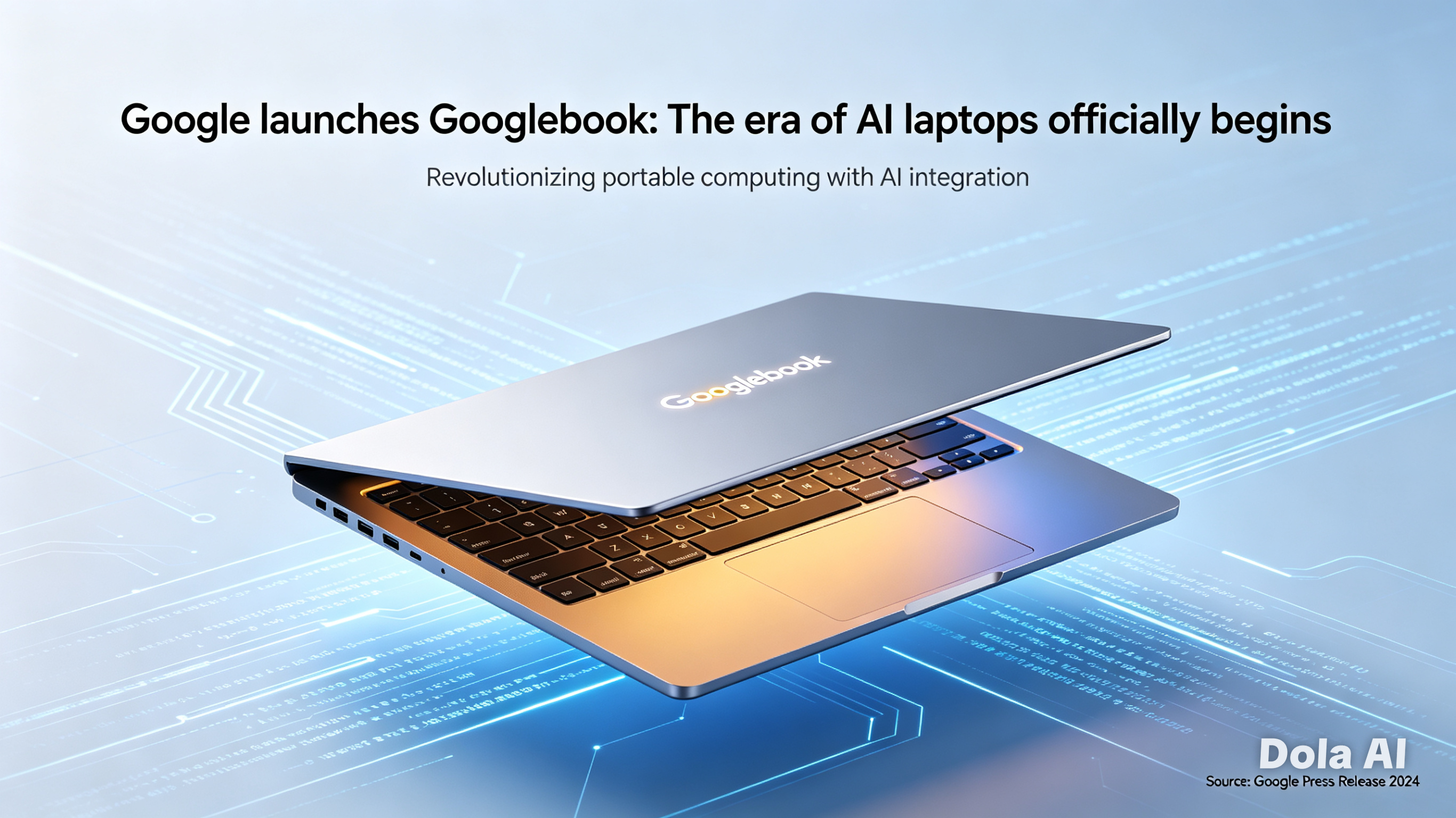
Google launches Googlebook: The era of AI laptops officially begins.
Nội dung
Google is poised to completely change the way people use computers with GoogleBook, its Gemini-centric AI-integrated laptop platform.
1. Learn about GoogleBook
According to published information, Googlebook is not a standalone laptop model but a next-generation computing platform developed by Google to place artificial intelligence at the center of the entire user experience. The unique aspect is that Googlebook will not only appear on devices manufactured by Google itself but will also be deployed on laptops from many well-known brands such as Acer, ASUS, Dell, HP, and Lenovo. The first devices are expected to launch this fall.
This move shows that Google is adopting a strategy similar to Android's in the past. Instead of trying to manufacture all the hardware itself to compete directly with traditional laptop manufacturers, Google is focusing on building a software platform and AI ecosystem, then collaborating with many partners to expand its market. This very strategy helped Android quickly become the most popular mobile operating system in the world, surpassing many major competitors in the smartphone market.
The most important aspect of the Googlebook lies in its development philosophy, which is completely different from current laptops. For many years, operating systems like Windows and macOS have primarily operated on a traditional model: users perform actions while the computer provides feedback. However, the Googlebook aims to make AI an intermediary between humans and computers. This means that instead of users learning how to use the software, the computer will learn to understand the user.

Following the explosion of AI generation in recent years, users have become accustomed to using artificial intelligence to assist in content writing, information searching, image editing, and data processing. However, most current AI tools still operate as separate services. GoogleBook aims to change that by integrating AI directly into the core of its operating system.
2. Gemini and Magic Pointer could change the way people use computers.
In many cases, AI only acts as a chatbot or auxiliary support tool that users must actively activate to interact with. But on GoogleBook, Gemini is designed to run continuously in the background and understand all the context unfolding on the screen.
This means AI is no longer a standalone application but has become an intelligent layer overlaid on the entire operating system. When users read emails, browse the web, edit documents, or work with images, Gemini can track the context to proactively offer relevant suggestions. For example, if an email contains information about a meeting next week, the AI can automatically suggest creating a calendar on Google Calendar. If the user is searching for travel destinations, the system can suggest saving trip information to their personal dashboard.
One of the most noteworthy features is the Magic Pointer, a technology developed by Google DeepMind. According to Google's description, the Magic Pointer allows Gemini to interact directly with the user's mouse cursor. This is considered a very bold idea because it completely changes the role of the traditional mouse cursor.
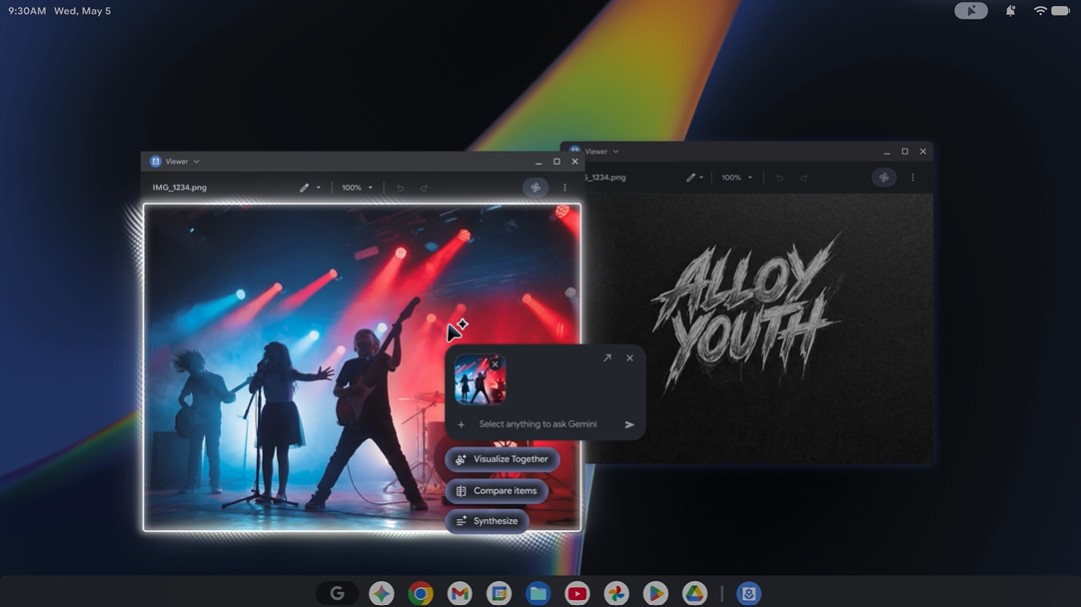
For decades, the computer mouse was simply a tool for clicking, dragging, and navigating the interface. But with GoogleBook, the cursor position becomes a "contextual signal" that helps AI understand what the user is paying attention to. When the mouse cursor moves to a piece of text, an image, or a date, Gemini analyzes the relevant content and proactively offers suggestions.
For example, simply hovering your mouse over a date in an email can prompt the AI to suggest scheduling a meeting immediately. If a user selects two images, Gemini can automatically combine them without needing specialized editing software. If reading a long article, the AI can automatically summarize the content or find more relevant information.
3. Create your widget and aspire to turn your laptop into a true personal assistant.
Besides Magic Pointer, GoogleBook also stands out with its Create Your Widget feature, a tool that allows users to create personalized widgets using natural language. This is considered a major step forward in bringing AI to the center of personalized computing experiences.
Typically, creating custom widgets or dashboards for work requires installing specialized software or possessing certain technical knowledge. However, with GoogleBook, everything is significantly simplified. Users simply describe their needs verbally or in text, and Gemini automatically generates a suitable interface.
For example, when preparing for a business trip, users can ask the system to create a dashboard displaying flight schedules, hotel confirmation emails, meeting schedules, location maps, and weather forecasts. The AI will automatically retrieve data from Gmail, Google Calendar, and the web to build a comprehensive interface without manual intervention.
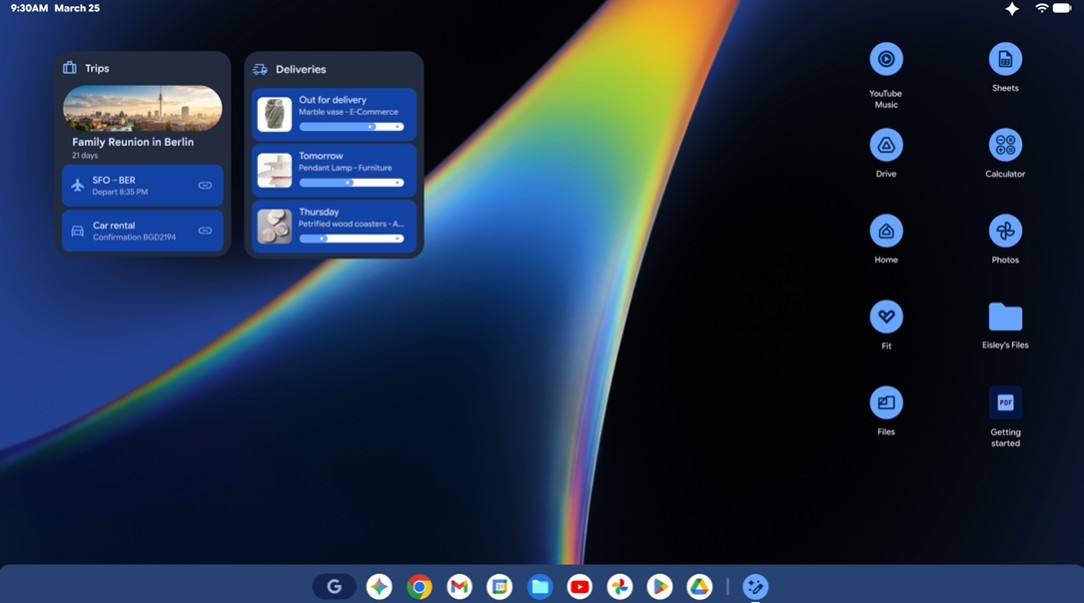
This shows that Google no longer views laptops as static devices with fixed interfaces. Instead, computers will constantly adapt to the actual needs of each individual. When working, the system prioritizes documents and productivity tools. When traveling, the interface focuses on schedules and maps. When entertaining, AI can suggest content that matches preferences.
This is a completely different approach from traditional operating systems, which rarely change contextually. GoogleBook is trying to transform the laptop into a flexible space capable of adapting to each user in real time.
Another noteworthy point is the ability to connect data across multiple Google services. With the advantage of owning Gmail, Google Calendar, Google Drive, Google Photos, and the vast Android ecosystem, Google has a huge amount of contextual data to help AI operate more intelligently. This could become a powerful competitive advantage that few rivals can match.
4. How will GoogleBook and Android create a unified ecosystem?
According to Google, the new platform will work seamlessly with Android smartphones through its Quick Access feature. Users can browse, search, and insert files from their phone to their laptop without manually transferring data. This significantly reduces the time spent processing tasks across multiple devices.
Beyond just data sharing, GoogleBook also allows you to run Android applications directly on your laptop without needing to download them separately or use complex emulators. This is extremely important because it blurs the lines between smartphones and computers.
In the future, users may be able to start work on their phones and then continue immediately on their laptops without any interruption. Mobile applications could also run seamlessly on larger screens without the need for separate desktop versions.
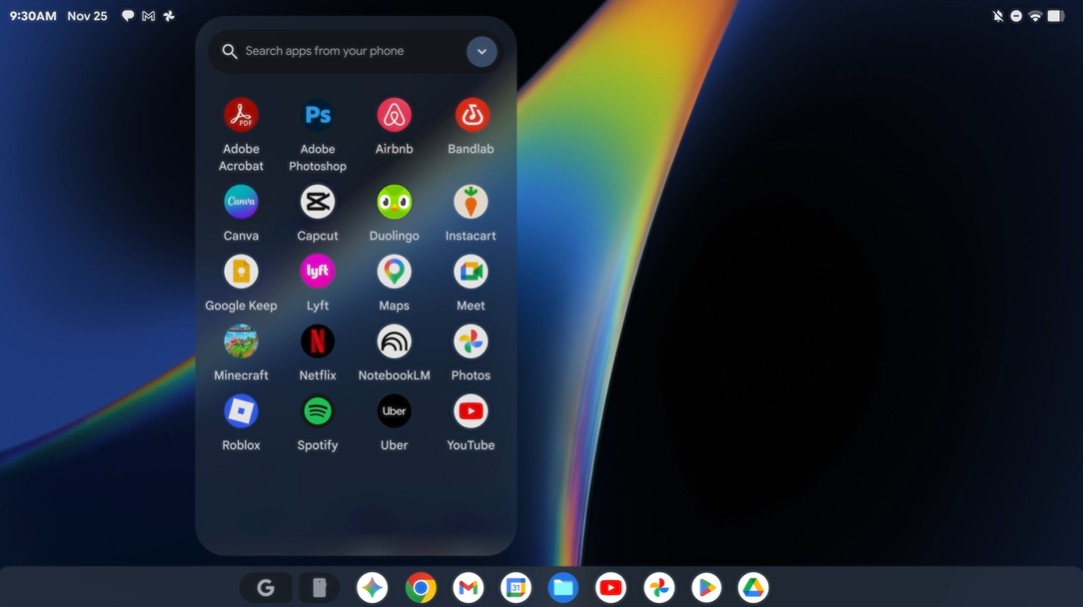
This strategy has many similarities to how Apple built the ecosystem between iPhones and MacBooks. However, Google has a huge advantage in terms of the global Android user base. If GoogleBook is widely deployed, it could help Android achieve a truly unified multi-device experience for the first time.
Furthermore, the integration of laptops and smartphones opens up the possibility of more powerful AI optimization. With data synchronized across multiple devices, Gemini can gain a more comprehensive understanding of users to provide more accurate support. AI can recognize whether users are on the go, preparing for a meeting, or working in the office, and automatically adjust the experience accordingly.
Google is also reportedly developing Aluminium OS, a new platform that combines ChromeOS and Android. If this materializes, it could be a major shift in Google's operating system strategy.
5. GoogleBook could revolutionize AI laptops globally.
The emergence of the Google Book not only impacted Google but could also change the entire laptop industry. For many years, the personal computer market had stagnated due to a lack of real breakthroughs in user experience. Companies mainly competed on hardware, while the way computers were used remained largely unchanged.
However, AI is opening up opportunities to create a new revolution. The Google Book shows that the future of laptops may no longer revolve around mere specifications but focus more on intelligence and automation capabilities.
If AI becomes intelligent enough to handle technical tasks, the roles of operating systems and applications will also change dramatically. Users may no longer need to learn how to use dozens of different software programs. Instead, they can simply describe their goals in natural language, and the AI will automatically find a way to complete the task.
This could revolutionize the entire software development industry. In the future, traditional applications with complex interfaces may gradually give way to AI services running in the background. Users interact directly with Gemini, while the AI automatically connects to the appropriate tools to process the task.

GoogleBook could also put significant pressure on its tech rivals. Microsoft is actively integrating Copilot into Windows, while Apple is developing Apple Intelligence for its ecosystem. This indicates that the AI laptop race is heating up more than ever.
However, GoogleBook will also face a number of challenges. Deeply integrating AI into the operating system requires extremely accurate and stable data processing capabilities. If the AI provides incorrect suggestions or interferes excessively with the user experience, users may feel frustrated rather than convenient.
Furthermore, privacy issues will also become a major point of contention. For AI to understand context and operate effectively, the system needs access to vast amounts of personal data such as emails, calendars, documents, and computer usage patterns. Google will certainly have to demonstrate that it can protect user data securely.
With GoogleBook, Google isn't just launching a new computing platform; it's attempting to fundamentally change how people will use computers in the future. And if things go according to the company's ambitions, GoogleBook could become one of the most important milestones in the personal technology industry in the next decade.












VIP Products



Best Selling Products
Plugin Retouch4me
69 USD
MidJourney Account
29 USD
Copyright Adobe Lightroom Account
59 USD
Windows 10 & 11 Pro Key
36 USD
Genuine Cheap Canva Pro
39 USD
Autodesk All App Account Copyright
120 USD
Capcut Pro 1 Year
39 USD
Adobe Photoshop Copyright - Full App
120 USD
Upgrade genuine Capture One account
120 USD
Genuine Adobe Illustrator account
99 USD
Freepik Premium Account
59 USD
Upgrade Genuine Office 365
49 USD
Adobe Premiere Pro Account
99 USD
ChatGPT Plus Account (GPT-4)
16 USD
Upgrade Duolingo Super
29 USD