
Best Selling Products

Genuine Adobe Illustrator account
99 USD

Capcut Pro 1 Year
39 USD

Upgrade Duolingo Super
29 USD

Freepik Premium Account
59 USD

MidJourney Account
29 USD

Autodesk All App Account Copyright
120 USD

Plugin Retouch4me
69 USD

Genuine Cheap Canva Pro
39 USD

Copyright Adobe Lightroom Account
59 USD

ChatGPT Plus Account (GPT-4)
16 USD

Upgrade Genuine Office 365
49 USD

Windows 10 & 11 Pro Key
36 USD

Adobe Premiere Pro Account
99 USD

Adobe Photoshop Copyright - Full App
120 USD

Upgrade genuine Capture One account
120 USD
Why Do Photos Have Purple Fringes? Understanding Photochromatic Aberration in Photography
Nội dung
- 1. What is optical aberration and why does it occur?
- 2. Common types of aberrations in photography
- 2.1. Longitudinal chromatic aberration
- 2.2. Horizontal chromatic aberration
- 2.3. Spherical Aberration
- 3. Situations where optical aberrations are likely to occur during photography.
- 4. The impact of aberrations on image quality
- 5. How to minimize optical aberrations during the shooting process.
- 6. How to correct optical aberrations using post-processing software.
- 7. The role of modern technology in reducing optical aberrations
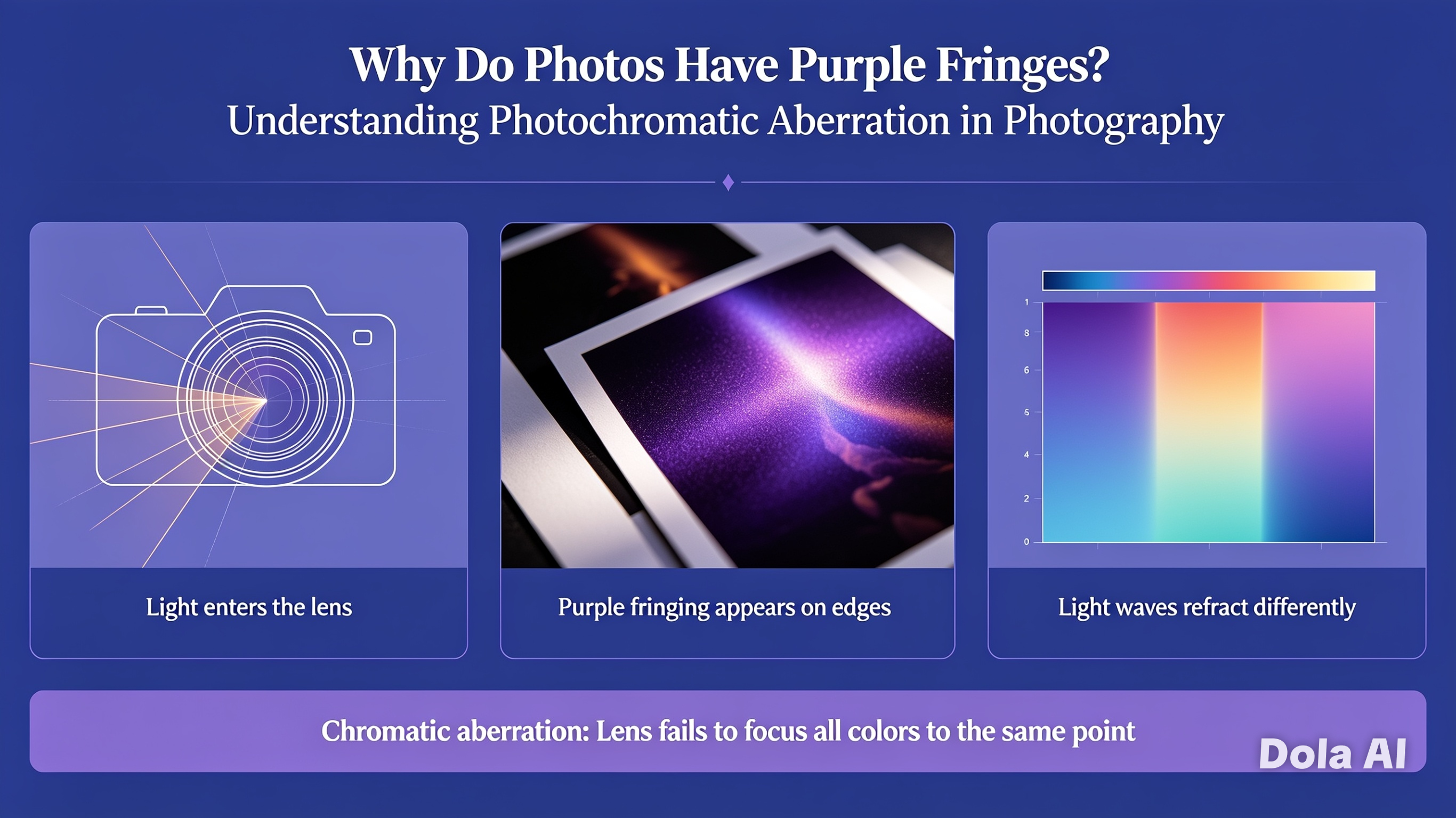
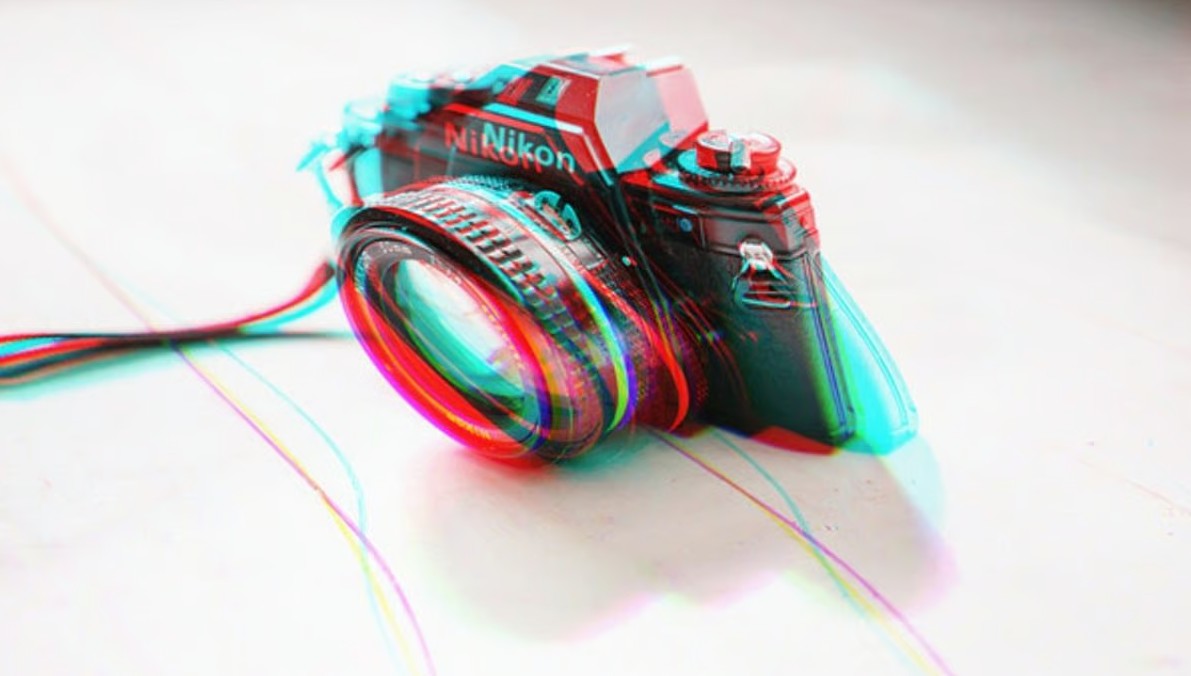
The purple fringing around the subject often appears when shooting against the light or using a large aperture. This is a sign of chromatic aberration.
1. What is optical aberration and why does it occur?
Aberration is an optical distortion that occurs when light passes through a lens system but fails to converge precisely at a single point on the camera sensor. This results in reduced image sharpness or the appearance of unusual color fringing around the subject. In photography, aberration is often referred to as "Chromatic Aberration" in English.
To better understand this phenomenon, we need to look at the nature of light. White light actually consists of many different wavelengths of color such as red, orange, yellow, green, blue, and violet. When passing through a lens, each wavelength is refracted to a different degree. Red light rays with longer wavelengths are usually bent less than blue or violet light rays with shorter wavelengths. This difference prevents the colors from converging simultaneously at the same point, thus creating color distortion or reduced sharpness in the image.
Ideally, all light rays should converge precisely onto the same sensor plane to produce a sharp and accurate image. However, due to the physical limitations of optical materials and lens design, this is almost impossible to achieve absolutely. Even the most advanced lenses today can only minimize, not completely eliminate, aberrations.
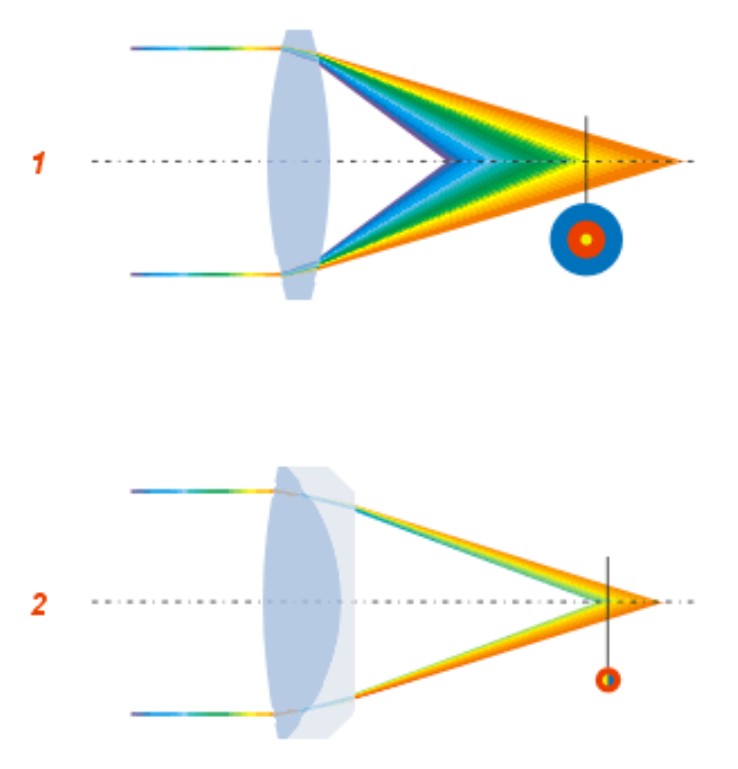
The degree of aberration depends on the quality of the lens's optical design. Inexpensive lenses often use simpler lens structures and fewer special glass elements, resulting in poorer light control. Professional lenses, on the other hand, are typically equipped with aspherical lenses, ED (Edge-Edge) glass, or Fluorite to reduce light dispersion.
Besides equipment factors, chromatic aberration is also affected by actual shooting conditions. When shooting against the light, at large apertures, or with objects that have strong contrast, chromatic aberration is often more noticeable. This is why many people notice purple fringing around hair or tree branches when shooting in bright sunlight.
2. Common types of aberrations in photography
In photography, aberrations don't just exist in a single form; they are divided into many different types. Each type has its own characteristics and affects image quality differently.
2.1. Longitudinal chromatic aberration
Vertical chromatic aberration occurs when different color wavelengths converge at different distances along the optical axis. This causes some colors to appear in front of the focus point while others appear behind it.
This phenomenon is often more apparent when shooting with large apertures such as f/1.4 or f/2.8. Photographers will easily notice purple or blue fringing around the subject, especially in areas with high contrast. For example, when shooting outdoor portraits, hair or clothing edges often appear slightly purple under bright light.
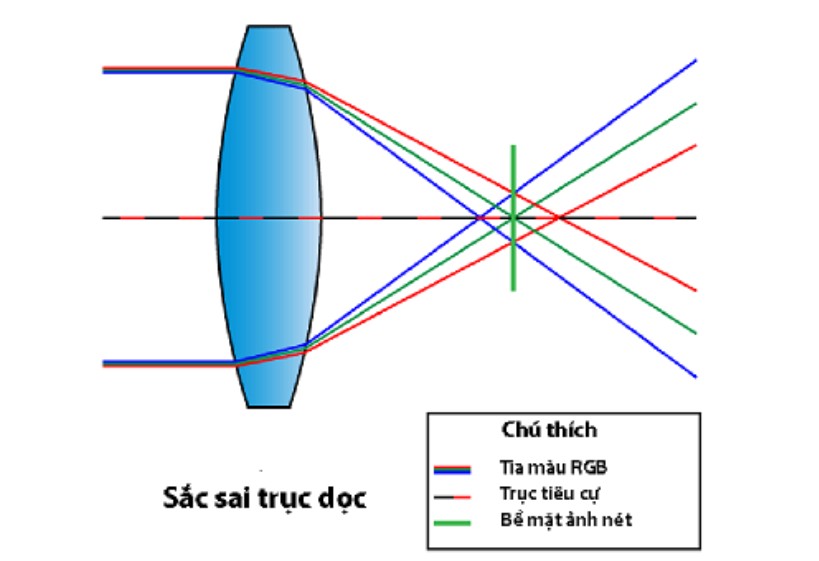
Vertical aberrations often directly affect image sharpness because the colors are not converging simultaneously. This type of aberration is also difficult to completely correct in post-processing because it involves focal deviations.
2.2. Horizontal chromatic aberration
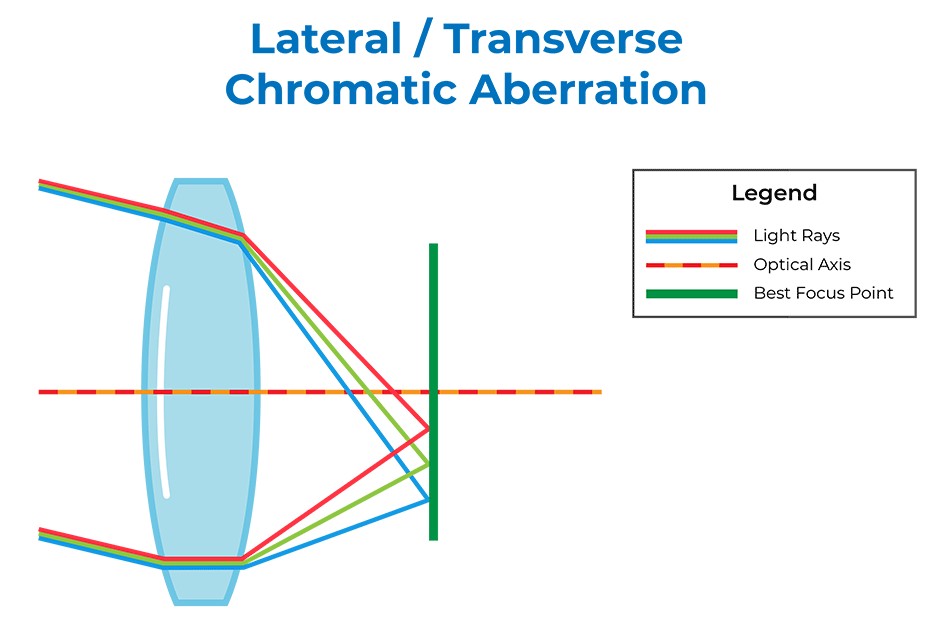
Unlike vertical aberration, horizontal aberration occurs when colors converge at different points on the same sensor plane but at different positions. This phenomenon usually appears at the edges of the image as red, blue, or purple fringes.
Horizontal aberration is common in wide-angle or zoom lenses when used at maximum focal length. Landscape or architectural photographers are more likely to encounter this phenomenon because the image contains a lot of detail at the edges of the frame.
One important difference is that lateral aberration is less affected by aperture. Even when the aperture is closed down, this phenomenon can still occur if the lens's optical design is not good enough.
2.3. Spherical Aberration
Spherical aberration does not cause color distortion but does reduce the overall sharpness of the image. This phenomenon occurs when light rays passing through the edges of the lens do not converge at the same point as the light rays at the center.
As a result, the image is soft, lacks sharpness, and has reduced contrast. Spherical aberration is often more pronounced when shooting at large apertures and decreases significantly when the aperture is closed down to around f/5.6 or f/8.
3. Situations where optical aberrations are likely to occur during photography.
Aberrations are not always easily visible. In many normal circumstances, this phenomenon is quite mild and hardly affects image quality significantly. However, under certain special conditions, aberrations become noticeable and visually unpleasant.
One of the most common situations is shooting against the light. When a strong light source is behind the subject, the light enters the lens directly with high intensity, causing a significant increase in chromatic aberration (color dispersion). This is why sunset photos or portraits taken in the afternoon sun often show a purple fringing around the hair and shoulders.
Areas with high contrast are also ideal environments for aberrations to appear. For example, when photographing a black tree branch against a white sky or a metal sign under bright sunlight, viewers will easily notice unusual color fringes around the edges of the object.
Large apertures are also a significant factor. When using apertures of f/1.2, f/1.4, or f/2, more light passes through the edges of the lens. These light rays are difficult to control precisely, easily leading to chromatic aberration and reduced sharpness.
Additionally, using zoom lenses at their maximum focal length also significantly increases chromatic aberration. Many common zoom lenses offer good optical quality in the mid-range of the focal length but experience a noticeable decline when zoomed to the maximum.
Another often overlooked factor is the quality of the UV filter or the filter attached to the front of the lens. Inexpensive filters with low-quality glass can sometimes increase aberrations and flare in bright light conditions.
4. The impact of aberrations on image quality
Aberrations are not just minor technical errors; they directly affect the visual perception and artistic value of a photograph.
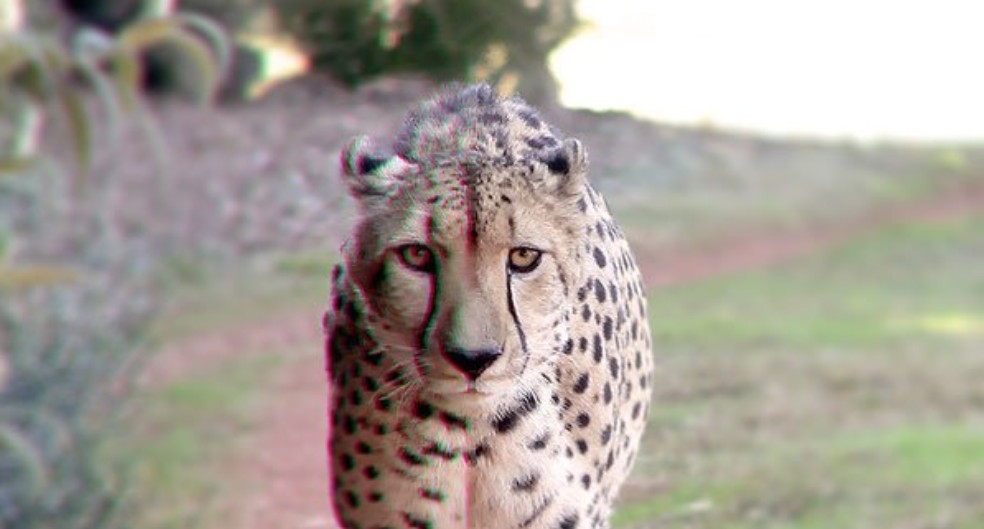
The most noticeable effect is the appearance of purple, blue, or red fringing around the subject. These fringings make the image look unnatural and unprofessional. In genres such as commercial photography, fashion photography, or product photography, chromatic aberration is almost unacceptable.
Aberrations also reduce the overall sharpness of an image. When light rays don't converge precisely, details in the image become soft and lack clarity. This is especially noticeable when zooming in on a high-resolution screen or printing large-sized photos.
In landscape photography, aberrations at the edges of the image can cause trees, the horizon, or architecture to appear color-banded and reduce detail. Meanwhile, in portrait photography, aberrations make hair and the areas of light around the face look unnatural.
Another problem is that aberrations can reduce the local contrast of an image. When light is unevenly dispersed, the image will lack the necessary depth and clarity.
In the field of filmmaking, chromatic aberration has an even greater impact due to the constant movement of color edges within the frame. This makes the video look lower quality and more difficult to process in post-production.
5. How to minimize optical aberrations during the shooting process.
Although it's impossible to completely eliminate aberrations, photographers can certainly minimize them using various practical methods.
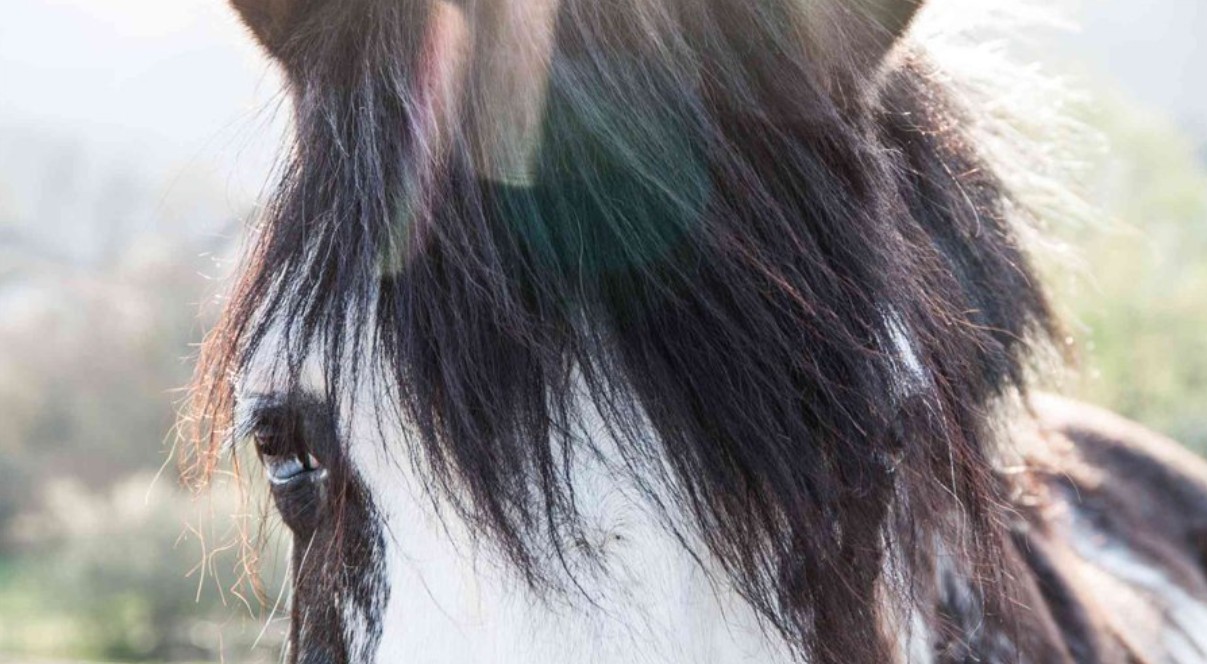
The simplest and most effective method is to close the aperture. Instead of using the widest aperture, photographers can reduce it to f/4, f/5.6, or f/8 to improve light gathering. This significantly reduces chromatic aberration and increases overall sharpness.
Choosing the right shooting angle is also very important. When shooting against the light, you should change the camera position or use natural obstacles to reduce direct light hitting the lens. A lens hood is also a useful accessory to limit scattered light and reduce flare.
Users should avoid using the maximum focal length on common zoom lenses. Instead, use the middle of the focal length range – where optical quality is usually best.
Another effective solution is to invest in high-quality lenses. Professional lenses using ED, UD, or Fluorite glass provide excellent control over light dispersion. Although the cost is higher, the resulting image quality is noticeably different.
Additionally, using high-quality filters helps reduce the risk of secondary aberrations. Users should prioritize reputable brands with multi-layer anti-reflective coatings.
6. How to correct optical aberrations using post-processing software.
In the age of digital photography, post-processing plays a crucial role in addressing chromatic aberration. Modern software is now capable of identifying and removing color fringing quite effectively.
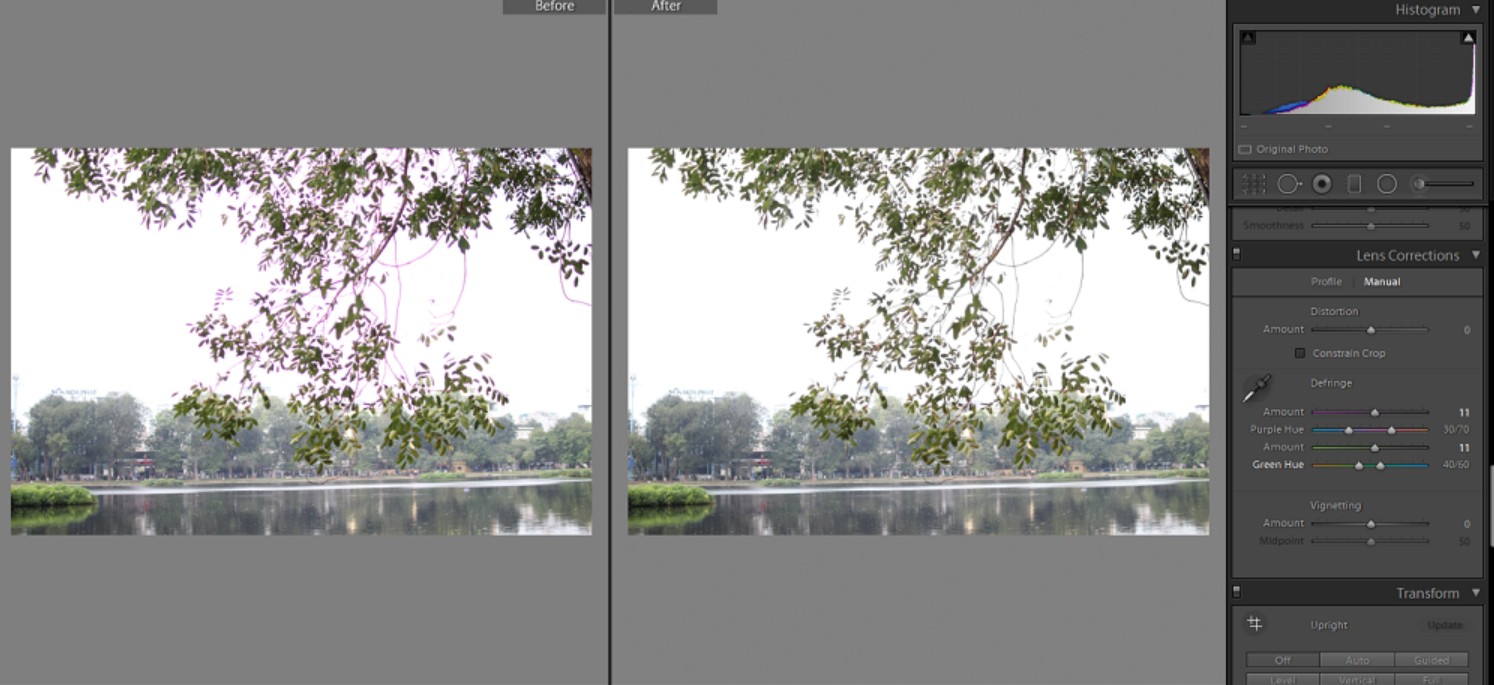
Adobe Lightroom is the most popular tool for this purpose. Simply by activating the "Remove Chromatic Aberration" function, the software will automatically analyze and remove most of the purple or blue fringing from your photos.
In cases of more severe aberrations, users can manually adjust the Defringe tool to precisely control the colors to be removed. This is especially useful for photos taken against the light or with high contrast.
Photoshop also offers a Lens Correction feature that effectively handles chromatic aberration. Additionally, reducing saturation in areas with chromatic aberration or using layer masks for localized correction are methods widely employed by professional photographers.
Other software programs like Capture One or DxO PhotoLab can automatically recognize the profile of each lens to better correct chromatic aberration.
However, post-processing should only be considered a supporting solution. If the image suffers from severe chromatic aberration due to the optical limitations of the lens, aggressive editing can lead to loss of detail and affect overall color.
7. The role of modern technology in reducing optical aberrations
Advances in optical technology have enabled manufacturers to significantly improve aberration control in modern lenses.
Many high-end lenses today are equipped with aspherical lenses to better control the path of light. Low-dispersion lenses such as ED, UD, or Super ED also help reduce chromatic aberration between light wavelengths.
In addition, advanced nano-coating helps to reduce light reflection inside the lens, thereby minimizing flare and aberrations in challenging lighting conditions.
Not only the hardware, but also the image processing technology in cameras is becoming increasingly intelligent. Many modern mirrorless cameras are capable of automatically recognizing the lens and directly correcting aberrations when shooting JPEGs.
Manufacturers like Canon, Sony, Nikon, and Fujifilm are constantly improving their optical processing algorithms to deliver cleaner and sharper images. This is why newer devices often produce superior image quality even at large apertures.
Aberrations are a common and almost unavoidable optical phenomenon in photography. Whether appearing as color fringing, reduced sharpness, or light distortion, aberrations directly affect the quality and aesthetics of images.
However, understanding the nature of aberrations will help photographers proactively control this phenomenon during shooting. From choosing the appropriate aperture, changing the shooting angle, using high-quality lenses to applying modern post-processing techniques, all contribute to minimizing the impact of aberrations on the final image.



















VIP Products








Best Selling Products
Genuine Adobe Illustrator account
99 USD
Capcut Pro 1 Year
39 USD
Upgrade Duolingo Super
29 USD
Freepik Premium Account
59 USD
MidJourney Account
29 USD
Autodesk All App Account Copyright
120 USD
Plugin Retouch4me
69 USD
Genuine Cheap Canva Pro
39 USD
Copyright Adobe Lightroom Account
59 USD
ChatGPT Plus Account (GPT-4)
16 USD
Upgrade Genuine Office 365
49 USD
Windows 10 & 11 Pro Key
36 USD
Adobe Premiere Pro Account
99 USD
Adobe Photoshop Copyright - Full App
120 USD
Upgrade genuine Capture One account
120 USD