Best Selling Products
Upgrade genuine Capture One account
120 USD

Autodesk All App Account Copyright
120 USD

Upgrade Genuine Office 365
49 USD

Capcut Pro 1 Year
39 USD

Genuine Cheap Canva Pro
39 USD

Copyright Adobe Lightroom Account
59 USD

Plugin Retouch4me
69 USD

Upgrade Duolingo Super
29 USD

MidJourney Account
29 USD

Freepik Premium Account
59 USD

Windows 10 & 11 Pro Key
36 USD

Adobe Premiere Pro Account
99 USD

ChatGPT Plus Account (GPT-4)
16 USD

Adobe Photoshop Copyright - Full App
120 USD

Genuine Adobe Illustrator account
99 USD
Canon EOS R6 V Review: A 7K Full-Frame Camera for Professional Creators
Nội dung
- 1. Canon EOS R6 V: Design & Handling
- 2. Optimized Design for Vertical Video
- 3. Connectivity System and Expandability
- 4. The Active Cooling System Is a “Game Changer”
- 5. Image Quality and Photography Performance
- 6. 7.5-Stop IBIS and the Handheld Shooting Experience
- 7. 7K Open Gate Video Is the Biggest Selling Point
- 8. Notable Advantages and Disadvantages
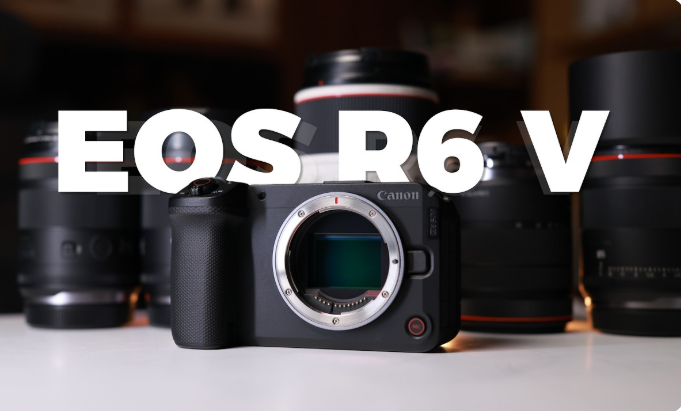
Canon continues to expand its mirrorless lineup for creators with the introduction of the Canon EOS R6 V. Featuring 7K 60p recording, Open Gate support, 7.5-stop IBIS stabilization, and an active cooling system, the EOS R6 V is regarded as a standout “video-first” camera for the modern generation of content creators.
1. Canon EOS R6 V: Design & Handling
The moment you hold the EOS R6 V in your hands, one thing becomes immediately clear: this is not a traditional Canon camera. Canon has completely reimagined its design philosophy to target a new generation of content creators. While previous EOS R models retained much of the DNA of conventional photography cameras, the EOS R6 V feels like a true creator-focused camera.
The flat-top design is the most significant change. Canon has removed the electronic viewfinder that was once a familiar feature on high-end mirrorless cameras. Eliminating the EVF allows the body to be more compact and creates additional space for video controls. This demonstrates Canon’s willingness to sacrifice part of the traditional photography experience in favor of optimizing modern video workflows.
According to Canon, the EOS R6 V was developed by a younger design team that wanted to create a camera specifically for creators. They believe that today’s generation of users relies less on EVFs, especially since most creators shoot using flip screens or external monitors.
The entire control layout of the EOS R6 V revolves around video production. The camera offers a total of 12 customizable buttons. By default, nearly all of them are assigned to video-related functions such as zebras, focus peaking, Canon Log, audio status, and livestream controls..jpg)
The Quick Control Dial is no longer just a standard control wheel. Canon has transformed it into a rapid-access video control center, allowing creators to adjust settings without constantly diving into menus. This is a small detail, but it proves extremely useful in real-world production environments.
Another interesting design choice is Canon’s replacement of the traditional shutter button with a larger REC button surrounded by a Power Zoom lever. Additionally, there is a large red recording button on the front of the camera body.
The EOS R6 V body is larger than the R50 V, yet it still maintains portability. This makes sense given the larger full-frame sensor and active cooling system inside.
One particularly commendable aspect is that Canon maintains weather sealing despite including a cooling fan. This is a major difference compared to many other video-centric mirrorless cameras that sacrifice weather resistance to integrate active cooling systems.
2. Optimized Design for Vertical Video
If there is one feature that demonstrates Canon’s understanding of modern creators, it is the EOS R6 V’s support for vertical video recording.
For years, traditional cameras were designed primarily around horizontal video. However, TikTok, Reels, and Shorts have completely changed how audiences consume content. Vertical video is no longer a secondary trend but has become one of the primary content formats on the internet.
Canon has integrated a dedicated vertical tripod mount alongside the traditional horizontal mount. This may sound simple, but it is incredibly useful. Creators no longer need an L-bracket or additional accessories when shooting portrait-oriented content.
Even more importantly, the EOS R6 V features a vertical user interface that automatically rotates according to the camera orientation. When switching to vertical recording, the entire UI adapts accordingly, creating a much more intuitive shooting experience..jpg)
3. Connectivity System and Expandability
The Canon EOS R6 V offers a comprehensive connectivity system for professional creators. The camera features a full-size HDMI port rather than the fragile micro HDMI ports commonly found on many mirrorless cameras. This is a significant advantage for users who frequently livestream or output video to external monitors.
The camera also includes dedicated microphone and headphone ports, enabling proper audio monitoring during recording. In addition, Canon integrates the Multi-Function Shoe, a next-generation hot shoe that supports intelligent accessories such as digital microphones powered directly by the camera.
The EOS R6 V also supports FTP and FTPS, which is relatively uncommon in a creator-focused camera. This makes professional data transfer workflows much more convenient.
However, the camera still lacks several advanced cinema-oriented features such as timecode, XC protocol support, and anamorphic de-squeeze functionality. This clearly indicates that Canon intends to maintain separation between the EOS R6 V and its professional Cinema EOS lineup.
4. The Active Cooling System Is a “Game Changer”
Overheating has always been a nightmare for mirrorless video cameras. Many models offer impressive specifications but fail to sustain long recording sessions due to excessive heat buildup.
Canon addresses this issue with an active cooling fan system in the EOS R6 V. This is undoubtedly one of the most valuable upgrades of the camera..jpg)
According to real-world testing, the EOS R6 V can record approximately one hour of 7K 60p RAW video even without activating the cooling fan. When active cooling is enabled, recording times can extend beyond two continuous hours.
This represents a major difference compared to the R6 Mark III, which does not feature a cooling fan.
For creators producing podcasts, livestreams, events, or long-form documentary content, the cooling system on the EOS R6 V truly transforms the user experience.
What makes this even more impressive is Canon’s ability to retain weather sealing despite incorporating a fan. This allows the EOS R6 V to be equally suitable for studio environments and demanding outdoor conditions.
5. Image Quality and Photography Performance
The Canon EOS R6 V uses the same 32.5MP full-frame sensor found in the R6 Mark III and C50. This marks the first time Canon has built three different product lines around a shared hardware platform.
In terms of image quality, the EOS R6 V produces beautiful photos with Canon’s signature color science. Natural skin tones, wide dynamic range, and excellent light handling continue to be key strengths of the brand.
The camera supports continuous shooting at up to 40fps using its electronic shutter. This is an impressive specification suitable for action photography and wildlife shooting.
The autofocus tracking system on the EOS R6 V has also been upgraded with advanced intelligent subject recognition capabilities.
.jpg)
However, the photography experience is not entirely perfect. The absence of an EVF makes shooting under bright sunlight more challenging. Additionally, the lack of a mechanical shutter can result in rolling shutter effects in certain high-speed scenarios.
6. 7.5-Stop IBIS and the Handheld Shooting Experience
Canon equips the EOS R6 V with 7.5-stop in-body image stabilization. Although this is slightly lower than the 8.5-stop rating of the R6 Mark III, the difference is extremely difficult to notice in real-world use.
The stabilization system performs effectively for handheld video recording and low-light photography.
An important point is that the EOS R6 V includes IBIS, while the C50 completely lacks sensor-based stabilization. This makes the EOS R6 V a far more appealing option for mobile creators.
When paired with stabilized RF lenses, handheld footage from the EOS R6 V remains highly stable even without the use of a gimbal..jpg)
7. 7K Open Gate Video Is the Biggest Selling Point
The ability to record 7K 60p video and 7K 30p Open Gate footage is undoubtedly the EOS R6 V’s most powerful weapon.
Open Gate recording captures the entire sensor area rather than cropping to a fixed video aspect ratio. This provides tremendous flexibility during post-production.
Creators can shoot once and then export multiple video formats for YouTube, TikTok, Reels, and other platforms.
Canon also includes C-Log 2 with approximately 15 stops of dynamic range, giving footage significant cinematic depth.
The oversampled 4K 60p footage from the EOS R6 V is exceptionally sharp and detailed.
However, shooting 7K Open Gate places considerable demands on storage systems. A single 30-minute podcast recording can consume hundreds of gigabytes of data.
As a result, EOS R6 V users must invest heavily in memory cards, SSDs, and powerful editing computers capable of handling these large files.
8. Notable Advantages and Disadvantages
The Canon EOS R6 V offers many compelling advantages. It provides powerful 7K 60p recording, flexible Open Gate functionality, effective stabilization, a capable cooling fan system, and reliable weather sealing.
Its video-first design, combined with a vertical UI and vertical tripod mount, makes modern creator workflows significantly more convenient.
Its ability to livestream in 4K 60p also makes the EOS R6 V highly attractive to streamers and professional content creators.
However, the camera still has several drawbacks. The absence of an EVF will be a major limitation for many traditional photographers.
The lack of a mechanical shutter also means the camera is not fully optimized for extremely high-speed sports photography.
Additionally, the EOS R6 V lacks timecode support, anamorphic functionality, and integrated XLR inputs found in the Cinema EOS lineup.
The Canon EOS R6 V is a very interesting, highly modern, and distinctly unique camera within Canon’s ecosystem. It is not simply a variation of the R6 Mark III or the C50, but rather a camera built specifically for a new generation of creators.
The combination of 7K Open Gate recording, IBIS stabilization, active cooling, weather sealing, and workflows optimized for vertical video makes the EOS R6 V one of the most compelling creator cameras available today.
Of course, the camera is not perfect. The absence of an electronic viewfinder, mechanical shutter, and timecode support clearly shows that Canon still wants to maintain a distinction between the EOS R6 V and its professional Cinema EOS series.
However, if you are a creator looking for a powerful and flexible hybrid camera optimized for modern video production and capable of handling nearly every professional content creation need, the Canon EOS R6 V is undoubtedly a highly worthwhile option in today’s premium camera segment.


















VIP Products








Best Selling Products
Upgrade genuine Capture One account
120 USD
Autodesk All App Account Copyright
120 USD
Upgrade Genuine Office 365
49 USD
Capcut Pro 1 Year
39 USD
Genuine Cheap Canva Pro
39 USD
Copyright Adobe Lightroom Account
59 USD
Plugin Retouch4me
69 USD
Upgrade Duolingo Super
29 USD
MidJourney Account
29 USD
Freepik Premium Account
59 USD
Windows 10 & 11 Pro Key
36 USD
Adobe Premiere Pro Account
99 USD
ChatGPT Plus Account (GPT-4)
16 USD
Adobe Photoshop Copyright - Full App
120 USD
Genuine Adobe Illustrator account
99 USD