Best Selling Products
Upgrade genuine Capture One account
120 USD

ChatGPT Plus Account (GPT-4)
16 USD

Windows 10 & 11 Pro Key
36 USD

Upgrade Genuine Office 365
49 USD
Plugin Retouch4me
69 USD

MidJourney Account
29 USD

Freepik Premium Account
59 USD
Autodesk All App Account Copyright
120 USD
Adobe Photoshop Copyright - Full App
120 USD

Capcut Pro 1 Year
39 USD
Copyright Adobe Lightroom Account
59 USD
Upgrade Duolingo Super
29 USD
Genuine Adobe Illustrator account
99 USD
Genuine Cheap Canva Pro
39 USD
Adobe Premiere Pro Account
99 USD
Is Flat Design Really Coming to an End? UX/UI Trends 2025
Nội dung
- 1. Flat design: The pinnacle of rationality, but lacking emotion.
- 2. The return of Skeuomorphism and the “New Skeuo”
- 2.1. Traditional Skeuomorphism
- 2.2. New Skeuomorphism
- 3. Will the future of UX/UI coexist with both "flat" and "raised" designs?
- 3.1. Skeuomorphism is booming in AR/VR, but flat design still dominates web and mobile.
- 3.2. Flat evolves, learning in depth from Skeuo to create a hybrid UI.
- 3.3. Why is Hybrid UI a logical step forward?
- 3.4. AI/3D technology applied with New Skeuo enables small teams to create user interfaces with rich depth.
The minimalist principles that dominated for decades are gradually giving way to interfaces with greater depth and emotion. Modern design demands more than simplicity; it's a combination of visual, tactile, and experiential elements. This new trend is bringing a completely different perspective to flat design.
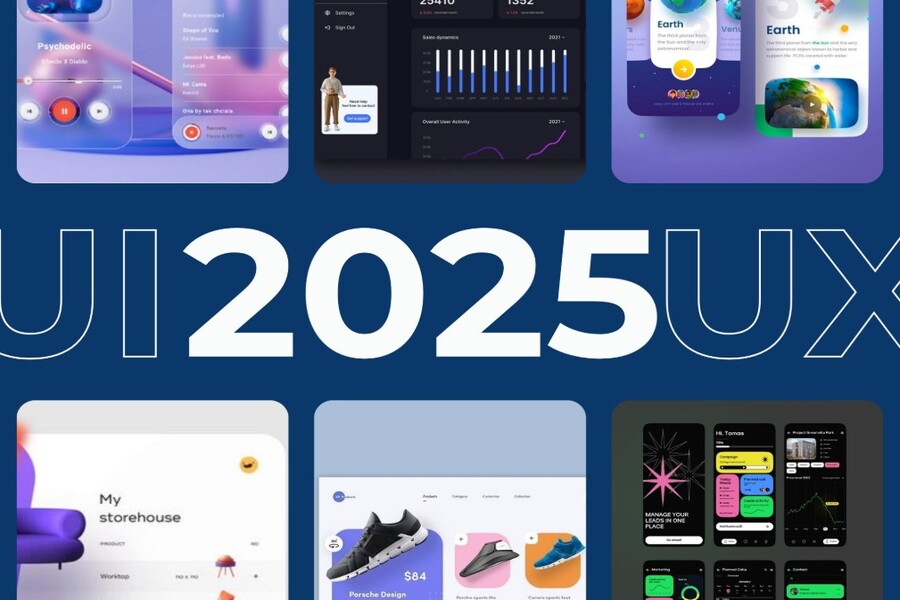
Flat design emerged as the flagship of minimalist style, eliminating unnecessary details to focus on efficiency and rationality. From mobile applications, operating systems, and websites to dashboards of large businesses and technology products, flat design has almost completely dominated. It is practical, neat, clean, and decisive.
But technology doesn't stand still. User experience doesn't stand still. And human aesthetics don't stand still either. As the digital space evolves into AR, VR, wearables, screenless interfaces, car dashboards, visual aids, and many other multisensory ecosystems, design is no longer just about being "easy to look at" and "easy to use." It needs to become part of the emotion. It needs to persuade with light, depth, texture, and intuitiveness. It needs to evoke a sense of touch, even when the user only touches the screen of the glasses.
From these changes, a style once considered outdated, skeuomorphism, is making a comeback. But it's not returning in the old way. Gone are the overly realistic parchment-like pages, the repetitive wood textures, or the shiny metal buttons of the 2010s interfaces. The new skeuomorphism, often called New Skeuo, has evolved into a more refined, gentle, emotionally rich style that is better suited to modern technology. This return raises a big question: Is flat design outdated? Or will it continue to evolve alongside skeuomorphism to create a unified design language? In this article, we will delve into the essence of both styles, analyze why flat design still has a place, explore how skeuomorphism is being reborn, and predict future scenarios for UX/UI in a world that is both flat and floating, minimalist and emotionally rich.
1. Flat design: The pinnacle of rationality, but lacking emotion.
Flat design emerged as a strategic shift in the history of interface design. When Apple switched to flat design starting with iOS 7 and Google introduced Material Design, everything seemed to change overnight. After the heavy, complex skeuomorphism and numerous object simulations of the iOS 6 and earlier eras, flat design brought a light, simple, and clean feel, perfectly matching the pace of mobile technology development.
Flat design is built on the principle of absolute minimalism. Every element that isn't truly necessary is removed. This makes the interface cleaner and easier to recognize, creating strong compatibility with the small screens and limited processing speeds of early smartphones. In a context where speed and performance are more important than anything else, flat design has proven its strength.
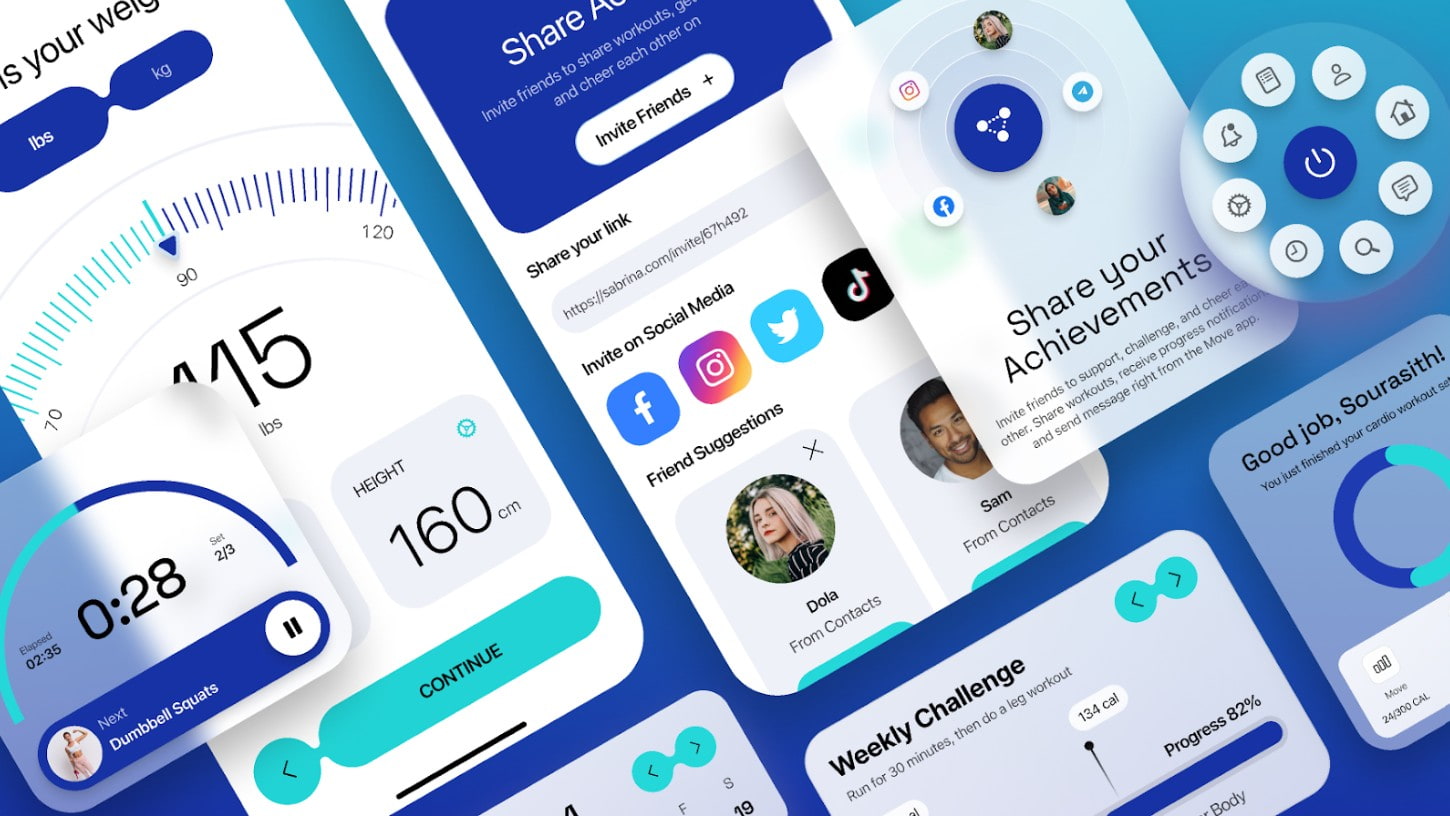
Users easily adapt to a flat interface because it focuses on functionality. Large, clear buttons, strong contrasting colors ensure readability, and simple icons eliminate visual clutter. This approach not only solves performance issues but also creates a new standard for user experience: direct, coherent, and uncluttered.
However, when flat colors, flat icons, and visual energy are excessively limited, the abstraction of flat design can sometimes become challenging. For the average user, especially newcomers, distinguishing between elements can become difficult. A card looks like a background. A button looks like a piece of text. An icon no longer suggests clear behavior.
Especially in the context of increasingly diverse devices, larger screen sizes, superior resolutions, and faster processing speeds, extreme minimalism is no longer the sole priority. People are beginning to look for something that flat design doesn't offer much: emotion. Flat interfaces are sometimes criticized as "cold," "dry," and "soulless." They are logical, but lack storytelling. They are efficient, but don't foster connection.
2. The return of Skeuomorphism and the “New Skeuo”
Skeuomorphism was once the foundation of early UX/UI, helping users become familiar with technology through visual simulations based on real-world objects. But when flat design emerged, this simulation style was labeled cumbersome and outdated. However, like fashion, design is always cyclical. And as 3D, AR, VR, and AI technologies developed, skeuomorphism was once again brought to the forefront. The difference is that it has adapted to suit the new world.
2.1. Traditional Skeuomorphism
In the early years of UX/UI, when users were still unfamiliar with digital interfaces, skeuomorphism played a crucial bridging role. A note-taking application needed to resemble a notebook; a virtual keyboard needed to resemble a physical keyboard; an on/off button needed to look like a real switch. All of these features helped users transition smoothly from the physical to the digital environment.
This simulation is based on cognitive psychology. People feel safer and more at ease when encountering things they are familiar with. Therefore, traditional skeuomorphism was once the perfect choice.
However, it also has clear limitations. Overly detailed modeling makes the interface cumbersome and difficult to manage. Textures like leather, wood, and metal, when used excessively, can quickly become outdated. In a world requiring high consistency in design systems, skeuomorphism is forced to give way to flat design, which is more streamlined and scalable.
2.2. New Skeuomorphism
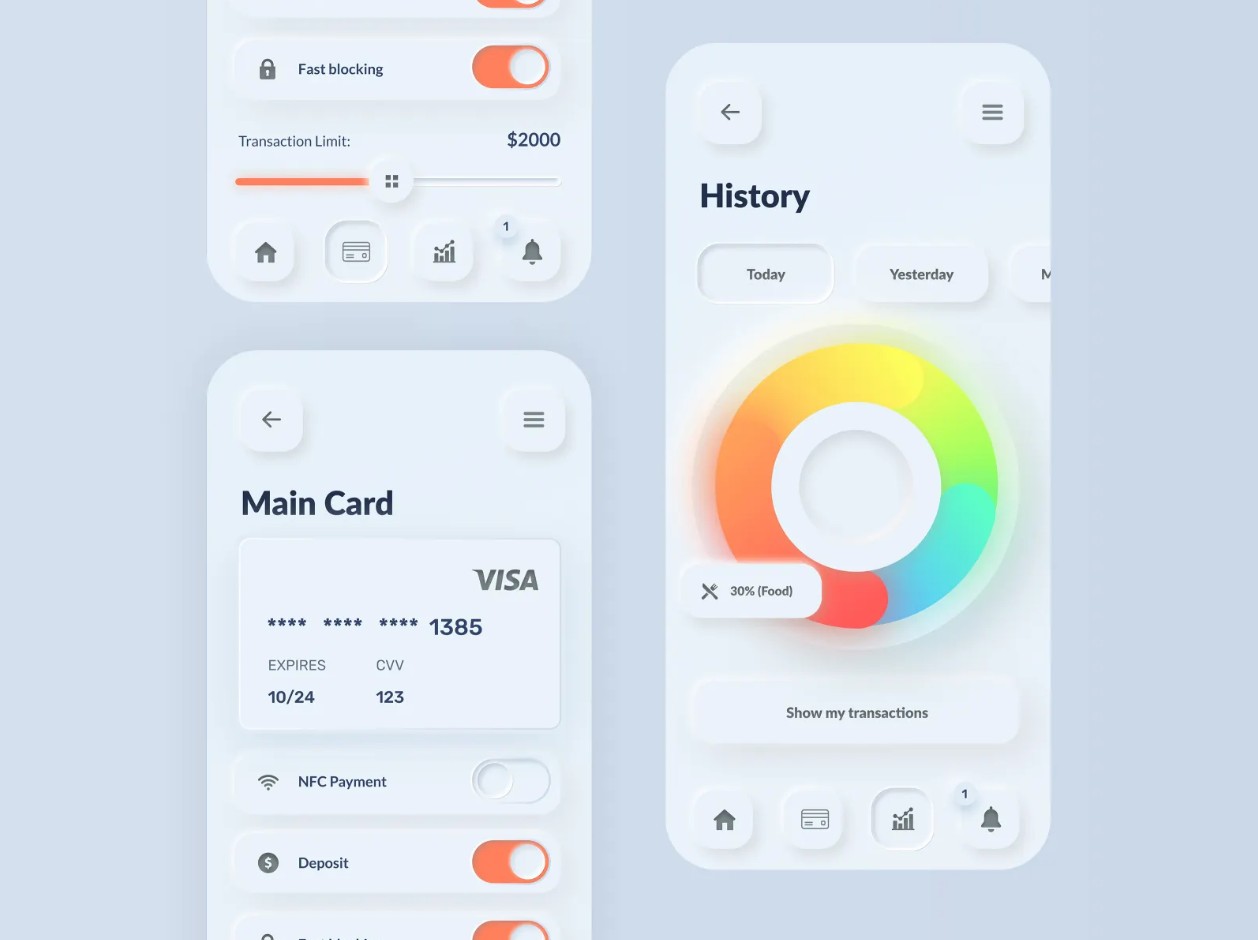
New Skeuomorphism, or Skeuo 2.0, no longer crudely mimics objects. It's not "fake leather," "fake wood," or "fake metal" like the old version. Instead, it focuses on evoking emotion through more subtle visual elements: depth, soft lighting, blurred shadows, subtle prominence, natural layering, transparent blur, and materials that are so minimalist they become metaphorical language.
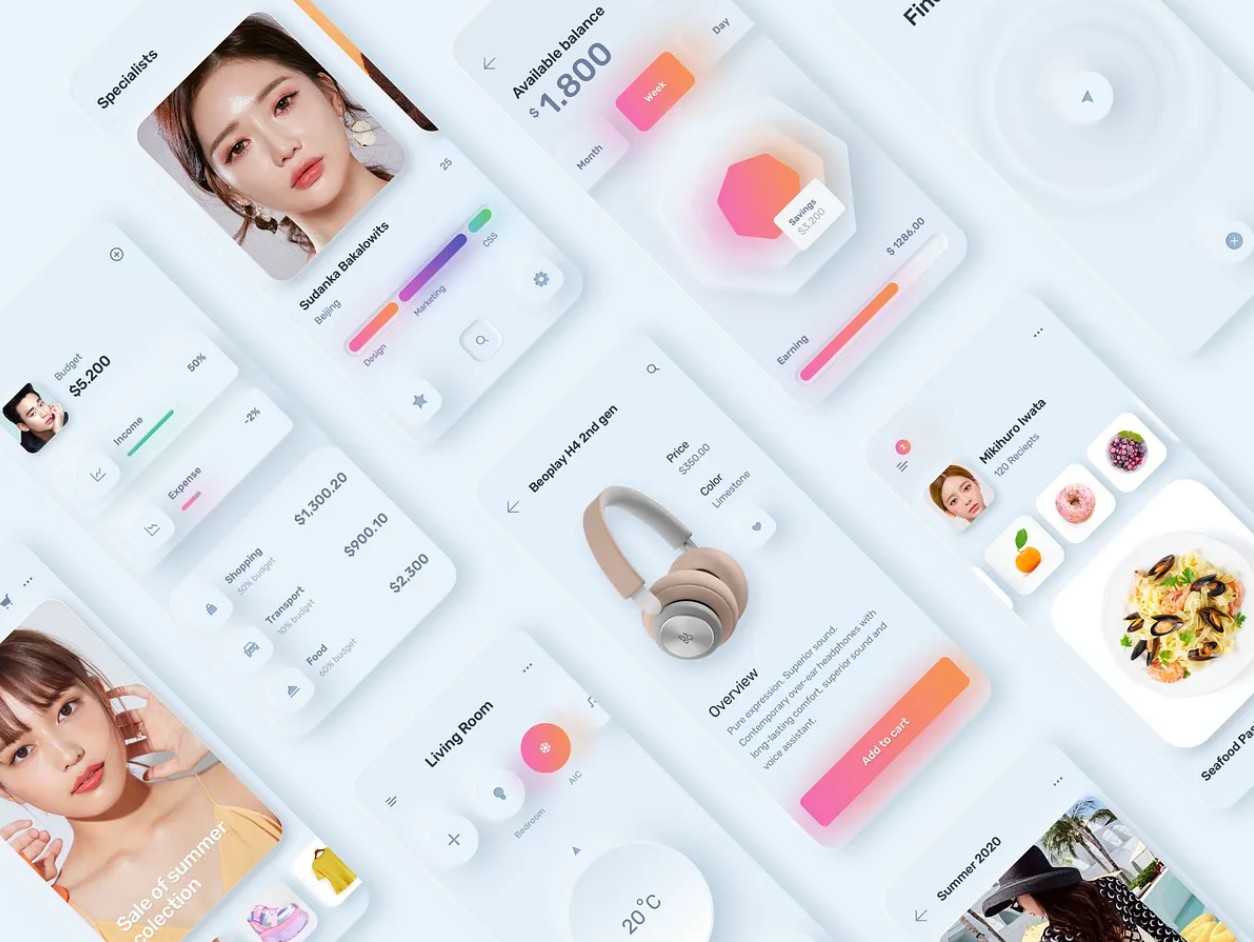
The core of New Skeuo lies in creating a tactile sensation even when the user is only touching a flat surface. Something flat design can't achieve, New Skeuo does naturally. A subtly recessed button entices the finger to press down. A subtly raised yet soft card draws the eye's attention. A translucent interface layer rising above a dark background helps users orient themselves more easily.
3. Will the future of UX/UI coexist with both "flat" and "raised" designs?
When discussing the future of design, it's not about choosing sides. No style is absolutely permanent or will disappear completely. Both flat and skeuomorphism have their own advantages, suit different contexts, and meet different user needs. The future of UX/UI isn't a battle of "flat versus flat," but rather a strategic blend to serve the right experience in each technological space.
3.1. Skeuomorphism is booming in AR/VR, but flat design still dominates web and mobile.
In 2D environments like phones, tablets, laptops, or smartwatches, flat design still holds its advantage. It's lightweight, simple, and straightforward, allowing for quick and efficient task processing. Users don't need complex, eye-catching displays when reading emails, viewing notifications, or navigating apps daily.
However, when entering three-dimensional spaces like AR and VR, where users no longer view interfaces on screens but interact directly in a real-world environment, flat design becomes unconvincing. Users need the suggestive effect of shadows, the feel of surfaces, and a sense of depth to understand which buttons can be pressed, which menus can be dragged, and which control panels can be expanded.
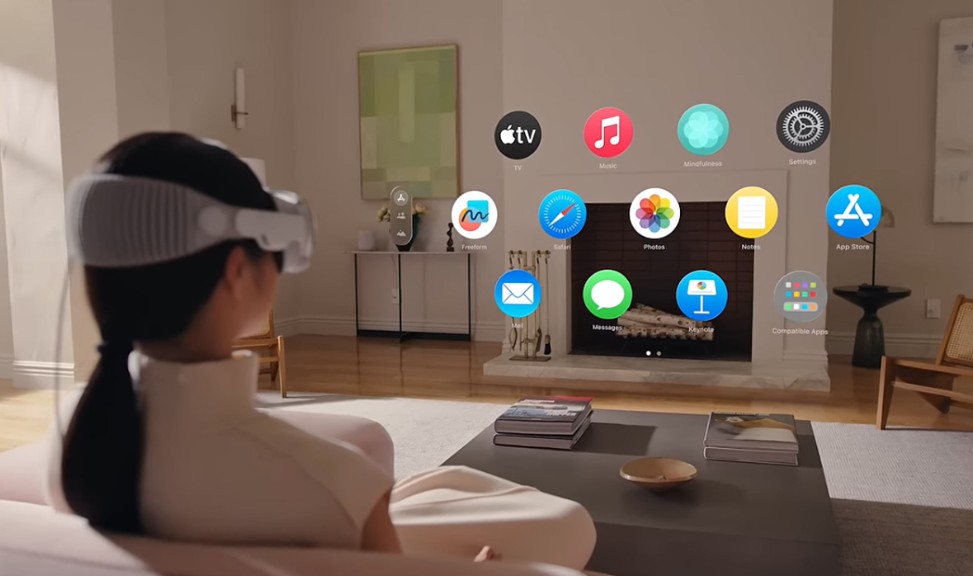
In this type of space, skeuomorphism and New Skeuo become the most suitable languages. They utilize light, buoyancy, and tactile-visual elements to guide natural human behavior. When users enter a virtual environment, a flat interface cannot convey enough information. But a floating button in 3D space, or a transparent panel with depth-of-field opacity, makes everything instantly clear.
3.2. Flat evolves, learning in depth from Skeuo to create a hybrid UI.
Modern design is gradually giving rise to a new style called Hybrid UI. This is a blend of the simplicity and functionality of flat design with the depth and subtle lighting of New Skeuo. The result is an interface that is both user-friendly and emotionally rich, lightweight yet still highly intuitive.
Hybrid UI doesn't try to be too flat, but it's not too flashy either. It retains the seriousness of flat design but adds the necessary depth to create a friendly and lively feel. In fact, this style can be seen in many prominent products today, from health apps to financial platforms and smart car dashboards.
Soft lighting, subtle shadows, and surface layers separated by thin raised surfaces allow users to quickly identify information levels and priorities. Hybrid UI achieves a hard-to-find balance between logic and emotion, between performance and aesthetics, making it a leading candidate for the interface of the future.
3.3. Why is Hybrid UI a logical step forward?
In practical use, Hybrid UI offers flexibility that previous styles lacked. Flat design is too simplistic in an increasingly information-rich world. Traditional Skeuo is too heavy and lacks the system sophistication for cross-platform experiences. Hybrid UI harmonizes all of these elements, creating an interface that is both intuitive and robust.
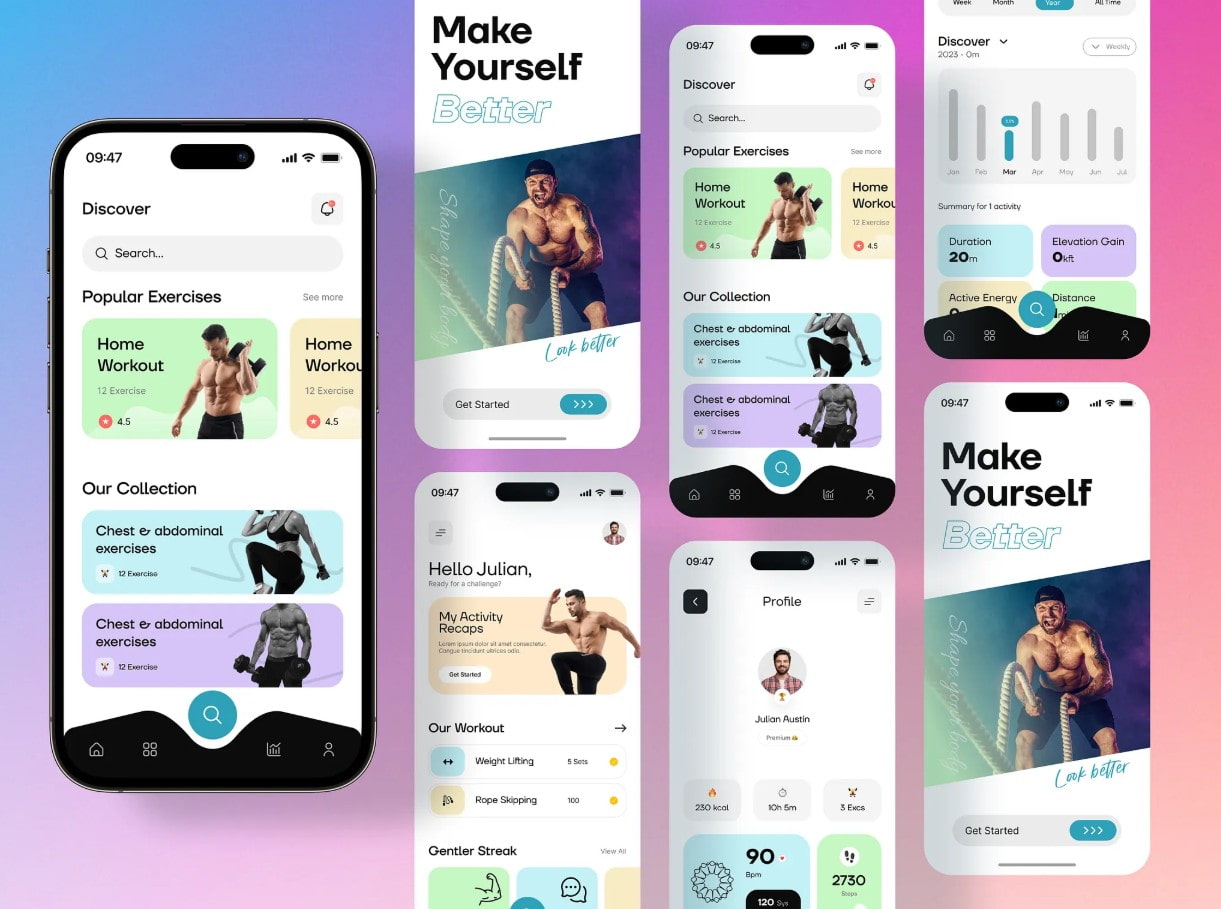
Hybrid UI reduces visual fatigue by using depth to naturally layer content. It increases comprehensibility by incorporating suggestive elements that flat design lacks. At the same time, it maintains a clean, modern look that fits seamlessly into larger design systems. In an era where interfaces must be compatible with countless different devices, flexibility is key. And Hybrid UI delivers on that comprehensively.
3.4. AI/3D technology applied with New Skeuo enables small teams to create user interfaces with rich depth.
The biggest weakness that caused traditional skeuomorphism to lose ground to flat design is the production cost. Creating a three-dimensional interface that accurately simulates materials and lighting requires a large team and a long time. However, with the widespread adoption of AI, 3D technology, and modern design tools, creating an interface with rich depth has become much easier.
Designers can now use AI to create sophisticated textures with just text descriptions. They can build a 3D interface on Figma or a real-time rendering engine without complex software. Engines that optimize lighting make modeling smoother. This allows even small teams to create products with the same depth as those from larger brands.
Flat design isn't outdated; it's simply entering a new phase. Skeuomorphism isn't returning to its original form, but rather being reborn in a more modern, richer, and more experiential version, suited to multidimensional technology. The future of UX/UI won't be a clash between flat and sculptural styles, but rather a strategic harmony between various styles to serve the diverse needs of users.
Flat design delivers excellent coherence and performance for simple tasks. New Skeuo creates emotional depth and strong intuitiveness for rich interactive environments. Hybrid UI combines both, opening the door to a new aesthetic where technology and emotion meet.














VIP Products


Best Selling Products
Upgrade genuine Capture One account
120 USD
ChatGPT Plus Account (GPT-4)
16 USD
Windows 10 & 11 Pro Key
36 USD
Upgrade Genuine Office 365
49 USD
Plugin Retouch4me
69 USD
MidJourney Account
29 USD
Freepik Premium Account
59 USD
Autodesk All App Account Copyright
120 USD
Adobe Photoshop Copyright - Full App
120 USD
Capcut Pro 1 Year
39 USD
Copyright Adobe Lightroom Account
59 USD
Upgrade Duolingo Super
29 USD
Genuine Adobe Illustrator account
99 USD
Genuine Cheap Canva Pro
39 USD
Adobe Premiere Pro Account
99 USD