Best Selling Products
Genuine Adobe Illustrator account
99 USD
Upgrade Genuine Office 365
49 USD
Adobe Photoshop Copyright - Full App
120 USD
Copyright Adobe Lightroom Account
59 USD

MidJourney Account
29 USD
Upgrade genuine Capture One account
120 USD
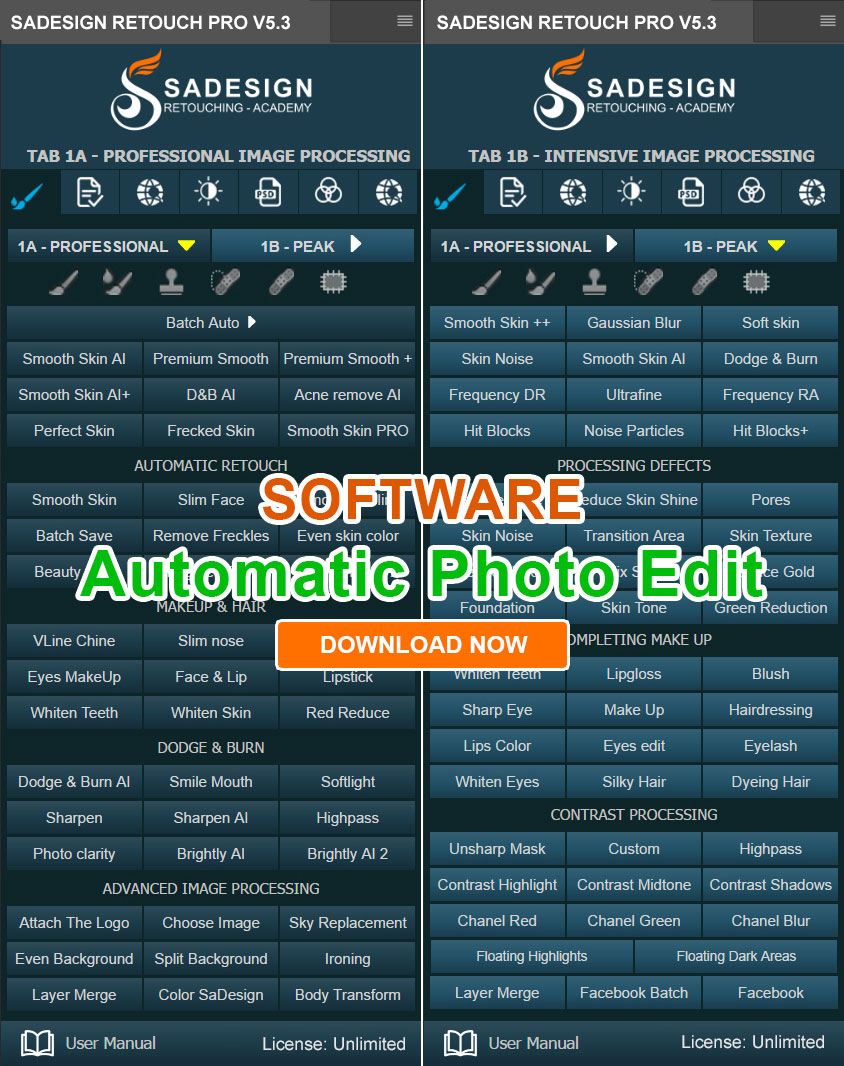
Plugin Retouch4me
69 USD
Windows 10 & 11 Pro Key
36 USD
Capcut Pro 1 Year
39 USD
ChatGPT Plus Account (GPT-4)
16 USD
Genuine Cheap Canva Pro
39 USD
Adobe Premiere Pro Account
99 USD

Freepik Premium Account
59 USD
Autodesk All App Account Copyright
120 USD
Upgrade Duolingo Super
29 USD
Gemini 3: A formidable competitor to ChatGPT, but will it be free?
Nội dung
Gemini 3 will profoundly improve reasoning, interaction, and content creation capabilities. With its high speed and stability, it is seen as Google's new hope in the AI race.
With the arrival of Gemini 3 , the global AI landscape is once again poised to enter a new phase of competition. We're not just talking about a typical upgrade; Gemini 3 is expected to be a groundbreaking leap, setting new standards for how humans interact with artificial intelligence, especially as AI increasingly becomes a natural part of both work and creative life. This article will delve into the key innovations and why Gemini 3 is considered Google's "blockbuster" in the world of next-generation AI.
1. Gemini 3's reasoning level is more like that of a real person.
One of the biggest challenges for all current AI models is the ability to reason like humans. Despite being trained with massive amounts of data and possessing high language comprehension skills, many models still suffer from "logical incompetence," meaning they may respond grammatically correctly but lack logic, consistency, or natural emotion in their reasoning.
Previous versions of Gemini have shown steady progress in simulating thinking: deeper question understanding, more natural responses, and reduced logical errors. However, the line between an intelligent model and a model that "truly understands" remains very wide. Therefore, the arrival of Gemini 3 is expected to be a breakthrough that will significantly narrow the gap between artificial intelligence and human thinking.
Gemini 3 goes beyond simply answering questions more accurately; it also aims for multi-step reasoning capabilities, a fundamental element if we want AI to become a reliable partner in work, learning, and creativity. Imagine asking an AI assistant how to optimize your company's supply chain, or suggesting growth strategies for your startup. A structured response, with analysis, reasoned decisions, and the ability to adapt to the situation, would be far better than a mechanical, formulaic answer.
Here, Gemini 3 is expected to be able to lead a conversation with a quality nearly comparable to ChatGPT, but sharper in its ability to recognize natural language and longer contexts. It can follow the flow of conversation for longer periods, remember details, reduce confusion, and especially minimize hallucinations.
Another important point is that Gemini 3 can automatically adjust its tone to the user's expression. When you're having a serious discussion, the AI can switch to a more analytical tone. When you're having a friendly conversation, the AI will respond with a softer, more approachable tone. This is a sign that Google is moving towards a highly personalized model, rather than just a machine that provides information.
2. Faster, lighter, and smarter.
Processing speed is a crucial factor in determining the user experience when interacting with AI. Even the most powerful model will frustrate users if it responds slowly or experiences significant delays, especially in work or continuous creative contexts.
Gemini 3 is expected to address this issue with significant performance improvements. Model optimization not only speeds up response times but also reduces the load on the processing infrastructure, ensuring stable operation even when running directly in a browser or on a mid-range device. For smartphone users, this will be a significant step forward, as high-level AI will become available anytime, anywhere, instead of only performing well on powerful servers.
Another noteworthy point is the "lightness" of the model. Google has long pursued the philosophy of creating models that are both powerful and compact enough for flexible deployment. If Gemini 3 retains this DNA, it will open up the possibility of integrating AI even into small browser applications, extensions, or offline software. This also helps increase the number of users, as they don't need powerful devices to fully utilize the power of AI.
3. Extensive integration and completely free?
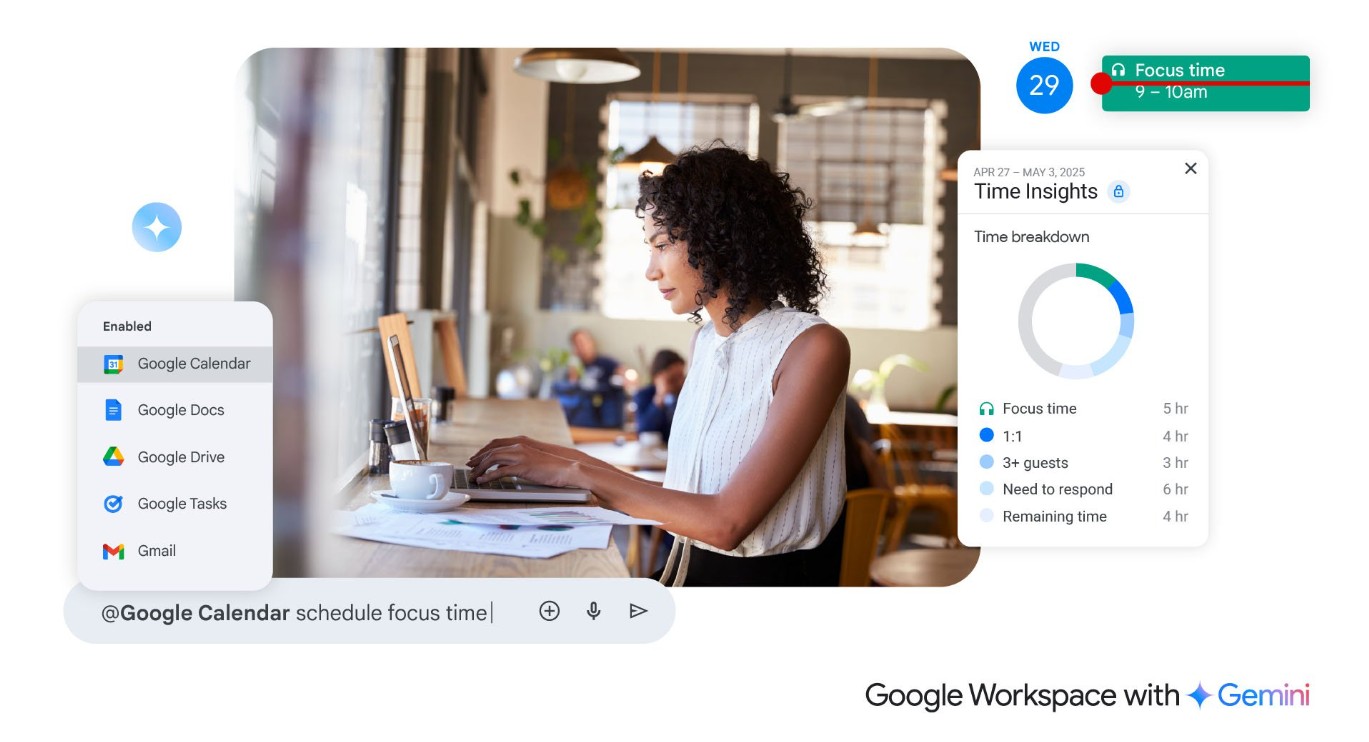
One of Google's biggest advantages is not just its technology, but also the scale of its ecosystem. From Gmail, Google Docs, Google Photos to Google Calendar, Workspace, and Android, Google's platform has billions of daily users. Therefore, when Gemini is deeply integrated into this ecosystem, it immediately becomes a tool that everyone can access without needing to learn anything extra.
Recently, Google has been testing several intelligent features in Gmail, such as “Help Me Schedule,” which allows users to automatically create meeting schedules based on email content. This is just the beginning of the “AI-ization” of the entire Google Workspace ecosystem.
With Gemini 3, the biggest expectation is that this model will become the default assistant, working seamlessly and readily available in every application. When composing text in Docs, you can ask AI to change the tone, optimize content, or extract data. In Sheets, Gemini 3 can analyze tables, create complex formulas, or visualize data without you having to remember syntax. In Gmail, AI can help write emails, suggest intelligent responses, or automatically summarize lengthy incoming messages.
What particularly interests the community is the possibility of Google offering a completely free, standard version of Gemini 3. This isn't far-fetched, as Google has a strong outreach strategy: readily offering free services on a large scale to gain a competitive advantage. If the standard version of Gemini 3 is free, Google will become a formidable competitor to all current commercial AI models, especially if its quality matches that of paid models.
Being free not only attracts mainstream users but also encourages businesses to research and integrate Gemini 3 into their operational processes. With the emergence of a powerful, fast, multimodal, and free model, the global AI ecosystem will witness a wave of applications more widespread than ever before.
4. The power of next-generation multimodal technology
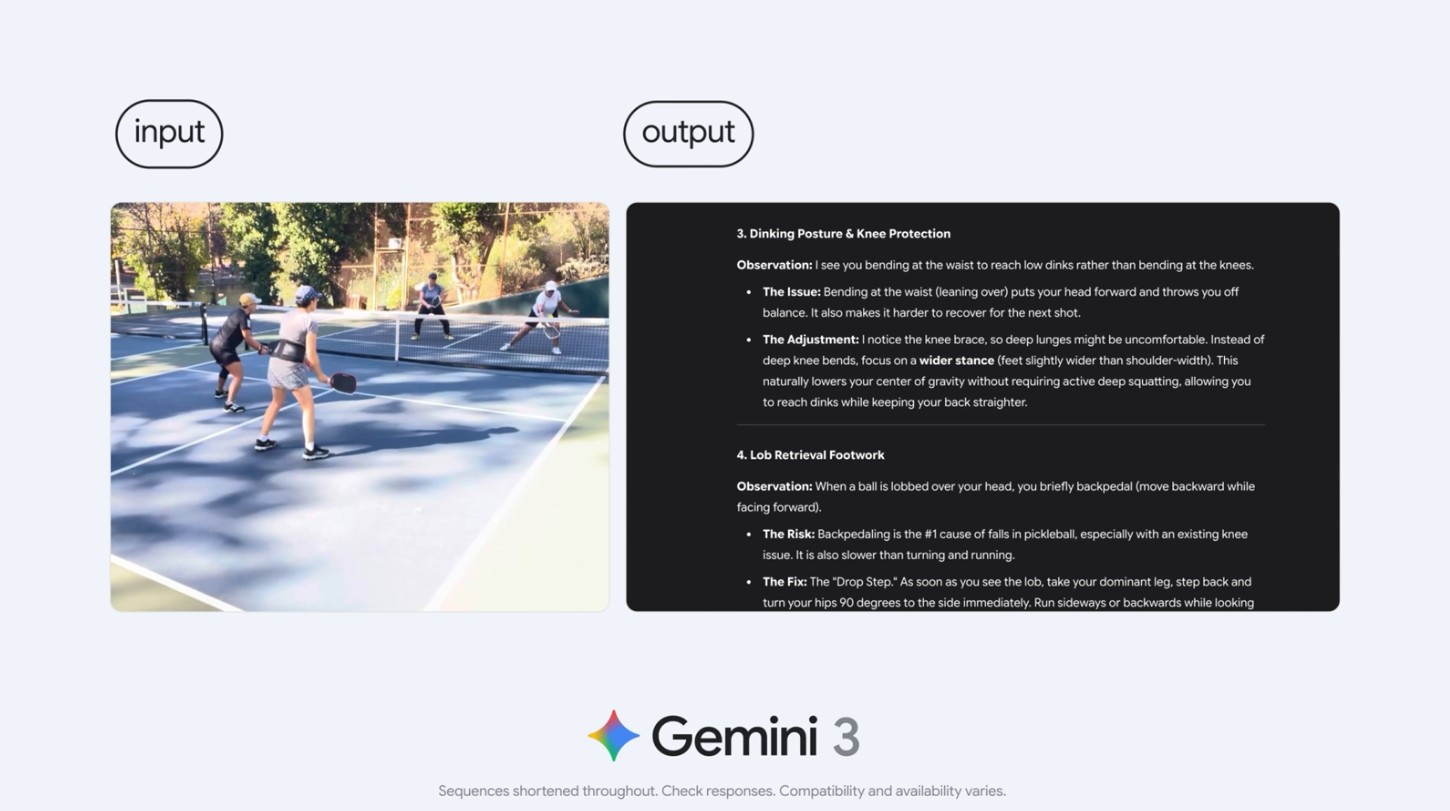
One of Gemini's defining characteristics is its multimodal capabilities: its AI not only understands text but also processes images, audio, and video. However, Gemini 3 is expected to be a leap forward, taking multimodal capabilities to a whole new level.
According to recent speculation, Gemini 3 may possess the ability to create long, smooth videos. If this capability approaches or even surpasses the quality of OpenAI's Sora 2, Gemini 3 could become an indispensable tool for content creators, filmmakers, and advertisers.
Video analysis capabilities are also predicted to improve significantly. An AI assistant that can understand movement, context, facial expressions, and character actions will create many new opportunities: from automated video editing, content summarization, and intelligent note-taking to assisting with production in professional studios.
Furthermore, Gemini 3 could also be equipped with the ability to recognize and generate text from images more accurately. If AI can read text on complex signs, blurry scanned documents, or artistic lettering, its potential for real-world applications will increase significantly.
5. A quality, quiet assistant.
One major difference between Google and competitors like OpenAI or xAI is its approach. Google doesn't try to release too many extra features in a short period of time; instead, they focus on perfecting the core experiences and ensuring every feature is truly useful.
Users sometimes feel overwhelmed by AI platforms that are constantly updating and adding new features, making it difficult for them to keep up or know which features to use correctly. Gemini, on the other hand, maintains a minimalist, clean approach and focuses on efficiency in their work.
Gemini 3 is also expected to follow that spirit: a powerful yet uncomplicated tool, an intelligent assistant that doesn't overwhelm users with a plethora of features. This is Google's familiar experience design style—lightweight, sophisticated, and genuinely focused on productivity.
The launch of Gemini 3 is not only a significant event for Google but also for the entire artificial intelligence industry. In the context of rapidly evolving AI models, Gemini 3 is expected to be a key milestone, ushering in a new era of multimodal AI that is faster, more powerful, and closer to human thought.









VIP Products
Best Selling Products
Genuine Adobe Illustrator account
99 USD
Upgrade Genuine Office 365
49 USD
Adobe Photoshop Copyright - Full App
120 USD
Copyright Adobe Lightroom Account
59 USD
MidJourney Account
29 USD
Upgrade genuine Capture One account
120 USD
Plugin Retouch4me
69 USD
Windows 10 & 11 Pro Key
36 USD
Capcut Pro 1 Year
39 USD
ChatGPT Plus Account (GPT-4)
16 USD
Genuine Cheap Canva Pro
39 USD
Adobe Premiere Pro Account
99 USD
Freepik Premium Account
59 USD
Autodesk All App Account Copyright
120 USD
Upgrade Duolingo Super
29 USD