
Best Selling Products

Genuine Adobe Illustrator account
99 USD

Copyright Adobe Lightroom Account
59 USD

Capcut Pro 1 Year
39 USD
Upgrade Duolingo Super
29 USD
Genuine Cheap Canva Pro
39 USD

Adobe Premiere Pro Account
99 USD
Upgrade genuine Capture One account
120 USD

Windows 10 & 11 Pro Key
36 USD

Plugin Retouch4me
69 USD
Autodesk All App Account Copyright
120 USD

Upgrade Genuine Office 365
49 USD

Freepik Premium Account
59 USD

MidJourney Account
29 USD
Adobe Photoshop Copyright - Full App
120 USD

ChatGPT Plus Account (GPT-4)
16 USD
Learn How to Write Meta Descriptions to Help Your Articles Achieve SEO Standards
Nội dung
- 1. What are Meta tags?
- 2. What is a Meta Description?
- 3. Why is Meta Description important in SEO?
- 4. Analyze the homepage meta description.
- 4.1. Homepage meta description tag length
- 4.2. Content of the meta description tag
- 4.3. Examples of effective meta description tags
- 5. Analyzing the meta description of the product page.
- 5.1. The card does not contain the entire homepage content.
- 5.2. Meta description providing the solution
- 5.3. Capitalize the meta description tag.
- 5.4. Clearly identify the product's unique and outstanding features.
- 5.5. End the card content with a half-sentence.
- 6. How to write a good meta description tag?
- 6.1. General content that meta description tags should have
- 6.2. Specific content required for meta description tags
- 6.3. Think carefully about your brand.
- 6.4. The Writing and Editing Process
- 7. How to write SEO-friendly meta descriptions
- 7.1. Keyword Appearance
- 7.2. Write an easy-to-read meta description.
- 7.3. Engaging content that matches the page
- 7.4. Appropriate length
- 7.5. No duplicate meta descriptions.
- 7.6. Consider using rich code snippets.
- 7.7. Attracting Attention
- 7.8. An impressive call to action (CTA)
- 8. Conclusion
In today''''s digital marketing world, optimizing content for search engines (SEO) is indispensable. One of the key components of an SEO strategy is the meta description.
1. What are Meta tags?
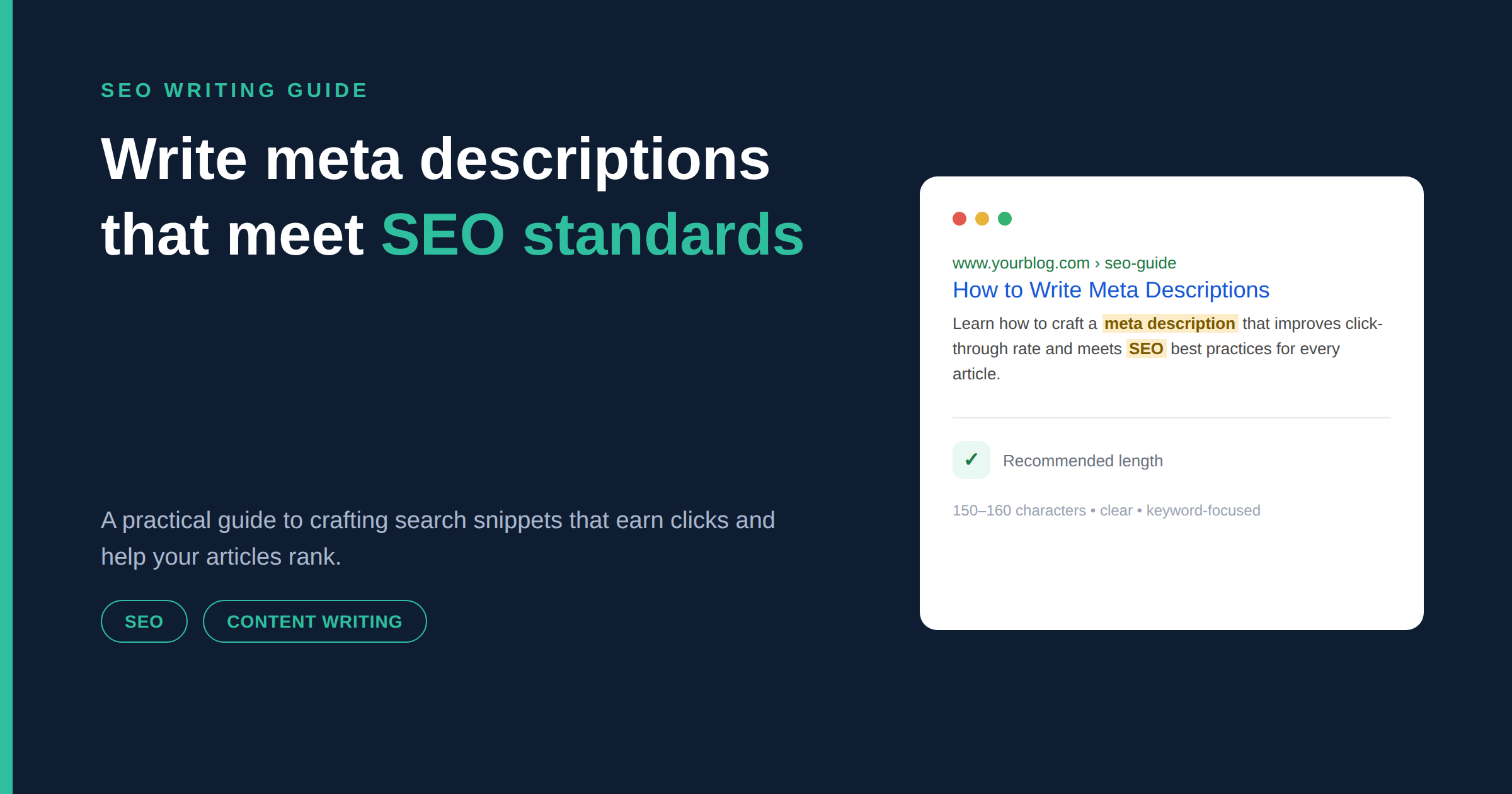
To understand meta descriptions, you first need to understand the concept of meta tags. Meta tags are pieces of code that describe the content of a webpage. A key characteristic of meta tags is that they don't appear directly on the webpage but only exist within its source code. These tags provide information to search engines, helping them understand the content and purpose of the page.
In SEO, there are four main types of meta tags you should know. First is Meta Keywords , which is a list of keywords related to the page's content. Second is Meta Title (or SEO title), which is the title users see at the top of their browser and is considered the page's name by search engines. Third, the Meta Description tag is a brief description of the page's content. Finally, Meta Robots is instructions for crawlers (bots) on how to process the page.
Understanding these meta tags will help you optimize your content more effectively. Each tag plays an important role in improving the visibility and interactivity of your website with users.
2. What is a Meta Description?
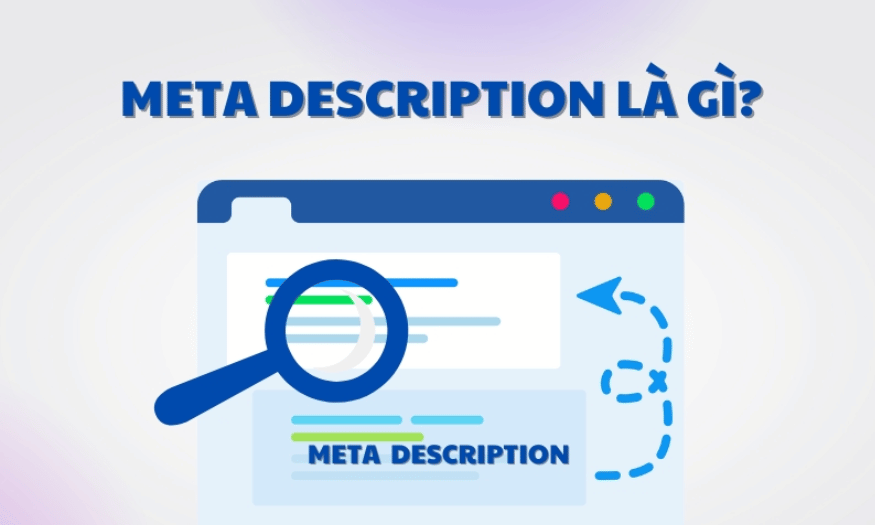
A meta description is a meta description tag, usually only about 155-160 characters long, that summarizes the content of a webpage. This description acts as a brief summary, providing an overview of the information users can find when clicking on a link. This is the answer to the question "what is a meta description?" that many people wonder about.
When users perform searches on search engines like Google, if the meta description contains the keywords they are searching for, it will be displayed in the search results. Although meta descriptions don't directly affect SEO rankings, they play a crucial role in attracting users to click on your link. A good meta description can increase the click-through rate (CTR) and lead to higher traffic to your website.

3. Why is Meta Description important in SEO?
Meta descriptions play a crucial role in your SEO strategy because they influence how users interact with your content. A compelling meta description can increase your click-through rate (CTR) from search engine results pages (SERPs). When users see an engaging description, they are more likely to click on your link, thereby increasing traffic to your site.
Additionally, meta descriptions provide a concise overview of the website's content to users. If the description is clear and engaging, users will feel they are getting value from reading your content. This not only improves the user experience but also contributes to increased engagement and reader retention.
Finally, while meta descriptions aren't a primary ranking factor in SEO, they indirectly influence page rankings by improving traffic. A good meta description will attract users, helping you build a stable and sustainable traffic stream for your website.

4. Analyze the homepage meta description.
When creating website content, many people mistakenly believe that referencing other sites' meta description tags will make it easier to create their own content. However, this is a serious mistake. Referencing others can lead to being influenced and lacking originality, resulting in bland and unappealing content. Instead, writing a meta description for your homepage should be based on fundamental principles and your own specific content. Below are some suggestions for creating an effective meta description for your homepage.
4.1. Homepage meta description tag length
Many people mistakenly believe that the meta description tag must be between 155-160 characters. However, this is not entirely accurate. You can choose a longer description, ranging from 155-300 characters. This extended length allows you to convey more information about your website content while still maintaining the necessary appeal to attract readers. Consider using a length that is appropriate for the content and specific goals of your homepage.
4.2. Content of the meta description tag
The content of your meta description tag is a crucial factor in determining click-through rates to your page. The meta description needs to provide a concise overview of the website's content while persuading users to click on the title tag. This process happens very quickly, and users often make decisions in seconds. Therefore, your content needs to be clear, engaging, and contain the necessary information to pique the reader's curiosity.
4.3. Examples of effective meta description tags
Let's consider some examples of successful meta description tags. For instance, Sadesign created a meta description tag with only 32 words, yet it still provided all the necessary information for the reader. This meta description tag not only clearly stated the SEO service but also used keywords like "reputable," "comprehensive," and "effective" to position the brand. Finally, the meta description included contact information, creating an opportunity for users who wanted to consult directly by phone. This shows that a well-written meta description tag can be highly effective in attracting users.

5. Analyzing the meta description of the product page.
Writing meta descriptions for product pages is generally easier than for the homepage, but several key elements still need attention to create an effective meta tag. When writing a meta description for a product page, you need to focus not only on describing the product but also on making it appealing to readers. Below are some tips to help you optimize your product page meta descriptions.
5.1. The card does not contain the entire homepage content.
It would be a big mistake to completely copy the content of your homepage meta description into your product page meta description. This not only dilutes the information but also fails to pique the reader's curiosity. Instead, provide specific and helpful information for your customers. For example, if you sell grout, let the reader know that this product is the perfect solution for construction projects. Or if you sell lawn mowers, help the reader visualize an easy journey in maintaining their garden. Differentiating your content will create a connection and attract customers to your product.
5.2. Meta description providing the solution
When writing a meta description for a product page, the content needs to highlight the solution your product offers to customers. An effective meta description will show how your product can solve a consumer's current need. This helps encourage readers to click on your product page. For example, Sadesign's meta description presented a solution to a customer's problem by emphasizing "market potential analysis" and "based on user search needs." This not only creates value but also demonstrates that your product is the optimal choice for their business.
5.3. Capitalize the meta description tag.
Capitalizing certain words in the meta description tag can be a bold move for a product page. While it's not advisable to capitalize the entire tag, emphasizing one or two key phrases can grab the reader's attention. Instead of capitalizing everything, choose specific words or phrases you want to highlight. For example, in Sadesign's meta description, words like "SEO Expert" and "Page Load Speed" are capitalized, making them stand out and grab the user's attention at first glance.
5.4. Clearly identify the product's unique and outstanding features.
In addition to providing basic information, you need to highlight the unique aspects of your product in the meta description tag. A good meta description tag will not only clearly state the content but also point out the factors that make your product stand out from the competition. For example, in the meta description tag for "SEO Content Creation," Sadesign emphasized "sustainable top ranking" and outlined the requirements for optimizing content for SEO. This not only helps readers better understand the product but also encourages them to click on the title to learn more about how to create effective content.
5.5. End the card content with a half-sentence.
Some SEO experts recommend ending your meta description with a full sentence. However, sometimes ending it in half a sentence can create a surprising and more engaging effect on click-through rates. This strategy is even more effective when you keep the meta description between 155-165 characters. Ending in half a sentence can create curiosity and make users want to click the link to learn more, thereby increasing the likelihood of interaction with your content.
6. How to write a good meta description tag?
Once you understand meta descriptions, it's crucial to know how to apply this knowledge to optimize your business. Writing a good meta description isn't just about summarizing the page's content; it's also about creating an engaging link that encourages users to click. To achieve this, you need to focus on key elements and answer two main questions: What are you offering? And why should users choose you?
6.1. General content that meta description tags should have
To write an effective meta description, you first need to define the general content it should contain. This includes clearly stating the product or service you offer and creating a compelling reason for users to click your link. You need to understand your target audience and what they are looking for. Think about highlighting the strengths and benefits of your product or service, thereby building trust and encouraging readers to explore further.
6.2. Specific content required for meta description tags
When writing meta descriptions for product pages, you need to ensure the content is not only clear but also specific. First, the description should answer the question of what product you are offering. Second, it should highlight why users should choose your product, such as quality, competitive pricing, or excellent customer service. For the homepage, emphasizing your brand and unique selling proposition is also crucial. Communicate your brand clearly to make a good impression on readers.
6.3. Think carefully about your brand.
Creating a meta description isn't just a simple task; it's an opportunity to showcase your brand identity. If your business has been around for years, consider feedback from previous customers to understand the value you provide. For new businesses, ask yourself what makes you confident in your ability to attract customers. Talking to others about your business can provide fresh and interesting perspectives for your meta description.
6.4. The Writing and Editing Process
Writing a meta description is like a creative process, where you may need to experiment with many different versions before finding the perfect one. Think of it like an elevator ride, where you might go through several "floors" (drafts) to arrive at the best description for your brand. Since this meta description card may be many customers' first contact with your brand, make sure you take the time to think it through and revise it until you're satisfied.

7. How to write SEO-friendly meta descriptions
Writing a meta description isn't simply about adding keywords; it's also about creating engaging content that increases click-through rates (CTR) and reduces bounce rates. Factors like user time spent on a page are also becoming increasingly important and impact website rankings in search engines. To write a standard SEO meta description, you need to pay attention to the following basic elements.
7.1. Keyword Appearance
One of the key elements of a standard SEO meta description is the presence of keywords. Ensuring that the main keyword appears in the meta description tag not only helps search engines easily identify it but also draws more user attention when that keyword is highlighted in search results. Make sure the keyword is placed naturally and clearly within the sentence to avoid feeling forced.
7.2. Write an easy-to-read meta description.
The meta description needs to be easy to read and natural. Stuffing too many keywords into the meta description not only makes the content difficult to understand but can also make users feel like you're trying to trick them. Start the description with the main keyword and then develop the content into a simple, easy-to-understand sentence. This creates a positive impression and encourages users to click the link.
7.3. Engaging content that matches the page
You should think of your meta description as an advertisement for your page. The content needs to be engaging and relevant to the information on the page to avoid misleading users. Make sure the meta description accurately reflects what users will find when they click the link. If the description doesn't match the actual content, users may feel disappointed and leave the page immediately.
7.4. Appropriate length
The length of a meta description is also important. While you can experiment with different lengths, it's best to keep it under 155-160 characters to ensure it doesn't get truncated in search results. If you have a lot of important information, make sure your main keywords are placed near the beginning of the description for easy visibility.
7.5. No duplicate meta descriptions.
Each page on your website should have a unique meta description tag. Copying descriptions from one page to another can lead to Google penalties for duplicate content. Take the time to write a unique description for each page; this not only optimizes SEO but also creates a better user experience.
7.6. Consider using rich code snippets.
Using schema markup can help increase the appeal of your meta description tag. By adding elements such as star ratings, product information, or customer reviews, you can attract more user attention. These elements not only make your description stand out but also provide additional useful information for the reader.
7.7. Attracting Attention
To capture users' attention, you need to highlight the clear benefits your article or product offers. This could include promotions, discounts, or solutions to a problem the customer is facing. Remember that users only spend about 3-5 seconds deciding whether to click a link or not, so provide a compelling reason right from the start.
7.8. An impressive call to action (CTA)
Ultimately, a strong call to action can be the deciding factor in getting users to click on your page. Phrases like "Get a consultation now," "View now," or "Buy now" not only create urgency but also motivate users to take action. When you combine a CTA with the benefits your product or article offers, you create a powerful push to convert emotion into action.

8. Conclusion
Writing meta descriptions isn't a simple task, but if you master the basics, you can create compelling and effective descriptions. Consider this a crucial part of your SEO strategy, as it not only improves search rankings but also attracts readers to your content. Remember, in this competitive world, a good meta description can be the deciding factor in users choosing you over your competitors.
















VIP Products





Best Selling Products
Genuine Adobe Illustrator account
99 USD
Copyright Adobe Lightroom Account
59 USD
Capcut Pro 1 Year
39 USD
Upgrade Duolingo Super
29 USD
Genuine Cheap Canva Pro
39 USD
Adobe Premiere Pro Account
99 USD
Upgrade genuine Capture One account
120 USD
Windows 10 & 11 Pro Key
36 USD
Plugin Retouch4me
69 USD
Autodesk All App Account Copyright
120 USD
Upgrade Genuine Office 365
49 USD
Freepik Premium Account
59 USD
MidJourney Account
29 USD
Adobe Photoshop Copyright - Full App
120 USD
ChatGPT Plus Account (GPT-4)
16 USD