Best Selling Products

Freepik Premium Account
59 USD

Capcut Pro 1 Year
39 USD

Genuine Cheap Canva Pro
39 USD

MidJourney Account
29 USD

Genuine Adobe Illustrator account
99 USD
Upgrade genuine Capture One account
120 USD

Windows 10 & 11 Pro Key
36 USD

Adobe Photoshop Copyright - Full App
120 USD
Autodesk All App Account Copyright
120 USD
Copyright Adobe Lightroom Account
59 USD

Upgrade Genuine Office 365
49 USD

Adobe Premiere Pro Account
99 USD
Plugin Retouch4me
69 USD

Upgrade Duolingo Super
29 USD

ChatGPT Plus Account (GPT-4)
16 USD
Leica M EV1: A Technological Masterpiece or a Compromise from Leica?
Nội dung
- 1. Advantages and disadvantages ofthe Leica M EV1
- 1.1. Advantages
- 1.2. Disadvantages
- 2. EV1 Review: Design Language
- 2.1. Design, weight, and dimensions
- 2.2. Telescope
- 2.3. Grip Experience
- 2.4. Screen
- 2.5. Storage
- 3. Evaluating the focusing capabilities of the Leica M EV1
- 4. Image quality assessment
- 5. Battery and operating time
Boasting a 60MP sensor and a luxurious design, the M EV1 remains controversial due to the removal of the optical viewfinder. What are its strengths that earn it praise? And what are its drawbacks that make photographers hesitate?
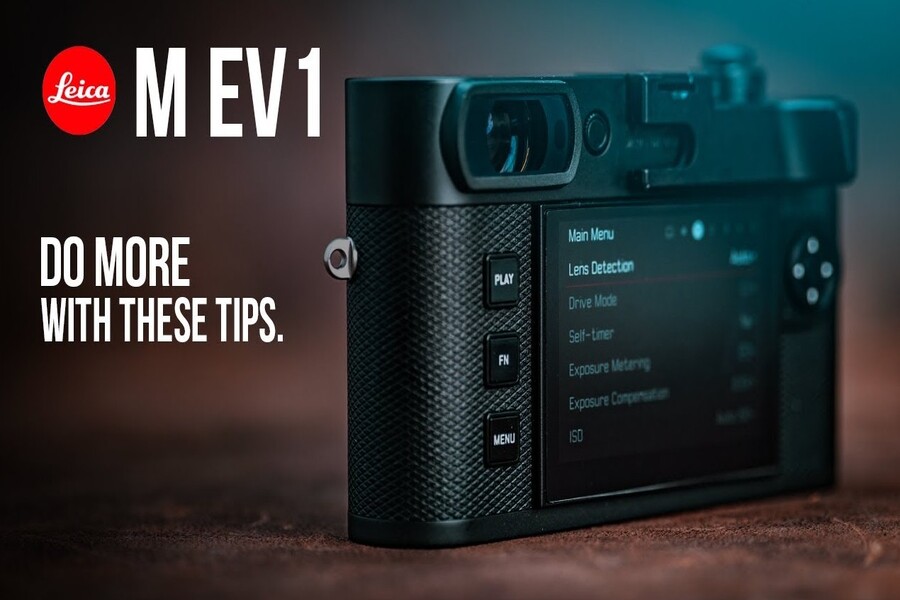
The Leica name has long been a symbol of sophistication, precision, and a pure photographic experience that few brands can match. Each Leica product is expected to be more than just a tool for capturing images; it's an artistic statement, where users can clearly feel the design philosophy, materials, shutter sound, and the streamlined beauty of mechanical photography. The Leica M series is the clearest example of this philosophy: emphasizing craftsmanship, slow but profound, bringing the photographer back to the feeling of being an "artist" rather than a "camera technician."
However, when Leica unveiled the Leica M EV1 , things became more exciting than ever. This wasn't just a new M-series camera; it represented a turning point for Leica, breaking away from the traditional optical viewfinder to introduce a completely new electronic viewfinder (EVF) system. Traditional M-series users might be surprised, even somewhat skeptical, but at the same time excited by the prospect of a more versatile, intuitive, and practical Leica M for modern photography.
The question is: Does the Leica M EV1 truly live up to the legendary M series? Or is it a "transitional" version lacking the refinement to convince long-time loyal users? Let's delve into this detailed review to find the answer.
1. Advantages and disadvantages ofthe Leica M EV1
The Leica M EV1 carried high expectations, especially as it marked a significant shift in both design and operation. Overall, the camera possesses many attractive strengths, particularly for users seeking a more accessible Leica M, but it still has some limitations.
1.1. Advantages
The most outstanding feature of the Leica M EV1 is undoubtedly its high-resolution electronic viewfinder (EVF) , which provides far more precise and intuitive focusing than traditional rangefinder mechanisms. Many Leica users often struggle with fast focusing or when using lenses with shallow depth of field. The M EV1's EVF completely solves this problem, while also supporting frame magnification to ensure that every point in focus is precisely adjusted.
.jpg)
The 60MP full-frame sensor is also a strong point of the M EV1. This sensor has proven its quality on the M11 and Q3, delivering sharp, detailed, and deep images. Those who like to crop images or need high-resolution images for printing will find the M EV1 a convincing experience.
Leica's designs have always exuded a premium feel, and the M EV1 is no exception. From the leather wrapping and meticulously finished metal components to every curve and button, everything is crafted with the precision and sophistication characteristic of Leica. This is a camera whose value is felt simply by holding it.
Ultimately, the M EV1's image quality remains distinctly Leica: depth, smooth tonal transitions, sharpness without harshness, creating a beauty that is both classic and modern. Those who have used Leica cameras understand this "magic" that makes it difficult for users to abandon the brand.
1.2. Disadvantages
The lack of a protective coating for the EVF is a significant drawback. Users who frequently shoot outdoors will easily encounter fingerprints, moisture, or oil buildup on the viewfinder, which can be annoying when quick aiming is needed.
The rear screen of the M EV1 retains a fixed design, measuring 2.95 inches, making it significantly smaller than current standards. This reduces versatility, especially for those accustomed to shooting from low or high angles.
Battery life isn't particularly impressive either, especially since the inclusion of the EVF causes the camera to drain power significantly faster compared to traditional mechanical M models.
2. EV1 Review: Design Language
The Leica M EV1 continues Leica's minimalist yet iconic design philosophy. Despite numerous technical changes, the camera retains its familiar classic look, making it easily recognizable as a member of the Leica M family.
.jpg)
The biggest difference is the removal of the optical rangefinder viewfinder , giving way to a flatter, more modern front design. This made the EV1 a Leica M camera that "didn't look like a Leica M," but over time, users began to see it as an innovation that fit the minimalist design trend of the era.
Despite the changes, the M EV1 retains its classic feel thanks to its magnesium and aluminum alloy body, combined with a premium faux leather finish. Every line still exudes a nostalgic vibe, but is refined enough to be modern and not outdated.
2.1. Design, weight, and dimensions
The Leica M EV1 feels great in the hand despite its extremely minimalist design. The feel is a perfect combination of solidity, weight, and maneuverability. Its compact size means it won't feel cumbersome even when carried all day.
The improved shutter system results in a much quieter clicking sound. When shooting street photography, this silence is a huge advantage, helping photographers maintain the naturalness of the moment.
The M EV1 is only available in black, but this black color perfectly suits the minimalist spirit of the modern M series. The device is also lighter than the M11, making it more comfortable to use for extended periods.
2.2. Telescope
Leica's inclusion of an EVF in the M series was a major breakthrough. The 5.76-megapixel electronic viewfinder provides sharp, accurate colors and virtually no lag.
.jpg)
Practical experience shows that this viewfinder provides excellent support to users in many challenging lighting situations. When shooting against the light, the EVF display allows users to easily control exposure without having to guess, unlike traditional rangefinder cameras.
The 1.3x or 1.8x magnification capability allows for fast and accurate manual focusing, especially when using large aperture lenses like the Summilux. Focus Peaking also helps to clearly display the focus area.
The biggest drawback is the lack of a protective coating, forcing users to clean the scope more often than desired.
2.3. Grip Experience
Despite its beautiful design, the M EV1 doesn't offer a truly secure grip with one hand, due to its rather flat front surface. Users can address this issue with a grip accessory sold separately by Leica, however, this comes at a considerable cost.
When a grip is attached, the experience is significantly improved. The camera becomes more stable, secure, and easier to handle, especially when holding it for extended periods of continuous shooting.
2.4. Screen
The 2.95-inch LCD screen, though small and non-tilting, boasts a very high resolution and responsive touch capabilities. This allows for clear information display and image review. Leica remains loyal to the fixed screen, aiming to preserve the classic feel and unibody construction of the camera.
.jpg)
2.5. Storage
The M EV1 boasts a 3GB buffer memory, allowing for smoother continuous shooting compared to previous models. It also offers 64GB of internal storage, providing convenience by eliminating the need for an SD card in many situations.
3. Evaluating the focusing capabilities of the Leica M EV1
The focusing capabilities on the M EV1 are greatly improved thanks to the magnifying EVF and Focus Peaking. This gives users more confidence than ever before in manual focusing. This feature is especially important for portraits, close-ups, or when using large aperture lenses.
Although not autofocus, the M EV1 makes focusing feel natural and precise, in keeping with the "slow but steady" philosophy of Leica M.
4. Image quality assessment
The image quality of the Leica M EV1 is truly captivating. The 60MP sensor delivers impressive detail, and its wide dynamic range helps retain information in both bright and dark areas. Leica photos are renowned for their soft sharpness, harmonious contrast, and subtly cinematic colors.
Images at low ISO are smooth and clear, medium ISO remains very clean, and even high ISO retains good detail. This makes the M EV1 a powerful tool for street photography, portraits, and landscapes.
.jpg)
5. Battery and operating time
Battery life isn't a strong point of the M EV1, especially since the EVF consumes more power. However, it's still sufficient for a full day of shooting if the user doesn't shoot continuously. The USB-C charging capability is convenient, but the port's location makes placing the camera while charging a bit inconvenient at times.
The inclusion of 64GB of internal storage is a major plus, reducing the need to remove the battery or memory card too frequently.
The Leica M EV1 is a special camera because it marks a turning point for the entire Leica M line. Although it no longer has an optical rangefinder, the M EV1 retains the soul of the M series: minimalist, handcrafted, and delivering a slow but emotionally resonant experience.

















VIP Products






Best Selling Products
Freepik Premium Account
59 USD
Capcut Pro 1 Year
39 USD
Genuine Cheap Canva Pro
39 USD
MidJourney Account
29 USD
Genuine Adobe Illustrator account
99 USD
Upgrade genuine Capture One account
120 USD
Windows 10 & 11 Pro Key
36 USD
Adobe Photoshop Copyright - Full App
120 USD
Autodesk All App Account Copyright
120 USD
Copyright Adobe Lightroom Account
59 USD
Upgrade Genuine Office 365
49 USD
Adobe Premiere Pro Account
99 USD
Plugin Retouch4me
69 USD
Upgrade Duolingo Super
29 USD
ChatGPT Plus Account (GPT-4)
16 USD