Best Selling Products

Upgrade Genuine Office 365
49 USD

Adobe Premiere Pro Account
99 USD

Genuine Adobe Illustrator account
99 USD

Plugin Retouch4me
69 USD

Windows 10 & 11 Pro Key
36 USD

Upgrade Duolingo Super
29 USD

Freepik Premium Account
59 USD
Upgrade genuine Capture One account
120 USD

MidJourney Account
29 USD
Adobe Photoshop Copyright - Full App
120 USD

Copyright Adobe Lightroom Account
59 USD
Autodesk All App Account Copyright
120 USD

ChatGPT Plus Account (GPT-4)
16 USD

Capcut Pro 1 Year
39 USD

Genuine Cheap Canva Pro
39 USD
Fujifilm X-T30 III Review: A Compact Yet Surprisingly Powerful Mirrorless Camera
Nội dung
- 1. Advantages and disadvantages
- 1.1. Advantages
- 1.2. Disadvantages
- 2. Fujifilm X-T30 III Review: Design Language
- 2.1. Design, dimensions, and weight
- 2.2. Distinguishing between X-T30 III and X-T30 II
- 2.3. New Film Simulation dial and recipe menu
- 2.4. Control knob
- 2.5. Built-in flash
- 3. Image Quality Review of the Fujifilm X-T30 III
- 4. Review of Fujifilm X-T30 III video quality
- 5. Image stabilization feature
- 6. Summary and Review of Fujifilm X-T30 III
Despite its compact size, the X-T30 III boasts a new processor and significantly faster autofocus. Is it the perfect choice for travelers, street life enthusiasts, and content creators?
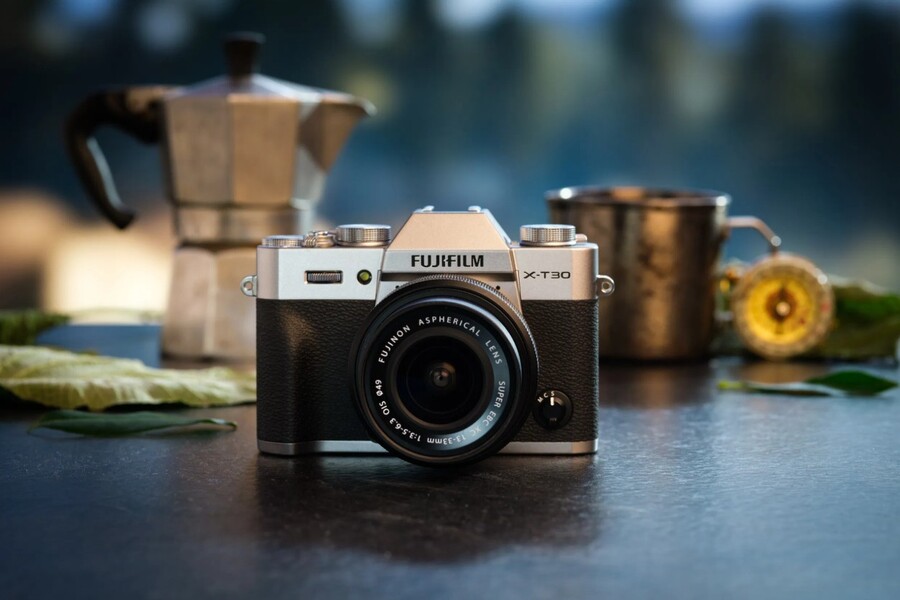
Fujifilm has become a household name in the photography community thanks to its distinctive design philosophy, traditional dial interface, and unique color quality. In the mid-range mirrorless camera segment, the Fujifilm X-T30 has always stood out for its combination of classic design, powerful shooting capabilities, and reasonable price. Now, with the Fujifilm X-T30 III, the company continues to refine this product line by upgrading the processor, improving autofocus, adding useful adjustments, and optimizing the user experience.
The X-T30 III can be described as a camera that lies between two worlds: powerful enough for high-performance users, yet compact enough for those who prefer a camera for everyday travel. However, in the context of a highly competitive mirrorless market with rivals from Sony, Canon, and even Fujifilm in the higher segment, the question is: Does the X-T30 III have what it takes to compete effectively in its price range? And what are the reasons you should consider this model over other options?
1. Advantages and disadvantages
1.1. Advantages
In this new generation, Fujifilm continues to retain the strengths that made the X-T30 series so appealing. The classic design spirit is maintained almost entirely: from the square body and the layout of the control dials to the embossed lettering in a retro style. The highlight of the X-T30 III comes from the addition of small but extremely useful details, making the user experience much smoother than its predecessor. The new Film Simulation dial is located directly on the camera body, allowing users to quickly switch between color modes without having to open the menu. This is extremely suitable for fast, flexible shooting styles or those who love color-accurate JPEG images from the camera.
The X-T30 III also scores points for its very compact size. Carrying it in a backpack, messenger bag, or even a tote bag is simple, something larger models like the X-T5 struggle with. The X Processor 5, which is found in many higher-end Fujifilm models, delivers fast autofocus, more accurate subject tracking, and excellent support for high-quality video formats. At Fujifilm's price point, this performance is considered a great deal.
.jpg)
Overall, the X-T30 III is a suitable camera for both beginners and seasoned photographers who want a retro-looking device that delivers stable image quality, beautiful colors right out of the box, and allows for easy creativity in any situation.
1.2. Disadvantages
Despite many commendable improvements, the X-T30 III still has a few limitations. While its compact body offers portability, it doesn't feel particularly secure in the hand, especially for those with larger hands. The lack of weather resistance means users need to be more cautious when traveling or shooting in challenging environments such as light rain, wind, dust, or humidity.
Furthermore, the screen can only be tilted in two directions, making vlogging or taking selfies less flexible. This is unfortunate, as competitors in the same segment are gradually equipping their devices with multi-directional rotating screens. Compared to the increasing demands of content creators, this limitation may somewhat affect the user experience.
However, these drawbacks are not actually too serious considering Fujifilm's target user group: those who prefer traditional photography and don't require the high-end modern features of a professional vlogger.
2. Fujifilm X-T30 III Review: Design Language
2.1. Design, dimensions, and weight
The Fujifilm X-T30 III retains the brand's signature philosophy: a classic look, the use of numerous mechanical dials, and a nostalgic feel when held. This not only sets it apart in a highly industrialized camera market but also allows users to focus on the shooting experience. Those who love retro design will certainly appreciate the classic SLR style with its protruding "hump" containing the EVF, a detail reminiscent of film cameras from a bygone era.
The X-T30 III is one of the smallest in the XT series, measuring just 118.4 x 82.8 x 46.6 mm. Weighing 329g for the body only and 503g with the kit lens attached, it's an ideal choice for travel or long street shooting sessions. Users can easily wear the camera all day without feeling burdened.
However, the compact size also has certain drawbacks. Details such as the shallower grip to optimize the size sometimes result in a less substantial feel in the hand. For those accustomed to larger camera bodies from Fujifilm, this feeling may take some time to adjust to.
.jpg)
In terms of build quality, the X-T30 III strikes a reasonable balance within its segment. The body is sturdy, the dials have good responsiveness, and operation is pleasant. While it doesn't reach the sophistication of higher-end models like the X-T5 or X-Pro3, the build quality of the X-T30 III is still convincing enough for a mid-range camera.
2.2. Distinguishing between X-T30 III and X-T30 II
In terms of appearance, it's difficult to distinguish the new version from the X-T30 II model. The two cameras are almost identical, from the overall design to the layout of the control buttons. However, Fujifilm has refined a few key points that make the X-T30 III different.
The most obvious identifying feature is the "X-T30 III" lettering printed at the bottom edge of the rear screen. Additionally, the familiar Drive dial from the previous generation has been replaced with Film Simulation, as Film Simulation is a strength of Fujifilm and is used much more frequently than Drive. The Drive function has been moved to the Delete button, making it a multi-functional button that can access two different features.
These changes, though small, offer a more flexible and convenient experience, making the X-T30 III a truly refined upgrade in the spirit of "fine-tuning for perfection."
2.3. New Film Simulation dial and recipe menu
Film Simulation has always been Fujifilm's "secret weapon" in winning over users who love classic photo colors. The X-T30 III takes this experience to a new level with a Film Simulation dial located directly on the camera body, allowing for instant switching between color modes such as Classic Chrome, Provia, Astia, or Classic Neg without opening the menu.
.jpg)
Furthermore, the company has added three dedicated slots for custom color recipes. Those who prefer using custom color recipes will find it extremely convenient to simply turn the knob to switch to their favorite color tone.
In addition, the recipe menu is separated from the focus or video settings to avoid accidentally changing unwanted parameters. This demonstrates Fujifilm's meticulous approach to optimizing the user interface.
2.4. Control knob
Fujifilm's dial design has always been highly praised for its clarity and coherence. On the X-T30 III, this system remains unchanged: exposure compensation knob, shutter speed knob, aperture control knob (depending on the lens), and other specialized function buttons. This provides a feel and operation similar to a classic film camera, allowing users to focus more on the shooting process.
In the mid-range camera segment, not many brands offer such a comprehensive set of rotary dials. This makes the X-T30 III particularly attractive to users who prefer a "true" photography experience rather than relying too heavily on electronic controls.
2.5. Built-in flash
While many manufacturers have removed built-in flashes from camera bodies, Fujifilm has retained this feature on the X-T30 III. Although not powerful, the built-in flash is extremely useful in situations with slightly low light, backlit shots, or when you want to create a small highlight on the subject's eyes. For beginners, the presence of a built-in flash can be considered a major advantage as it eliminates the need to invest in a separate flash unit.
.jpg)
3. Image Quality Review of the Fujifilm X-T30 III
The Fujifilm X-T30 III inherits the 26.1MP X-Trans CMOS IV sensor and is upgraded to the X Processor 5. This delivers superior sharpness, excellent dynamic range, and accurate colors in the Fujifilm style.
When paired with the XC 15–45mm or XC 13–33mm kit lenses, the center of the image boasts high sharpness and accurate color reproduction. The edges may experience a slight decrease in sharpness, but this is negligible in most situations. What many people love about Fujifilm is its ability to process JPEG colors directly: by selecting the appropriate simulation film, users can obtain beautiful images without extensive editing.
Fujifilm is particularly strong in the street photography and travel photography segments due to its vibrant colors, pleasing contrast, and good noise handling in low-light conditions. With the X-T30 III, image quality is comparable to higher-end cameras in most everyday situations.
Autofocus is a significant improvement. The camera recognizes people, animals, and vehicles. The focusing speed is noticeably faster, especially in challenging lighting conditions. However, continuous tracking still can't surpass Sony or Canon, but it's sufficient for most semi-professional and professional users.
4. Review of Fujifilm X-T30 III video quality
Video recording capabilities are one of the most surprising aspects of the X-T30 III. With the support of the X Processor 5, it can shoot 6.2K 30p open-gate, allowing for the full use of the 3:2 sensor for more flexible post-processing. This is especially useful for multi-platform content creators; you can shoot once and then crop the video for YouTube, TikTok, or Reels while maintaining quality.
Additionally, the camera supports 4K 60p and FHD 240p recording, allowing for smooth slow-motion effects. Video colors when using film simulation have good contrast, suitable for those who prefer videos without overly complex color grading.
.jpg)
The drawback lies in the screen only flipping in two directions, making it difficult to shoot vlogs or self-portraits. Users can overcome this by using the Fujifilm XApp to preview from their phone, but this is not as convenient as a multi-directional flip screen.
5. Image stabilization feature
The Fujifilm X-T30 III uses a digital image stabilization (DIS) system when shooting video. When combined with lenses that have OIS, shake is reduced more effectively, making it suitable for handheld shooting in many situations. However, the lack of in-camera image stabilization (IBIS) puts the camera at a disadvantage compared to some competitors, especially when shooting in low light conditions or using lenses without image stabilization.
Battery and usage time: The familiar NP-W126S battery continues to be used. Users can take approximately 315–425 photos depending on the mode. This number isn't very high, but it's still sufficient for a typical day of shooting. The camera supports USB-C charging, making it very convenient to carry a power bank.
Direct Instax printing support: A very interesting and distinctly Fujifilm feature is the ability to print Instax photos directly from the camera. The X-T30 III supports Mini, Square, and Wide printers. Users can take a photo and print a unique film image immediately.
6. Summary and Review of Fujifilm X-T30 III
The Fujifilm X-T30 III isn't a revolutionary camera, but it's a subtle upgrade based on what users truly need. From its beautiful retro design and compact size to its powerful image quality and the inclusion of a rotary film simulation knob, it shows that Fujifilm understands its target audience.
.jpg)
The upgrade from the new processor results in faster autofocus, more vibrant colors, and smoother video recording. These seemingly small details make a significant difference in the real-world experience. The X-T30 III can effectively meet the needs of photography enthusiasts, semi-professional content creators, or travelers who want a lightweight yet powerful camera.
Despite some limitations such as the lack of IBIS and a non-rotating screen, these drawbacks are entirely acceptable considering Fujifilm's price point. In a market where mirrorless cameras are becoming increasingly expensive, the X-T30 III maintains a reasonable and accessible price while delivering performance that exceeds its segment.
If you're looking for a camera that's aesthetically pleasing, produces beautiful images, is easy to use, suitable for both still photography and videography, and has an optimal price, the Fujifilm X-T30 III is definitely a name worth considering.
















VIP Products






Best Selling Products
Upgrade Genuine Office 365
49 USD
Adobe Premiere Pro Account
99 USD
Genuine Adobe Illustrator account
99 USD
Plugin Retouch4me
69 USD
Windows 10 & 11 Pro Key
36 USD
Upgrade Duolingo Super
29 USD
Freepik Premium Account
59 USD
Upgrade genuine Capture One account
120 USD
MidJourney Account
29 USD
Adobe Photoshop Copyright - Full App
120 USD
Copyright Adobe Lightroom Account
59 USD
Autodesk All App Account Copyright
120 USD
ChatGPT Plus Account (GPT-4)
16 USD
Capcut Pro 1 Year
39 USD
Genuine Cheap Canva Pro
39 USD