Best Selling Products

Upgrade Genuine Office 365
49 USD

Capcut Pro 1 Year
39 USD

Genuine Adobe Illustrator account
99 USD

Genuine Cheap Canva Pro
39 USD

Copyright Adobe Lightroom Account
59 USD

Freepik Premium Account
59 USD

Upgrade genuine Capture One account
120 USD

Adobe Photoshop Copyright - Full App
120 USD

MidJourney Account
29 USD

Adobe Premiere Pro Account
99 USD

Upgrade Duolingo Super
29 USD

Windows 10 & 11 Pro Key
36 USD

ChatGPT Plus Account (GPT-4)
16 USD

Plugin Retouch4me
69 USD

Autodesk All App Account Copyright
120 USD
Negative space in photography: The secret to creating spacious and emotionally rich compositions.
Nội dung
- 1. What is Negative Space in Photography?
- 2. Characteristics of Photographs Taken in Negative Space
- 3. Simplify the Context
- 4. Position the Subject Out of Frame
- 5. Utilize the Sky and Open Space
- 6. Utilize Simple Colors
- 7. Controlling Depth of Field (DOF)
- 8. Use Light to Create Space
- 9. Purposeful Framing and Trimming
- 10. Types of Photos Suitable for Soundproof Spaces
- 11. Common Mistakes When Taking Photos in Negative Space
- 12. Practical Tips to Improve Your Skills
Empty space within a frame can tell a powerful story if used correctly. This article shares tips for creating light and airy compositions without being monotonous. Suitable for both beginners and professional photographers.

1. What is Negative Space in Photography?
In photography, negative space refers to the empty space surrounding or interspersed between the main subjects in the frame. This could be the vast sky above a person, the calm water in front of a boat, a plain wall behind the subject, or simply areas of light and shadow that do not contain any prominent visual information.
The key to negative space lies not in how much "empty" it is, but in its visual role. This space exists to highlight the subject, guide the viewer's gaze, and create rhythm in the composition. In many cases, it is the negative space that determines the emotional impact of the photograph, while the subject only serves to initiate initial attention.
Contrary to the popular belief that a beautiful photograph needs to be "full," photography that effectively utilizes negative space demonstrates a maturity in visual thinking. The photographer no longer tries to cram in information, but actively chooses what should appear and what should be omitted. This is very similar to the minimalist philosophy in design, where empty space is not considered superfluous but a design element of equal value to the content.
2. Characteristics of Photographs Taken in Negative Space
Photographs that utilize negative space often evoke a sense of lightness and airiness at first glance. Instead of being overwhelmed by too much detail, viewers have time to observe, feel, and connect with the image. This is one of the reasons why negative space photographs are often considered subtle and profound.
One noticeable feature is that the main subject doesn't occupy too much space in the frame. It's placed in a wider area, where the background has been simplified in terms of detail, color, and texture. This allows the viewer's gaze to focus more quickly, while also creating a visual balance between the subject and its surroundings.
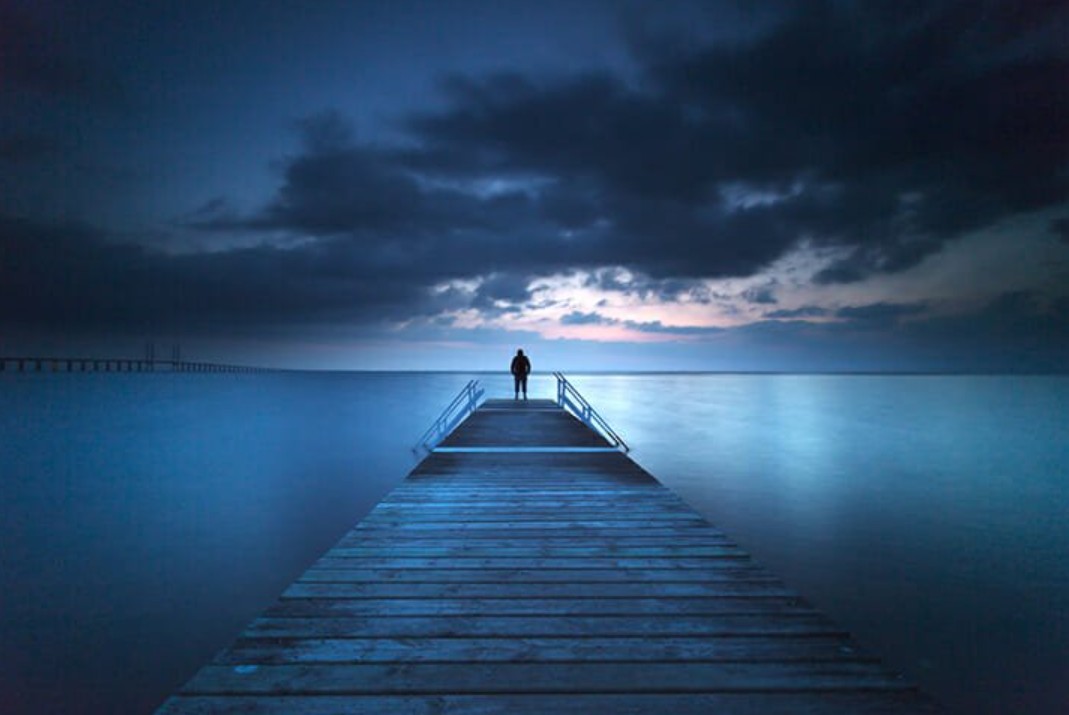
Photographs with good negative space often don't need many elements to convey emotion. Just a small figure in a wide scene, a solitary object against a plain background, or a striking detail in a large empty space is enough to evoke feelings of loneliness, peace, freedom, or tranquility. This restraint is what allows negative space photographs to convey powerful emotions despite their simple composition.
3. Simplify the Context
Simplifying the background is the crucial first step and foundation when photographing negative space. If the background is too detailed, the empty space loses its visual purpose and is no longer considered true negative space.
In reality, finding a completely "empty" background is not easy, especially in urban environments. Therefore, photographers need to learn how to observe and choose the right camera angle to eliminate distracting details. By simply changing their position slightly, lowering or raising the shooting angle, photographers can transform a complex scene into a simpler and more controllable composition.

Backgrounds such as plain walls, solid-colored backgrounds, water surfaces, the sky, or surfaces with even and subtle textures are often highly effective. More importantly, every element in the frame needs a reason to exist. If a detail doesn't serve to highlight the subject or the message, it should be removed.
Simplification doesn't mean making the photo bland. On the contrary, when the background is restrained, the subject has more "breathing space," and the viewer has more room to feel the emotions the photo conveys.
4. Position the Subject Out of Frame
One of the most effective ways to emphasize the role of negative space is to position the subject off-center from the frame. Placing the subject in the center often creates a sense of security but reduces the opportunity to explore the surrounding space.
When the subject is positioned on one side of the frame, the rest becomes negative space, creating a dynamic visual balance. This composition makes the frame feel more natural, modern, and rhythmic. Viewers are not only looking at the subject but are also drawn to the surrounding space.

In particular, in photographs where the subject is looking or moving, leaving negative space in that direction is crucial. The empty space in front of the subject's gaze or footsteps helps the story in the photograph become more logical and relatable. Viewers tend to imagine what is happening or will happen in that space, thereby creating a stronger emotional connection.
5. Utilize the Sky and Open Space
Open spaces such as the sky, the sea, fields, or large squares are ideal "materials" for exploiting negative space. In these contexts, empty space is not only easy to control but also provides a sense of spaciousness and airiness to the frame.
When the majority of the image area is dedicated to the sky or empty space, even a small subject stands out thanks to the contrast in proportion. This is a common compositional approach in landscape, travel, and lifestyle photography, where the sense of space and atmosphere is just as important as the subject itself.
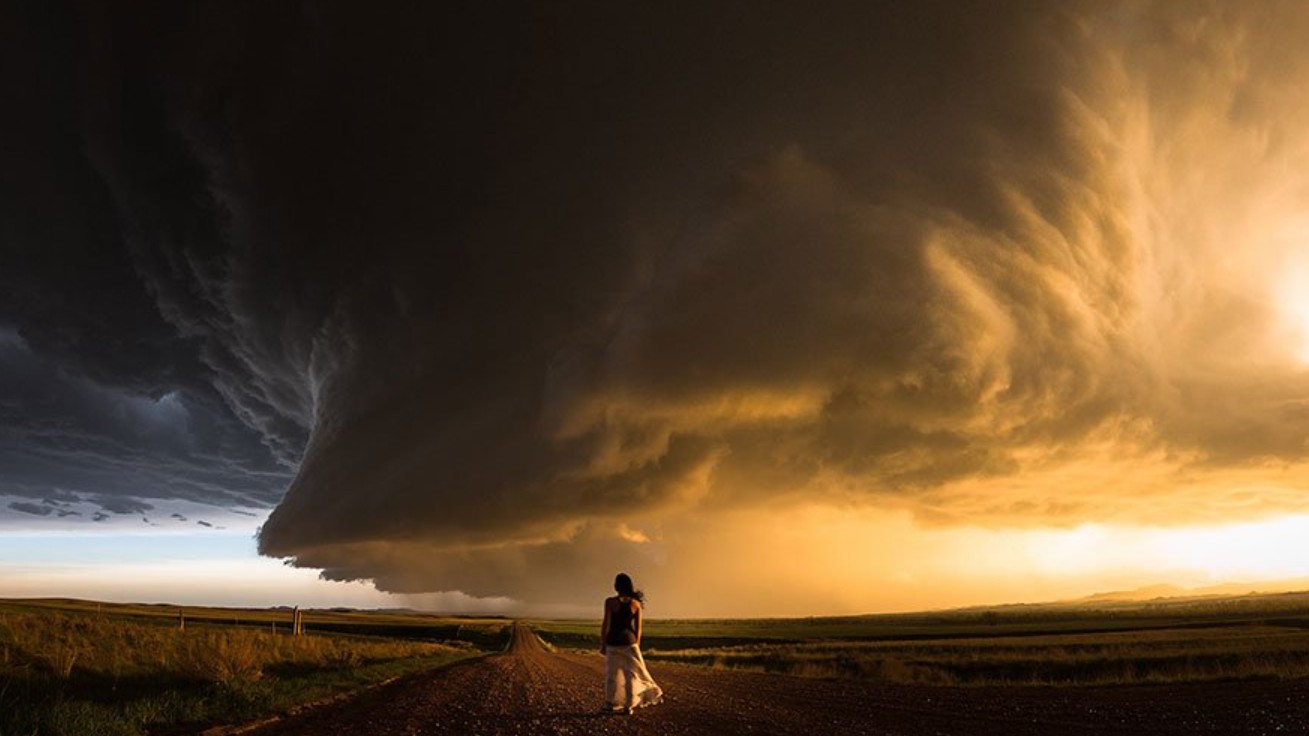
Lowering the camera angle to increase the area of the sky or placing the subject at the bottom of the frame helps to make the negative space more apparent. Soft lighting, such as early morning or late afternoon, further enhances the aesthetic effect, as the sky has a gentle color transition and the light isn't too harsh.
6. Utilize Simple Colors
Color is a key element in shaping and controlling negative space. A photograph with a simple color palette will help make the space feel more pleasant and purposeful.
When the background of an image has only one or two dominant colors, the subject will stand out much more, especially if there is a clear contrast in color or brightness. For example, a dark subject against a light background, or a striking splash of color against a neutral background, always creates a strong visual effect.
Limiting the number of colors in a single frame helps prevent viewer distraction. In many cases, choosing costumes, props, or backgrounds with consistent colors is an important part of the preparation process, not just a decision made at the time of filming.
7. Controlling Depth of Field (DOF)
Depth of field is an effective tool for creating a soft and controllable negative space. When using a large aperture, the blurred background becomes a smooth surface, helping to separate the subject from its surroundings.
However, negative space doesn't necessarily have to be a completely blurred background. In many cases, a sharp but less detailed background can still produce a similar effect. The important thing is that the background doesn't "compete" for attention with the main subject.
Understanding the relationship between aperture, focal length, and shooting distance allows photographers to be more proactive in controlling negative space, rather than relying entirely on post-processing.
8. Use Light to Create Space
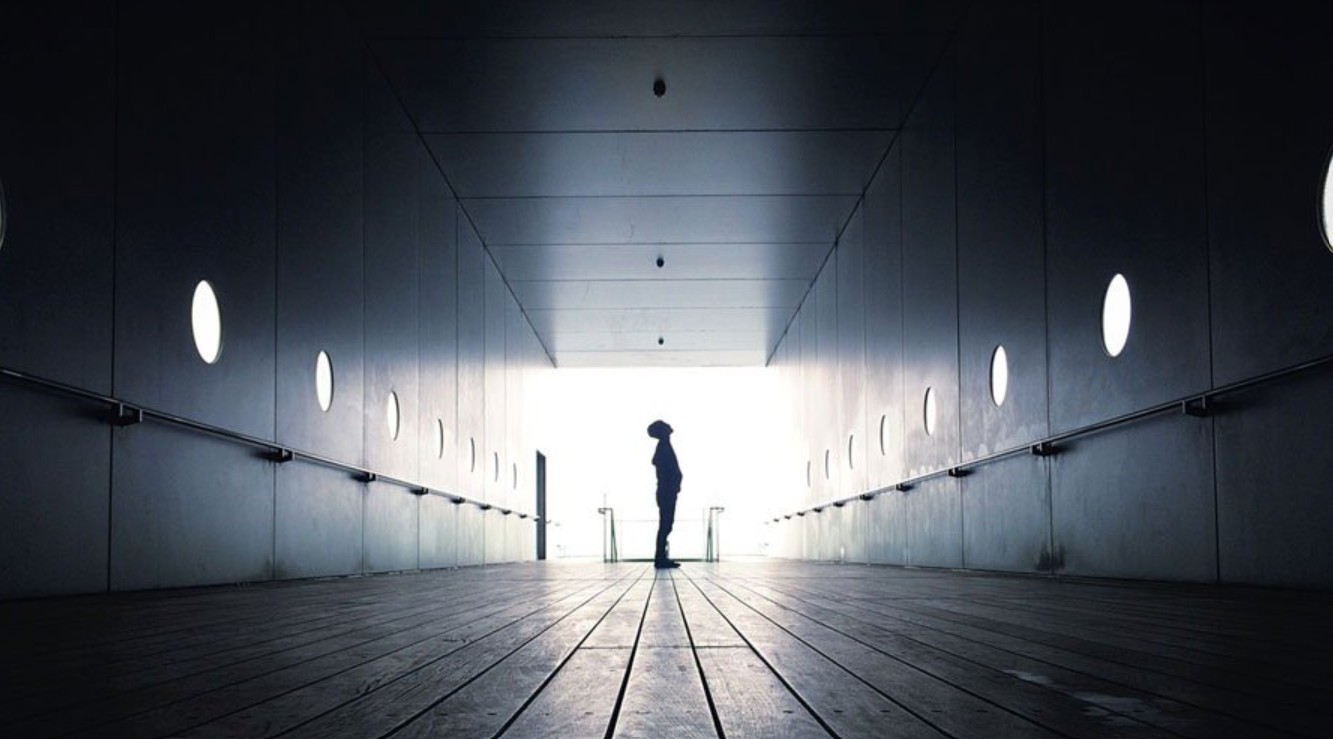
Light has the ability to powerfully shape negative space. Backlighting can create large dark areas surrounding the subject, transforming them into emotionally rich negative spaces.
Additionally, large areas of light, light streaming through windows, or shadows cast by architecture and people can also be used as visual voids. These areas of light and shadow not only serve as a backdrop but also contribute to storytelling, creating depth and rhythm in the frame.
Good lighting control helps to give a somber space a sense of character, avoiding feelings of emptiness or meaninglessness.
9. Purposeful Framing and Trimming
Negative space is sometimes perfected in post-production through framing and re-cropping. Removing unnecessary details at the edges of the image or adjusting the aspect ratio can help increase negative space and make the subject stand out more.
However, post-processing should only be supportive. A well-composed photograph from the start always feels more natural and visually appealing than one that requires extensive editing later.
10. Types of Photos Suitable for Soundproof Spaces
Negative space can be applied flexibly in many genres of photography. In artistic portraiture, negative space helps emphasize emotion and inner state. In landscape and street photography, the empty space helps highlight the vastness or compactness of the space.
In product photography, advertising, and design, negative space also has high practical value as it helps images appear more elegant, easier to read, and more convenient for inserting marketing messages.

11. Common Mistakes When Taking Photos in Negative Space
A common mistake is creating too much empty space without a clear purpose, making the photo look diluted and lacking focus. Additionally, making the subject too small or having a color similar to the background also reduces visual impact.
Many seemingly empty scenes actually contain subtle distracting details, making the soundstage less "clean" and diminishing its original value.
12. Practical Tips to Improve Your Skills
To improve negative space photography skills, photographers should start with the simplest compositions. A subject, a background, and a light source are enough to train observation skills and minimalist thinking.
Referring to advertising posters, editorials, minimalist photography, and famous works on negative space will also help you better understand how empty space is used as a visual language.
Negative space isn't a technique exclusive to any particular style or subject; it's a crucial foundation in photographic and design thinking. Knowing how to use negative space means understanding what's essential in a frame and daring to eliminate unnecessary elements.





















VIP Products








Best Selling Products
Upgrade Genuine Office 365
49 USD
Capcut Pro 1 Year
39 USD
Genuine Adobe Illustrator account
99 USD
Genuine Cheap Canva Pro
39 USD
Copyright Adobe Lightroom Account
59 USD
Freepik Premium Account
59 USD
Upgrade genuine Capture One account
120 USD
Adobe Photoshop Copyright - Full App
120 USD
MidJourney Account
29 USD
Adobe Premiere Pro Account
99 USD
Upgrade Duolingo Super
29 USD
Windows 10 & 11 Pro Key
36 USD
ChatGPT Plus Account (GPT-4)
16 USD
Plugin Retouch4me
69 USD
Autodesk All App Account Copyright
120 USD