
Best Selling Products
Upgrade genuine Capture One account
120 USD
Windows 10 & 11 Pro Key
36 USD

Capcut Pro 1 Year
39 USD
Autodesk All App Account Copyright
120 USD
Adobe Photoshop Copyright - Full App
120 USD
Upgrade Genuine Office 365
49 USD
Plugin Retouch4me
69 USD
Adobe Premiere Pro Account
99 USD

Freepik Premium Account
59 USD

Upgrade Duolingo Super
29 USD

MidJourney Account
29 USD
Genuine Adobe Illustrator account
99 USD
Genuine Cheap Canva Pro
39 USD

ChatGPT Plus Account (GPT-4)
16 USD
Copyright Adobe Lightroom Account
59 USD
Nikon and the silent revolution: Bringing the cinematic filmmaking experience to every hand.
Nội dung
Nikon's affordable pricing strategy isn't a gimmick; it's their way of bringing high technology out of luxury studios.
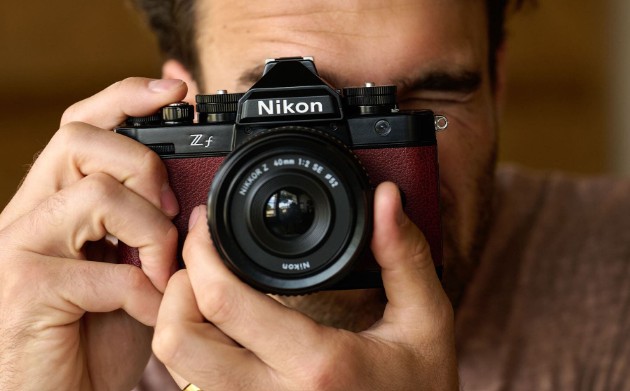
In the world of photography, where names like Canon, Sony, and Panasonic still dominate in terms of sales and brand image, Nikon's unexpected release of more affordable camera models has captured the attention of the entire creative community. This is not just a short-term business move; it's actually a crucial strategic shift in Nikon's development philosophy. Instead of focusing on high-spending professional customers, Nikon is redefining its role in the digital creative era: bringing the most advanced technologies closer to everyone, especially the younger generation of creatives.
1. Nikon stands out with its competitive pricing strategy.
When Nikon announced products like the Z5 II , Z6 III , and most recently the Nikon ZR , the tech world quickly noticed a clear commonality: they all had significantly lower prices than what people had expected from a brand like Nikon. Interestingly, this affordability didn't come with any compromises in technology or build quality.
Previously, when people thought of Nikon, they often pictured a conservative brand: focused on pure image quality, targeting professional photographers, and maintaining a certain distance from beginners. But in the last few years, the picture has completely changed. Nikon is doing the opposite: opening its doors, welcoming and creating opportunities for more people to enter the world of photography.
Nikon's competitive pricing strategy isn't just about attracting new customers. It's also about demonstrating its understanding of the modern creative market, where cameras are no longer just for "shooting," but also tools for content creation, recording, and storytelling. Young people today don't buy cameras just for still photos. They shoot vlogs, make short films, livestream, create vertical videos, and upload everything to TikTok, YouTube, or Instagram.
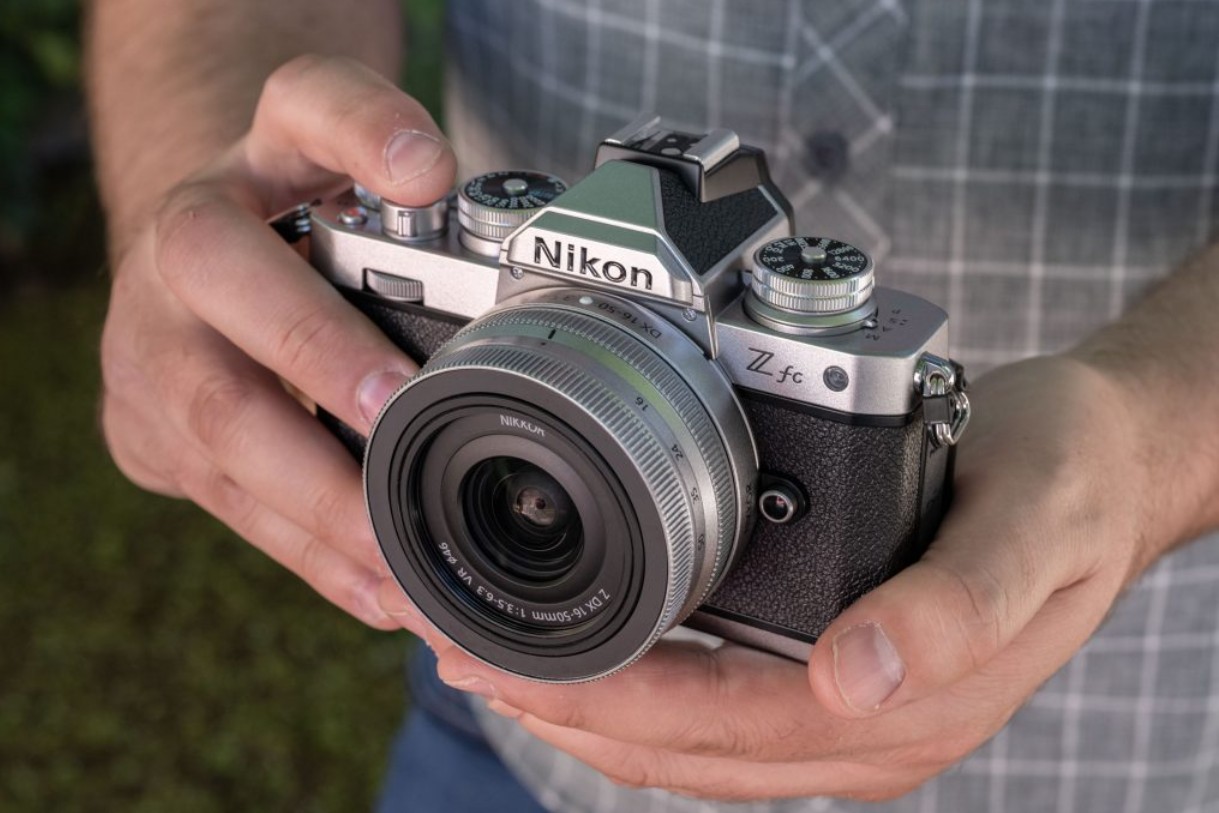
If Nikon maintained its traditional pricing, this customer group would continue to seek "affordable but sufficient" options like the Sony ZV-E10 or Panasonic G100. Nikon understood this and decided to break through the barrier by restructuring its pricing strategy, transforming "professional cameras" into something young people could dream of and actually own.
But most importantly: Nikon doesn't lower prices by cutting back on features or materials. They do this by restructuring the manufacturing process, optimizing hardware design, and fully leveraging the power of EXPEED 7 processing technology: one of the most advanced imaging chips Nikon has ever developed.
2. EXPEED 7 image processing technology optimizes cost and performance.
To understand why Nikon can offer such competitive pricing while maintaining high quality, we need to look at the heart of every modern camera: the image processor. Nikon developed the EXPEED 7 as a “miniature computer” within the camera body, combining RAW video processing capabilities, support for RED R3D NE format shooting, and significantly improved performance in challenging lighting conditions.
Thanks to EXPEED 7, Nikon can reduce its reliance on expensive hardware components while still ensuring superior image quality. This processor is responsible not only for color, contrast range, and noise, but also for controlling heat and power consumption.
Nikon's development of its own processing chip offers a huge advantage. They no longer need to rely entirely on external suppliers as before, meaning better control over production costs. Furthermore, with the EXPEED 7 capable of handling multiple processes simultaneously, from image signal processing and sensor management to video codecs, Nikon can streamline the camera's internal architecture, reducing components without sacrificing performance.
Buy Genuine Licensed Software at Affordable Prices
In practice, this yields two important results.
First, Nikon saves on production costs per unit.
Second, end users directly benefit from a more affordable price while still owning a powerful enough tool to shoot video in internal RAW quality.
A prime example is the Nikon ZR : a "cinema-style" camcorder introduced by the company at the IBC conference in Amsterdam. Priced at just $2,200 , the Nikon ZR astonished filmmakers with its insane specifications: 6K RAW recording, RED R3D NE color processing, over 15 stops of dynamic range, 32-bit floating audio, and Z-mount lens compatibility. Meanwhile, competitors in the same segment such as the Sony FX3 ($4,300), Panasonic Lumix S1 II ($3,200), or Canon C50 ($3,900) cost almost twice as much without necessarily offering a superior experience.
According to Takashi Aihara, General Manager of User Experience Planning at Nikon, in an interview at IBC, this price point is not based on component costs, but rather on the result of a new business philosophy. He said:
“Our pricing isn’t really related to component costs at all. It’s based on the company’s goal of providing access to a wider range of customers, especially young people. We want more people to be able to experience our cinematic workflow, from in-house RAW shooting to post-production, with much greater flexibility and creativity.”
3. Nikon sees this as a bridge to create a larger photography community.
In an era where smartphones have narrowed the gap between "professional photographers" and "casual photographers," Nikon chose not to compete, but to expand. They didn't try to convince anyone that cameras were better than phones; instead, they made camera use more natural, accessible, and engaging.
Nikon's story today is essentially a story of technological democratization. With more affordable prices, the barriers to entry into photography or filmmaking are lower than ever before. A media student, a graphic designer looking to expand their video skills, or a YouTuber wanting to upgrade from a phone to a professional camera—all can find a reasonable, sustainable, and long-term upgradeable option in Nikon.
From a brand perspective, this is an extremely smart move. Because every new user entering the Nikon ecosystem is a potential future supporter. When they invest in Nikon lenses, accessories, and post-production workflows, the likelihood of them remaining loyal to the brand for many years is very high. This not only sustains long-term revenue but also strengthens the community.
In the fiercely competitive digital camera industry, where global sales have plummeted from their heyday, Nikon has chosen to broaden its reach rather than simply deepen its operations. They're not just selling high-end equipment with large profit margins, but aiming to make professional technology more accessible, widespread, and accessible.
Imagine, if previously only a small group of photographers could experience 12-bit RAW shooting or a 15-stop dynamic range, now, for $2,000, anyone can experiment with a truly cinematic workflow. That's the power of Nikon's "bridging" strategy.
4. Nikon ZR: A prime example of the new pricing strategy.
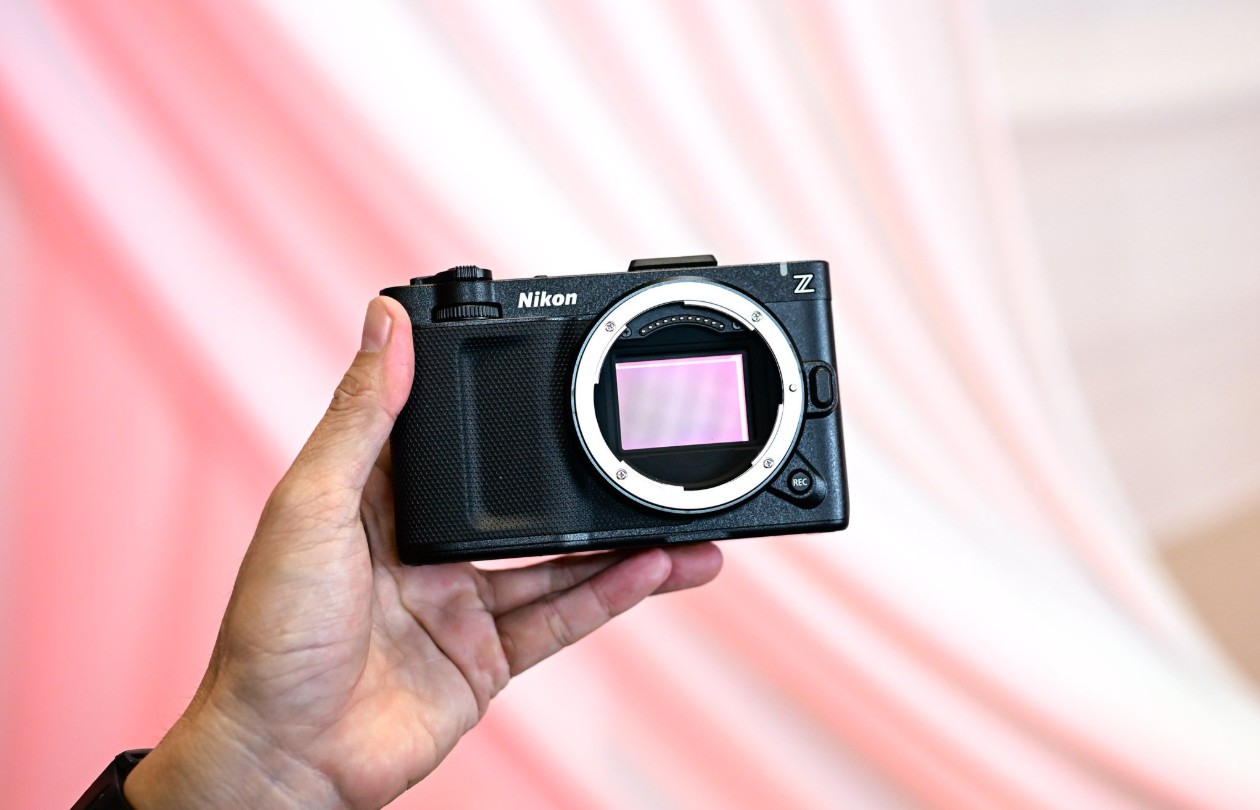
If you need the clearest evidence for this direction, the Nikon ZR is the perfect example. Introduced at the IBC 2025 conference in Amsterdam, the ZR is considered Nikon's biggest breakthrough in recent years. The company not only collaborated with RED Digital Cinema but also incorporated R3D NE RAW shooting technology into a compact, easy-to-handle, and… readily available mirrorless camera.
The ZR is designed for independent filmmakers, content creators, and commercial videographers who want a powerful enough device to produce cinematic-quality video without a massive investment. In terms of specifications, the ZR can shoot 6K at 59.94 fps, supports internal RAW, has a dynamic range of over 15 stops, and incorporates 32-bit float audio technology, all packed into a small, robust body compatible with Z-mount lenses.
What made the ZR so popular wasn't just its hardware, but also Nikon's pricing strategy. For $2,200, users get almost all the features of a high-end cinema camera, while the Sony FX3 costs over $4,000, the Canon C50 nearly $3,900, and the Panasonic S1 II around $3,200. That difference of nearly $2,000 isn't just a number, it's a statement: Nikon is changing the rules of the game.
When asked about pricing strategy, Takashi Aihara said that the price doesn't come from "cutting on components" or "taking advantage of cheap supply." Instead, it stems from Nikon's humanitarian goal: to bring a cinematic workflow to more people, especially young people.
In other words, the ZR is not just a product, but an invitation. Nikon is telling users: "Step into the world of professional filmmaking; we've opened the door."
Surprisingly, despite its lower price, the ZR still delivers a premium, solid, and refined feel in every design detail. Reviewers at Petapixel, DPReview, and TechRadar all commented that the ZR's build quality is on par with models costing one and a half times more, while its real-world performance, particularly in color accuracy and contrast range, has surprised many.
5. Assessment and Strategic Vision
Looking deeper, Nikon's pricing strategy is not simply a short-term marketing campaign, but part of a long-term vision for the future of creativity. Nikon is preparing for an era where the lines between professional and semi-professional, between photography and filmmaking, are gradually blurring.
Today, a graphic designer can also be a product videographer. An architect can create their own project presentation videos. An influencer can produce short documentaries. Nikon understands that when the technology for filming, photography, post-production, and sharing is in the hands of the user, the biggest barrier is no longer skill, but the cost of accessing the equipment.
By lowering that barrier, Nikon is creating an open ecosystem: where everyone can start with an affordable Z5 II, then gradually upgrade to the Z6 III, and then the ZR, while maintaining the same workflow, lenses, and operating habits. This strategy is similar to how Apple built its iPhone-Mac-iPad ecosystem – where a unified experience is key to retaining users.
From a product design perspective, Nikon is also showing a clear shift: their new cameras are becoming more minimalist, user-friendly with intuitive interfaces and more refined button layouts. This not only enhances the product's aesthetics but also makes it easier for younger users to get acquainted with the new camera as they transition from smartphones.
In the near future, if Nikon continues to adhere to its "affordable price - high technology" strategy, it could completely regain the market share it lost over the past decade. Furthermore, Nikon has the opportunity to lead in the "prosumer" segment.
The question, "Why has Nikon recently priced its cameras so affordably?" probably has a clear answer: because Nikon is changing. They are no longer a brand exclusively for seasoned photographers, but a companion for everyone who loves creativity, from students and independent filmmakers to designers, content creators, and visual artists.
With EXPEED 7 technology, the philosophy of "bringing cinematic standards to everyone," and products like the Nikon ZR, the company has proven that high-end technology can absolutely go hand in hand with reasonable prices. Nikon isn't selling its products cheaply; they are redefining the value of creativity.
And that's what makes the difference. In a world where technology is changing every day, Nikon has chosen a more humane path: expanding opportunities, connecting communities, and nurturing a passion for creativity in each individual.













VIP Products


Best Selling Products
Upgrade genuine Capture One account
120 USD
Windows 10 & 11 Pro Key
36 USD
Capcut Pro 1 Year
39 USD
Autodesk All App Account Copyright
120 USD
Adobe Photoshop Copyright - Full App
120 USD
Upgrade Genuine Office 365
49 USD
Plugin Retouch4me
69 USD
Adobe Premiere Pro Account
99 USD
Freepik Premium Account
59 USD
Upgrade Duolingo Super
29 USD
MidJourney Account
29 USD
Genuine Adobe Illustrator account
99 USD
Genuine Cheap Canva Pro
39 USD
ChatGPT Plus Account (GPT-4)
16 USD
Copyright Adobe Lightroom Account
59 USD