Best Selling Products

MidJourney Account
29 USD
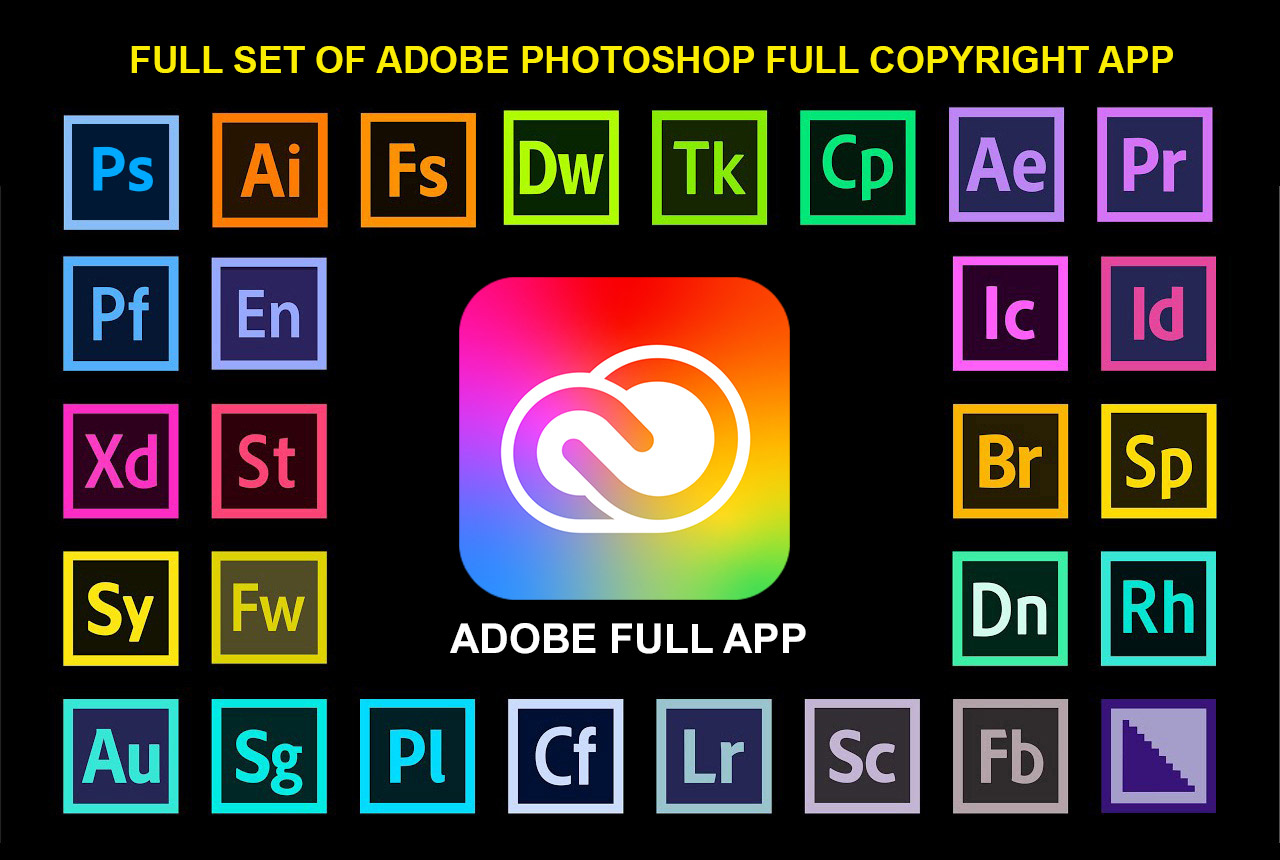
Adobe Photoshop Copyright - Full App
120 USD

Upgrade Genuine Office 365
49 USD
Autodesk All App Account Copyright
120 USD

Windows 10 & 11 Pro Key
36 USD
Upgrade Duolingo Super
29 USD
Plugin Retouch4me
69 USD

Copyright Adobe Lightroom Account
59 USD

Capcut Pro 1 Year
39 USD

Genuine Adobe Illustrator account
99 USD
Adobe Premiere Pro Account
99 USD
Genuine Cheap Canva Pro
39 USD

Freepik Premium Account
59 USD
Upgrade genuine Capture One account
120 USD

ChatGPT Plus Account (GPT-4)
16 USD
Not only targeting Sora, Kling also directly targeted Google's AI ecosystem.
Nội dung
Kling is not simply a video creation model. It reflects China's ambition to build a closed-loop AI technology chain. The competition is no longer about individual products, but about the entire ecosystem.
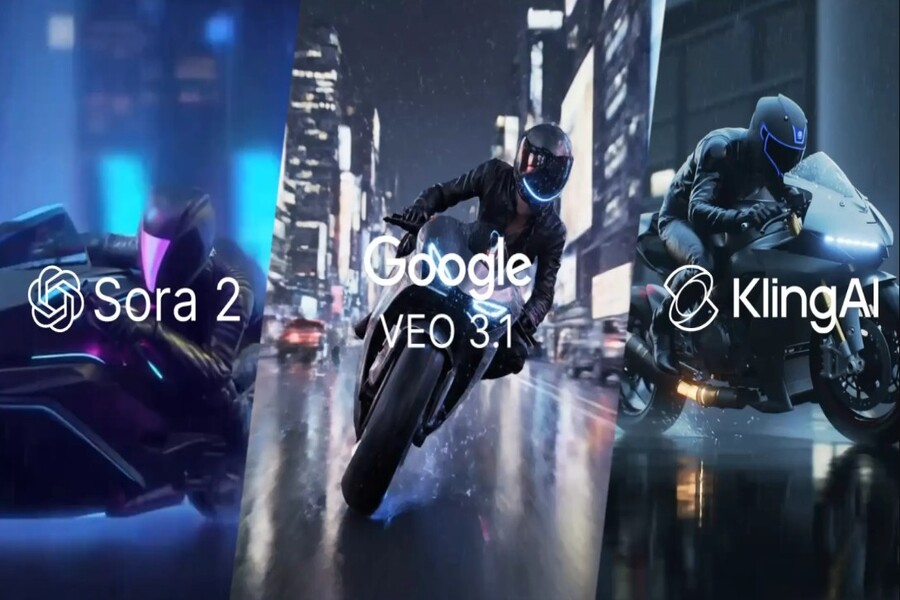
1. Kling AI and Kuaishou's ambitions in the video AI race.
Kuaishou's serious investment in AI video creation is no surprise. With its core platform centered around video, the company possesses an advantage that few competitors have: a massive database of viewing behavior, content styles, motion, editing rhythm, and visual preferences of users. Kling is not just a standalone AI product, but a strategic move to control the entire content production value chain from ideation and creation to distribution.
Since its launch in China in June 2024, Kling has quickly attracted the attention of the creative and technology communities. While Western AI video creation tools are still limited in user base or operate within experimental settings, Kling has been deployed quite widely, continuously updated, and rapidly commercialized.

One of the clearest examples of Kling's power is the science fiction film project The Seeker by Emmy Award-winning filmmaker Stephan Bugaj. With just two people and a budget of around $2,000, Bugaj completed the film in six weeks, a nearly unimaginable feat in the context of traditional film production.
What's remarkable isn't just the cost or time, but the entirely new creative process. The Seeker was produced in direct collaboration with Kuaishou, with Kling AI handling much of the visual design, music, and character voice acting. Elements that previously required large teams of specialists were integrated into a single, unified AI system.
Bugaj called it “the world’s first commercial AI film” and said the work has been released on several popular video platforms. Speaking at a CES 2026 conference in Las Vegas, he emphasized that AI generation has significantly shortened production cycles. Instead of taking months, or even years, to complete a project, creators can now realize their ideas in just days or weeks.
Video is no longer the "exclusive privilege" of large studios with huge budgets, but is gradually becoming a flexible medium, much like how images and typography have been democratized in the digital design era.
Stephan Bugaj is not alone. Jason Zada, another Emmy-winning director and the man behind the studio Secret Level, shared a similar experience using Kling. His studio created a Christmas video and theme song in less than two weeks.
The finished video consists of 630 scenes, each approximately 10 seconds long, for a total duration of 1 hour and 45 minutes. This number demonstrates that Kling is not only suitable for short videos or concept testing, but is also fully capable of handling lengthy projects with a massive number of scenes.
Zada acknowledged that Secret Level had experimented with similar ideas before, but the technology wasn't mature enough then. According to him, the latest version of Kling is truly amazing, especially when compared to what the technology could achieve just a year ago. This reflects the rapid development of AI video creation.
At CES 2026, Kuaishou officially introduced Kling 2.6: a version considered the biggest breakthrough for the platform to date. The most important highlight of this update is the ability to "create sound and images simultaneously."
In traditional AI video production processes, most tools follow a linear path: creating images or videos without sound first, then processing the music, effects, or voiceover in post-production. This is not only time-consuming but also creates a discrepancy in emotion, rhythm, and overall experience.
Integrating audio and video from the outset fundamentally changes how creators work with AI video. Instead of "patching" audio onto images, both are now created simultaneously, synchronized in emotion, rhythm, and context. For those working in motion design, film, or advertising, this is extremely important, as audio always plays a crucial role in guiding visual emotions.

According to China Daily, since its launch in China in June 2024, Kling has generated over 600 million videos and attracted more than 60 million users globally. By the end of 2025, more than 30,000 businesses and developers will have integrated Kling's API into their systems, demonstrating that the platform serves not only individuals but also becomes part of the infrastructure for the creative industry.
In terms of revenue, Kling also surprised many. In 2025, the platform's revenue reached approximately $140 million, more than double Kuaishou's target of $60 million. Notably, about 70% of the revenue came from international markets, with the US accounting for nearly a third. This is clear evidence that Kling is not just a "domestic Chinese product," but has entered the global arena.
To date, Kling has undergone seven major upgrades. Among them, the Kling O1 is considered a significant milestone, becoming the industry's first unified multimedia video model. The O1 can process images, videos, subjects, and text in a single prompt, while also allowing for quick editing in post-production.
For creative professionals, this means a great deal. Instead of switching back and forth between many different tools: AI for image creation, AI for video editing, and editing software, Kling aims to consolidate the entire process into a seamless ecosystem. Kling 2.6 further refines this by significantly improving audio creation capabilities, bringing the platform closer to an "all-in-one AI studio."
Despite its simple interface, Kling doesn't aim for mass appeal in the sense of "free for everyone." According to Kuaishou, the platform focuses on professional creators and corporate clients. This group accounts for approximately 70% of Kling's total revenue.
According to Sensor Tower, approximately 70% of Kling's revenue comes from overseas markets, indicating that its globalization strategy is on the right track. The US, Europe, and other emerging creative markets are becoming "golden opportunities" for AI video tools that have the potential to transform production processes.
2. Kling in a fight against Sora and Veo
Experts consider Kling to be the product with the highest potential to directly compete with OpenAI's Sora and Google's Veo, especially in its ability to control video length and complex motion. Representatives of Kling AI have stated that their technology is particularly excellent at creating realistic characters, natural movements, and performing far beyond current industry standards.
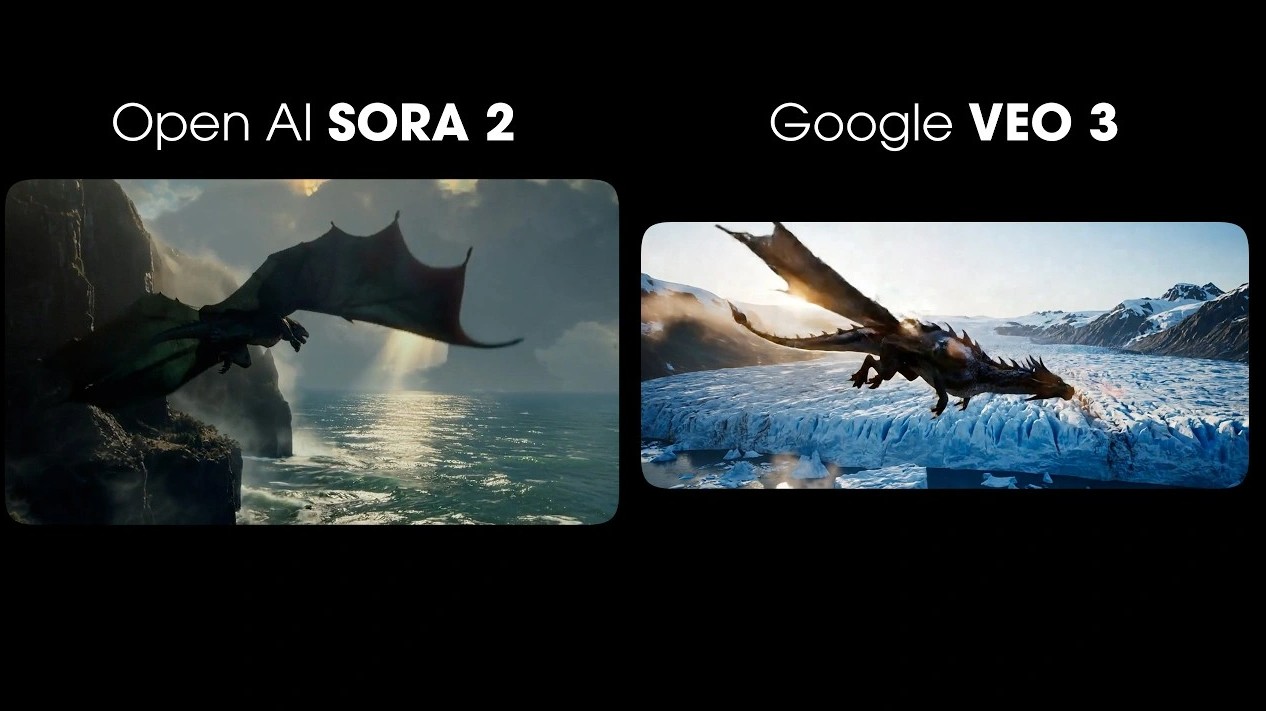
Aleksandr Mashrabov, founder of Higgsfield AI, observes that a wave of creative studios is emerging that relies heavily on AI. Tools like Kling empower those with vivid imaginations and bold ideas, helping them realize their vision without budgetary or human resource constraints.
Unlike the traditional Hollywood environment, AI studios operate on a low-cost, flexible, and continuously experimental basis. AI-generated products allow for work at a conceptual level: ideas can be quickly transformed into videos, mistakes can be corrected, and improvements can be made—the possibilities are virtually limitless.
Kling is not alone. In China, a host of other competitors are also emerging strongly, such as ByteDance's Jimeng, Alibaba's Wan, Tencent's Hunyuan, and startups like Hailuo, PixVerse, and Vidu. This competition has created an extremely vibrant AI video ecosystem, where new innovations emerge every month.
According to a report from the China Internet Network Information Center in October 2025, the number of AI-generated content users in the country doubled to 515 million in just six months. Among them, AI-generated video tools play an indispensable role. Tencent even predicts that within the next two years, a third of feature films and animated films could be "dominated by or heavily involved with AI.














VIP Products




Best Selling Products
MidJourney Account
29 USD
Adobe Photoshop Copyright - Full App
120 USD
Upgrade Genuine Office 365
49 USD
Autodesk All App Account Copyright
120 USD
Windows 10 & 11 Pro Key
36 USD
Upgrade Duolingo Super
29 USD
Plugin Retouch4me
69 USD
Copyright Adobe Lightroom Account
59 USD
Capcut Pro 1 Year
39 USD
Genuine Adobe Illustrator account
99 USD
Adobe Premiere Pro Account
99 USD
Genuine Cheap Canva Pro
39 USD
Freepik Premium Account
59 USD
Upgrade genuine Capture One account
120 USD
ChatGPT Plus Account (GPT-4)
16 USD