
Best Selling Products

Autodesk All App Account Copyright
120 USD

Upgrade genuine Capture One account
120 USD

Genuine Adobe Illustrator account
99 USD

Upgrade Genuine Office 365
49 USD

Upgrade Duolingo Super
29 USD

Plugin Retouch4me
69 USD

Adobe Photoshop Copyright - Full App
120 USD

Genuine Cheap Canva Pro
39 USD

ChatGPT Plus Account (GPT-4)
16 USD

Copyright Adobe Lightroom Account
59 USD

MidJourney Account
29 USD

Adobe Premiere Pro Account
99 USD

Windows 10 & 11 Pro Key
36 USD

Freepik Premium Account
59 USD

Capcut Pro 1 Year
39 USD
The book reveals how an AI application is born, operates, and evolves.
Nội dung
This book goes beyond just discussing models or algorithms; it guides readers through the entire journey of a real-world AI application, from initial ideas and system design to operation and continuous improvement. It offers a rare, systematic, and long-term perspective.

1. AI is becoming a “life cycle,” not just a model.
The core difference between "AI Engineering" and most current AI books and materials lies in its approach. The book doesn't begin with complex mathematics or algorithmic formulas, but rather with a very practical question: how is an AI application born, survives, thrives, and is sustained in a production environment?
The author guides the reader through the entire lifecycle of an AI application, from platform model selection and system architecture design to quality assessment, deployment in real-world environments, continuous operation, and user data collection and feedback. This is a very "product-oriented" perspective, reflecting the shift in the modern AI industry.
For those working in design, product development, or technology strategy, this approach is particularly familiar. It mirrors the digital product design lifecycle: research, design, deployment, measurement, and improvement. In Chip Huyen's view, AI is not a mysterious "black mass," but rather a component within a larger product system, influenced by users, data, infrastructure, and organizational factors.

2. The Vietnamese version and the value of accurate translation.
The Vietnamese version of the book was published by Times, in collaboration with the Science, Technology, and Communication Publishing House (Ministry of Science and Technology), with translation handled by Le Thanh Hung. This is a huge plus, because with technical books, the quality of translation almost entirely determines the reading experience.
In the tech community, it's not uncommon for books translated into Vietnamese to suffer from broken terminology, incorrect context, or a loss of the original spirit. With "AI Techniques," the translation is highly praised for its accuracy in technical terminology, while maintaining a clear, easy-to-follow, and engaging writing style. This is especially important considering the book's target audience includes not only pure AI engineers, but also data scientists, programmers, product managers, and business leaders.
One of the central themes of the book is the concept of foundation models. These are large models, trained on massive datasets and capable of adapting to a wide range of tasks, from language and image processing to multimodal applications.
Chip Huyen dedicates several chapters to explaining why platform models are becoming central to the modern AI ecosystem. Instead of building individual models for each problem, businesses today tend to leverage platform models, then refine or combine them to address specific needs. This approach saves costs, shortens deployment time, and increases scalability.
Importantly, the author doesn't just describe the technology, but places it within the context of system architecture. The choice of platform model—whether to build it in-house or use a third-party service, deploying on-premise or in the cloud—is analyzed from a trade-off perspective.

One of the most valuable aspects of the book lies in the author's approach to AI evaluation. In fact, many AI projects fail not because of poor models, but because of the lack of appropriate evaluation mechanisms when implementing them into the product.
Chip Huyen emphasized that evaluating AI cannot be limited to traditional metrics such as accuracy or F1 scores. With AI generative applications, the issue becomes even more complex, as the output is probabilistic, creative, and sometimes lacks a clear "correct answer."
The book clearly distinguishes between model-level and system-level evaluation. A model might work well in a testing environment, but when placed in a real system with real data, real users, and operational constraints, its effectiveness can change significantly. This is a very practical perspective, accurately reflecting what is happening in the industry.
3. Risks of AI generation
One commendable aspect of Chip Huyen's writing is his frankness in discussing the inherent risks of generative AI. The book devotes significant space to analyzing issues such as hallucinations, output inconsistencies, the risk of bias, and challenges related to ethics and data security.
Instead of viewing AI as a "miracle," the author consistently emphasizes the role of monitoring, evaluation, and collaboration between humans and machines. AI is seen as a support tool, not a completely autonomous entity. Therefore, designing AI operational processes requires placing humans at the center, from decision-making to ultimate accountability.
This is a crucial perspective, especially given that many businesses are chasing AI as a fad, sometimes overlooking the long-term consequences. For those working in strategy and product development, the book serves as a wake-up call.

4. Who is this book for?
Despite its heavily technical nature, "AI Engineering" is not just a book for AI engineers or machine learning experts. Its readership is much broader. Data scientists can find a comprehensive overview of the system. Programmers can gain a better understanding of their role in the AI value chain. Product managers and business leaders can use the book as a roadmap to guide their AI strategy.
It is this multifaceted nature that sets the book apart. It doesn't try to please a single readership, but rather acts as a "common language," helping cross-functional teams better understand and collaborate in the AI development process.
5. Chip Huyen and lessons learned from Silicon Valley
Chip Huyen's name is no stranger to the global AI community. She is an expert in machine learning systems, having worked at Nvidia, Netflix, Snorkel AI, and taught at Stanford University. Her experience in large-scale AI deployment gives her a very practical perspective, different from many purely academic authors.
Prior to "AI Techniques," Chip Huyen's book "Designing Machine Learning Systems" had already become a familiar resource for the AI community. The new book is seen as the next step, expanding thinking from traditional machine learning systems to the world of AI generation and foundational modeling.
The work has received many positive reviews from experts. Luke Metz, co-creator of ChatGPT, commented that the book serves as a comprehensive guide, professionally describing everything needed to design and deploy AI generative applications in a production environment.
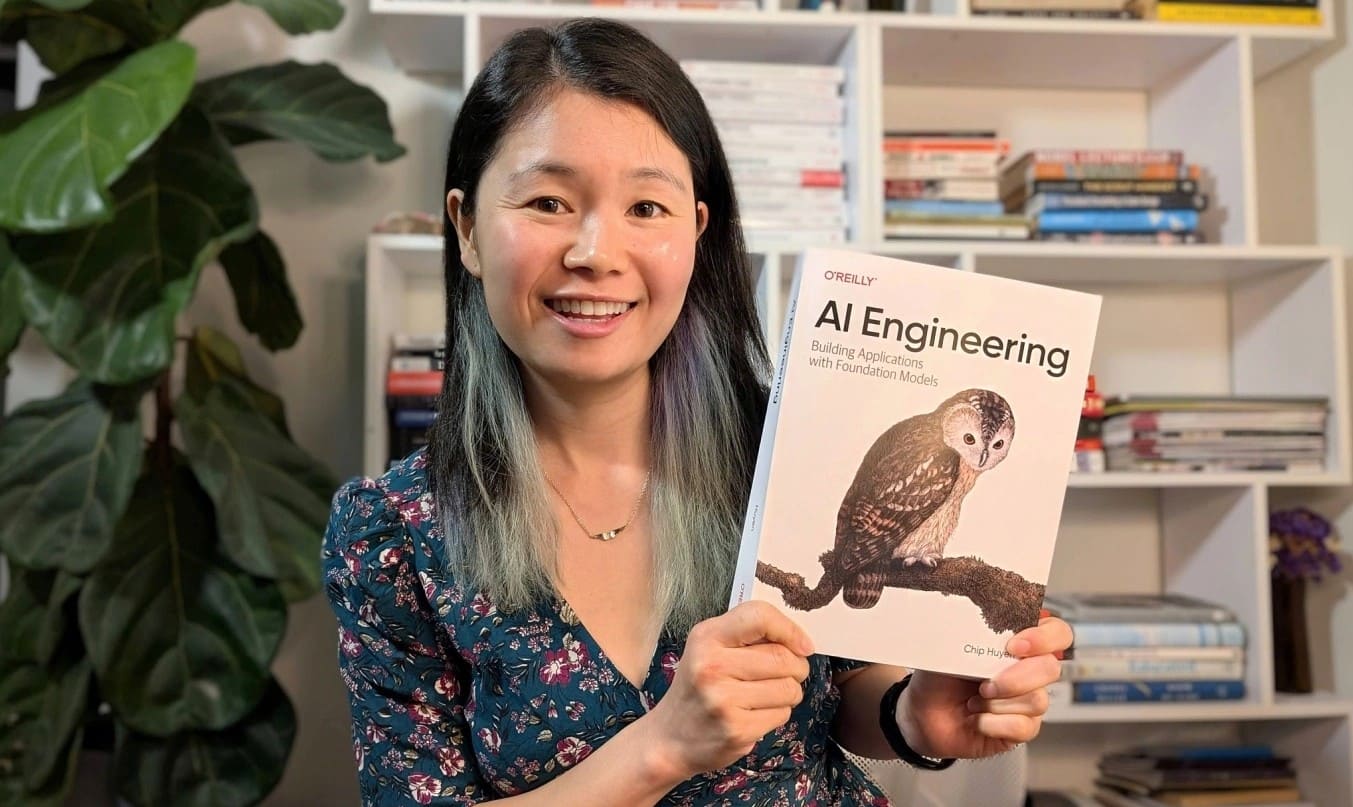
Aileen Bui, Director of AI Product Operations at Google, praised the book for providing timeless foundational knowledge. She believes that whether you're a product manager or an engineer, the book helps bridge the collaboration gap between cross-functional teams, making it a "must-read" for anyone involved in AI development.
Vietnam is promoting digital transformation and the application of AI in many fields, and the appearance of the Vietnamese version is particularly significant. It not only provides technical knowledge but also contributes to shaping a systematic and sustainable approach to AI.
Instead of viewing AI as a quick fix or a mere "token" feature, the book encourages readers to see AI as a living system that needs continuous design, operation, and improvement. This mindset is essential for AI to truly create long-term value for businesses and society.
For anyone currently involved, or planning to be involved, in the journey of building AI in Vietnam, this is a book worth having on their desk. Not just for one-time reading, but for reference, reflection, and reference whenever facing an important decision related to AI.





















VIP Products








Best Selling Products
Autodesk All App Account Copyright
120 USD
Upgrade genuine Capture One account
120 USD
Genuine Adobe Illustrator account
99 USD
Upgrade Genuine Office 365
49 USD
Upgrade Duolingo Super
29 USD
Plugin Retouch4me
69 USD
Adobe Photoshop Copyright - Full App
120 USD
Genuine Cheap Canva Pro
39 USD
ChatGPT Plus Account (GPT-4)
16 USD
Copyright Adobe Lightroom Account
59 USD
MidJourney Account
29 USD
Adobe Premiere Pro Account
99 USD
Windows 10 & 11 Pro Key
36 USD
Freepik Premium Account
59 USD
Capcut Pro 1 Year
39 USD