Best Selling Products

Upgrade genuine Capture One account
120 USD

Windows 10 & 11 Pro Key
36 USD

Freepik Premium Account
59 USD

Adobe Photoshop Copyright - Full App
120 USD

Copyright Adobe Lightroom Account
59 USD

Upgrade Duolingo Super
29 USD

Capcut Pro 1 Year
39 USD

Genuine Adobe Illustrator account
99 USD

Adobe Premiere Pro Account
99 USD

Plugin Retouch4me
69 USD

Autodesk All App Account Copyright
120 USD

Upgrade Genuine Office 365
49 USD

ChatGPT Plus Account (GPT-4)
16 USD

MidJourney Account
29 USD

Genuine Cheap Canva Pro
39 USD
Overview of 3D Graphic Design and 5 Popular Software Programs on Computers
Nội dung
What is 3D graphic design and how is it applied in practice? This article provides a comprehensive overview along with a list of widely used 3D software today.
From architecture and interior design to films, games, advertising, media, and e-commerce, 3D imagery is everywhere, offering a more realistic, vivid, and emotionally rich experience compared to traditional 2D graphics.
The rapid development of hardware technology, especially GPUs and graphics processing capabilities, has made 3D design more popular and accessible than ever before. While previously 3D was the domain of large studios with high investment costs, today, with just a personal computer and the right software, anyone can start learning and practicing 3D design.
However, this very popularity has led many to wonder: What is 3D graphic design? What skills are needed to pursue this field? Which software should I start with? And what are the career opportunities for 3D design in the future? This article will help you answer all those questions systematically, practically, and easily.
Buy Genuine Licensed Software at Affordable Prices
1. What is 3D graphic design?
3D graphic design is the process of creating three-dimensional images, models, or spaces using specialized software, where objects are represented in full three dimensions: width, height, and depth. Unlike 2D design, which exists only on a flat surface, 3D design simulates the real world, allowing viewers to perceive form, proportion, light, materials, and space.
Technically, 3D graphic design typically involves several consecutive steps. The first step is modeling, where the designer creates the basic shape of the object. Next is texturing, which gives the model color and textures such as metal, wood, fabric, or leather. Then comes setting up lighting and cameras to create a realistic sense of space. Finally, there is rendering, the process of producing the complete image or video.
.jpg)
The greatest strength of 3D design lies in its ability to simulate and predict. An unproduced product, an unbuilt structure, or a character that doesn't yet exist can all be "realized" through 3D modeling. This helps businesses save costs, optimize processes, and convey ideas more visually.
In today's context, 3D graphic design is no longer limited to a specific field. It is an intersection of art, technology, and problem-solving, requiring designers to possess both aesthetic sense and spatial and technical thinking abilities.
2. Factors and skills necessary to become a 3D graphic designer
To pursue 3D graphic design seriously and long-term, learners need not only to know how to use software but also to build a comprehensive skill set. This field demands a close combination of creative thinking and technical ability.
First and foremost, spatial thinking is a core element. 3D designers need to be able to visualize objects in three-dimensional space, understanding proportions, volumes, and structure. This skill helps you create accurate models and avoid basic geometric errors.
Furthermore, fundamental artistic knowledge such as composition, color, lighting, and materials plays a crucial role. A 3D model, no matter how technically sound, will struggle to make an impression if it lacks aesthetic sense. Understanding how light affects surfaces and how color influences emotions will help make 3D products more vibrant and convincing.
.jpg)
Software skills are essential. Each 3D software program has a different interface, tools, and design philosophy. Mastering one or a few popular programs gives designers more flexibility in their work and expands their career opportunities.
Furthermore, patience and a willingness to learn continuously are also crucial. 3D design is a field with a steep learning curve, especially for beginners. Getting used to complex interfaces, multi-step operations, and a large amount of knowledge requires perseverance and a proactive attitude.
Finally, soft skills such as time management, communication, and teamwork also contribute significantly to the success of a 3D designer. In a real-world work environment, you not only design for yourself, but also have to meet the requirements of clients, the engineering team, and related departments.
3. Top 5 Free 3D Graphic Design Software Currently Available
Technological advancements have brought about many high-quality 3D design software programs, including numerous free or basic-level tools. Below are five highly-rated 3D graphic design software programs suitable for both beginners and experienced users.
3.1 SketchUp
SketchUp is a popular 3D design software known for its user-friendly interface and intuitive usage. It's particularly popular in architecture, interior design, and spatial planning due to its ability to create models quickly and easily.
.jpg)
SketchUp allows users to create 3D models using simple drag-and-drop operations, making the learning process easier compared to many other 3D software. The free version of SketchUp runs directly in the browser, requires no installation, and is ideal for beginners or those with basic learning needs.
Furthermore, SketchUp boasts a massive 3D Warehouse library, where users can download millions of free models shared by the community. This saves time and expands creative possibilities. However, to achieve high-quality rendering, users often need to combine SketchUp with third-party rendering tools.
3.2 TurboCAD Deluxe
TurboCAD Deluxe is a powerful CAD design software suitable for both 2D and 3D design. It is commonly used in engineering, mechanical engineering, and architecture due to its accurate modeling capabilities and support for detailed technical drawings.
.jpg)
For those who want to learn 3D design from an engineering perspective, TurboCAD Deluxe is a worthwhile option. The software's interface has a traditional CAD style, suitable for those already familiar with AutoCAD or similar software.
Although not as prevalent in the content creation industry as games or films, TurboCAD has maintained its own unique position thanks to its high applicability in academic and production environments.
3.3 Blender
Blender is considered the most powerful free 3D design software currently available. It's open-source software that provides a full range of tools for modeling, sculpting, animation, VFX, film, and game development.
.jpg)
Blender's standout feature is its ability to control the entire 3D production process within a single platform. Its Cycles and Eevee rendering systems allow for the creation of high-quality images, directly competing with many expensive paid software programs.
Blender boasts a large global user community, with thousands of free resources, courses, and plugins. However, the software is relatively difficult for beginners, requiring time to get acquainted with it and persistent learning.
3.4 Daz Studio
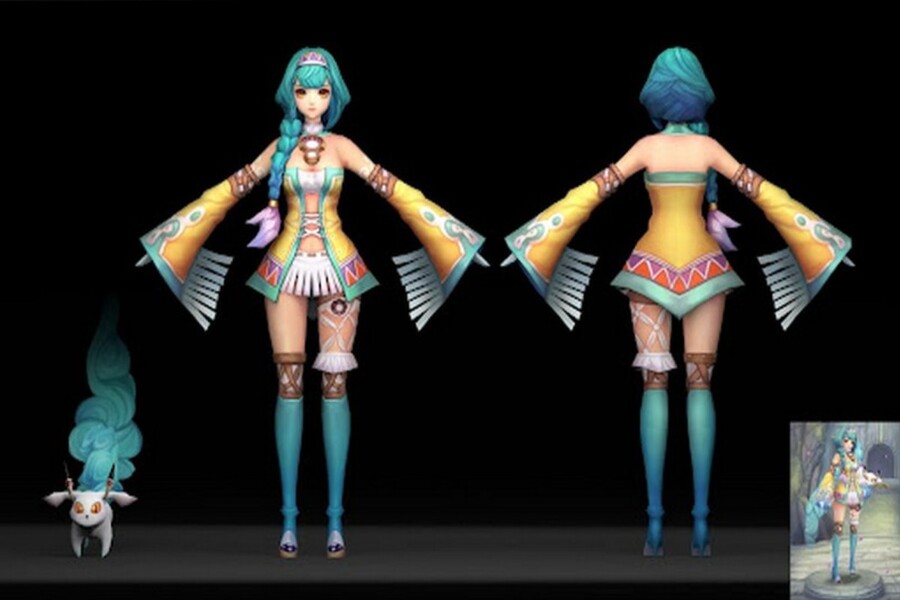
Daz Studio is 3D design software focused on creating pre-built characters and environments. It's ideal for illustration, concept art, comics, and advertising imagery.
The biggest advantage of Daz Studio is its ability to create detailed 3D characters in a short amount of time. Users can customize appearance, clothing, posture, and expressions without needing complex modeling skills.
Daz Studio is suitable for beginners who want to get acquainted with 3D character design; however, its deep customization capabilities and technical application are not as flexible as Blender or Rhino.
.jpg)
3.5 Rhino
Rhino is a popular 3D design software known for its precise NURBS surface processing capabilities, commonly used in high-end industrial, jewelry, product, and architectural design.
Although Rhino isn't entirely free, its long-term trial and educational policies make it accessible to a wider audience. Rhino allows for the creation of highly accurate models suitable for manufacturing and 3D printing.
The ability to expand through plugins, especially Grasshopper, makes Rhino a powerful tool for professional designers and creative engineers.
.jpg)
4. Career opportunities in 3D design
3D graphic design opens up numerous career opportunities in the context of a rapidly developing digital economy and creative industries. 3D designers can work in fields such as architecture, interior design, gaming, film, advertising, media, e-commerce, and product manufacturing.
Besides working in-house at companies or studios, many 3D designers choose to freelance or work with international clients. Thanks to the nature of the work, which can be done remotely, 3D design offers high flexibility in terms of time and location.
With the development of virtual reality, augmented reality, and the metaverse, the demand for 3D design is expected to continue to increase in the future. This is a field with long-term growth potential for those who seriously invest in skills and creative thinking.
3D graphic design is not just a passing trend, but an important part of the modern creative industry. Understanding the nature of 3D design, acquiring the necessary skills, and choosing the right software are the first steps to confidently entering this field.





















VIP Products








Best Selling Products
Upgrade genuine Capture One account
120 USD
Windows 10 & 11 Pro Key
36 USD
Freepik Premium Account
59 USD
Adobe Photoshop Copyright - Full App
120 USD
Copyright Adobe Lightroom Account
59 USD
Upgrade Duolingo Super
29 USD
Capcut Pro 1 Year
39 USD
Genuine Adobe Illustrator account
99 USD
Adobe Premiere Pro Account
99 USD
Plugin Retouch4me
69 USD
Autodesk All App Account Copyright
120 USD
Upgrade Genuine Office 365
49 USD
ChatGPT Plus Account (GPT-4)
16 USD
MidJourney Account
29 USD
Genuine Cheap Canva Pro
39 USD