Best Selling Products
Adobe Photoshop Copyright - Full App
120 USD

Upgrade Genuine Office 365
49 USD
Upgrade genuine Capture One account
120 USD

Freepik Premium Account
59 USD
Autodesk All App Account Copyright
120 USD

Plugin Retouch4me
69 USD
Adobe Premiere Pro Account
99 USD
Genuine Cheap Canva Pro
39 USD

MidJourney Account
29 USD

ChatGPT Plus Account (GPT-4)
16 USD
Copyright Adobe Lightroom Account
59 USD

Capcut Pro 1 Year
39 USD
Genuine Adobe Illustrator account
99 USD

Windows 10 & 11 Pro Key
36 USD

Upgrade Duolingo Super
29 USD
The Importance of Optical Image Stabilization (OIS) When Choosing a Camera: An Expert''''s Perspective
Nội dung
- 1. The Nature and Operating Mechanism of OIS Technology
- 2. The Practical Benefits of Owning an OIS System
- 3. Analyzing the Relationship Between OIS and In-Body Image Stabilization (IBIS)
- 4. When Is OIS Really Necessary, and When Can It Be Skipped?
- 5. Drawbacks of the OIS System to Keep in Mind
- 6. Mindset for Choosing Equipment: Is OIS Worth the Price Difference?
- 7. Guide to Using OIS Correctly for Maximum Effectiveness
- 8. The Future of OIS in the Era of Artificial Intelligence and High-Density Sensors
- 9. Conclusion
Learn what optical image stabilization (OIS) is and how important it is when buying a camera. An analysis of the pros and cons of OIS compared to in-body image stabilization (IBIS), with advice on choosing the right device for professional photography and videography needs.
1. The Nature and Operating Mechanism of OIS Technology
To answer the question of necessity, we first need to break down how this technology interacts with light and the lens elements inside a professional camera.The Working Principle Based on Gyroscopes.jpg)
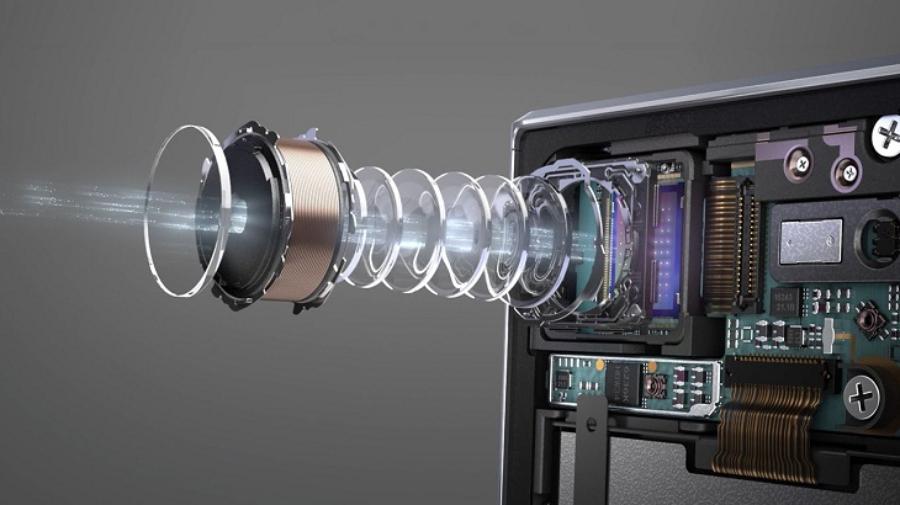
Optical Image Stabilization is a system integrated directly inside the lens. This mechanism uses ultra-sensitive gyroscopic sensors to detect shaking movements from the user's hand or environmental impacts. When vibration along the horizontal or vertical axis is detected, the control system commands a group of elements inside the lens to move in the opposite direction of that vibration.
This process happens extremely fast, up to thousands of times per second, in order to keep the image projected onto the sensor stationary. As a result, the light passing through the lens converges precisely at a point on the sensor instead of being smeared due to the camera moving while the shutter is open.
The Difference Between OIS and Electronic Image Stabilization (EIS)
Many users often confuse OIS with Electronic Image Stabilization (EIS). While OIS intervenes physically and optically before light reaches the sensor, EIS is a software algorithm that processes the image after the data has already been captured. EIS typically crops the frame to compensate for shake, leading to reduced detail quality and resolution. In contrast, OIS keeps the lens's resolution and optical quality fully intact, delivering the most natural and authentic sharpness for the photo.
2. The Practical Benefits of Owning an OIS System
The value of OIS doesn't lie in flashy marketing specs but is most clearly demonstrated in demanding shooting situations, where the line between an artistic photo and a failed shot is razor-thin.
The Ability to Shoot in Low-Light Conditions
In low-light environments such as sunset, indoors, or at night, the camera needs to keep the shutter open longer to gather enough light. As exposure time increases, even the smallest vibration causes motion blur. OIS allows photographers to lower their shutter speed by 3 to 5 stops compared to the usual rule of thumb while still maintaining sharpness. For example, instead of having to shoot at 1/100 second to avoid shake, you can confidently shoot at 1/15 second or even slower with the help of OIS. This helps minimize the need to push ISO too high, thereby reducing noise and preserving the best possible dynamic range in the photo.
Optimization for Telephoto Lenses
For sports or wildlife photographers who frequently use telephoto lenses, OIS is a "life-or-death" feature. At long focal lengths such as 200mm, 400mm, or 600mm, even the smallest hand tremor is magnified dozens of times over. Without OIS, the image in the viewfinder would jump around constantly, making focusing and composition extremely difficult. The optical stabilization system helps "flatten" the movement in the viewfinder, allowing users to track subjects smoothly and capture moments at a distance without needing the support of a tripod.
Improving the Quality of Handheld Video
In the era of the content creator, the ability to shoot high-quality video is a mandatory requirement. OIS acts as a miniature gimbal system inside the lens, helping eliminate small vibrations as the person shooting walks or moves their hand. Footage shot with OIS looks more professional, reducing "rolling shutter" artifacts and the high-frequency vibrations that tend to strain viewers' eyes. This is an extremely important factor for vloggers or documentary filmmakers who need maximum flexibility and mobility.
3. Analyzing the Relationship Between OIS and In-Body Image Stabilization (IBIS)
The arrival of In-Body Image Stabilization (IBIS) has raised a big question about whether OIS is still necessary. In reality, however, these two systems complement each other rather than fully replacing one another..jpg)
The Advantage of OIS at Long Focal Lengths Compared to IBIS
IBIS works by moving the sensor inside the camera body. Although very effective at short and medium focal lengths (from 16mm to 50mm), as the focal length increases, the sensor needs to travel a very large distance to compensate for shake, exceeding the physical capability of the camera mount. At this point, OIS in the lens proves superior because the stabilizing lens element is positioned optimally to redirect the light path more effectively. That's why professional telephoto lenses from Canon, Nikon, or Sony still maintain OIS systems even though their camera bodies already have top-tier IBIS.
Combined Power: The Dual IS System
The most perfect combination today is the ability for the lens's OIS and the body's IBIS to communicate with each other, often called Dual IS or Sync IS. When both systems work together, they share data and coordinate smoothly to achieve stabilization of up to 7 or 8 stops. This opens up the ability to shoot handheld long exposures of several seconds without a tripod — something that seemed impossible in the past. Therefore, buying a lens with OIS for a body that already has IBIS is never redundant; it's a comprehensive upgrade for the whole system.
4. When Is OIS Really Necessary, and When Can It Be Skipped?
Despite its many advantages, OIS is not a "universal cure" for every situation. Properly assessing your needs will help you save a significant amount of money, since lenses with OIS are usually more expensive and heavier.
Cases Where OIS Is Essential
Photographers specializing in events and photojournalism: Where you must move around constantly, have no time to set up a tripod, and often work in complex lighting conditions.
Users who love shooting wildlife or birds: Distant subjects require long focal lengths and fast moment-capturing speed.
Independent filmmakers (cinematographers): Those who prioritize mobility, shooting handheld, while still wanting to maintain smoothness in the frame.
Street photographers: Those who need to be quick, discreet, and who often shoot in the evening under streetlights.
Cases Where OIS Can Be Considered Unnecessary
Professional landscape photographers: Those who always use a tripod and control the camera with a remote shutter release to achieve absolute sharpness. In fact, when the camera is mounted on a tripod, it's usually recommended to turn OIS off to prevent the system from creating false vibrations of its own.
Architecture or product photography in a studio: An environment with well-controlled strobe lighting and a camera that's always fixed in place.
Using ultra-wide-angle lenses: At focal lengths like 12mm or 14mm, hand shake affects sharpness far less than at long focal lengths. If the camera body already has IBIS, you can safely skip OIS on a wide-angle lens to save on budget.
5. Drawbacks of the OIS System to Keep in Mind
For an objective view, users need to clearly understand the "price" they pay for having optical image stabilization built into the lens..png)
Impact on Size and Weight
Integrating additional sensors, magnets, and a movable group of lens elements makes the lens bulkier and heavier. For those who prioritize compactness (travel photography), a simple Prime lens without OIS may offer a more comfortable experience throughout a long journey.
Durability and Long-Term Stability
Because OIS is a mechanical system that moves continuously, it carries a higher risk of failure compared to lenses with an entirely static structure. After many years of use, the suspended stabilizing lens element can develop play or run into electronic faults. However, with the manufacturing standards of today's major camera brands, OIS durability has improved significantly and typically lasts as long as the lens itself.
Battery Power Consumption
The optical stabilization system consumes a certain amount of power from the camera's battery to operate the motors that move the lens elements. During full-day shooting sessions, keeping OIS on continuously can reduce battery life by about 10-15%. This is a small detail, but one worth accounting for if you're not carrying multiple spare batteries.
6. Mindset for Choosing Equipment: Is OIS Worth the Price Difference?
Typically, a lens version with OIS costs several million to tens of millions of VND more than the version without OIS. To decide whether it's worth it, you should look at the "return on investment" for your design and creative work.
Investing in Safety and Success Rate
In professional photography, missing a precious moment because the photo came out blurry is a loss that can't be measured in money. OIS provides a "safety net," helping increase the rate of high-quality shots with every press of the shutter. If your work demands absolute precision with no chance for a retake (such as weddings or sports moments), OIS is the best insurance for your career.
Weighing Optical Quality Against Features
Some high-end lenses don't include OIS in order to pour all their focus into glass quality (such as Zeiss lines or some older Canon L-series lenses). In this case, you're trading stabilization support for the purest possible sharpness and color rendering. If you have good handholding skills or always work with a tripod, this trade-off is entirely reasonable. However, for most everyday and semi-professional users, the support OIS provides brings far more practical value than the slight difference in optical resolution that's hard for the naked eye to notice.
7. Guide to Using OIS Correctly for Maximum Effectiveness
(2).jpg)
Owning OIS is one thing, but knowing how to use it to optimize its power is another.
When Should You Turn OIS On and Off?
Turn OIS on: When holding the camera by hand, when standing on a moving vehicle (boat, car), when shooting at low shutter speeds, or when shooting handheld video.
Turn OIS off: When the camera is mounted on a stable tripod, when shooting at very high shutter speeds (such as 1/4000 second — at this point OIS no longer serves a compensating purpose and can sometimes even slightly reduce fine sharpness), and when the camera battery is running very low and needs to be conserved as much as possible.
Understanding the Stabilization Modes (Mode 1, 2, 3)
Many high-end lenses offer different OIS modes. Mode 1 is usually for multi-directional stabilization (static shooting). Mode 2 is for the panning technique (following a moving subject with the camera), where the system only stabilizes along the vertical axis and leaves the horizontal axis free to create a smooth panning effect. Mode 3 only activates stabilization at the exact moment the shutter closes, helping save battery and keep the viewfinder feeling more natural. Understanding these modes clearly will help you fully master your equipment across different shooting scenarios.
8. The Future of OIS in the Era of Artificial Intelligence and High-Density Sensors
Technology never stands still. In recent years, OIS has no longer been alone in the fight against shake. The combination of precision mechanics and artificial intelligence (AI) is creating new breakthroughs.
Predictive Stabilization Powered by AI
New generations of cameras are beginning to integrate AI to analyze the trajectory of a user's movement. Instead of only reacting after vibration occurs, modern OIS systems can predict the direction of shake based on handholding habits and the type of subject being tracked. This is especially useful for sports photographers, where movements happen extremely fast and unpredictably. Owning a lens that supports a high-speed data transfer protocol compatible with the camera body's AI will be a huge advantage in the near future.
Challenges from Ultra-High-Resolution Sensors
As sensors go beyond 50MP, 60MP, or even 100MP, each pixel becomes extremely small. A vibration that used to be considered negligible on a 12MP sensor will now blur dozens of pixels on a high-resolution sensor. At this level, OIS is no longer a "nice to have" option but becomes a mandatory requirement. If you're planning to upgrade to a high-resolution camera line, prioritize lenses with the latest-generation OIS system so as not to waste the sensor's potential.
Cheap Canva Pro Upgrade
9. Conclusion
Optical Image Stabilization is not just a supplementary feature — it's a revolution that helps close the gap between handholding technique and harsh environmental conditions. In the era of modern photography, OIS is especially necessary for those who frequently shoot in low light, use long focal lengths, or do professional videography. While the development of IBIS is gradually narrowing the gap, OIS still firmly holds its position as the final layer of protection for image sharpness, especially on telephoto lenses. Investing in OIS is investing in confidence and practical capability, allowing photographers to create freely without being held back by physical vibrations, resulting in the sharpest and most emotionally powerful work.















VIP Products


Best Selling Products
Adobe Photoshop Copyright - Full App
120 USD
Upgrade Genuine Office 365
49 USD
Upgrade genuine Capture One account
120 USD
Freepik Premium Account
59 USD
Autodesk All App Account Copyright
120 USD
Plugin Retouch4me
69 USD
Adobe Premiere Pro Account
99 USD
Genuine Cheap Canva Pro
39 USD
MidJourney Account
29 USD
ChatGPT Plus Account (GPT-4)
16 USD
Copyright Adobe Lightroom Account
59 USD
Capcut Pro 1 Year
39 USD
Genuine Adobe Illustrator account
99 USD
Windows 10 & 11 Pro Key
36 USD
Upgrade Duolingo Super
29 USD