Best Selling Products

Autodesk All App Account Copyright
120 USD

Windows 10 & 11 Pro Key
36 USD

ChatGPT Plus Account (GPT-4)
16 USD

Genuine Adobe Illustrator account
99 USD

Freepik Premium Account
59 USD

Upgrade genuine Capture One account
120 USD

Upgrade Duolingo Super
29 USD

Upgrade Genuine Office 365
49 USD

Capcut Pro 1 Year
39 USD

Adobe Photoshop Copyright - Full App
120 USD

Plugin Retouch4me
69 USD

MidJourney Account
29 USD

Genuine Cheap Canva Pro
39 USD

Copyright Adobe Lightroom Account
59 USD

Adobe Premiere Pro Account
99 USD
What Is a Banner? A Guide to 7 Ways to Design Attractive Banners in 5 Minutes
Nội dung
- 1. What is a banner?
- 2. Purposes of using banners
- 2.2. Religious banners
- 2.3. Trade union banners
- 2.4. Sports banners
- 2.5. Advertising banners
- 3. Common types of banners today
- 3.1 Magazine and newspaper banners
- 3.2 Online banners
- 3.3 Street banners
- 4. Tips for designing beautiful and effective banners
- 4.1 Clearly define goals and target audience
- 4.2 Use high-quality visuals and graphic elements
- 4.3 Use impactful and readable typography
- 4.4 Maintain a logical and balanced layout
- 4.5 Use attractive and harmonious colors
- 4.6 Keep content concise with clear CTA
- 4.7 Test and optimize performance
- 5. Steps to design effective banners
- 5.1 Identify target customers and buying behavior
- 5.2 Choose the right platform and size
- 5.3 Define the message
- 5.4 Design layout and structure
- 5.5 Add a strong call-to-action (CTA)
- 5.6 Review, refine, and test
- 6. Conclusion
In a digital world that evolves every second, banners have become one of the most familiar yet powerful communication tools.
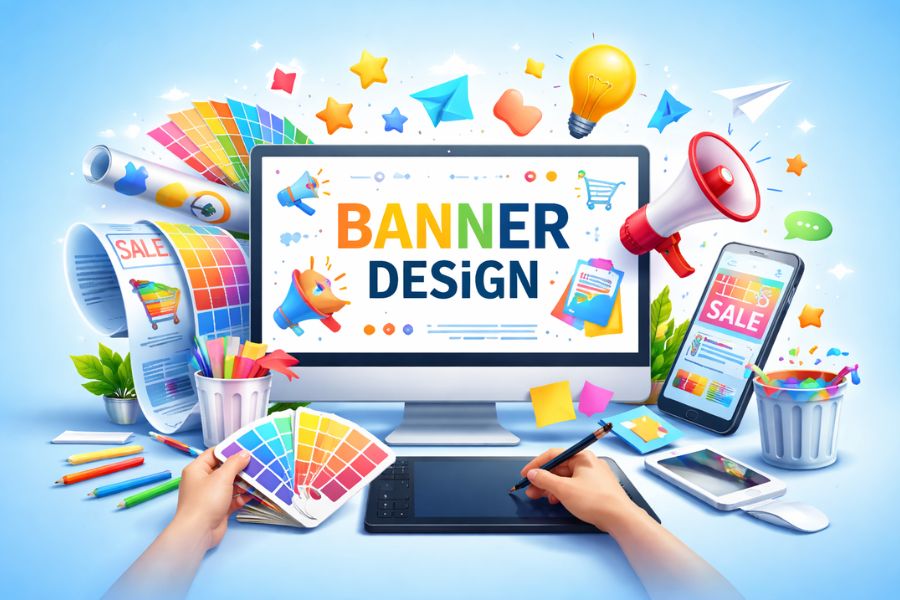
1. What is a banner?
A banner is understood as a type of advertising material that can combine images, text, or even video to convey a message to viewers. Thanks to its flexibility across multiple platforms—from websites and social media to physical spaces like events or streets—banners always act as the first touchpoint between brands and customers. In just a few seconds, an impressive banner can capture attention, spark curiosity, and encourage deeper exploration.
From a communication perspective, a banner is not just a beautiful image but also a tool that helps businesses deliver messages in a concise and memorable way. Depending on its purpose, banners can be designed in various sizes and formats, from website ads to outdoor billboards. This diversity allows banners to adapt well to any marketing campaign, making them a familiar choice whenever there is a need to attract attention and drive customer action.
.jpg)
2. Purposes of using banners
Banners are used in various fields depending on the communication goals that businesses or organizations aim to achieve. With their ability to convey information visually and attractively, banners are always an effective tool for creating quick impressions and increasing audience awareness. From commercial advertising to community activities, banners consistently serve as highlights that enhance communication effectiveness.
2.1. Emblem banners
Emblem banners are often used to represent the symbols and traditional values of an organization. Their design is typically formal, using elements such as logos, primary colors, or slogans to emphasize brand identity. A well-structured layout helps convey a sense of credibility and professionalism.
In organizational environments, emblem banners often appear at ceremonies, conferences, meeting rooms, or workplaces. They serve as reminders of history, unity, and collective pride. As a result, this type of banner is not only decorative but also contributes to building sustainable internal culture.
2.2. Religious banners
Banners in the religious field carry sacred meanings and aim to spread humanistic messages. These banners often use religious symbols, iconic imagery, or quotes with doctrinal value. A gentle and elegant design style helps viewers feel the tranquility and spiritual significance conveyed.
Religious banners are commonly used during major holidays, community events, sermons, or faith-based activities. Their purpose is not only to deliver information but also to inspire, bring peace, and guide spiritual direction. This type of banner has deep influence as it touches human emotions and beliefs.
2.3. Trade union banners
Banners for trade unions tend to be motivational and encourage collective work spirit. Content often includes slogans, campaign announcements, or calls to action for common benefits. Clear and readable design ensures messages are delivered quickly and effectively.
These banners are commonly found in workplaces such as factories, offices, conferences, or campaign launches. Beyond communication, they also foster unity, create a positive atmosphere, and strengthen connections among members.
2.4. Sports banners
Sports banners are vibrant and energetic, reflecting fighting spirit and team pride. They often use bold colors, striking imagery, and motivational slogans to create excitement. A youthful and emotional design helps quickly capture attention in sports environments.
You can find sports banners in stadiums, tournaments, team launches, or fan events. They not only motivate athletes but also promote events and strengthen fan engagement. These are essential materials that convey unity and passion for sports.
2.5. Advertising banners
Advertising banners are among the most common tools in marketing activities. With eye-catching visuals and concise content, they are designed to attract attention immediately. They can appear in shopping centers, websites, social media, or on the streets, helping businesses quickly reach customers.
The goal of advertising banners is to drive actions such as purchases, registrations, or brand awareness. Thanks to their visual clarity and reasonable cost, banners are always prioritized in promotional campaigns. A creative and clear banner can deliver outstanding marketing results and leave a lasting impression.
.jpg)
3. Common types of banners today
Today, banners are widely used across various fields and are classified based on display platforms and purposes. From traditional print banners to modern online banners and large-scale street banners, each type has its own advantages that help businesses effectively deliver messages and reach target audiences.
3.1 Magazine and newspaper banners
Banners in newspapers and magazines are traditional advertising forms that convey credibility through high-quality printing and layouts optimized according to editorial standards. These banners are carefully designed in color and typography to stand out in dense printed content. Their reliability makes them suitable for campaigns aiming to build professionalism and strengthen brand image.
3.2 Online banners
Online banners include web banners and social media banners displayed on websites, blogs, online newspapers, and social platforms. They can be static images, animated GIFs, HTML5 visuals, or even short videos, making messages more engaging and dynamic. Their biggest advantage is easy performance measurement through impressions, clicks, and conversion rates, making them ideal for product promotion, marketing, and recruitment campaigns.
3.3 Street banners
Street banners such as posters, streamers, and billboards are placed in high-traffic areas to reach large audiences quickly. Since they only have a few seconds to make an impression, these banners prioritize large, clear designs with short, memorable messages. They are commonly used for brand promotion, community events, or large-scale campaigns requiring strong public attention.
.jpg)
4. Tips for designing beautiful and effective banners
Effective banner design requires a combination of creativity and strategy. A beautiful banner is not just visually appealing but must also accurately convey the campaign message. When elements like layout, color, content, and call-to-action are properly arranged, banners become powerful tools for increasing engagement, attracting customers, and improving conversion rates.
4.1 Clearly define goals and target audience
Identifying clear goals and target audiences helps shape the visual style, content, and message. Whether the goal is increasing traffic, boosting sales, or attracting candidates, a focused banner will be more persuasive. Understanding the audience profile allows for better choices in colors, imagery, and tone.
4.2 Use high-quality visuals and graphic elements
High-quality images and videos immediately attract attention and enhance professionalism. Sharp, relevant visuals help viewers quickly grasp the message. For online banners, subtle animations or short videos can increase engagement and stand out in competitive environments.
4.3 Use impactful and readable typography
Typography guides the viewer’s eye and conveys information clearly. Fonts should be readable, well-contrasted, and aligned with brand style. Proper arrangement of size, spacing, and color makes messages more prominent and memorable.
4.4 Maintain a logical and balanced layout
A scientific layout ensures harmony and creates a natural visual flow, helping viewers absorb information effectively. Principles like balance, hierarchy, and proper spacing contribute to a professional look. Clear layouts also highlight logos and calls-to-action more effectively.
4.5 Use attractive and harmonious colors
Colors strongly influence emotions, so choosing the right palette is key. Harmonizing colors with brand identity and campaign goals enhances emotional impact and memorability. Contrasting colors for key elements like CTA buttons can significantly boost interaction.
4.6 Keep content concise with clear CTA
Banner content should be short yet meaningful, allowing viewers to understand it instantly. Strong, simple wording increases impact. Clear CTAs like “Learn More,” “Apply Now,” or “Get Offer” guide user actions and improve conversion rates.
4.7 Test and optimize performance
Creating multiple banner versions for A/B testing helps identify the most effective design based on metrics like impressions, clicks, and conversions. Continuous optimization improves performance, reduces costs, and enhances campaign accuracy.
.jpg)
5. Steps to design effective banners
Designing an effective banner requires a combination of research, creativity, and strategic thinking to ensure clear messaging and proper audience targeting. When done correctly, banners not only look appealing but also deliver high conversion value.
5.1 Identify target customers and buying behavior
Understanding audience characteristics such as age, gender, interests, and behavior helps tailor messaging, visuals, and colors effectively, increasing appeal and purchase motivation.
5.2 Choose the right platform and size
Each platform like Facebook, Google Display, or websites has specific banner size requirements. Proper sizing ensures sharp display and avoids content cropping, while also optimizing costs and targeting accuracy.
5.3 Define the message
A clear, concise message that highlights core benefits helps attract attention quickly and motivates interaction.
5.4 Design layout and structure
Careful arrangement of visuals, headlines, content, and logos ensures harmony and readability. A well-structured layout creates natural eye flow and enhances memorability.
5.5 Add a strong call-to-action (CTA)
CTA elements should be prominent and easy to notice. Phrases like “Buy Now,” “Sign Up,” or “Learn More” encourage immediate action while maintaining overall aesthetics.
5.6 Review, refine, and test
Before launching, check for errors in spelling, colors, or display compatibility. A/B testing multiple versions helps determine the most effective one based on engagement metrics.
6. Conclusion
A banner is not just an image carrying information but a bridge that brings brands closer to customers in the shortest time. When designed correctly, banners can clearly convey messages, create positive emotions, and significantly enhance communication effectiveness. With seven simple and practical design tips, you can create impressive banners even without extensive graphic experience. Let every banner you design become a unique mark and the starting point for building a professional brand image in today’s digital space.





















VIP Products








Best Selling Products
Autodesk All App Account Copyright
120 USD
Windows 10 & 11 Pro Key
36 USD
ChatGPT Plus Account (GPT-4)
16 USD
Genuine Adobe Illustrator account
99 USD
Freepik Premium Account
59 USD
Upgrade genuine Capture One account
120 USD
Upgrade Duolingo Super
29 USD
Upgrade Genuine Office 365
49 USD
Capcut Pro 1 Year
39 USD
Adobe Photoshop Copyright - Full App
120 USD
Plugin Retouch4me
69 USD
MidJourney Account
29 USD
Genuine Cheap Canva Pro
39 USD
Copyright Adobe Lightroom Account
59 USD
Adobe Premiere Pro Account
99 USD