
Best Selling Products

Windows 10 & 11 Pro Key
36 USD
Upgrade genuine Capture One account
120 USD
Upgrade Genuine Office 365
49 USD
Upgrade Duolingo Super
29 USD

ChatGPT Plus Account (GPT-4)
16 USD
Capcut Pro 1 Year
39 USD
Adobe Premiere Pro Account
99 USD

MidJourney Account
29 USD
Genuine Cheap Canva Pro
39 USD
Copyright Adobe Lightroom Account
59 USD
Genuine Adobe Illustrator account
99 USD
Autodesk All App Account Copyright
120 USD
Plugin Retouch4me
69 USD
Freepik Premium Account
59 USD
Adobe Photoshop Copyright - Full App
120 USD
Blindly Trusting ChatGPT: Mistakes That Could Cost You Dearly
Nội dung
AI is incredibly powerful, but it is not always correct. When you rely on it completely without verification, risks can arise, ranging from data loss to misinformation. This article highlights common mistakes and how to avoid them so you do not end up “paying tuition fees” because of AI.
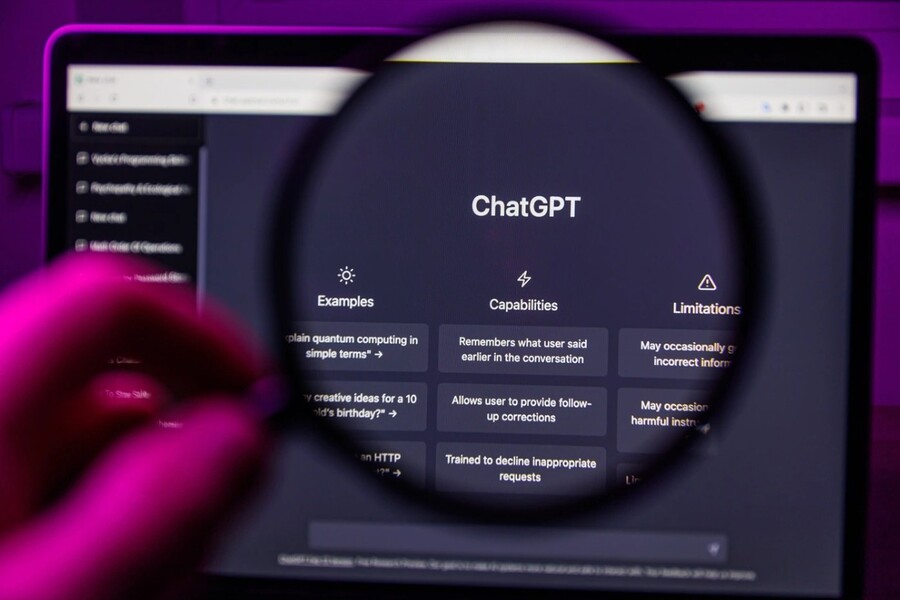
1. Risks of Overtrusting ChatGPT
1.1. Don’t Treat ChatGPT as a Storage Drive
One of the most common misconceptions is treating ChatGPT conversation history as a long-term storage solution. Many people develop the habit of keeping important drafts directly within chats, including research materials, creative content, design concepts, and even source code. This carries significant risks.
Unlike dedicated storage platforms, conversational systems are not designed to function as permanent data repositories. When users delete their history, change settings, or encounter account-related issues, data may disappear. Across many digital services, once a user confirms deletion, recovery is often impossible. This reflects a core privacy principle: when data is deleted, the system does not retain a copy..jpg)
From the perspective of creative and design work, losing data means more than losing text. It can mean losing concepts, idea development processes, reasoning structures, strategic frameworks, and creative logic. These elements are often impossible to fully recreate from memory alone. Therefore, relying on chat history as a “hard drive” is a risky habit.
The solution lies in disciplined workflows. Even when using AI, important data should always be backed up on dedicated storage platforms such as cloud services, document management systems, or version-control software. ChatGPT should be viewed as a thinking aid, not a storage system.
1.2. Application Integrations
One of AI’s biggest promises is automation. Features such as third-party integrations, automated assistants, and smart workflows are expected to handle many processes that humans traditionally manage, from scheduling and task management to creative support. However, reality shows that this technology is still evolving.
In many cases, users find that a system reports a task as completed when the expected result has not actually been achieved. This does not necessarily indicate a serious failure, but rather highlights the complexity of integrating AI with external platforms, where factors such as access permissions, APIs, data synchronization, and system status all play important roles.
.jpg)
From a design and creative perspective, this teaches an important lesson: automation does not mean perfect automation. Even when AI is involved in a workflow, human verification remains essential. Blind trust in automated systems can result in errors, particularly when important data, content, or decisions are involved.
At this stage, AI should be viewed as an accelerator rather than a complete replacement system. Effective users are those who know how to balance automation with manual oversight.
1.3. Trusting ChatGPT and AI “Slop”
One issue frequently discussed within the technology community is the phenomenon of AI-generated content that appears professional on the surface but lacks depth. Some researchers refer to this as “workslop,” meaning outputs that look complete yet require extensive revision before practical use.
This is especially noticeable in creative work. AI can write quickly, but it does not always capture a brand’s voice, customer insights, or strategic objectives accurately. When users depend entirely on AI-generated content, they may spend additional time editing, restructuring, and refining the material.
.jpg)
Some studies in the technology sector also suggest that in certain contexts, excessive use of AI can actually slow down workflows rather than accelerate them. The issue is not the AI itself but how it is used. If AI produces unsuitable content, the time spent correcting it may exceed the time required to create it from scratch.
From a professional standpoint, AI should be viewed as a first draft. Real value emerges when humans add strategic thinking, emotion, experience, and creativity. AI accelerates the process, but the final quality still depends on people.
1.4. The AI Bubble and the Prospect of Living with Advertising
AI is attracting enormous investment from technology companies. However, every technological wave tends to follow a cycle of high expectations, adjustment, and eventual maturity. In the early stages, technologies are often heavily promoted before sustainable business models emerge.
.jpg)
Some technology economists argue that the AI industry is still searching for stable profitability. This does not mean AI is failing; rather, it reflects a familiar pattern in technological innovation. When development costs are high, companies must find revenue sources, and advertising remains one of the most common business models in the digital technology industry.
If AI platforms adopt advertising in the future, the user experience may change. This raises questions about balancing business models with product quality. However, this remains a topic of discussion within the industry rather than a widespread reality today.
From a user perspective, the key lesson is not to view any technology as a perfect solution. AI is a powerful tool, but it remains part of a broader and continuously evolving technology ecosystem.
2. How to Use ChatGPT More Intelligently and Effectively
To maximize the power of ChatGPT, the first important step is asking clear, specific, and contextual questions. The more information you provide about your goals, audience, style, length, and desired format, the more relevant the response will be. For example, instead of asking, “write a marketing article,” request: “write a 400-word advertisement for a skincare product, using a friendly tone, targeting women aged 25–35, including a headline and call to action.” Detailed instructions like these help ChatGPT better understand your needs and produce more accurate results.
.jpg)
Second, interact through multiple steps rather than asking only once. You can request revisions, expansions, summaries, tone changes, additional examples, or rewrites in different styles. Think of it as a collaborative process: ask → receive results → refine → finalize. When you clearly explain what you are dissatisfied with, the quality of the content can improve significantly.
Another important principle is verifying information when necessary. ChatGPT is highly capable of summarizing, explaining, and generating ideas, but it can still make mistakes or lack up-to-date information in certain cases. For content involving statistics, legal matters, healthcare, finance, or important decisions, you should cross-check information with reliable sources to ensure accuracy and safety.
In addition, you should leverage ChatGPT as a tool for thinking support and productivity enhancement. Use it to create outlines, summarize lengthy documents, plan study or work schedules, generate creative ideas, draft emails, write content, learn new skills, or explain complex topics in a simple way. When you understand how to provide effective instructions and take advantage of the tool’s strengths, you can save significant amounts of time, reduce mental workload, and improve your daily productivity.
Finally, never stop experimenting with prompts. Different ways of phrasing a request can produce very different results. The more frequently you use ChatGPT, the better you will understand how to communicate effectively with it and transform it into a truly useful “digital assistant” for learning, work, and creativity.











VIP Products

Best Selling Products
Windows 10 & 11 Pro Key
36 USD
Upgrade genuine Capture One account
120 USD
Upgrade Genuine Office 365
49 USD
Upgrade Duolingo Super
29 USD
ChatGPT Plus Account (GPT-4)
16 USD
Capcut Pro 1 Year
39 USD
Adobe Premiere Pro Account
99 USD
MidJourney Account
29 USD
Genuine Cheap Canva Pro
39 USD
Copyright Adobe Lightroom Account
59 USD
Genuine Adobe Illustrator account
99 USD
Autodesk All App Account Copyright
120 USD
Plugin Retouch4me
69 USD
Freepik Premium Account
59 USD
Adobe Photoshop Copyright - Full App
120 USD