Best Selling Products

Adobe Photoshop Copyright - Full App
120 USD
Genuine Adobe Illustrator account
99 USD

Copyright Adobe Lightroom Account
59 USD

Plugin Retouch4me
69 USD
Upgrade genuine Capture One account
120 USD
Autodesk All App Account Copyright
120 USD
Genuine Cheap Canva Pro
39 USD

Capcut Pro 1 Year
39 USD

Windows 10 & 11 Pro Key
36 USD
ChatGPT Plus Account (GPT-4)
16 USD

Freepik Premium Account
59 USD

MidJourney Account
29 USD

Upgrade Genuine Office 365
49 USD
Upgrade Duolingo Super
29 USD

Adobe Premiere Pro Account
99 USD
ChatGPT and the dark side of artificial intelligence.
Nội dung
Artificial intelligence (AI) is making a powerful breakthrough, permeating every aspect of life, from Copilot to help you plan your work to ChatGPT becoming a "smart tutor" to help you learn more effectively.

The popularity of ChatGPT is explained by its speed, convenience, and flexibility. Users can chat, search, write articles, translate, create content, or even plan tasks in just seconds. For many, it truly is a "revolution in human-machine communication." However, behind this attractive facade, neuroscientists, psychologists, and educators are sounding the alarm about the far-reaching effects that the overuse of ChatGPT could have on human thinking, learning, and creativity.
1. Is AI a useful tool or a double-edged sword?
It's undeniable that AI in general, and ChatGPT in particular, has helped people save time and effort in many activities. Tasks that used to take hours, even days, to complete now only take a few minutes with the help of ChatGPT. A student can ask ChatGPT to explain complex physics concepts in simple language. A marketing employee can ask ChatGPT to create a media plan. A journalist can use this tool to suggest headlines, introductions, or summaries quickly.
But precisely because of this excessive convenience, a question is becoming increasingly urgent: Is ChatGPT making us lazier in our thinking? When every question can be answered instantly, when every idea can be "generated" with just a few lines of suggestions, will people still have the motivation to research, analyze, and create on their own?
Researchers have shown that whenever we delegate an intellectual task to technology, the brain conserves energy by reducing independent cognitive activity. In the short term, this may seem harmless, but in the long run, this dependence stunts critical thinking, memory, and creativity. Therefore, ChatGPT is teetering on the fine line between a "powerful assistant" and a "thought thief."
2. When human intelligence "falls asleep" because of ChatGPT
A study published on the academic platform arXiv, titled “Your Brain on ChatGPT: Accumulating Cognitive Debt When Using AI Assistants for Essays ,” has yielded worrying findings. This research aimed to measure the impact of using AI in intellectual activities, specifically in academic essay writing.
Participants were divided into three groups: the first group wrote entirely using their own abilities; the second group was allowed to search using traditional search engines; and the third group used ChatGPT, representing a large language model (LLM). Analysis of brain activity using magnetic resonance imaging showed that the group using only their brains had the strongest activity in areas related to logical thinking, long-term memory, and creativity. Conversely, the group using ChatGPT had the weakest activity, almost "dormant" during the writing process.
According to researchers, this phenomenon reflects the accumulation of "cognitive debt" as humans gradually lose the ability to think for themselves because they have delegated too many cognitive processes to machines. From a neurobiological perspective, when the brain no longer has to process complex information, neural connections weaken over time, severely impacting the ability to learn and create.
It's worth noting that those who use ChatGPT not only have weaker brain function, but they also lose their mental engagement with their work. They feel that their writing is no longer their own product, lacking personal touch. This leads to feelings of alienation, lack of enthusiasm, and a lack of confidence. If intellectual work requiring creativity and emotion becomes a matter of "pressing a button and waiting for results," can people still feel the joy of the thinking process?
The "emotional detachment" experienced when using ChatGPT is not just a subjective feeling. In many psychological experiments, people who relied on AI to complete essays often couldn't clearly remember how they arrived at the results. They struggled with citing, interpreting, or defending their own viewpoints because the reasoning process wasn't their own. When the brain isn't involved in the thought process, natural memorization and analysis are paralyzed.
This leads to a worrying consequence: people are gradually losing their capacity for critical thinking—the ability to recognize, analyze, and understand their own thoughts. As a result, thinking becomes superficial, dependent, and uncreative. In educational or research environments, this is a particularly serious problem, because critical thinking is the foundation of intellectual progress.
Some experts call this "cognitive disengagement." When people feel that intellectual work no longer requires effort, they gradually lose their sense of control and motivation to learn. In the long run, this can cause people to lose confidence in their own abilities.
One often overlooked but alarming aspect is that ChatGPT is gradually changing how people use language. An international research team collected and analyzed over 22 million words used in online conversations, posts, and documents over the past two years. They found a significant increase in the frequency of phrases originating from or influenced by AI language models.
Phrases like “in today’s digital world,” “as technology continues to evolve,” or “with the rise of artificial intelligence” appear frequently in human-generated writing, demonstrating that AI is shaping the linguistic style of society. Gradually, unique expressions, personal styles, or distinctive cultural characteristics of native languages are being overshadowed, giving way to an “emotionless,” uniform, and formulaic language.
When everyone writes and speaks in the style of ChatGPT, individual identity is blurred. Language, which is the deepest expression of thought and culture, risks being assimilated. This not only affects how we communicate, but also, conversely, impacts how people think, because thought and language are inseparable.
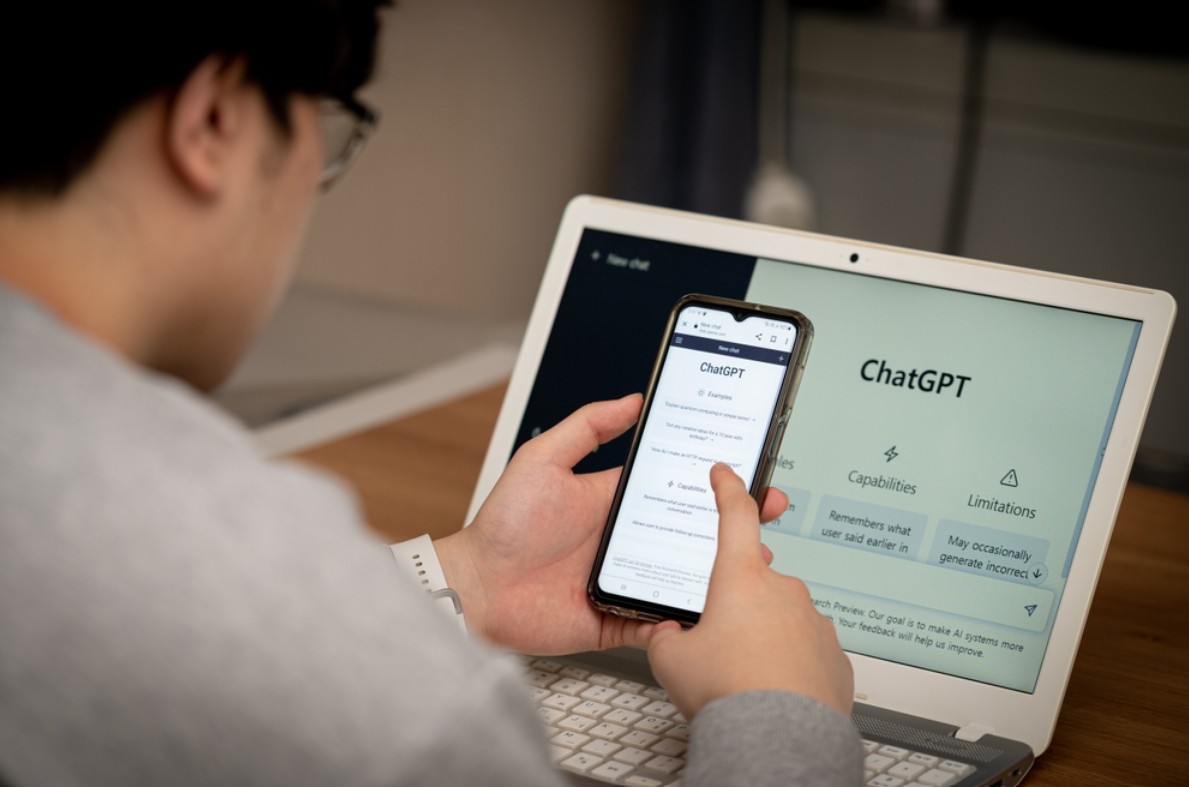
No group has been more significantly impacted by ChatGPT than the younger generation. In the academic environment, ChatGPT is seen as a "powerful assistant" helping students quickly look up information, write essays, complete assignments, or even draft projects. With the widespread use of these tools, many students only need to enter the topic, choose a writing style, and in a few seconds they have a complete piece of writing.
However, experts warn that using ChatGPT too early and without control can cause long-term harm to children's cognitive development. During the brain's formative years, the process of self-learning, making mistakes, and correcting errors is crucial for building logical and creative thinking skills. If AI takes over this part, the child's brain is not sufficiently activated, leading to intellectual stagnation.
A Stanford University study showed that students who frequently use AI to write essays have a 35% lower ability to remember content compared to those who write them themselves. Furthermore, when asked to rephrase their ideas verbally, the AI-dependent group appeared hesitant, lacked confidence, and struggled to express emotions. This dependence, if prolonged, could lead to passive thinking and poor real-world communication skills in the younger generation.
Educational psychologists argue that instead of outright banning AI, it's crucial to guide students to use it proactively. ChatGPT can be a useful learning tool if used correctly: for example, to check grammar, look up word meanings, or learn how to structure arguments, but it shouldn't completely replace the thinking process.
3. Unforeseen consequences of societal dependence on AI
If individuals lose their capacity for independent thinking, then society as a whole will face even more serious consequences. A world where most content is created by AI and humans use that very content to learn is a world of knowledge replication.
Scientists call this phenomenon the "knowledge degradation effect." As AI generates more and more data, and humans use that data to train the next generation of AI, the quality of the information gradually degrades. It's like copying a photograph multiple times; each subsequent copy becomes blurrier than the previous one. If this happens on a global scale, human knowledge risks becoming diluted, distorted, and losing its accuracy.
Furthermore, a society dependent on AI faces the risk of declining collective critical thinking and creativity. When everyone expects "standard" answers from ChatGPT, the spirit of critical thinking weakens. In such an environment, groundbreaking ideas, new initiatives, or unconventional thinking become rare. And when creativity dies out, societal progress also stops.
Professor Gary Marcus (a cognitive science expert at New York University) once warned that humanity is at risk of losing its collective imagination. When every idea is shaped by the writing, speaking, and thinking patterns of AI, humans will gradually forget how to dream and create. What is called "inspiration" will be replaced by "predictable output," where everything is logical but devoid of emotion, structured but lacking soul.
This isn't limited to literature or art. In programming, design, advertising, or even scientific research, human creativity is what drives breakthroughs. If everything relied on pre-existing templates, humanity might enter an era of "intelligent homogenization."
4. A balanced solution between technology and human thinking.
Artificial intelligence is not the enemy of humanity. The problem lies in how we use it. ChatGPT, if used correctly, can become an effective tool to support thinking rather than replace it. The important thing is that humans need to proactively control technology, not let technology control them.
One approach suggested by many experts is to use AI selectively. Instead of asking ChatGPT to write the article from scratch, users should outline their ideas and main arguments themselves, then ask the AI to suggest ways to expand or refine the wording. In this way, the creative process remains human, while the AI only plays a technical support role.
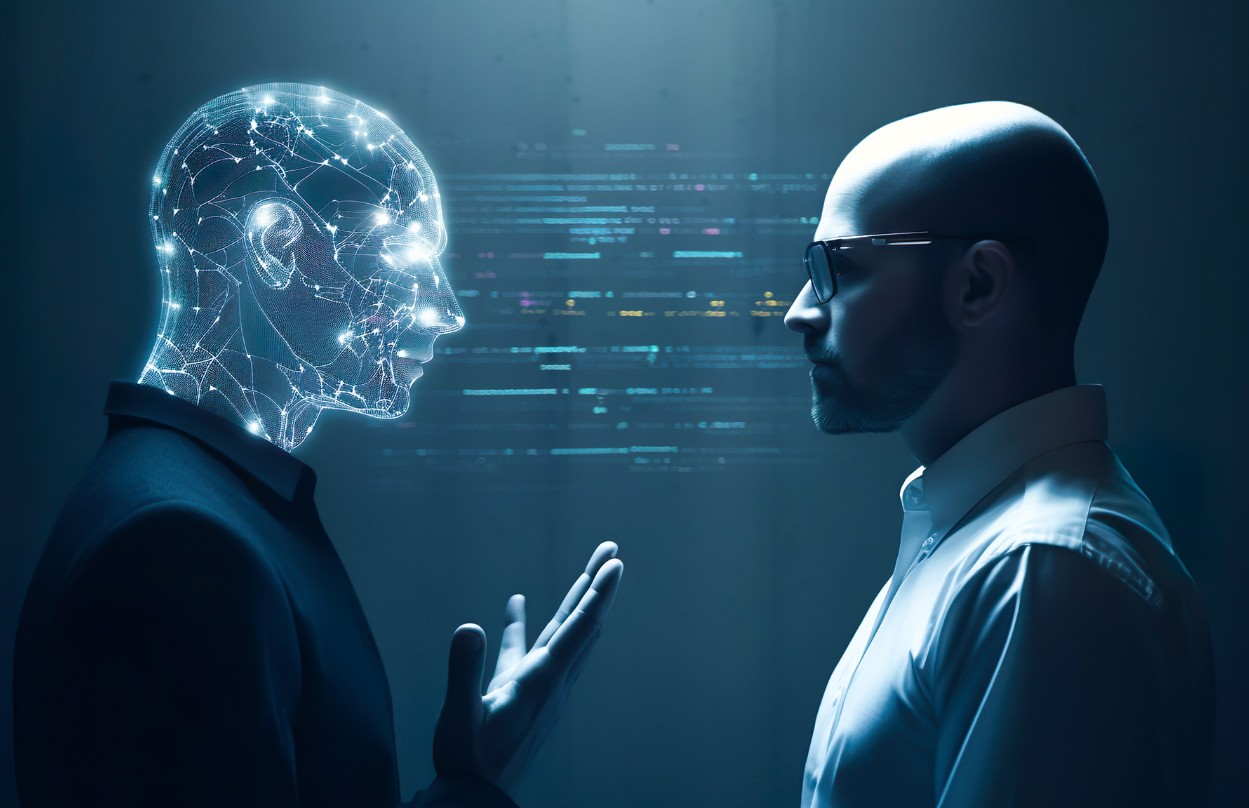
In educational settings, teachers need to guide students to understand the limitations of ChatGPT. This tool can help with spell checking and information synthesis, but it cannot replace analytical skills and personal feelings. Teaching children how to learn with AI, rather than learning from AI, will be key to maintaining their natural intellectual development.
At the macro level, governments and technology organizations need to develop ethical policies for managing and using AI. Clearly defined standards regarding data transparency, intellectual property rights, and responsible use are necessary to prevent misuse. Furthermore, educating citizens about the digital age, helping them understand and use AI correctly, is essential for maintaining a balance between humans and technology.
5. Conclusion
ChatGPT represents a historic turning point in the development of artificial intelligence. It opens up unprecedented opportunities for creativity, communication, and learning. But it also poses a major question for humanity: In the future, when everything is "thought for" by the AI, will humans still know how to think?
The answer depends on each individual. If we view ChatGPT as a tool, it will help us expand our capabilities. But if we view it as a replacement brain, it will degenerate us. Technology is only truly meaningful when it serves humanity, not when it makes humans mere extensions of the technology itself.
















VIP Products





Best Selling Products
Adobe Photoshop Copyright - Full App
120 USD
Genuine Adobe Illustrator account
99 USD
Copyright Adobe Lightroom Account
59 USD
Plugin Retouch4me
69 USD
Upgrade genuine Capture One account
120 USD
Autodesk All App Account Copyright
120 USD
Genuine Cheap Canva Pro
39 USD
Capcut Pro 1 Year
39 USD
Windows 10 & 11 Pro Key
36 USD
ChatGPT Plus Account (GPT-4)
16 USD
Freepik Premium Account
59 USD
MidJourney Account
29 USD
Upgrade Genuine Office 365
49 USD
Upgrade Duolingo Super
29 USD
Adobe Premiere Pro Account
99 USD