
Best Selling Products

Capcut Pro 1 Year
39 USD

Upgrade genuine Capture One account
120 USD

ChatGPT Plus Account (GPT-4)
16 USD

Genuine Cheap Canva Pro
39 USD

Windows 10 & 11 Pro Key
36 USD

Genuine Adobe Illustrator account
99 USD

Upgrade Genuine Office 365
49 USD

Plugin Retouch4me
69 USD

Adobe Photoshop Copyright - Full App
120 USD

Autodesk All App Account Copyright
120 USD

MidJourney Account
29 USD

Upgrade Duolingo Super
29 USD

Freepik Premium Account
59 USD

Adobe Premiere Pro Account
99 USD

Copyright Adobe Lightroom Account
59 USD
Composition in Photography: 5 Ways to Arrange Your Frame and Capture Every Eye
Discover 5 essential composition principles, including the Rule of Thirds, Leading Lines, Symmetry, Frame Within a Frame, and Negative Space, to create more balanced, engaging, emotionally impactful photographs with greater depth.

1. What Is the Basic Concept of Photo Composition?
Before learning advanced techniques, it is important to understand the true nature of photo composition.
Many people assume composition consists of complicated rules reserved only for professional photographers. In reality, composition exists in every photograph, whether you realize it or not. Every time you raise a camera to take a picture, you are unconsciously deciding what will appear in the frame and what will be left out.
1.1. A Simple Definition of Photo Composition
Photo composition is the arrangement of visual elements within a frame to create balance, attract attention, and clearly communicate a message to the viewer.
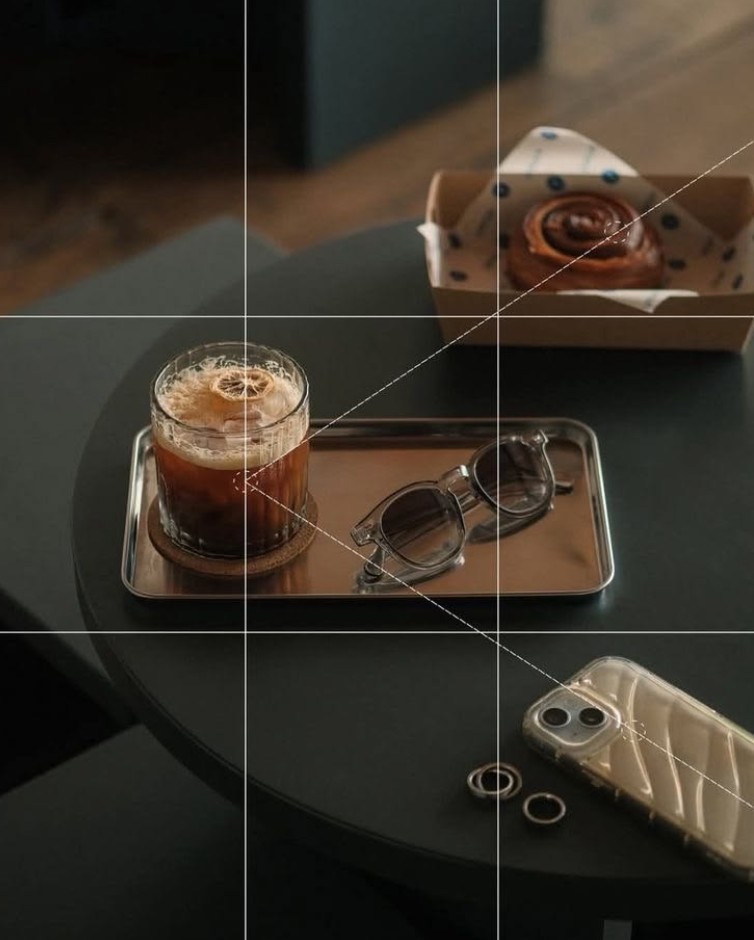
To understand it more simply, imagine the frame as a blank sheet of paper. On that sheet, you decide where to place the subject, which details to keep, and which distracting elements to remove.
A photograph without composition is like a room arranged randomly. Everything is present, but there is no connection between the elements. In contrast, when composition is thoughtfully organized, viewers can immediately understand the main focus of the image and feel what the photographer wants to convey.
That is why composition is not just a technique but also an art of selection.
1.2. The Role of Photo Composition
The first and most important role of composition is guiding the viewer’s eye.
When looking at a photograph, people do not observe everything at once. Instead, their eyes naturally search for a point of interest first and then move on to other details. Good composition controls this visual journey and directs attention exactly where the photographer intends.
The second role is creating emotion.
Each type of composition evokes a different emotional response. Symmetrical composition creates a sense of balance, stability, and formality. Diagonal compositions bring a feeling of movement, energy, and dynamism. Meanwhile, minimalist compositions with large amounts of negative space often create feelings of peace, solitude, or contemplation.
.jpg)
The third role is reducing visual chaos within the frame.
Life is filled with countless details. If you try to include everything in a photograph, viewers may feel overwhelmed and unsure where to focus. Composition simplifies information by keeping essential elements and removing anything that does not support the story of the image.
2. Why Do You Need to Master Composition Thinking?
Many people learning photography spend most of their time researching cameras, lenses, or editing software. However, these tools only become truly effective when supported by a solid understanding of composition.
Understanding composition helps you view a scene systematically. Instead of simply pointing and shooting, you know where to place the subject, which distractions to eliminate, and how to create emphasis within the frame.
This is the difference between someone who knows how to take photographs and someone who merely owns a camera.
2.1. Composition Creates Clear Subject Hierarchy
One of the most common problems beginners face is overcrowded frames.
For example, when photographing a friend in a busy square, many elements may appear simultaneously, including crowds, vehicles, billboards, trees, and architectural structures. Without clear composition, all of these elements compete for attention.
As a result, viewers spend more time figuring out what the actual subject is.
On the other hand, when proper composition is applied, the subject immediately stands out. The remaining elements simply support and reinforce the main story.
This is one of the clearest distinctions between amateur and professional photography.
.jpg)
2.2. Elevating a Snapshot into Artistic Photography
Snapshots hold value as memories, but not necessarily as works of visual art.
When traveling, many people stand in front of a famous landmark and take a simple photograph to prove they were there. The image successfully preserves a memory, but often fails to evoke emotion in viewers.
In contrast, a photograph built with intentional composition allows viewers to experience much more. They do not simply see the location; they feel the atmosphere, lighting, and story within the frame.
That is the moment photography moves beyond simple documentation and becomes an art form.
3. 5 Composition Techniques to Make Your Photos More Engaging
There are countless composition techniques in photography. However, the following five are considered the most important foundations because they are easy to apply, highly effective, and suitable for nearly every genre of photography.
3.1. The Rule of Thirds
If you could learn only one composition principle, it should undoubtedly be the Rule of Thirds.
This principle divides the frame into nine equal sections using two horizontal and two vertical lines. The four intersection points created by these lines are considered the strongest positions for placing a subject.
Beginners often place subjects directly in the center of the frame. While this is not necessarily wrong, it can make the composition feel static and less engaging.
(1).jpg)
By moving the subject toward one of the four intersection points, the composition becomes more balanced and naturally appealing to viewers.
In landscape photography, this rule is also useful for positioning the horizon. Instead of placing it in the center, position the horizon along either the upper third or lower third line to increase depth and visual interest.
It is a simple technique that can instantly improve image quality.
3.2. Using Leading Lines
A great photograph needs more than just a focal point. It also needs a way to guide the viewer's attention.
Leading lines are elements within a frame that direct the viewer’s eye from one point to another. They can be roads, rows of trees, fences, railway tracks, rivers, or any elongated shape.
When used effectively, leading lines create depth and make an image feel more three-dimensional.
For example, a road beginning at the bottom corner of the frame and extending toward the horizon naturally encourages viewers to follow that visual path.
(1).jpg)
This technique is especially effective in landscape and travel photography.
3.3. Symmetrical Composition
Humans are naturally attracted to balance.
That is why symmetrical compositions often appear pleasing and professional. In this style, both sides of the frame share similarities in shape, color, or structure.
Symmetry frequently appears naturally in architecture, hallways, bridges, roads, or reflections on water surfaces.
When photographing symmetrical compositions, place the axis of symmetry directly in the center of the frame. This creates a feeling of stability and harmony.
Symmetrical composition is particularly suitable for architectural photography, churches, hotels, palaces, and environments with strong geometric structures.
(1).jpg)
A well-executed symmetrical photograph often creates a strong visual impact because it conveys a sense of perfection and order.
3.4. Frame Within a Frame
One of the most effective ways to draw attention is by creating an additional frame within the image.
This technique uses foreground elements such as windows, tree branches, arches, fences, or rock openings to surround the main subject.
This secondary frame acts like an invisible arrow, directing viewers precisely where they should focus.
In addition to emphasizing the subject, the Frame Within a Frame technique enhances depth and creates separation between the subject and its surroundings.
Many street and travel photographers love this technique because it improves storytelling without requiring complex tools.
.jpg)
A simple doorway can sometimes transform an ordinary photograph into a highly emotional piece of visual storytelling.
3.5. Using Negative Space to Create Elegance
Many beginners believe a great photograph should contain as many details as possible. However, some of the most powerful photographs contain very few elements.
Negative space refers to the area within an image that does not contain the primary subject.
This may include a vast blue sky, an expansive ocean, a snowy field, or a plain monochromatic wall.
Negative space gives viewers’ eyes a place to rest and allows the subject to stand out more clearly.
Particularly in portrait and storytelling photography, leaving ample space in the direction the subject is looking or moving creates a more natural and open feeling.
(1).jpg)
This is one of the most widely used techniques in modern minimalist photography.
4. Common Mistakes When Applying Photo Composition
Although understanding composition principles is essential, many photographers make the mistake of applying them too rigidly.
Composition is a tool, not an absolute set of rules. Some famous photographers intentionally break the Rule of Thirds or create asymmetrical arrangements to generate stronger emotional impact.
The key is understanding why each principle exists before choosing to follow or break it.
Another common mistake is focusing too much on the subject while ignoring the background. A utility pole appearing behind a person’s head, a brightly colored billboard, or an unrelated object can ruin a composition even when the subject is placed correctly.
Therefore, before pressing the shutter button, take a few seconds to observe the entire frame rather than focusing solely on the main subject.
5. Conclusion
When you understand and effectively apply principles such as the Rule of Thirds, Leading Lines, Symmetry, Frame Within a Frame, and Negative Space, you will notice a significant improvement in the quality of your photographs. The wonderful thing is that these techniques do not require expensive equipment—only observation skills and consistent practice.





















VIP Products








Best Selling Products
Capcut Pro 1 Year
39 USD
Upgrade genuine Capture One account
120 USD
ChatGPT Plus Account (GPT-4)
16 USD
Genuine Cheap Canva Pro
39 USD
Windows 10 & 11 Pro Key
36 USD
Genuine Adobe Illustrator account
99 USD
Upgrade Genuine Office 365
49 USD
Plugin Retouch4me
69 USD
Adobe Photoshop Copyright - Full App
120 USD
Autodesk All App Account Copyright
120 USD
MidJourney Account
29 USD
Upgrade Duolingo Super
29 USD
Freepik Premium Account
59 USD
Adobe Premiere Pro Account
99 USD
Copyright Adobe Lightroom Account
59 USD