Best Selling Products

Freepik Premium Account
59 USD

Capcut Pro 1 Year
39 USD
Upgrade genuine Capture One account
120 USD
Adobe Premiere Pro Account
99 USD
Windows 10 & 11 Pro Key
36 USD

MidJourney Account
29 USD

ChatGPT Plus Account (GPT-4)
16 USD

Upgrade Duolingo Super
29 USD
Genuine Adobe Illustrator account
99 USD
Genuine Cheap Canva Pro
39 USD

Copyright Adobe Lightroom Account
59 USD
Autodesk All App Account Copyright
120 USD
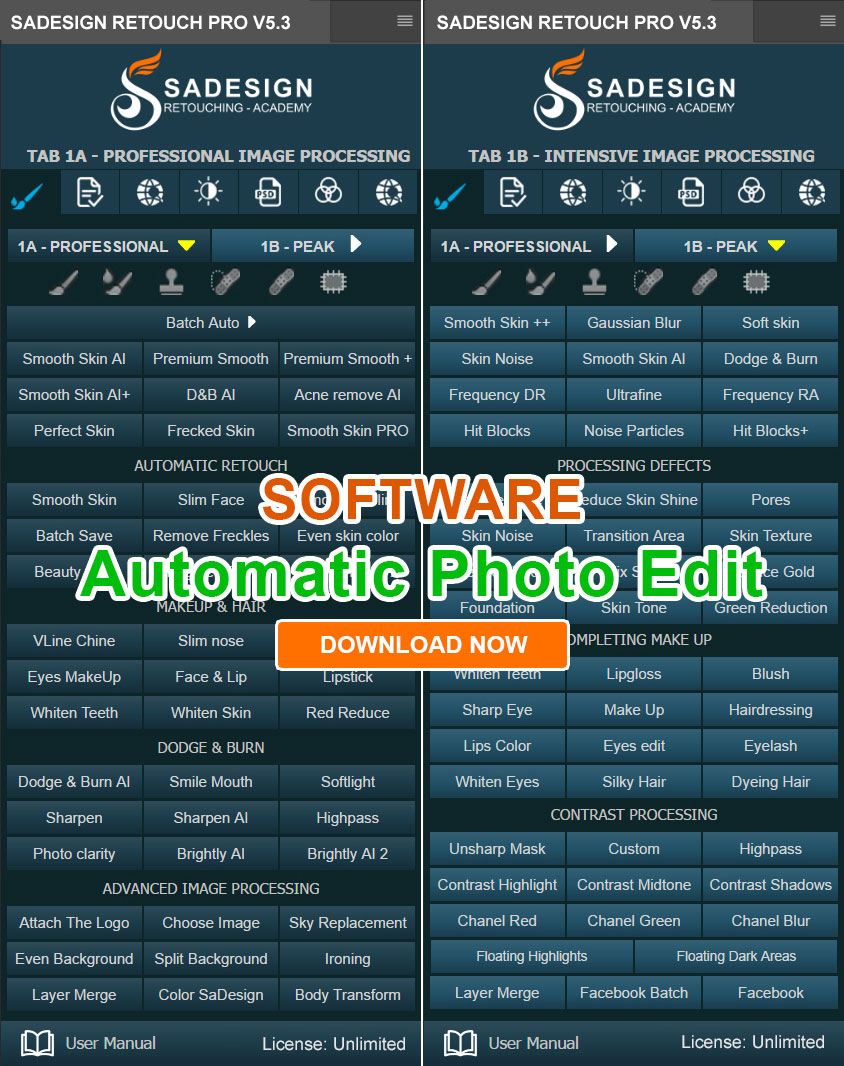
Plugin Retouch4me
69 USD
Adobe Photoshop Copyright - Full App
120 USD
Upgrade Genuine Office 365
49 USD
Design a Professional Ebook with InDesign from A–Z
Nội dung
- 1. What is an Ebook and why is it important?
- 1.1. What is an Ebook?
- 1.2. The important role of Ebooks in the digital age
- 2. Why use InDesign for Ebook creation?
- 2.1. Professional layout capabilities
- 2.2. Exporting multiple formats (PDF, EPUB, HTML)
- 2.3. Optimizing the reader experience
- 2.4. Case study: Word vs InDesign
- 3. Preparation before getting started
- 3.1. Define the Ebook’s objective
- 3.2. Prepare the content
- 3.3. Gather design resources
- 3.4. Determine size and format
- 5. Common Ebook mistakes and how to fix them
- 5.1. Missing Fonts errors
- 5.2. Blurry or pixelated images after export
- 5.3. Ebook files that are too large and difficult to download or share
- 5.4. Table of contents not working in EPUB or interactive PDF versions
Discover the complete process of creating an Ebook, from layout and typography to exporting publication-ready files. You will learn how to transform ideas into professional digital publications that are easy to read and compatible with all devices. Suitable for beginners as well as designers looking to upgrade their skills.
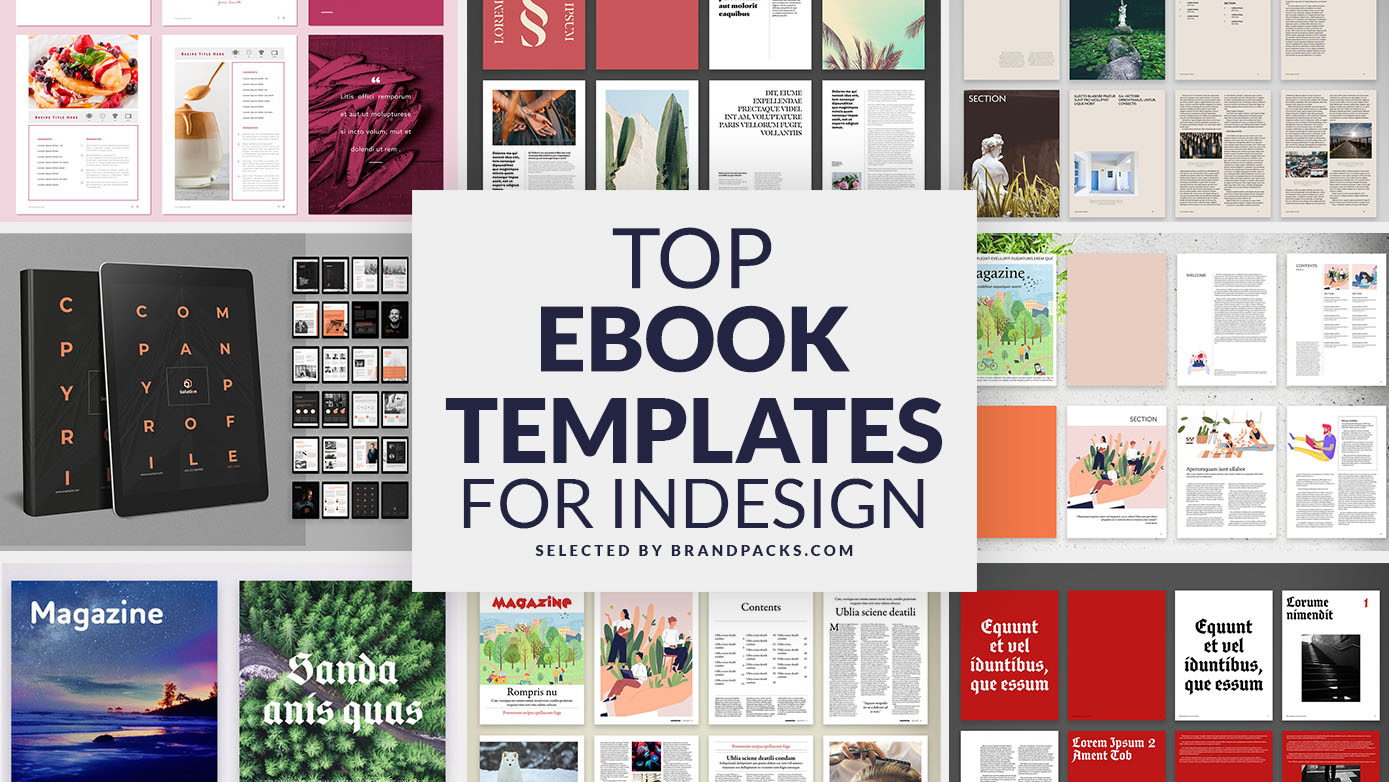
1. What is an Ebook and why is it important?
1.1. What is an Ebook?
An Ebook (Electronic Book) is a digital publication that can be read on devices such as computers, smartphones, tablets, or dedicated e-readers like Kindle and Kobo. Unlike traditional printed books, Ebooks can integrate interactive elements such as hyperlinks, automatic tables of contents, bookmarks, content search functions, and even animations or videos.
In terms of formats, Ebooks commonly exist as PDF, EPUB, or HTML files. PDF preserves the same layout as a printed version, while EPUB allows content to automatically adapt to different screen sizes, providing a more flexible reading experience. Thanks to this convenience, Ebooks are increasingly used in education, business, marketing, and self-publishing.
1.2. The important role of Ebooks in the digital age
First, Ebooks help spread knowledge quickly without geographical limitations. An electronic book can be downloaded and read anywhere in the world within seconds. This opens up broad access to knowledge for readers while allowing authors and businesses to reach global audiences without printing or traditional distribution costs.
.jpg)
In addition, Ebooks are highly effective marketing tools. Many businesses use Ebooks as a “lead magnet” by offering valuable content for free. A high-quality Ebook not only helps build credibility but also increases brand awareness, creates trust, and encourages the conversion of potential customers into actual customers.
In education and training, Ebooks serve as flexible learning platforms. Learners can easily search, annotate, bookmark content, and carry an entire library on a compact device. Compared to printed books, Ebooks are more cost-effective, easier to update, and more environmentally friendly.
Furthermore, Ebooks help individuals and professionals build personal brands. A professionally designed Ebook not only demonstrates expertise but also showcases the author’s capabilities and working style. This is why more freelancers, coaches, marketers, and designers are choosing Ebooks as tools to establish their positions within their industries.
Finally, Ebooks offer flexibility in publishing and distribution. You can update content, correct errors, or release revised editions without printing costs. As a result, content remains fresh, accurate, and relevant to readers.
2. Why use InDesign for Ebook creation?
While Word and PowerPoint are suitable for basic documents, Adobe InDesign is widely regarded as the “gold standard” when it comes to professional Ebook design. The reason lies in the outstanding advantages this tool offers.
.jpg)
2.1. Professional layout capabilities
InDesign allows complete control over every element of an Ebook, from layout, fonts, line spacing, and colors to images. One of its most powerful features is the Paragraph Styles and Character Styles system. By defining styles for headings, body text, quotes, and captions in advance, you can synchronize the entire document with just a single click.
This ensures consistency from the first page to the last, avoiding visual clutter and maintaining a professional appearance. Compared to Word or PowerPoint, layout design in InDesign provides significantly greater precision and flexibility, especially for Ebooks containing dozens or hundreds of pages.
2.2. Exporting multiple formats (PDF, EPUB, HTML)
One of InDesign’s greatest strengths is its ability to publish in multiple formats. You can create high-quality PDF files for printing, EPUB files for e-readers such as Kindle or Kobo, and HTML files for online publishing.
Thanks to this flexibility, your Ebook can reach readers across multiple platforms while maintaining display quality. There is no need to redesign the project from scratch for each format, saving considerable time and effort.
2.3. Optimizing the reader experience
InDesign allows you to create automatic tables of contents, smart page numbering, internal links, bookmarks, and even interactive Ebooks. These features make navigation easier, improve content accessibility, and provide a smoother reading experience.

Compared to a static PDF created in Word, an Ebook produced in InDesign feels significantly more professional, user-friendly, and engaging.
2.4. Case study: Word vs InDesign
An Ebook created in Word often encounters font issues, low-quality printed images, inconsistent layouts, and difficulties with automatic table-of-contents generation. In contrast, an Ebook designed in InDesign features a consistent layout, sharp imagery, optimized file size, and publication-ready output.
Clearly, choosing InDesign is the first step toward creating a professional, visually appealing, and long-lasting Ebook.
3. Preparation before getting started
Before opening InDesign, thorough preparation will determine much of your Ebook’s final quality.
3.1. Define the Ebook’s objective
You need to clearly understand the purpose of the Ebook. If the goal is marketing, the design should focus on attractiveness and brand recognition. If it is educational material, the layout should prioritize clarity and readability. If it is a portfolio, visuals and presentation become more important. The clearer the objective, the more accurate the design direction.
3.2. Prepare the content
A good Ebook always starts with quality content. You should build a logical structure, organize chapters clearly, and maintain a consistent tone of voice. Illustrations, charts, and infographics should be prepared in advance to avoid interruptions during the design process.
3.3. Gather design resources
Fonts, images, icons, and templates are essential elements. Having everything prepared beforehand helps the design process move faster and appear more professional.
3.4. Determine size and format
The size of an Ebook directly affects the reading experience. A4 is suitable for printing, A5 is ideal for tablet reading, while a vertical format is optimized for smartphones. Choosing the correct format from the start helps avoid extensive revisions later.
.jpg)
3. Guide to creating an Ebook with InDesign
Create a new document
Start with File > New > Document and select settings appropriate to your publishing goals. Configure the document size, margins, and bleed settings to ensure a proper layout and prevent printing issues. Columns help improve readability and visual balance.
Set up typography styles
Paragraph Styles and Character Styles help manage typography efficiently. Headings, body text, quotes, and captions should be clearly defined to maintain consistency throughout the Ebook.
Insert and manage images
Use File > Place to import images while maintaining correct proportions and resolution. Text Wrap allows text to flow around images, creating visually appealing and dynamic layouts.
Create an automatic table of contents
The Table of Contents feature improves navigation, especially in lengthy documents. This is an essential feature when exporting interactive PDFs or EPUB files.
Add branding elements
Logos, colors, icons, and infographics help make an Ebook professional and recognizable. Master Pages help maintain consistency across headers, footers, and page numbers.
Review and optimize
Use Preflight to check for font, image, and color issues. Preview the entire Ebook before exporting to ensure there are no errors.
Export the Ebook from InDesign
Export PDFs for printing and client distribution. Export EPUB files for e-reading devices. Choosing the correct PDF/X standard and optimizing file size ensures the Ebook performs well across all platforms.
.jpg)
5. Common Ebook mistakes and how to fix them
Understanding the causes of common issues and knowing how to resolve them will help you maintain Ebook quality, save time on revisions, and ensure a professional final product.
5.1. Missing Fonts errors
This is the most common issue when opening or exporting Ebooks from InDesign. When a file uses fonts that are not available on the system or fonts are not embedded during export, the software substitutes them with default fonts. As a result, layouts change, spacing becomes inconsistent, and some characters may display incorrectly or become unreadable, especially in languages that use diacritics such as Vietnamese.
The problem often results from using unlicensed fonts, fonts downloaded from unreliable sources, or forgetting to embed fonts during export. Additionally, when files are shared between multiple computers or among team members, missing fonts can easily occur if font management is not handled properly.
To solve this issue, prioritize widely used fonts or fonts from Adobe Fonts to ensure compatibility and stability. When exporting PDF or EPUB files, always verify that the Embed Fonts option is enabled. If collaborating with a team, use InDesign’s Package feature to bundle all fonts with the project files and prevent Missing Fonts errors on other systems.
5.2. Blurry or pixelated images after export
A visually appealing Ebook requires sharp images. However, many users encounter blurry, pixelated, or jagged images after exporting. This often happens when source images have low resolution, are excessively enlarged, or are compressed too heavily during export.
In InDesign, images displayed on-screen may only be previews, making them appear sharper than they actually are. During export, inappropriate image compression settings can significantly reduce image quality. Additionally, using small images from the internet and enlarging them within the layout is a common cause of pixelation.
To avoid this issue, use images at 300 dpi for print projects and around 150 dpi for digital Ebooks. Avoid enlarging images beyond their original size, and instead use appropriately sized images from the beginning. When exporting PDFs, review the Compression settings and limit downsampling for important visuals. If file size optimization is required, compress images before importing them rather than relying on InDesign’s automatic compression.
.jpg)
5.3. Ebook files that are too large and difficult to download or share
One common challenge in Ebook production is excessive file size. An Ebook weighing dozens or even hundreds of megabytes can be difficult to email, download on mobile devices, or distribute online. Readers may abandon the Ebook simply because it takes too long to load.
The primary cause is usually the use of extremely high-resolution images, excessive full-page visuals, or heavy image formats such as TIFF. In addition, failing to optimize export settings may cause InDesign to retain all original image data, significantly increasing file size.
To solve this issue, optimize images before importing them into InDesign and reduce resolution according to the intended use. For screen-based reading, 150 dpi is generally sufficient. When exporting PDFs, choose the Smallest File Size preset or customize compression settings to reduce file size. Additional optimization can be achieved using tools such as Adobe Acrobat or SmallPDF while preserving display quality.
5.4. Table of contents not working in EPUB or interactive PDF versions
The table of contents is an important element that helps readers navigate an Ebook easily, especially in lengthy multi-chapter documents. However, many users encounter situations where the table of contents cannot be clicked, links to incorrect pages, or fails to appear on electronic reading devices.
A common cause is creating the table of contents manually instead of using InDesign’s Table of Contents feature. When page numbers are typed manually, InDesign cannot generate internal links, causing navigation failures when exporting to EPUB or interactive PDF formats. In addition, improperly configured Heading Styles prevent the software from generating an accurate TOC.
To avoid this issue, always create the table of contents using InDesign’s automatic Table of Contents tool. Ensure chapter headings are assigned the correct Paragraph Styles before generating the TOC. During export, enable bookmark and hyperlink options to ensure full functionality. After exporting, test the file on an actual reading device to verify navigation performance.
A great Ebook should not only look beautiful but also function flawlessly on every device. And InDesign is the tool that helps transform your ideas into professional, sustainable, and impressive publishing products.












VIP Products



Best Selling Products
Freepik Premium Account
59 USD
Capcut Pro 1 Year
39 USD
Upgrade genuine Capture One account
120 USD
Adobe Premiere Pro Account
99 USD
Windows 10 & 11 Pro Key
36 USD
MidJourney Account
29 USD
ChatGPT Plus Account (GPT-4)
16 USD
Upgrade Duolingo Super
29 USD
Genuine Adobe Illustrator account
99 USD
Genuine Cheap Canva Pro
39 USD
Copyright Adobe Lightroom Account
59 USD
Autodesk All App Account Copyright
120 USD
Plugin Retouch4me
69 USD
Adobe Photoshop Copyright - Full App
120 USD
Upgrade Genuine Office 365
49 USD