Best Selling Products

Adobe Photoshop Copyright - Full App
120 USD

Freepik Premium Account
59 USD

MidJourney Account
29 USD

Plugin Retouch4me
69 USD

Windows 10 & 11 Pro Key
36 USD

Copyright Adobe Lightroom Account
59 USD

Capcut Pro 1 Year
39 USD

Upgrade genuine Capture One account
120 USD

Upgrade Duolingo Super
29 USD

Genuine Cheap Canva Pro
39 USD

Autodesk All App Account Copyright
120 USD

Genuine Adobe Illustrator account
99 USD

ChatGPT Plus Account (GPT-4)
16 USD

Adobe Premiere Pro Account
99 USD

Upgrade Genuine Office 365
49 USD
Google launches AI video recognition tool created by Gemini.
Nội dung
In response to the growing wave of sophisticated fake videos, Google has added a feature that allows users to verify content created using the company's AI.
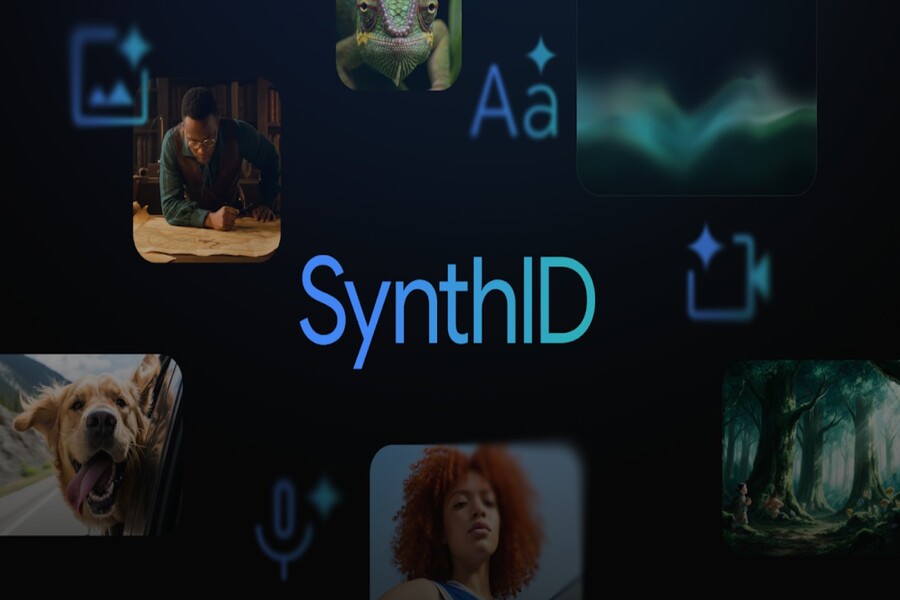
We've seen AI write, paint, compose music, create surreal images, and now even produce videos with quality that's increasingly difficult to distinguish from human-produced content. This explosion brings countless creative opportunities, but it also raises serious concerns about misinformation, fraud, fakery, and the erosion of social trust.
In this context, a major question is becoming increasingly urgent: how do we know which content is real and which is created by AI? When fake videos can make viewers believe a politician said something they never said, or a celebrity appears in a fictional setting, the line between reality and illusion becomes more blurred than ever.
Google understands its responsibility as both a provider of AI generation technology and a massive content distribution platform. Developing AI without accompanying tools for transparency and verification will only exacerbate the crisis of trust in the digital age.
Therefore, Google has just announced a significant step: expanding content transparency tools on Gemini, allowing users to detect videos created by Google's own AI. This is not just a technical feature, but also a statement about how Google wants to shape the future of digital content: creativity must go hand in hand with responsibility.
1. Google expands content transparency tools on Gemini.
According to the latest announcement, Google has officially expanded its AI content verification capabilities on Gemini. With this update, users can upload videos to Gemini and ask a simple question: "Was this video created using Google's artificial intelligence?"
Notably, Google doesn't require users to have technical knowledge, install complex software, or use third-party tools. The experience is designed in the spirit of "AI for the masses": ask questions in natural language, and let the AI process and answer them automatically.
From a user experience design perspective, this is a very smart decision. Instead of forcing users to learn how to "read" AI cues, Google empowers them to verify directly. Verification becomes a proactive, accessible action that doesn't feel imposed upon them.
However, the most important element lies in the technology behind this feature: an invisible yet verifiable content tagging system called SynthID.
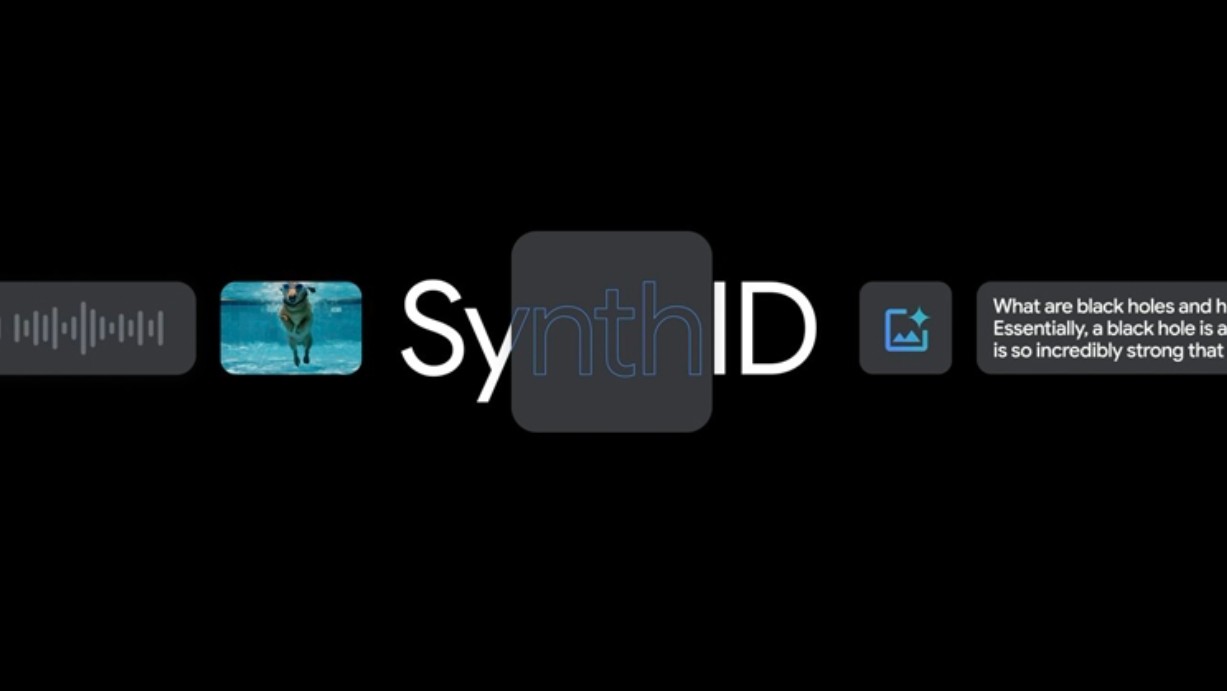
2. Proprietary ID: The key to Gemini's AI video recognition.
Gemini's AI video detection capabilities don't rely on purely statistical "judgment," but rather on a proprietary digital ID that only Google's AI models can generate and recognize. This is a core differentiating factor compared to many AI detection tools currently on the market.
Instead of trying to guess whether a video "looks like AI," Google chooses a proactive approach, attaching identifying marks right from the moment the content is created. This is similar to assigning a VIN to a car: invisible to the naked eye, but always present in its structure.
When users upload videos to Gemini for verification, the system scans the entire content for traces of SynthID. If found, Gemini can confirm that the video was created or edited using Google's AI.
This approach clearly reflects the "by design" philosophy: transparency is not a last resort, but is integrated right from the technological foundation.
3. What is SynthID and why is it important?
SynthID is a digital copyright marking technology developed by Google, embedded directly into AI-generated content. The unique aspect is that these markings are completely invisible to humans, and do not alter image, sound, or viewing quality. However, they can be reliably detected by software.
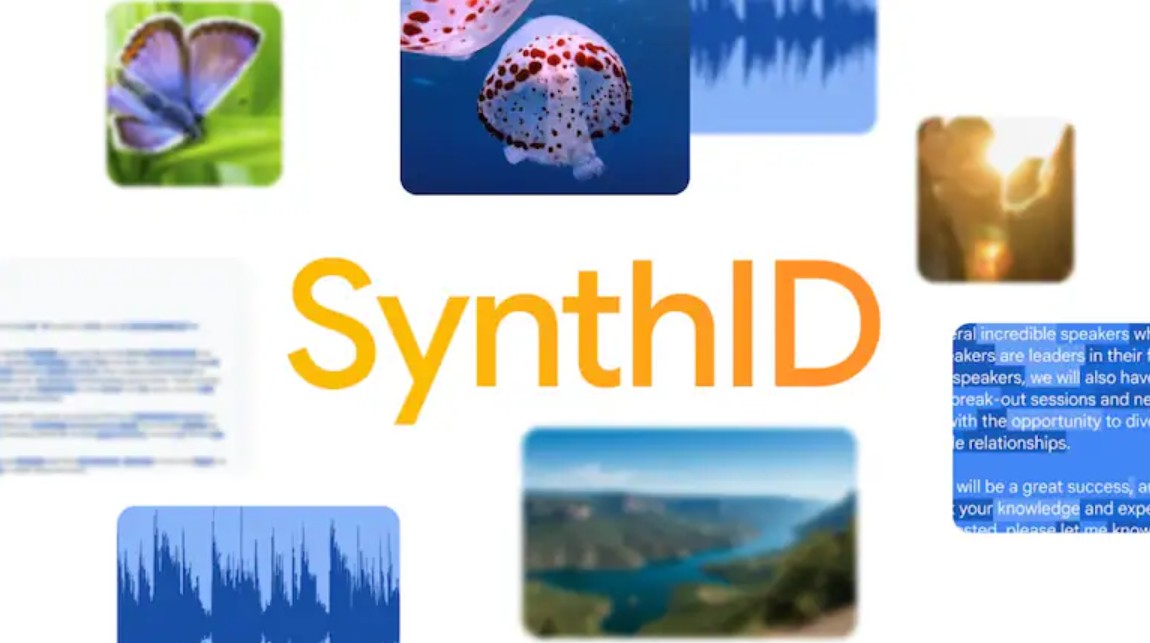
Technically, SynthID doesn't function like a traditional watermark. It doesn't insert logos, watermarks, or easily truncated symbols. Instead, it embeds signals into the content's data structure, robust enough to withstand basic editing operations like compression, splicing, or formatting changes.
From a design and experience perspective, this is a very subtle solution. It doesn't break the aesthetic of the content but still ensures traceability.
More importantly, SynthID demonstrates a clear stance from Google: AI should not create "anonymous" content. Every AI-generated product needs to be traceable back to its source, at least within the developer's ecosystem.
One commendable aspect of Google's implementation of this feature is that Gemini goes beyond simply providing binary answers. Instead of just saying "yes" or "no," the system provides detailed context about where and how SynthID was detected in the video.
For example, users might receive a notification that SynthID was detected in the audio segment between the 10th and 20th seconds, while the video contains no AI signature. This suggests that the video may have been partially edited using AI, rather than being created entirely from scratch.
From a media and journalistic perspective, this level of detail is extremely valuable. It allows users, journalists, and fact-checkers to better understand the nature of the content, avoiding extreme conclusions such as "this video is completely fake" or "it's completely real."
From a user experience perspective, this is how Google builds trust: not by imposing conclusions, but by providing data for users to judge for themselves.
4. The Imperfect Limits of Gemini
Despite its many positive aspects, Gemini's AI video verification tool still has certain limitations. First, there are technical constraints: uploaded video files must not exceed 100 MB and must not be longer than 90 seconds.
This means users cannot use Gemini to check feature-length movies, documentaries, or other lengthy content. However, in the context of short videos dominating social media, this limitation is still sufficient to verify much of the controversial content currently circulating.
From a product design perspective, this is a reasonable trade-off. Processing long videos requires significant computational resources, and if scaled up unchecked, the user experience could be severely impacted. Google is clearly prioritizing usability and responsiveness over covering every scenario.
The ability to verify AI-generated videos is not a standalone step but an extension of the content transparency ecosystem that Google has been building since 2023. Prior to this, Google deployed SynthID for AI-generated images, and according to reports, over 20 billion pieces of content have been flagged.
This figure demonstrates the enormous scale of AI content within the Google ecosystem and reflects the company's proactive efforts to label and manage it. Expanding to video is a natural progression.
Notably, Gemini can detect Google's AI content almost instantly. This significantly reduces verification time, a crucial factor in situations where information spreads rapidly.
However, the biggest and most controversial limitation of this tool is its scope of application. Gemini can only verify content created or edited using Google's internal AI tools.
If a video was created by a different AI model, or edited using a tool not owned by Google, Gemini will not be able to provide any information. This makes the tool useful primarily within the Google ecosystem, rather than being a comprehensive AI detection solution.
From a strategic perspective, this is understandable. Google cannot and probably does not want to be held accountable for content generated by other AI platforms. However, from a societal perspective, this shows that we are still a long way from achieving a common standard for verifying AI content.
Google's deployment of the video detection tool created by Gemini is a significant step forward, but it also highlights a reality: AI transparency cannot be a single-company effort.
In a world where dozens of different AI models coexist, each with its own way of creating content, the lack of a common standard leaves users in a state of "selective blindness." They may know if a piece of content was created by Google, but are completely powerless against other sources.
From a systems design perspective, this is the time for the tech industry to sit down and discuss open standards and cross-platform markup and verification mechanisms. Otherwise, transparency efforts will remain localized.
Google's ability to detect videos created by Gemini isn't just a new feature; it's a statement of responsibility in the age of AI generation. Through SynthID technology and the visual verification experience on Gemini, Google is demonstrating that AI-powered creation shouldn't come with ambiguity about its origin.
Despite its limitations, particularly within the Google ecosystem, this step is highly significant in the context of increasingly sophisticated fake content. It gives users a tool, albeit imperfect, to begin asking the right questions: where does this content come from, and should I trust it?
In the future, as AI becomes increasingly powerful, the question will no longer be whether we can create realistic-looking content, but whether we are transparent enough to live with it. And right now, Google is trying to answer that question in its own way.





















VIP Products








Best Selling Products
Adobe Photoshop Copyright - Full App
120 USD
Freepik Premium Account
59 USD
MidJourney Account
29 USD
Plugin Retouch4me
69 USD
Windows 10 & 11 Pro Key
36 USD
Copyright Adobe Lightroom Account
59 USD
Capcut Pro 1 Year
39 USD
Upgrade genuine Capture One account
120 USD
Upgrade Duolingo Super
29 USD
Genuine Cheap Canva Pro
39 USD
Autodesk All App Account Copyright
120 USD
Genuine Adobe Illustrator account
99 USD
ChatGPT Plus Account (GPT-4)
16 USD
Adobe Premiere Pro Account
99 USD
Upgrade Genuine Office 365
49 USD