
Best Selling Products

Adobe Photoshop Copyright - Full App
120 USD
Upgrade genuine Capture One account
120 USD

MidJourney Account
29 USD

Upgrade Genuine Office 365
49 USD

Adobe Premiere Pro Account
99 USD

Autodesk All App Account Copyright
120 USD

Windows 10 & 11 Pro Key
36 USD

Freepik Premium Account
59 USD

Plugin Retouch4me
69 USD

Genuine Adobe Illustrator account
99 USD

ChatGPT Plus Account (GPT-4)
16 USD

Upgrade Duolingo Super
29 USD

Genuine Cheap Canva Pro
39 USD

Capcut Pro 1 Year
39 USD

Copyright Adobe Lightroom Account
59 USD
Mechanical Shutter vs. Electronic Shutter: Which One Is Right for You?
Nội dung
- 1. Overview of the two shutter systems
- 1.1 How the mechanical shutter works
- 1.2 Electronic shutter technology
- 1.3 Electronic front curtain shutter (EFCS)
- 2. Performance differences between shutter types
- 2.1 Effects on image quality and artifacts
- 2.2 Common limitations of each type
- 3. Practical suggestions for choosing a shutter mode
Every time you press the shutter button, a chain of operations precise to the thousandth of a second takes place inside the camera body. Most users only pay attention to the final result, but how the camera controls when exposure begins and ends directly affects burst speed, sharpness, noise level, and even the shape of moving subjects in the image.

1. Overview of the two shutter systems
The shutter determines how long the sensor is exposed to light. There are two ways to do this. The first is to use physical curtains that open and close in front of the sensor, called the mechanical shutter. The second is to let the sensor's own circuitry start and stop collecting light, called the electronic shutter. Between these two approaches there is also a hybrid solution that many modern cameras offer: the electronic front curtain shutter, commonly abbreviated as EFCS. Each option serves different shooting situations, and understanding their nature is the first step toward choosing correctly.
1.1 How the mechanical shutter works
The mechanical shutter is the oldest design and has been continuously improved over several decades. In this system, two thin curtains move one after the other across the surface of the sensor. When you press the button, the first curtain opens to let light reach the sensor, and the exposure only ends when the second curtain closes. At fast speeds, the second curtain starts moving before the first curtain has completed its travel, so in practice the light passes through a narrow slit that sweeps along the sensor.
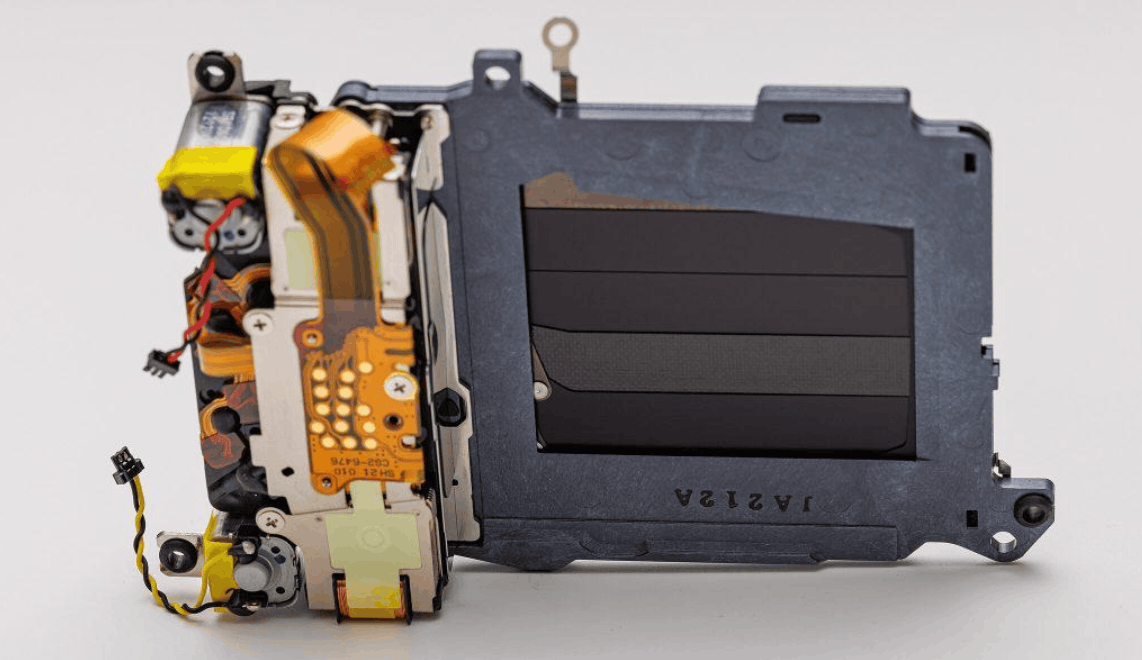
The greatest advantage of the mechanical shutter is its reliability and consistency. The entire frame is exposed almost simultaneously under any lighting condition, so images rarely suffer from distortion or horizontal banding. The mechanical shutter is also fully compatible with flash systems, because the flash sync speed is designed around this very mechanism, usually at around 1/200 to 1/250 second depending on the camera model. In addition, it generates almost no extra electronic noise and gives very predictable results.
However, the mechanical shutter also has clear limitations. Every shot produces noise and a slight vibration. This can be disruptive at weddings, concerts, churches, or when photographing wildlife that is very sensitive to sound. Vibration from the front curtain as it runs can also reduce sharpness at certain shutter speed ranges, especially when shooting macro or using heavy telephoto lenses. Besides that, the mechanical shutter is a mechanical component with a limited lifespan, which manufacturers typically rate at a few hundred thousand shots depending on the camera model.
1.2 Electronic shutter technology
The electronic shutter eliminates the physical curtains entirely. Instead, the sensor itself activates and cuts off each row of pixels in an electronically controlled sequence, then reads out the data row by row from top to bottom. This approach brings several notable benefits.
The first benefit is absolute silence. There is no click and no mechanical vibration, so you can shoot in places that need to stay quiet without disturbing the atmosphere or startling your subject. The second benefit is no mechanical wear, since no moving part is worn down by the number of shots, which extends the lifespan of the equipment. The third benefit is that shutter speeds can far exceed the mechanical limit, reaching 1/32000 second on many cameras, which is very useful when you want to open up the aperture in strong sunlight without using an ND filter. The fourth benefit is the ability to shoot without viewfinder blackout. Because no curtain blocks the sensor at the moment of capture, the image in the viewfinder does not go dark, helping you track the subject continuously.
Thanks to these advantages, the electronic shutter allows very high burst speeds, from about 20 to 60 frames per second on many of today's mirrorless models. Such an enormous number of images requires an efficient culling and processing workflow to find the most worthwhile moments.

The downside of this technology is the rolling shutter effect. Because the sensor is read out row by row rather than all at once, the lower rows receive light a tiny amount later than the upper rows. With stationary subjects, this delay is negligible. But with fast-moving subjects, the image can become distorted. The degree of distortion depends mainly on the sensor readout speed, and this specification varies greatly between camera models. High-end cameras using stacked sensors read out data much faster, and therefore reduce this effect considerably compared to entry-level cameras.
1.3 Electronic front curtain shutter (EFCS)
EFCS is an intermediate solution that many photographers favor. In this mode, the start of the exposure is handled by an electronic signal, while the end of the exposure is still performed by the second mechanical curtain. Because the front curtain does not have to move, the camera eliminates a significant source of vibration, often called shutter shock, and at the same time avoids most rolling shutter problems because the end of the exposure is carried out mechanically at very high speed.
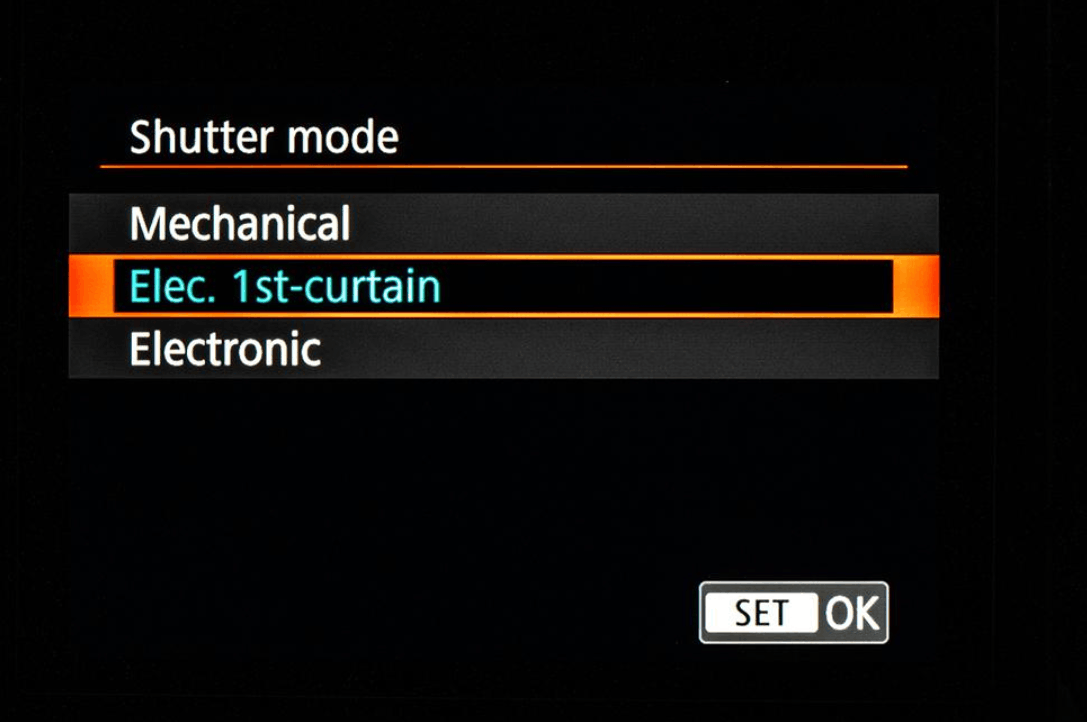
EFCS works best when shooting static or slow-moving subjects in controlled conditions, for example tripod landscapes, architecture, product photography, or macro. In these situations, pixel-level sharpness matters, and even tiny reductions in vibration make a difference.
However, EFCS is not perfect. At very fast speeds, especially when combined with large-aperture telephoto lenses, some cameras may produce anomalies, the most common being distorted bokeh or blurred light spots with clipped edges, caused by the mechanical curtain passing before that area has received enough light. Therefore, do not make EFCS your default mode right away. Test it with your own camera and lenses, at various speeds and under different conditions, and only then decide.
2. Performance differences between shutter types
Switching to the electronic shutter or sticking with the mechanical shutter has no single right answer for every case. Actual shooting conditions are what decide. You need to consider the lighting conditions, the speed of the subject, and even the behavioral norms of the environment, such as when photographing a solemn ceremony. Each system reacts differently in each situation.
In terms of noise, the mechanical shutter produces a clear click, the electronic shutter is completely silent, and EFCS produces only a very faint sound. In terms of vibration, the mechanical shutter vibrates, the electronic shutter does not, and EFCS significantly reduces it compared to a fully mechanical shutter. In terms of maximum shutter speed, the mechanical shutter typically stops at around 1/8000 second, while the electronic shutter can reach 1/32000 second, and EFCS is usually subject to a similar limit as the mechanical shutter. In terms of rolling shutter risk, the mechanical shutter is low, the electronic shutter ranges from medium to high depending on the camera, and EFCS is low. In terms of flash sync, the mechanical shutter fully supports it, the electronic shutter is limited, and EFCS partially supports it. In terms of burst speed, the mechanical shutter is moderate, the electronic shutter is the highest, and EFCS is usually moderate.
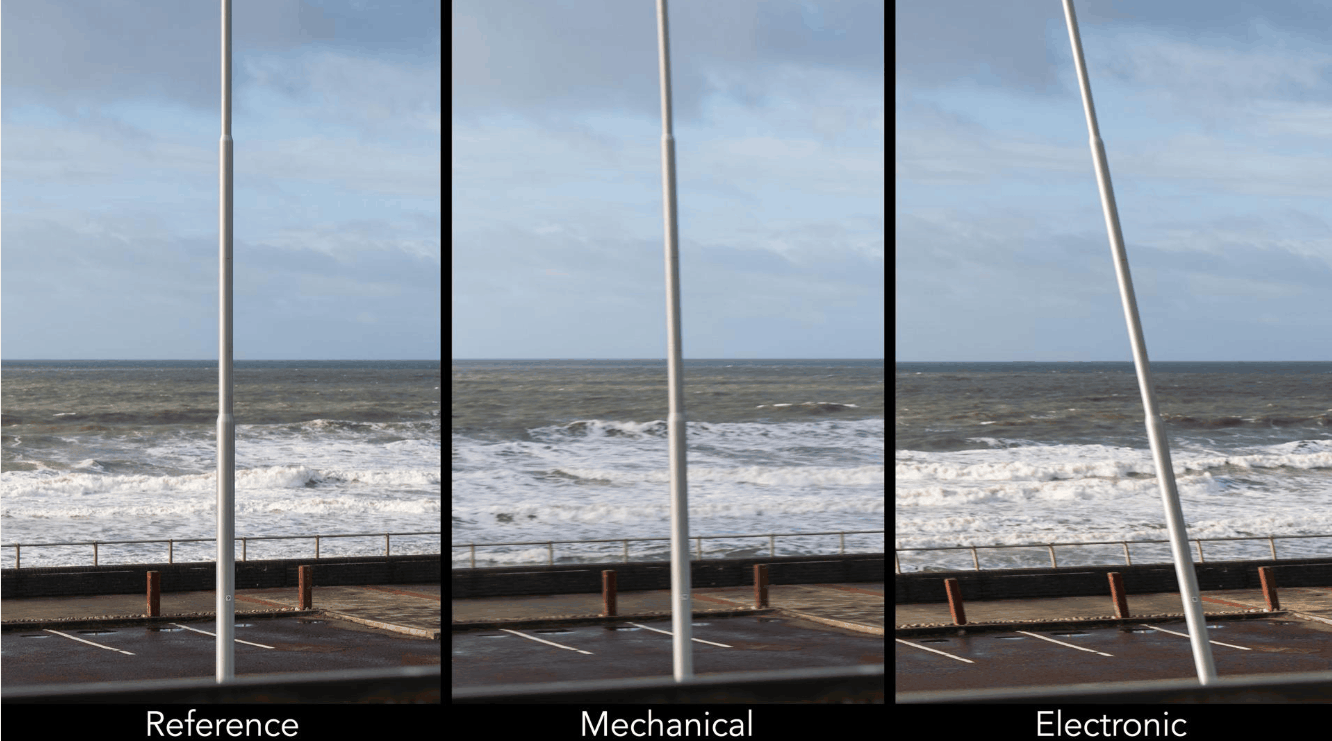
From these differences, a general principle can be drawn. If you shoot nature or places that require quiet, silence should be the priority and the electronic shutter is a reasonable choice. If you need flash sync, or are shooting a subject moving very fast horizontally under harsh light, the mechanical shutter still holds the advantage. And when you want maximum sharpness in still images, EFCS is usually a good balance.
2.1 Effects on image quality and artifacts
Each type of shutter leaves its own mark on the image, and recognizing these helps you choose the right mode before pressing the button. The most noteworthy phenomenon with the electronic shutter is banding, meaning horizontal stripes that appear when shooting under artificial light with a certain flicker frequency, such as fluorescent lights, cheap LED lights in gyms, indoor stadiums, or offices. The cause lies in the way the sensor is read row by row. When the light intensity fluctuates while the sensor is scanning, each row receives a different amount of light and forms stripes in the image. The mechanical shutter encounters this problem less because the entire frame is exposed within a very short period and almost simultaneously.

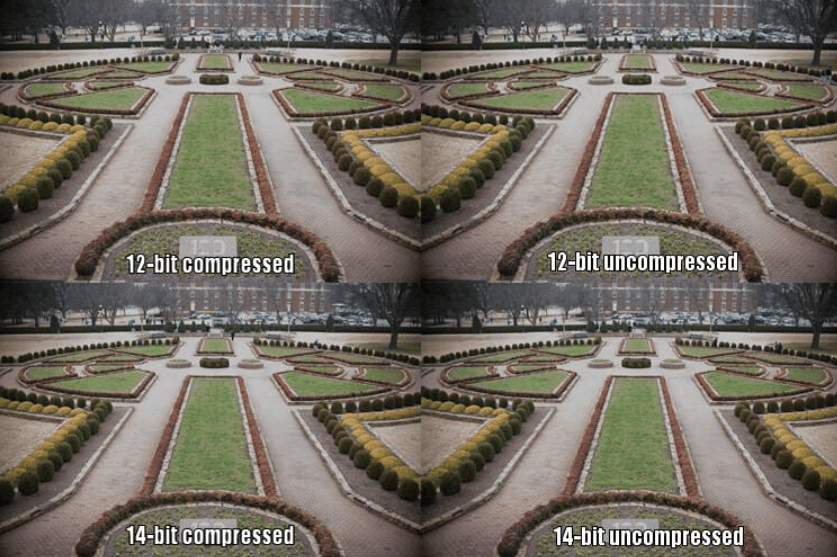
Besides banding and rolling shutter, on some camera models, fully electronic mode also brings other trade-offs such as reduced RAW file bit depth or slightly reduced dynamic range, depending on the sensor's readout speed. This is why you should look up the specific specifications of your camera instead of assuming that electronic mode always delivers equal quality.
On the other hand, the mechanical shutter and EFCS also have their own weaknesses. The mechanical shutter can cause slight vibration that reduces sharpness at certain speed ranges, while EFCS can distort out-of-focus areas in particular lens configurations, as mentioned above.
Whichever mode you choose, post-processing still plays a role in finishing the result. Minor errors in sharpness, exposure, or color can be adjusted with software, and handing repetitive technical adjustments over to intelligent tools lets photographers spend more time on the creative part. However, post-processing should only be a supplementary layer. Errors such as severe banding or distortion from rolling shutter are very hard to fix completely, so preventing them at the moment of shooting is always more effective.
2.2 Common limitations of each type
No system is perfect, so choosing a shutter is always a process of finding a balance. The mechanical shutter, although reliable, has a limited lifespan, typically in the range of a few hundred thousand shots, and when it wears out, replacing it can be quite expensive. Vibration from the mechanism can also reduce sharpness in macro or when using telephoto lenses on a tripod.
The electronic shutter allows completely silent shooting, but it is also the type most prone to distortion. When photographing fast-moving subjects, the wings of a flying bird may look unnaturally curved, and airplane propellers can turn into warped arcs. If you end up with a dynamic but technically inaccurate photo, sometimes a better direction is to shift the focus from documentary quality to artistic quality. In addition, many cameras limit the flash sync speed or disable the ability to fire the flash entirely in electronic mode.
When you understand how your camera works internally, you gain real creative freedom. You no longer depend on automatic mode but actively control every frame. Try out the settings in real conditions, because practice itself will help you sense the boundary where technique gives way to art.
3. Practical suggestions for choosing a shutter mode
The best shutter mode depends on the subject, the environment, and the capabilities of the camera you are using. Adjust your choice to your creative goals, and you will get stable, high-quality results.
The mechanical shutter is suitable when you work with flash, when shooting under flickering artificial light, or when the subject moves very fast horizontally. Typical examples are photographing sprinters, race cars, or vehicles sweeping across the frame. In these situations, the risk of distortion and banding in electronic mode is a risk you should not accept.

The electronic shutter is the ideal choice when you need to shoot silently or discreetly, such as at weddings, ceremonies, performing arts, or wildlife observation. It is also suitable when you need a high burst speed under natural light, or when mechanical vibration affects sharpness, such as in macro or with telephoto lenses mounted on a tripod. If you want to open up the aperture at midday in the sun without using an additional filter, the superior shutter speed of electronic mode is also a big advantage.

EFCS suits most still-photography situations that need maximum sharpness, such as landscapes, architecture, interiors, and products. If your camera supports this mode, it is a safe setting for many everyday needs, as long as you have checked beforehand that the bokeh is not affected with the lenses you are using.
Finally, if you frequently shoot in places with artificial lighting such as gyms, offices, or stages, take the time to try both modes right at the location before starting the main job. A few test frames can help you avoid a whole shoot ruined by horizontal stripes. Remember that the degree of distortion varies by camera model, so experience with your own equipment is always the most reliable guide.




















VIP Products








Best Selling Products
Adobe Photoshop Copyright - Full App
120 USD
Upgrade genuine Capture One account
120 USD
MidJourney Account
29 USD
Upgrade Genuine Office 365
49 USD
Adobe Premiere Pro Account
99 USD
Autodesk All App Account Copyright
120 USD
Windows 10 & 11 Pro Key
36 USD
Freepik Premium Account
59 USD
Plugin Retouch4me
69 USD
Genuine Adobe Illustrator account
99 USD
ChatGPT Plus Account (GPT-4)
16 USD
Upgrade Duolingo Super
29 USD
Genuine Cheap Canva Pro
39 USD
Capcut Pro 1 Year
39 USD
Copyright Adobe Lightroom Account
59 USD
Articles on the same topic