
Best Selling Products
Genuine Adobe Illustrator account
99 USD

Capcut Pro 1 Year
39 USD

ChatGPT Plus Account (GPT-4)
16 USD
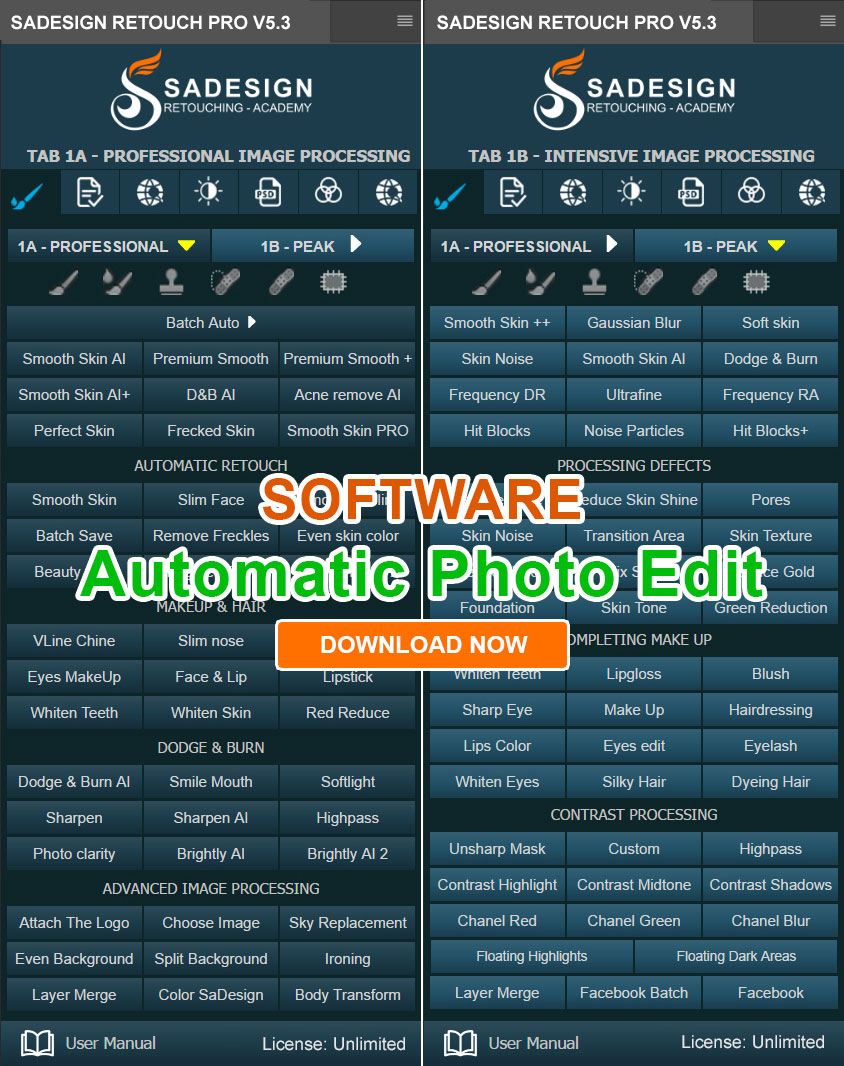
Plugin Retouch4me
69 USD
Genuine Cheap Canva Pro
39 USD

MidJourney Account
29 USD
Upgrade Duolingo Super
29 USD

Upgrade genuine Capture One account
120 USD
Autodesk All App Account Copyright
120 USD

Freepik Premium Account
59 USD
Adobe Photoshop Copyright - Full App
120 USD
Adobe Premiere Pro Account
99 USD
Copyright Adobe Lightroom Account
59 USD
Upgrade Genuine Office 365
49 USD
Windows 10 & 11 Pro Key
36 USD
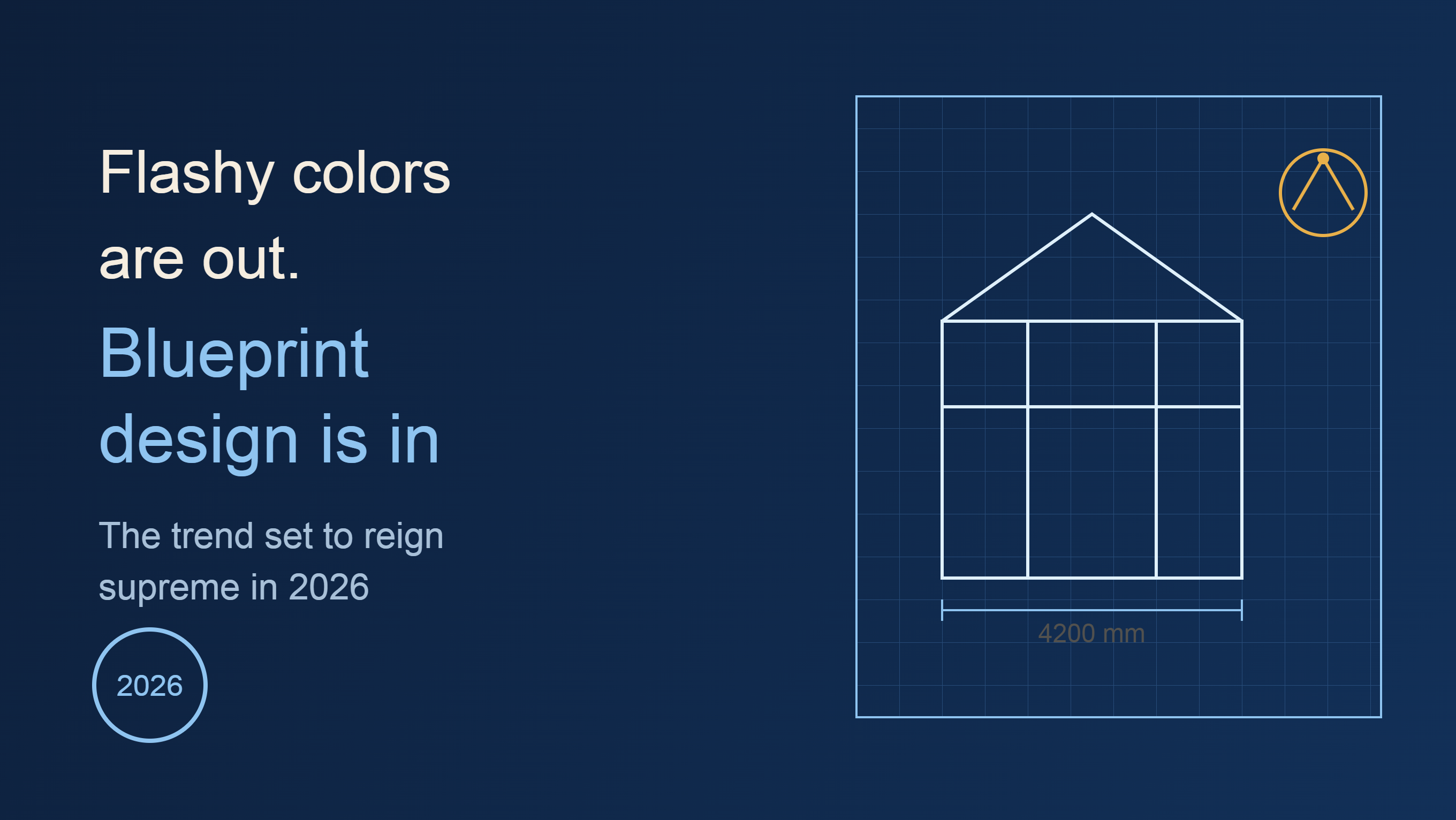
The entire design world is abandoning flashy colors: Blueprint graphic design is unexpectedly set to reign supreme in 2026.
Nội dung
- 1. Why will technical drawing graphic design become a trend in 2026?
- 1.1. Minimalism is making a quieter comeback.
- 1.2. AI makes creating "deconstructed" illustrations easier.
- 1.3. Functional aesthetics convey a sense of trustworthiness.
- 2. Structure of a graphic design blueprint
- 2.1. Deconstructed Illustrations
- 2.2. Piece connection lines and annotation symbols
- 2.3. Two-tone or monochromatic color palettes
- 2.4. Grid-based layouts
- 3. Where will blueprint graphic design appear in 2026?
- 3.1. Food and beverage brands
- 3.2. Product and Packaging Marketing
- 3.3. Poster and Space Design
- 3.4. Merchandise
- 3.5. Guidance and Education Content
- 4. Conclusion
After years of chasing vibrant colors and complex effects, designers are returning to structured minimalism. Blueprints are becoming the new trend thanks to their ability to make everything clearer, more logical, and easier to understand than ever before.
1. Why will technical drawing graphic design become a trend in 2026?
Blueprint graphic design is set to stand out in 2026 because it brings a sense of "order" to a visual world overloaded with color, movement, and information. When everything is vying for attention, designs that can slow down the experience and allow viewers to grasp things quickly become particularly valuable.
The resurgence of this style is driven by three significant cultural shifts occurring simultaneously within the creative industry.
1.1. Minimalism is making a quieter comeback.
After years of maximalism, designers began to feel a noticeable fatigue. Dense layouts, strong colors, and constant effects made the user experience feel heavy rather than enjoyable.
In this context, minimalism did not disappear but returned in a new form: more practical, more structured, and less decorative.
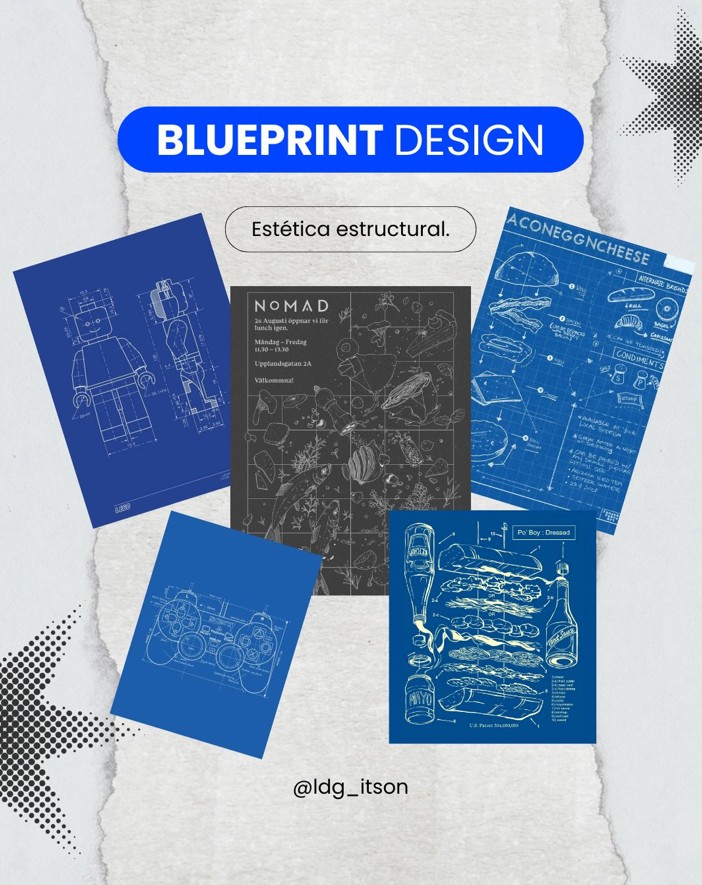
Blueprint graphic design has become a form of "functional minimalism." It not only eliminates unnecessary elements but also reorganizes information in a systematic way. Instead of just "less," it becomes "clearer."
This creates a very special visual sensation: clean but not cold, simple but not monotonous, structured but not rigid.
1.2. AI makes creating "deconstructed" illustrations easier.
One of the key factors driving the development of blueprint design is the explosion of AI tools in design.
Previously, creating technical illustrations, especially exploded views or structural diagrams, required highly advanced illustration skills. But with AI, this process has become much more accessible.
Designers can now transform a real-world object into outlines, layered diagrams, or monochrome drawings in just minutes. This opens up a new possibility: turning everything in life into a visual system that can be “explained.”
However, precisely because AI can create images that are too perfect and too detailed, many designers choose to "reduce" rather than "add." Blueprint becomes the ideal choice because it is based on the principle of eliminating unnecessary elements to focus on structure.
1.3. Functional aesthetics convey a sense of trustworthiness.
In an age where users are exposed to an overwhelming amount of information, trust has become a crucial asset in design.
Technical images, diagrams, or structures are often perceived by the human brain as "more reliable" because they evoke associations with accuracy and logic.
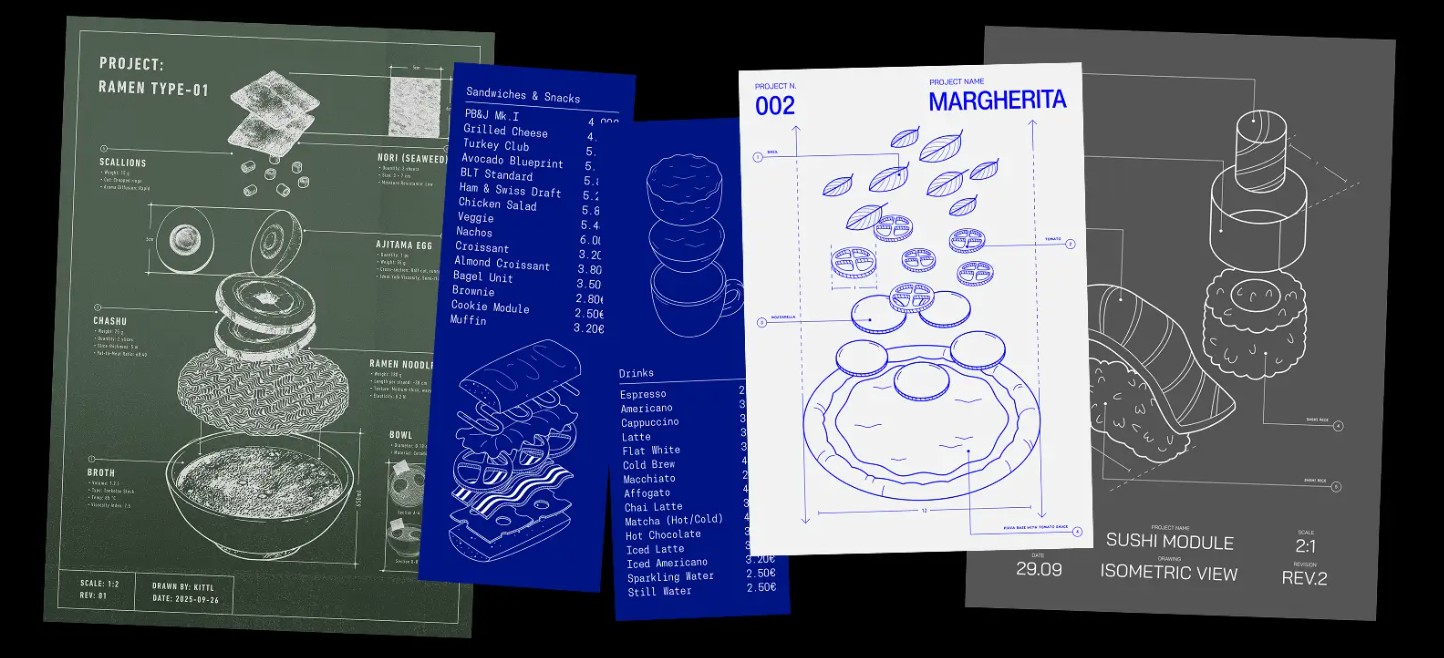
Blueprint graphic design directly exploits this psychology. When a product is presented as a diagram, exploded view, or technical drawing, viewers tend to believe that it has a clear basis, a real structure, and is not overly exaggerated.
That's why this style is appearing more and more in areas such as product presentations, infographics, menu design, packaging, layout editorials, and science-inspired branding.
2. Structure of a graphic design blueprint
Although graphic design blueprints can be varied, they are always based on a very clear system of visual rules. This is a style where every detail has a reason for existing; no element is merely for "decorative purposes."
2.1. Deconstructed Illustrations
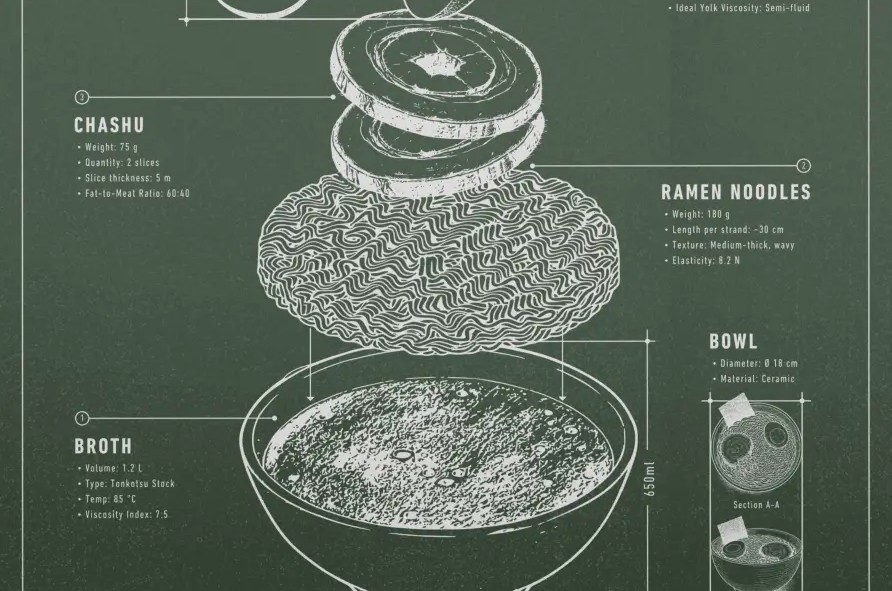
The most noticeable characteristic of a blueprint is the way it breaks down an object into many smaller components.
Instead of showing a complete object, a blueprint divides it into structural layers: individual parts, individual functions, individual connections. A shoe can be represented as a system consisting of a sole, upper, cushioning, and materials. An electronic device can be separated into its circuit board, outer casing, and internal mechanical components.
This approach transforms design into an explanatory tool. It not only shows “what,” but also “how it works.”
In many cases, blueprints also use the exploded view style: separating the parts spatially so that the viewer can clearly understand the overall structure.
2.2. Piece connection lines and annotation symbols
In blueprints, lines are never decorative. They are a system for guiding information.
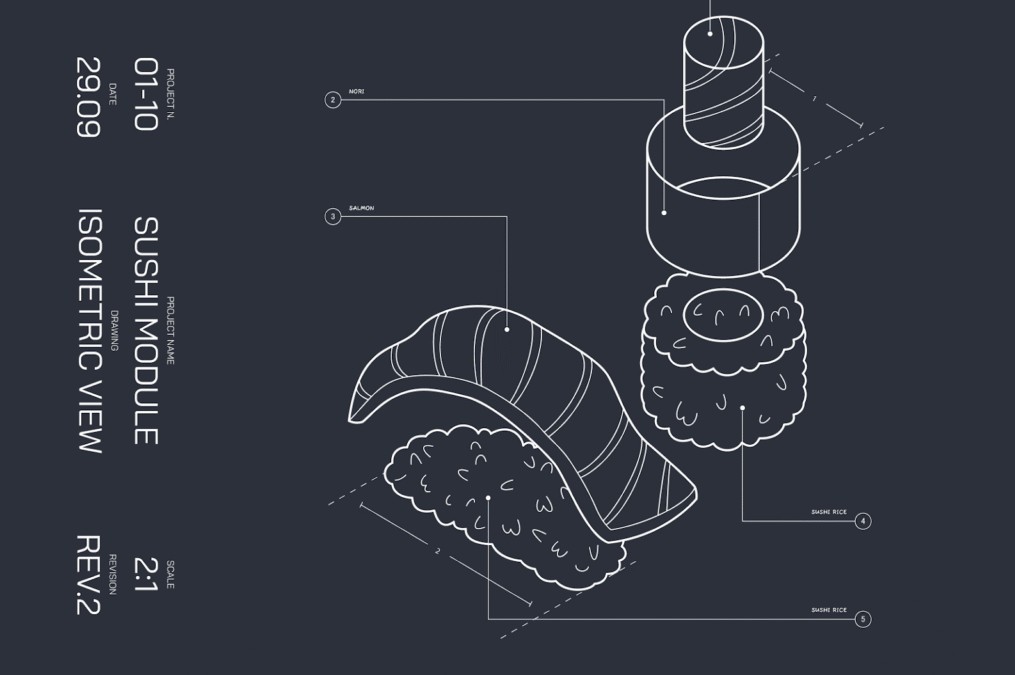
These connecting lines are typically very thin, often only 1 to 2 pixels in a digital environment. They are used to connect labels to specific components, creating a clearly structured network of information.
These lines are typically straight or angled at 45 degrees to maintain a sense of accuracy. Small circular dots at the ends of the connecting lines (nodes) help to emphasize the connection between information and objects.
In some cases, dashed or dotted lines are used to distinguish the level of importance of information, creating multiple layers of meaning within the same layout.
2.3. Two-tone or monochromatic color palettes
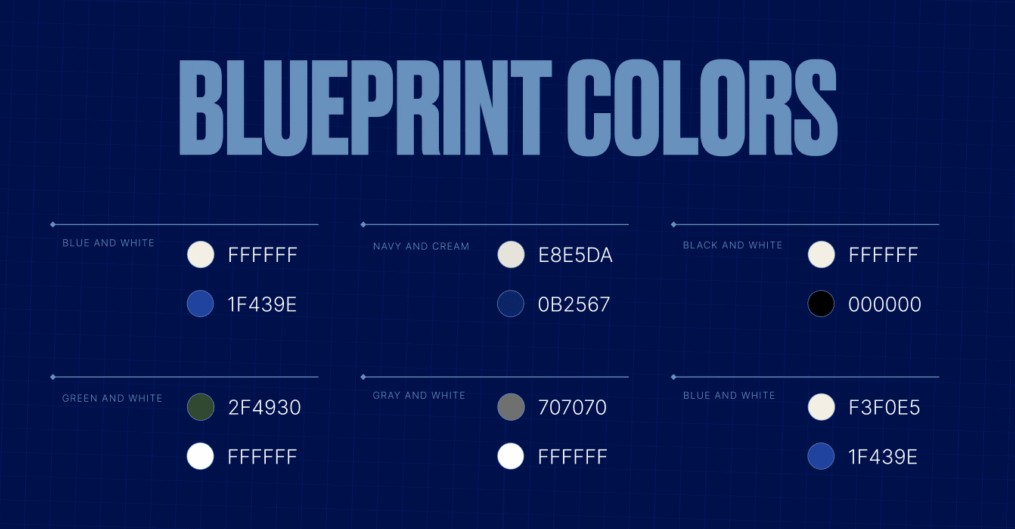
Traditional blueprint uses cyan and white, stemming from older printing techniques. In modern design, this color palette has been expanded while still maintaining a minimalist spirit.
Popular color combinations in 2026 include blue and white, navy blue and cream, black and white, dark green and white, or neutral gray systems.
The key isn't the specific colors, but the color range. Blueprints almost always operate in a two-tone system to maintain clarity and readability.
2.4. Grid-based layouts
If there's one element that holds the entire blueprint together, it's the grid system.
Every element in the design is aligned according to a clear structure: even spacing, reasonable proportions, and deliberate symmetry. No matter how complex the image, the viewer can still perceive the underlying order.
It is this "hidden order" that creates the distinctive feel of a blueprint: it may seem complex at first glance, but the more you observe it, the easier it becomes to understand.
3. Where will blueprint graphic design appear in 2026?
The most interesting thing about blueprints is not the style itself, but its ever-expanding range of applications.
3.1. Food and beverage brands
In the F&B industry, blueprints are used to describe the ingredients and processing methods of a product. Instead of a traditional menu, users can see diagrams illustrating how a dish is made, from ingredients to preparation methods.
3.2. Product and Packaging Marketing
Technology, cosmetics, and lifestyle brands are using blueprints to create an “exploded view” of their products. A device, a bottle of serum, or a fashion item can be analyzed into its visual component layers.
This approach helps consumers understand the product more deeply, not just its appearance but also its internal structure.
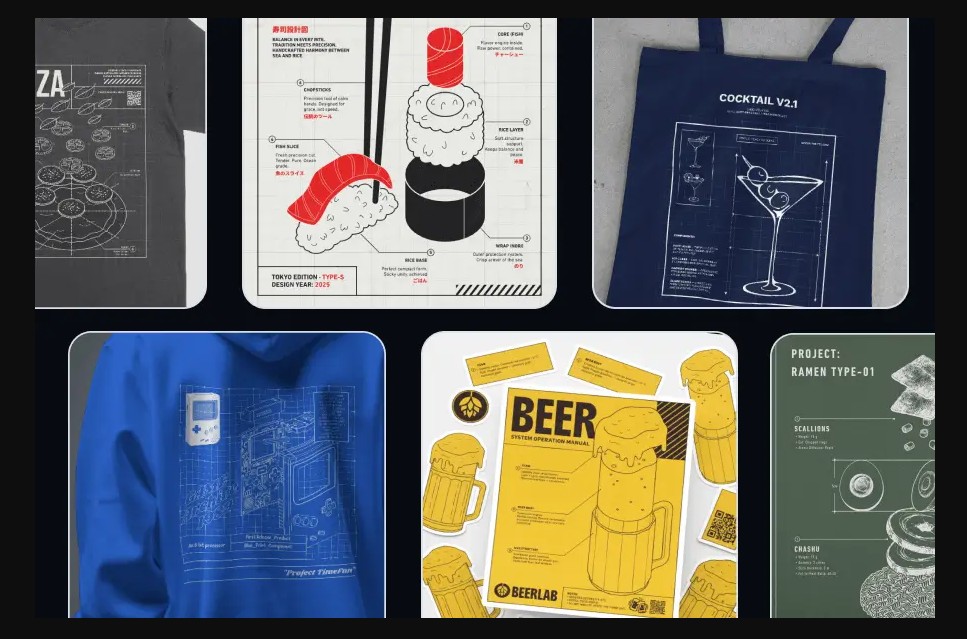
3.3. Poster and Space Design
Blueprint is becoming a popular style in art posters and interior design. Cafes, galleries, and boutiques use it to create a minimalist yet informative feel.
3.4. Merchandise
T-shirts, tote bags, and lifestyle products use blueprints to transform familiar objects like guitars, ramen bowls, or sneakers into artistic technical diagrams.
3.5. Guidance and Education Content
Blueprints are particularly well-suited for content requiring clear explanations. In education, product onboarding, or technical documentation, this style simplifies complex concepts by breaking them down into easily understandable structures.
4. Conclusion
The return of blueprint design doesn't reflect a world becoming more technical, but rather a world that's overloaded. In an environment where everything competes for attention, clarity becomes a premium value. Blueprint graphic design doesn't win through complexity, but through its ability to make complexity understandable. And perhaps that's why it's not just a trend, but a new way of thinking about design in the digital age.









VIP Products


Best Selling Products
Genuine Adobe Illustrator account
99 USD
Capcut Pro 1 Year
39 USD
ChatGPT Plus Account (GPT-4)
16 USD
Plugin Retouch4me
69 USD
Genuine Cheap Canva Pro
39 USD
MidJourney Account
29 USD
Upgrade Duolingo Super
29 USD
Upgrade genuine Capture One account
120 USD
Autodesk All App Account Copyright
120 USD
Freepik Premium Account
59 USD
Adobe Photoshop Copyright - Full App
120 USD
Adobe Premiere Pro Account
99 USD
Copyright Adobe Lightroom Account
59 USD
Upgrade Genuine Office 365
49 USD
Windows 10 & 11 Pro Key
36 USD