Best Selling Products

Upgrade Duolingo Super
29 USD
Upgrade Genuine Office 365
49 USD
Genuine Cheap Canva Pro
39 USD

Windows 10 & 11 Pro Key
36 USD
Autodesk All App Account Copyright
120 USD

Copyright Adobe Lightroom Account
59 USD

MidJourney Account
29 USD

Adobe Premiere Pro Account
99 USD
Genuine Adobe Illustrator account
99 USD

Capcut Pro 1 Year
39 USD

Freepik Premium Account
59 USD

Plugin Retouch4me
69 USD
Upgrade genuine Capture One account
120 USD

ChatGPT Plus Account (GPT-4)
16 USD
Adobe Photoshop Copyright - Full App
120 USD
Tips for choosing a professional photo editing app for online applications.
Nội dung
- 1. Practical benefits of using a photo editing app for ID photos at home.
- 1.1. Solving the problem of travel time and cost
- 1.2. Mastering facial expressions and demeanor completely.
- 1.3. Permanent storage and flexible reuse for the future.
- 2. Essential features that a standard ID photo editing software should have.
- 2.1. Automatic background detection and extraction algorithm
- 2.2. A wide range of size formats conforming to international standards.
- 2.3. Tools for natural makeup and pairing elegant outfits
- 3. A step-by-step process for editing ID photos to achieve a high level of perfection.
- 3.1. Step one: Prepare the light source and the shooting space.
- 3.2. Step two: Upload portrait images to the application system.
- 3.3. Step three: Crop the image and change the background as required.
- 3.4. Step four: Correcting flaws and putting together a presentable outfit.
- 3.5. Step five: Final quality check and file export
- 4. Serious mistakes to avoid so your ID photo won't be rejected.
- 4.1. Abuse of beauty enhancements that alter identity.
- 4.2. Incorrect head proportion relative to the rest of the frame.
- 4.3. Using blurry or underexposed input images.
- 5. Breakthrough online photo post-processing solution for ID photos at appvip.ai
- 6. Trends in mobile portrait photography technology innovation.
- 6.1. The rapid development of intelligent deep learning models
- 6.2. Integrate real-time automatic valid error scanning feature.
- 7. Conclusion
Detailed instructions on how to design and perfect your own passport photo at home using photo editing apps. Discover technological solutions for background removal, error correction, and automatic outfit changes at appvip.ai.
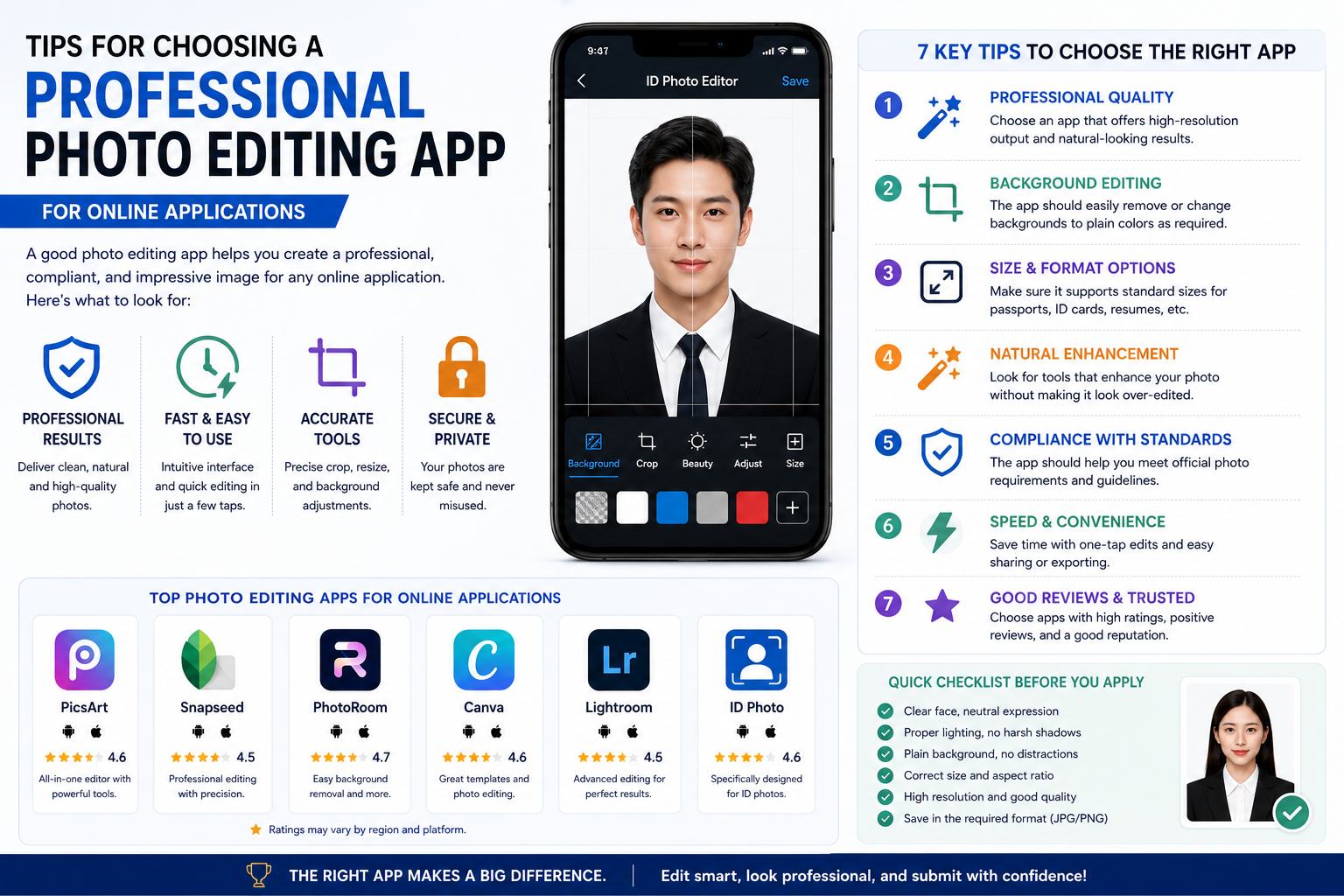
1. Practical benefits of using a photo editing app for ID photos at home.
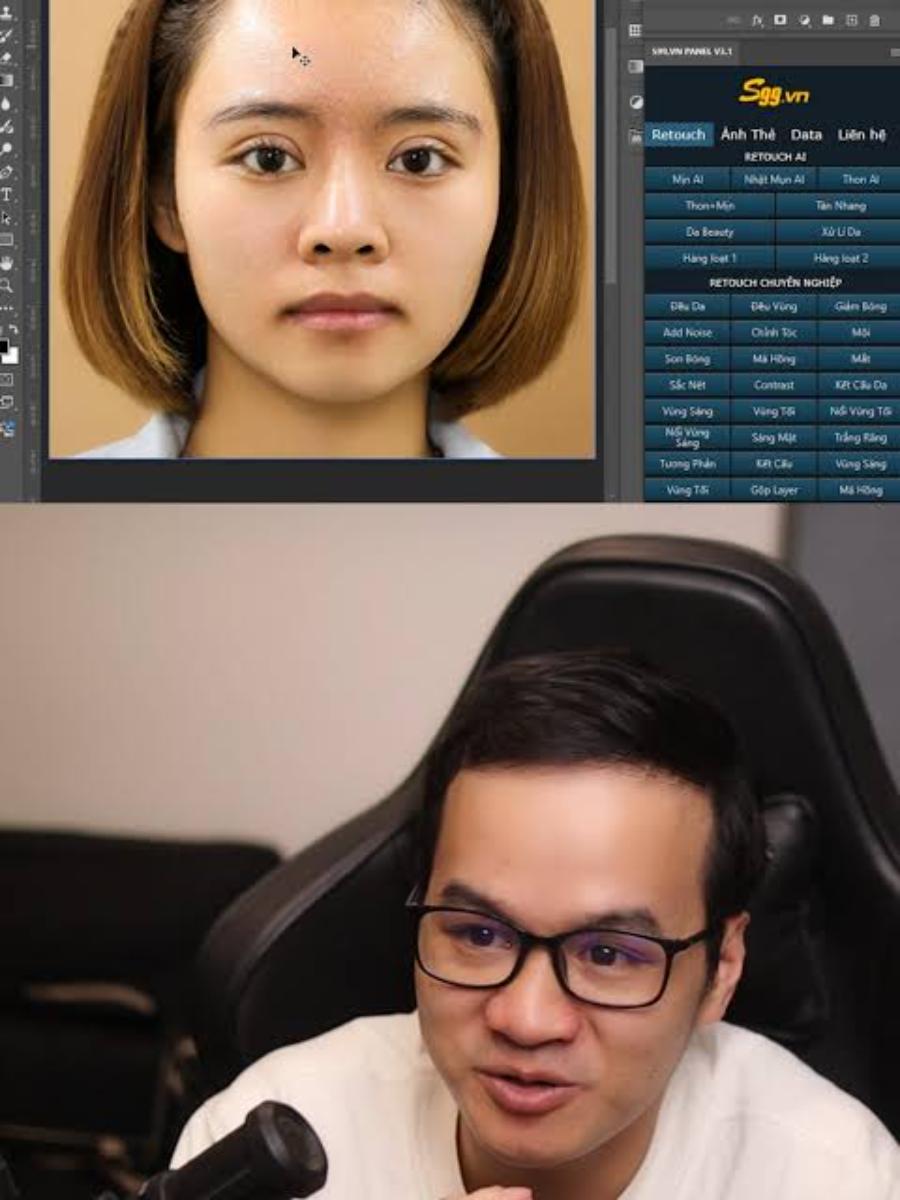
1.1. Solving the problem of travel time and cost
Traveling to studios, waiting in line for photographers, and scheduling photo pickup dates can be inconvenient for busy individuals. Using photo editing apps on your phone or computer allows you to create a high-quality ID photo in less than ten minutes. This process lets you do it at any time of day without incurring any additional costs.
1.2. Mastering facial expressions and demeanor completely.
Many people experience facial stiffness, anxious eyes, or unnatural smiles when standing in front of a stranger's camera. Taking photos yourself in a familiar space provides complete peace of mind, allowing you to easily adjust your facial expressions. You can take dozens of different photos until you find the perfect moment for post-processing.
1.3. Permanent storage and flexible reuse for the future.
With a high-quality, professionally processed original image file, you can store it on cloud platforms. Whenever you need to create new documents like visas, employee ID cards, or driver's licenses, you simply open the app to resize or adjust the background without having to retake the photo from scratch, providing long-term usability.
2. Essential features that a standard ID photo editing software should have.
2.1. Automatic background detection and extraction algorithm
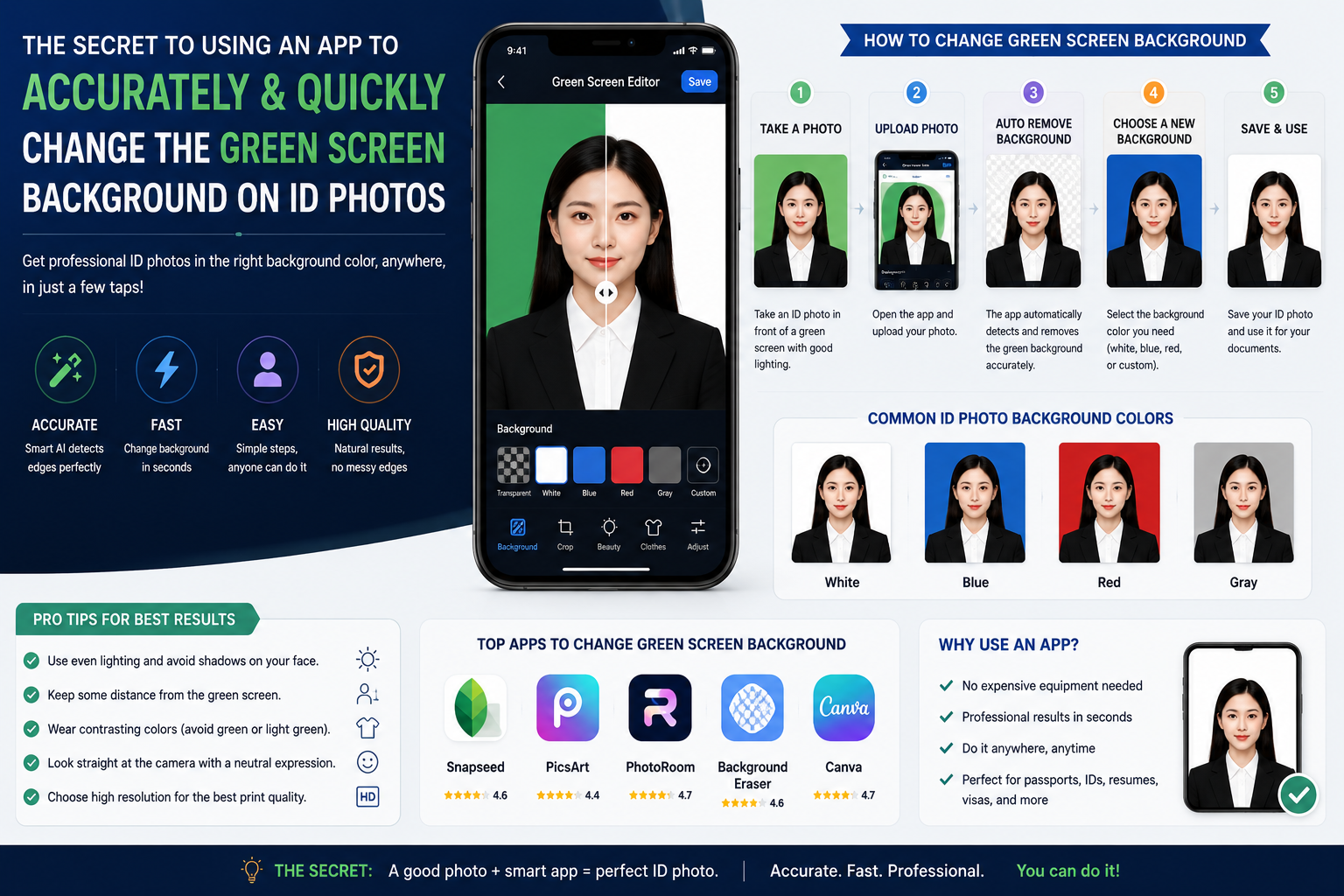
The most important factor determining the quality of a photo editing app is its ability to isolate the subject. The system needs to clearly separate intricate details such as strands of hair, shoulder edges, collars, and the cluttered background. The process of applying a new green or white background must be smooth, without leaving jagged edges that reveal signs of digital editing.
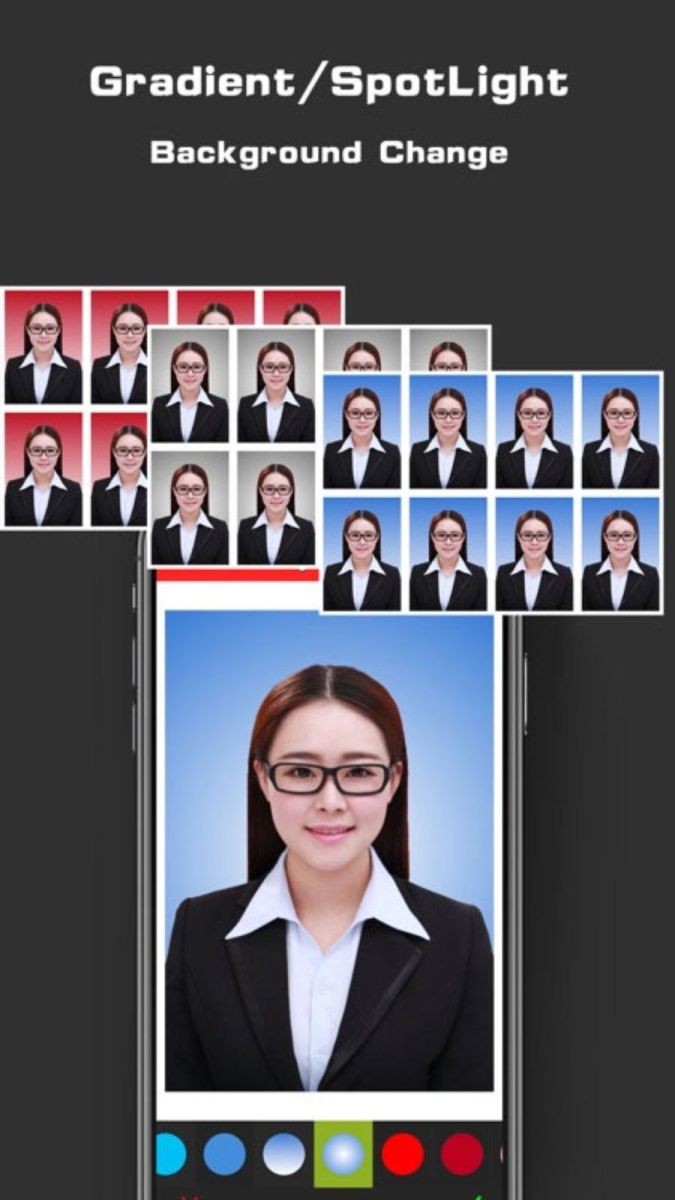
2.2. A wide range of size formats conforming to international standards.
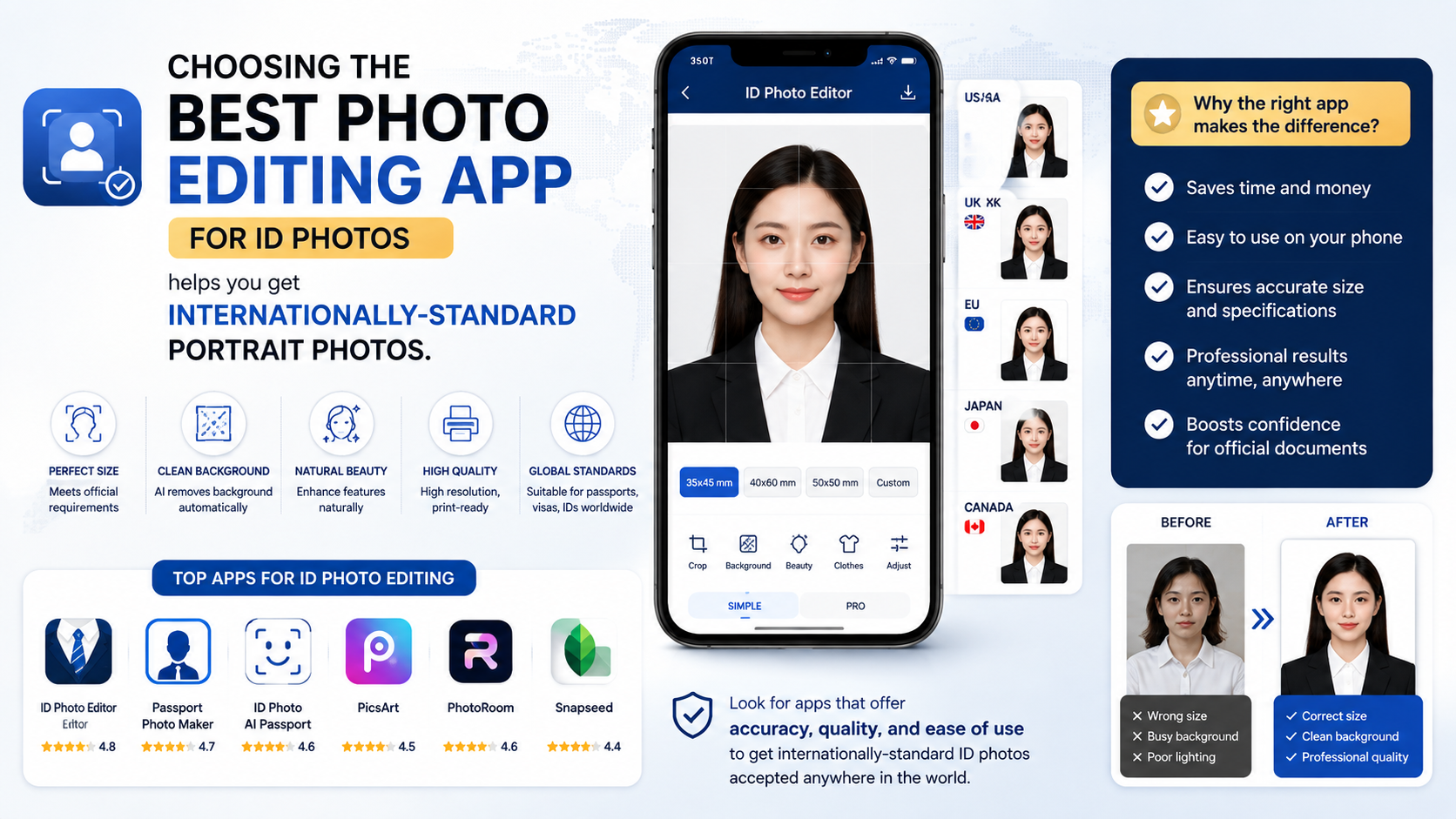
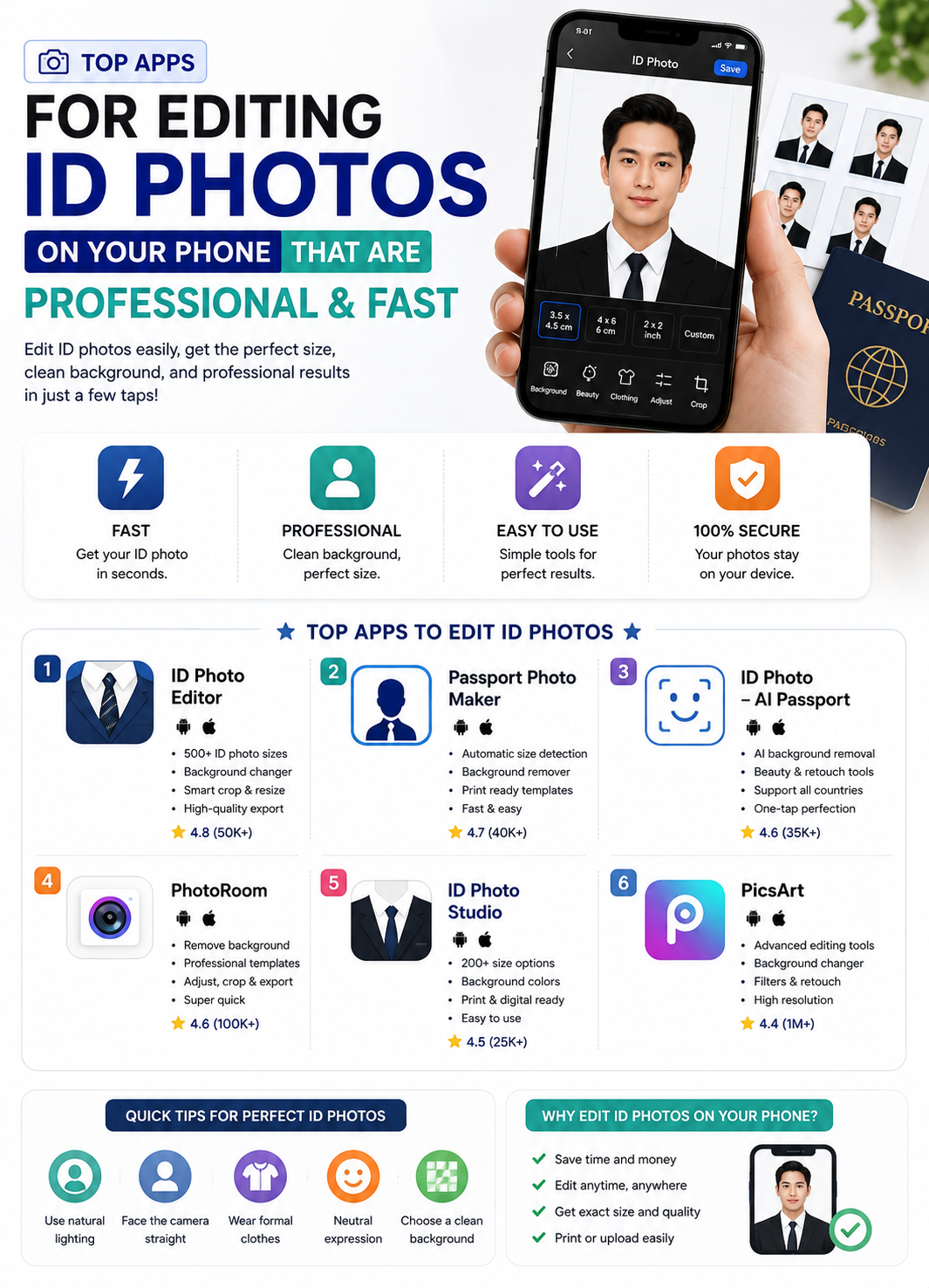
Each type of administrative document adheres to strict size regulations, such as 2x3, 3x4, 4x6 centimeters, or the ICAO standard passport photo format. A quality application must integrate these aspect ratio options. A visual grid guide helps users easily position their head and shoulders within the safe frame.
2.3. Tools for natural makeup and pairing elegant outfits
To ensure the formality of the identification photo, a digital clothing merging feature is essential. The application needs to provide a diverse library of white shirts and men's and women's suits for users to choose from. In addition, tools to adjust skin smoothness and eye brightness to a moderate level will help create a fresher appearance without altering the identifying features.
3. A step-by-step process for editing ID photos to achieve a high level of perfection.
3.1. Step one: Prepare the light source and the shooting space.
You should find an area with evenly distributed light, ideally facing a window to take advantage of soft natural light. Keep your face free of shadows on one side and avoid standing directly under overly bright ceiling lights. Position the camera at eye level, sit up straight, and maintain a distance of one to one and a half meters.
3.2. Step two: Upload portrait images to the application system.
Open your chosen app and upload a photo from your gallery or take one directly with the built-in camera. Ensure you are sitting with a straight back, shoulders balanced, head not tilted, and eyes looking directly into the lens. Maintaining a serious yet relaxed expression will make the photo more appealing.
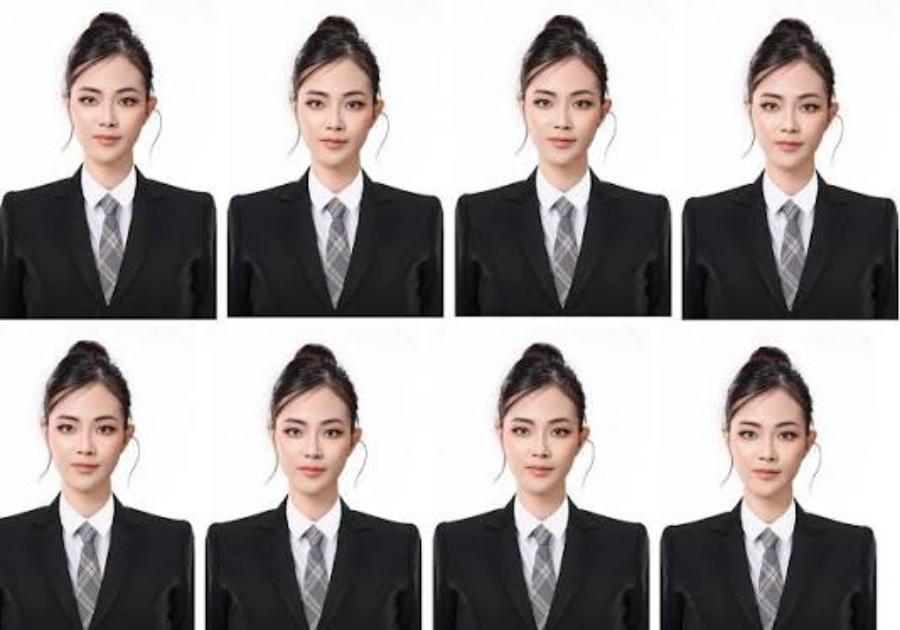
3.3. Step three: Crop the image and change the background as required.
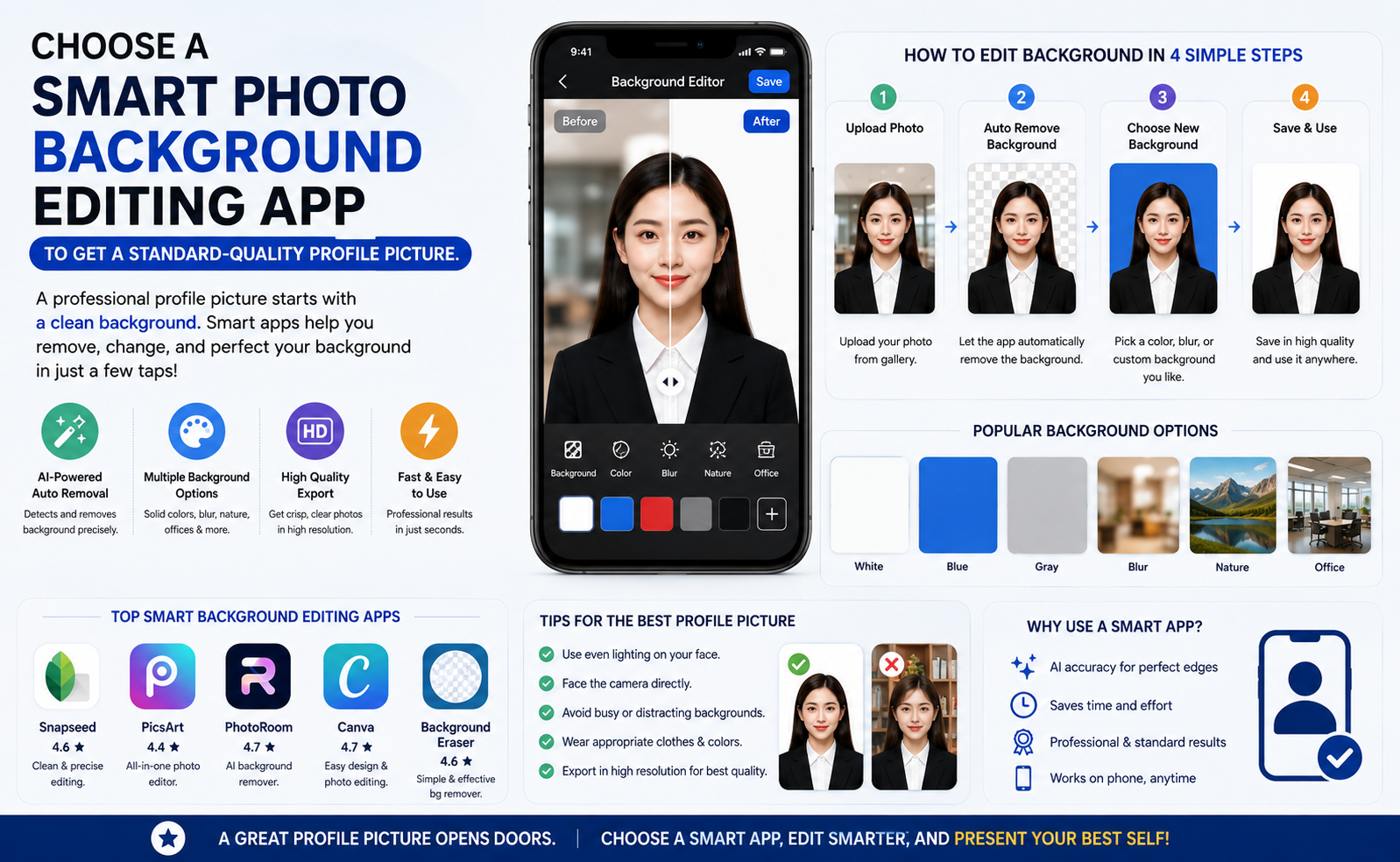
Select the correct size corresponding to the type of document you need to complete from the toolbar. Next, activate the automatic background removal function and choose the background color (blue or white) as required. Carefully check the edges of the hairline to ensure the new background is evenly and sharply applied.
3.4. Step four: Correcting flaws and putting together a presentable outfit.
Use skin smoothing and light balancing tools at a moderate level to remove temporary blemishes or dark circles. Next, access the clothing library to select a shirt or vest that suits the character's figure, adjusting the collar proportions to match the character's neck as naturally as possible.
3.5. Step five: Final quality check and file export
Review the entire image at a larger size to detect any minor errors. Export the file in a high-quality format such as JPEG or PNG to maintain sharpness when uploading to online public service systems or printing at a local photo shop.
4. Serious mistakes to avoid so your ID photo won't be rejected.
4.1. Abuse of beauty enhancements that alter identity.
The primary purpose of a profile picture is for biometric verification and identification. Making your chin excessively sharp, enlarging your eyes, or removing distinctive moles will transform you into a completely different person. This excessive use of photo editing technology will result in your profile being rejected during the automated review process.
4.2. Incorrect head proportion relative to the rest of the frame.
Passport and ID card photo standards always require the face to occupy seventy to eighty percent of the image area. Cropping the photo too far, making the face appear smaller, or cropping too close, cutting off the shoulders, will result in a non-standard photo. These mismatched image files will certainly not be accepted on online portals.
4.3. Using blurry or underexposed input images.
Taking photos in dark environments or using a low-resolution front camera will result in severely grainy images. Even with the best post-processing, it's difficult to restore details lost due to insufficient light. A poor-quality photo always looks unprofessional and unsuitable for hard copy printing.
5. Breakthrough online photo post-processing solution for ID photos at appvip.ai
For users seeking a fast and highly accurate portrait photo editing method without installing resource-intensive software, the web platform appvip.ai is the optimal choice. Appvip.ai utilizes the most advanced artificial intelligence technologies to automate the entire process of portrait photo recognition and background removal. At appvip.ai , the system boasts the ability to accurately remove backgrounds down to individual hair strands and automatically adjust facial proportions according to the strictest current standards. Users simply access appvip.ai , upload their photo, and select the desired ID photo type. The intelligent AI at appvip.ai will complete all steps, from background replacement and brightness adjustment to adding business attire, in just seconds, delivering sharp, perfectly valid results.
6. Trends in mobile portrait photography technology innovation.
6.1. The rapid development of intelligent deep learning models
Next-generation post-production software no longer relies on manual human editing but instead utilizes artificial intelligence. Deep learning models can analyze skin structure and lighting to automatically balance colors to suit various environmental conditions, resulting in a final product with the highest degree of realism and naturalness.

6.2. Integrate real-time automatic valid error scanning feature.
In the near future, portrait photo editing applications will integrate smart moderation filters directly connected to the public service portal. The system will immediately issue a warning if the photo violates standards regarding head tilt, eyes not looking straight ahead, or inappropriate attire, ensuring an absolute approval rate for applications.
7. Conclusion
The advent of modern technology has made owning a beautiful and professional-looking ID photo easier than ever. Using a reputable photo editing app along with basic knowledge of lighting and posing will help you completely master your appearance on important documents. Hopefully, the detailed information and instructions in this article have provided you with practical and useful information, helping you confidently design perfect ID photos for work and daily life.

















VIP Products




Best Selling Products
Upgrade Duolingo Super
29 USD
Upgrade Genuine Office 365
49 USD
Genuine Cheap Canva Pro
39 USD
Windows 10 & 11 Pro Key
36 USD
Autodesk All App Account Copyright
120 USD
Copyright Adobe Lightroom Account
59 USD
MidJourney Account
29 USD
Adobe Premiere Pro Account
99 USD
Genuine Adobe Illustrator account
99 USD
Capcut Pro 1 Year
39 USD
Freepik Premium Account
59 USD
Plugin Retouch4me
69 USD
Upgrade genuine Capture One account
120 USD
ChatGPT Plus Account (GPT-4)
16 USD
Adobe Photoshop Copyright - Full App
120 USD