Best Selling Products
Upgrade Genuine Office 365
49 USD
Plugin Retouch4me
69 USD

MidJourney Account
29 USD
Genuine Cheap Canva Pro
39 USD
Capcut Pro 1 Year
39 USD
Adobe Photoshop Copyright - Full App
120 USD
Windows 10 & 11 Pro Key
36 USD
Copyright Adobe Lightroom Account
59 USD

Upgrade Duolingo Super
29 USD

ChatGPT Plus Account (GPT-4)
16 USD
Genuine Adobe Illustrator account
99 USD

Freepik Premium Account
59 USD
Adobe Premiere Pro Account
99 USD
Autodesk All App Account Copyright
120 USD
Upgrade genuine Capture One account
120 USD
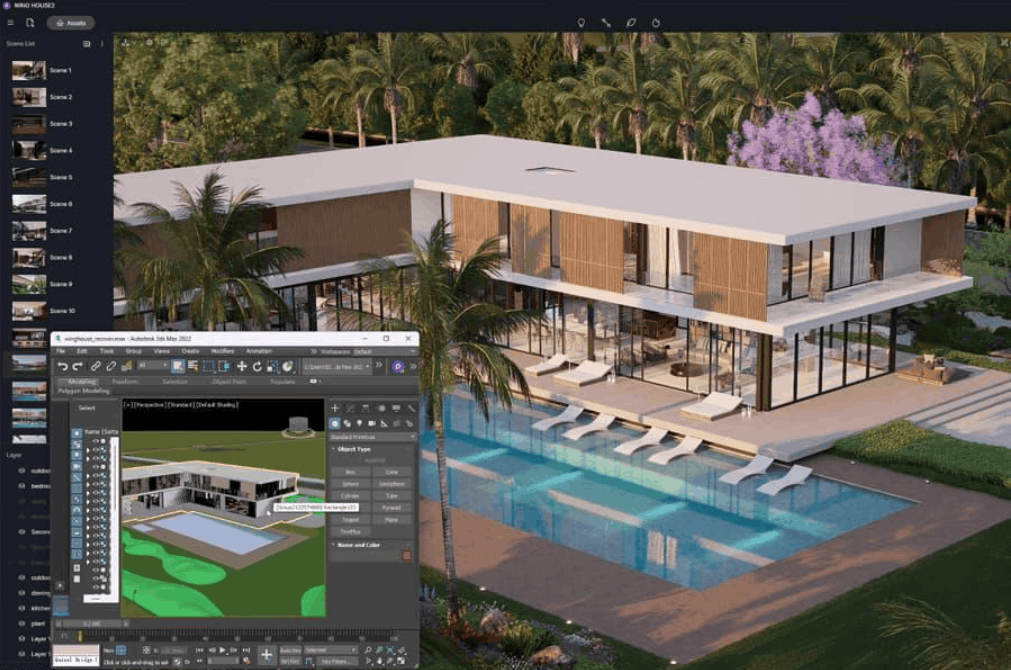
3ds Max in 2026 and its position in the architectural visualization industry.
Nội dung
- 1. Why will 3ds Max remain the default choice for architectural rendering in 2026?
- 2. Areas where 3ds Max excels over other architectural modeling tools.
- 3. 3ds Max and 3ds Max Design, two names but only one product since 2016.
- 4. Who is actually using 3ds Max?
- 5. Cost of using 3ds Max in 2026
- 6. Should I learn 3ds Max for architectural visualization?
- 7. Conclusion
In the world of architectural visualization, often abbreviated as Archviz, 3ds Max is an almost indispensable name. While the market has seen the emergence of many new tools, from Blender to real-time modeling platforms, most professional studios still place 3ds Max at the heart of their workflow. This doesn''''t mean it''''s the fastest, cheapest, or easiest to learn. The reason lies in a combination of advantages that few other tools can replicate in a short time. This article analyzes 3ds Max from the perspective of a real-world production unit, from its current position, strengths, costs, to the most important question for newcomers: should you invest the time to learn it?
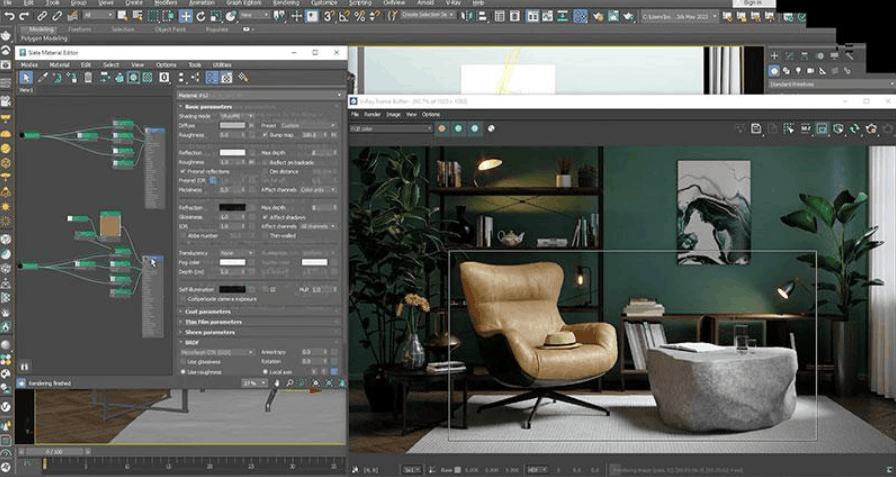
1. Why will 3ds Max remain the default choice for architectural rendering in 2026?
The honest answer is that it's thanks to the ecosystem, not simply technical prowess. Many software programs can build a structure, and many others can render it beautifully, but very few tools simultaneously sit at the heart of a vast repository of plugins, resource libraries, scene files, and a team of artists trained for over twenty years. For a studio, this asset base is the real product they're buying.
Imagine a plugin that can precisely plant tens of thousands of trees, a parametric facade creation tool that works in minutes, or a material library that perfectly matches the client's specified finishing catalog. These tools typically launch for 3ds Max first, then migrate to other platforms if necessary. 3ds Max's direct integration with the industry's two most popular rendering engines, V-Ray and Corona, further solidifies this position, as these are the tools that generate the majority of the high-quality still images clients see.
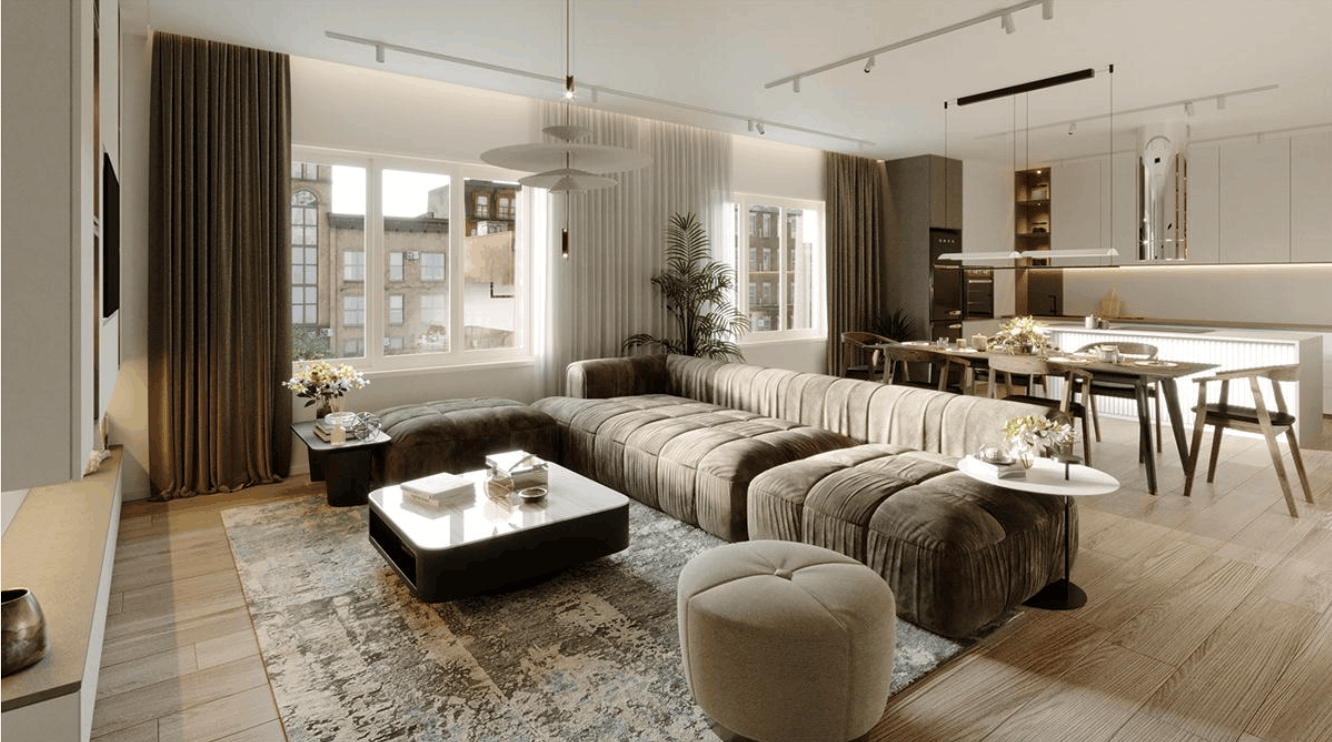
Another reason, often overlooked in software reviews, is the staffing issue. A studio that standardizes its workflow on 3ds Max can hire an Archviz artist and have a productive employee within the first week. The same isn't necessarily true for newer workflows, no matter how excellent the software itself is. For studio managers, the ability to quickly replace staff and low training costs are clearly financially valuable factors. It is this synergy between tools, resources, and people that has transformed 3ds Max from a choice into an unspoken industry standard.
2. Areas where 3ds Max excels over other architectural modeling tools.
3ds Max's strength lies in its ability to handle complexity rather than creating beautiful images, as many other tools can achieve high-quality rendering. There are four key points to analyze.
Firstly, there's the ability to create non-destructive models using a modifier stack. Artists can change a decision made three hours prior without having to rebuild the underlying geometry. In projects where clients require two or three revisions to the facade, this is the difference between a single revision and a complete overhaul, and it directly impacts the project's timeline and profit margin.
Secondly, there's the issue of accuracy when rendering rigid surfaces and splines. Architectural geometry primarily consists of straight lines, precise dimensions, and repetitive shapes. 3ds Max is designed for that specific type of work, and still delivers more consistent results compared to applications focused on organic sculpting.
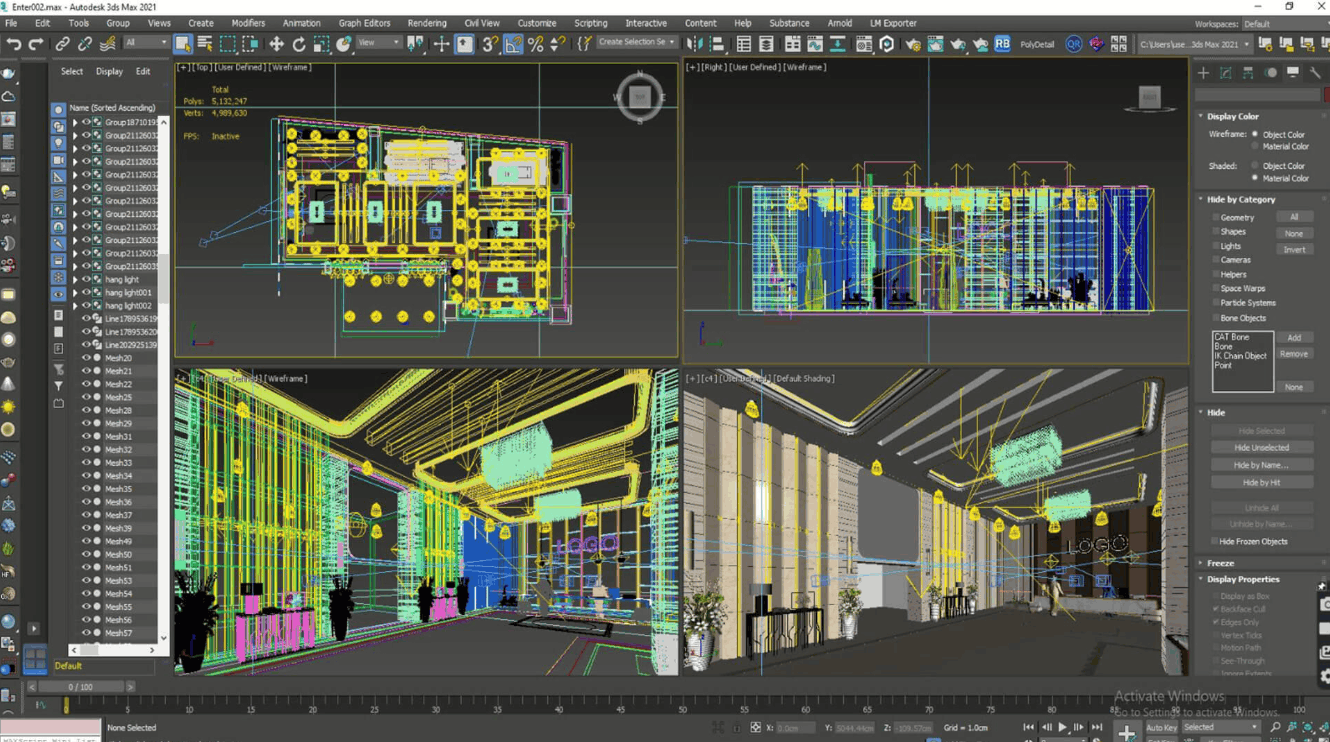
Third is the ability to manage scenes at a large scale. Thanks to layers, XRef, and proxies, an artist can open a total area with millions of polygons without the file collapsing. Smaller tools often hit a ceiling at this point first, forcing users to split the scene or sacrifice detail.
Fourth is the depth of its plugin ecosystem. Forest Pack for plants, RailClone for iterative and parametric components, tyFlow for particle effects, and many other tools all consider 3ds Max as their core platform. These strengths mean 3ds Max is often used for modeling in the production process, while presentation and animation can be outsourced to other tools if needed.

3. 3ds Max and 3ds Max Design, two names but only one product since 2016.
There's really nothing left to compare. Autodesk merged 3ds Max Design into 3ds Max starting with the 2016 version, and the Design version hasn't been sold as a separate product since then.
Previously, the two versions differed in one rather narrow aspect. 3ds Max Design included a Lighting Analysis toolset for architects and engineers needing to measure daylight values, while the standard version leaned more towards gaming and media. Otherwise, most of the features of the two versions were almost identical. After the merger, the lighting analysis feature is now integrated into a single product, eliminating the need for architectural users to choose between them.
If you come across a tutorial, job posting, or hardware specifications sheet that still distinguishes between these two versions, understand that the content was written before 2016. It's more of a historical detail than a basis for making a purchase decision. This is also a small but useful detail for identifying outdated documentation when you're learning or researching software, as information that's still confused on this point is often also outdated on many other points, such as pricing, system requirements, or rendering processes.
4. Who is actually using 3ds Max?
The 3ds Max user base is much narrower than what marketing suggests, and is primarily focused on visualization rather than cinematography.
The largest group consists of architectural visualization studios. They typically combine 3ds Max with V Ray or Corona for still images, and use an additional real-time tool for motion. The second group comprises architectural and interior design offices with in-house visualization teams, receiving geometry from Revit, Rhino, or SketchUp and refining it for client presentations.
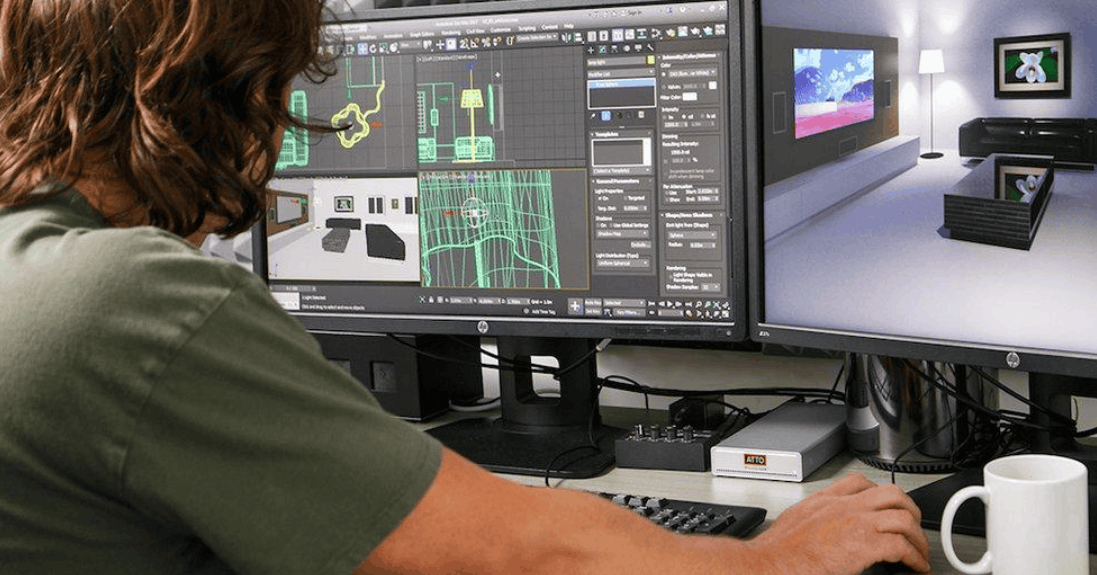
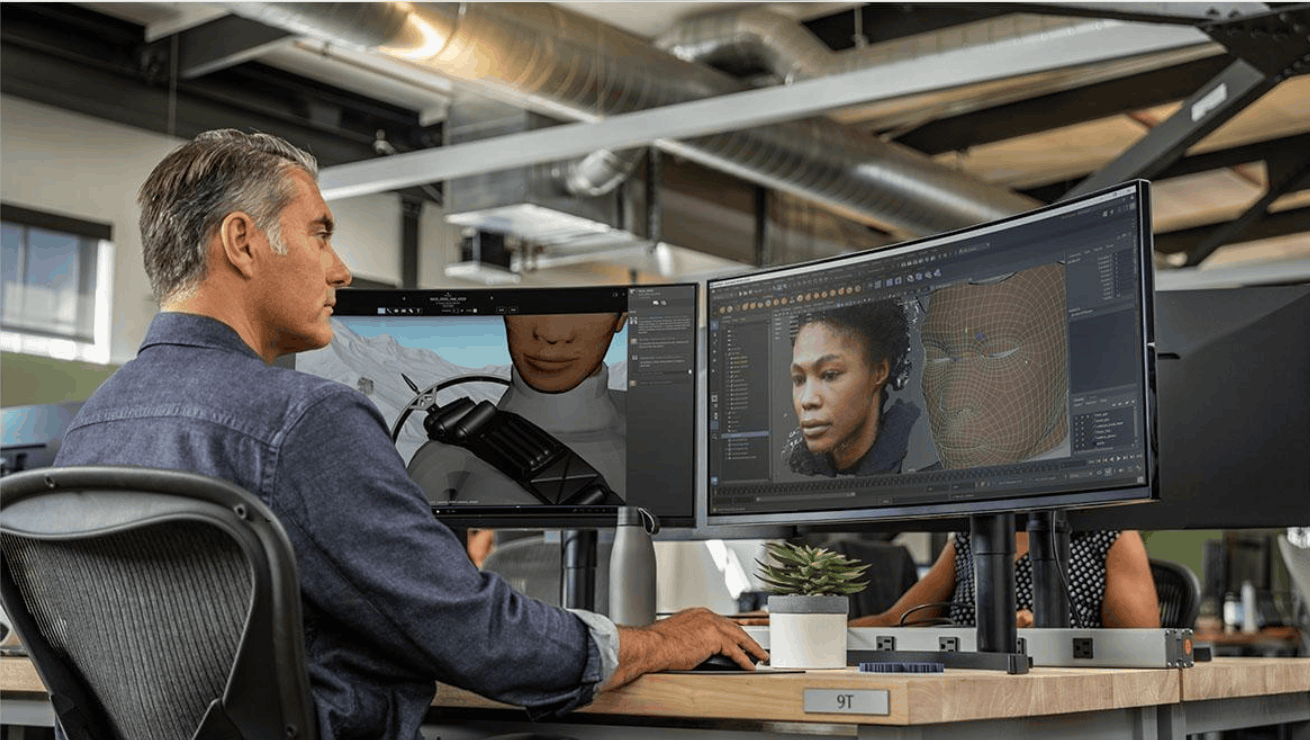
The third group consists of product and industrial designers who create visuals for catalogs or resources for product configurators, where precise dimensions are more important than organic shapes. The fourth group comprises game studios, primarily using 3ds Max to create environments and hard surface assets, while character animation is often outsourced to Maya or Blender.
Finally, there's the field of television and motion graphics. This group is significantly smaller than it was in the 2000s, as much of the visual effects work for film and television has been centered around Maya and Houdini for many years now. If you're the client rather than the software operator, what matters is the output, not the underlying toolset. A beautiful and well-designed image is the real value, regardless of which software is used.
5. Cost of using 3ds Max in 2026
Based on US listed prices, an annual subscription for 3ds Max costs approximately $2,010 per year, equivalent to $168 per month if paid annually. Monthly subscriptions are more expensive, around $255 per month, suitable for short-term projects that don't want a year-long commitment. A three-year plan costs approximately $6,025, roughly the same price as a one-year plan. There's also a token-based Flex plan, suitable for infrequent and irregular use, but if you run the software for more than ten days a month, the annual plan is almost always cheaper. Students and instructors receive a free one-year license for educational purposes, while the Indie plan is for individuals and small studios with revenue below a certain threshold.
However, the price of a license isn't the actual cost of a workspace, and this is a figure that surprises many studios. A functioning 3ds Max workspace is typically the sum of four purchases. The first is the 3ds Max subscription. The second is the rendering engine subscription, as almost no one delivers Archviz with Arnold pre-installed. The third is the plugin and resource license, including plant spreaders, parametric geometry, material libraries, and model packs. The fourth is hardware powerful enough for rendering, and this is often the largest expense in the first year.
Therefore, budget based on output rather than just the tools. Clients pay for a finished image, and that figure is largely independent of the software that created it. This approach allows you to compare options fairly, especially when considering the choice between investing in your own tools and hiring an external provider.
6. Should I learn 3ds Max for architectural visualization?
The answer is yes, if you plan to work in or with a professional Archviz studio. It remains the most frequently mentioned software in job postings, assumed to be used in most production workflows, and the foundation upon which most resource libraries are based. Learning 3ds Max means you speak the same language as the market.
However, there are four scenarios you should reconsider. The first is if you use macOS and don't want to buy an additional Windows machine or rent a remote workstation, since 3ds Max runs natively on Windows. The second is if you work alone or in a small team, where the total cost of licenses, rendering engine, and plugins is a real constraint. In that case, Blender combined with a free or low-cost rendering solution can give you much better value for your money.
The third scenario is that your primary need is a quick tour video of the construction site for clients rather than highly detailed static images; in this case, a real-time tool should be your first investment, not your second. The fourth scenario is that you are an architect who only needs occasional visual presentations, not a visualization specialist; in this case, a tool already built into your existing CAD or BIM environment will save you a significant amount of time.
If you decide to learn, start with the basics of modeling and scene management, then move on to materials, lighting, and rendering. Learning in this order helps you avoid developing bad habits from the start, a common problem because the 3ds Max interface incorporates many different ways to do the same thing.
7. Conclusion
3ds Max isn't a perfect tool, but in architectural visualization, it still holds an irreplaceable position thanks to its modeling capabilities, plugin ecosystem, and deep integration with V Ray and Corona. The key is to properly assess its role: a powerful tool for modeling and still images, while animation should be considered separately within the budget and workflow. Once you understand the true cost, strengths, and limitations of the software, the decision to invest in 3ds Max becomes much clearer and more grounded.








VIP Products

Best Selling Products
Upgrade Genuine Office 365
49 USD
Plugin Retouch4me
69 USD
MidJourney Account
29 USD
Genuine Cheap Canva Pro
39 USD
Capcut Pro 1 Year
39 USD
Adobe Photoshop Copyright - Full App
120 USD
Windows 10 & 11 Pro Key
36 USD
Copyright Adobe Lightroom Account
59 USD
Upgrade Duolingo Super
29 USD
ChatGPT Plus Account (GPT-4)
16 USD
Genuine Adobe Illustrator account
99 USD
Freepik Premium Account
59 USD
Adobe Premiere Pro Account
99 USD
Autodesk All App Account Copyright
120 USD
Upgrade genuine Capture One account
120 USD