Best Selling Products

Upgrade Duolingo Super
29 USD
Autodesk All App Account Copyright
120 USD
Copyright Adobe Lightroom Account
59 USD

MidJourney Account
29 USD

ChatGPT Plus Account (GPT-4)
16 USD
Windows 10 & 11 Pro Key
36 USD
Adobe Photoshop Copyright - Full App
120 USD
Upgrade genuine Capture One account
120 USD

Genuine Adobe Illustrator account
99 USD
Genuine Cheap Canva Pro
39 USD
Plugin Retouch4me
69 USD
Adobe Premiere Pro Account
99 USD

Upgrade Genuine Office 365
49 USD

Freepik Premium Account
59 USD
Capcut Pro 1 Year
39 USD
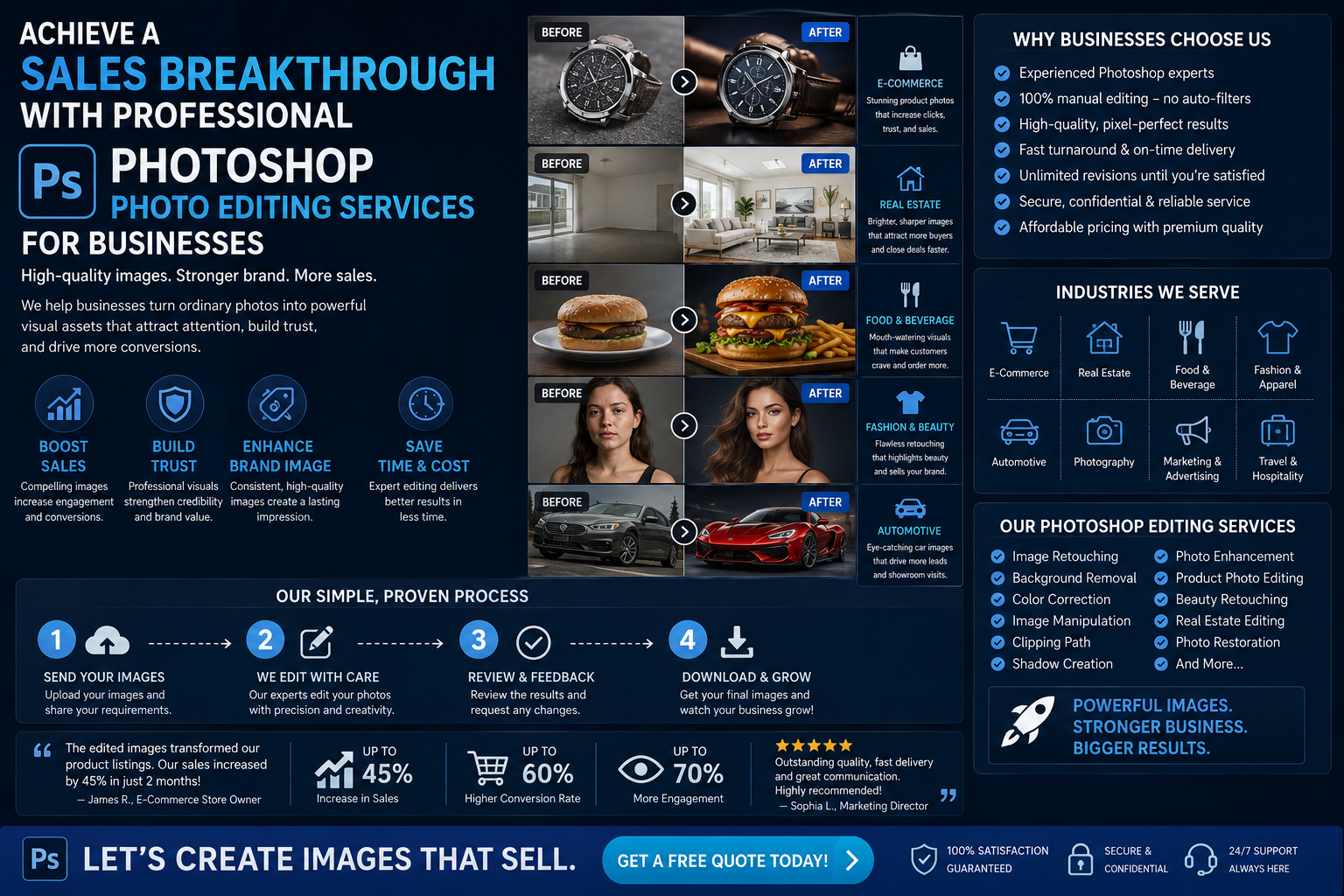
Achieve a sales breakthrough with professional Photoshop photo editing services for businesses.
Nội dung
- 1. Reasons why businesses should choose professional Photoshop photo editing services.
- 1.1. Optimizing the display quality of commercial products
- 1.2. Saving on hardware investment and internal personnel costs.
- 1.3. Ensure timely delivery and consistency of the brand identity.
- 2. Core components in today's image processing service system.
- 2.1. Editing and removing the background from e-commerce product images.
- 2.2. Post-production of high-end portrait, fashion, and yearbook photos.
- 2.3. Restoring old photos and reconstructing damaged image data
- 3. Step-by-step process for implementing standard photo editing services
- 3.1. Receiving requests and analyzing source data from customers.
- 3.2. Conduct technical processing and apply advanced filters.
- 3.3. Internal quality control and handover of the finished product
- 4. Criteria for evaluating and selecting a reputable service provider.
- 4.1. Professional competence demonstrated through practical projects.
- 4.2. Technology infrastructure and information security
- 4.3. Transparent pricing policy and attentive after-sales service.
- 5. Appvip.ai - A reputable system providing graphic resources and process digitization solutions.
- 6. Breakthrough development trends in the image post-production services industry.
- 6.1. The rise of artificial intelligence (AI) technology in image processing
- 6.2. The trend towards minimalist layout and respect for natural colors
- 7. CONCLUSION
Looking for high-quality Photoshop image editing services? Discover solutions for optimizing commercial images, restoring old photos, and enhancing brand recognition.
1. Reasons why businesses should choose professional Photoshop photo editing services.
1.1. Optimizing the display quality of commercial products
When photographed with a regular camera, products often suffer from lighting issues, color inaccuracies, or unwanted impurities in the studio environment. Our team of professional technicians will use advanced algorithms to balance the light range, reduce noise, and highlight the core details of the product. This ensures that images displayed on websites or e-commerce platforms are stunning, realistic, and visually appealing to customers at first glance.
1.2. Saving on hardware investment and internal personnel costs.
Establishing an independent graphic design department requires businesses to allocate significant budgets for purchasing high-configuration computers, annual software licenses, and staff salaries and bonuses. Outsourcing the work to an external service provider optimizes cash flow and minimizes personnel management risks. Businesses only need to pay for the actual number of products requiring acceptance, providing maximum flexibility in financial planning for each campaign phase.
1.3. Ensure timely delivery and consistency of the brand identity.
Reputable post-production service providers operate within a closed-loop process with strict time commitments. Their ability to process large volumes of image data in a short time allows businesses to launch new collections promptly during peak market periods. Furthermore, the application of synchronized color filters (presets) ensures consistency across the entire brand image system across all media channels.
2. Core components in today's image processing service system.
2.1. Editing and removing the background from e-commerce product images.
This category focuses on isolating the product from its original background, often replaced with a plain white background or trendy 3D simulated scenes. Experts will adjust the natural shadows, remove wrinkles on the packaging, and clean any dust or dirt from the object's surface. This is a mandatory standard for stores on Amazon, Shopee, or Lazada to increase conversion rates.
2.2. Post-production of high-end portrait, fashion, and yearbook photos.
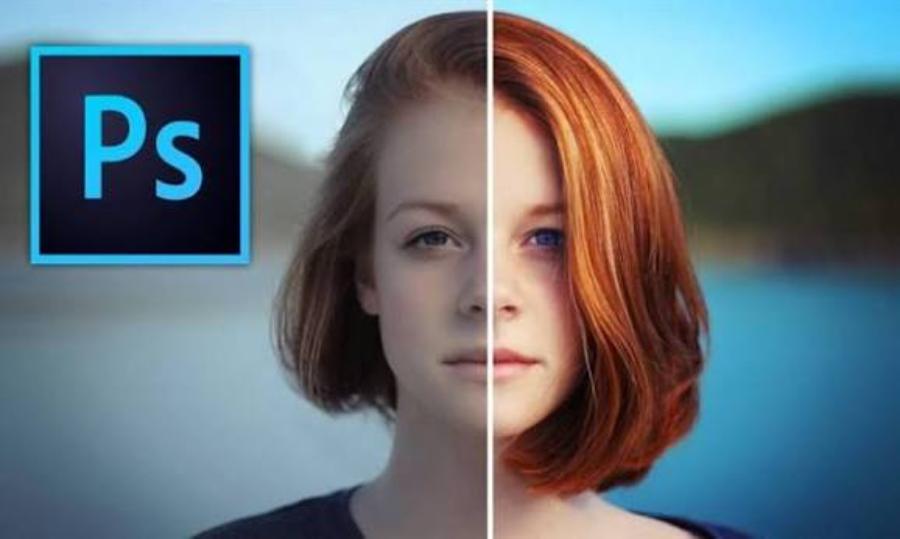
Human image manipulation requires absolute finesse to perfect the subject's beauty without sacrificing their inherent authenticity. The service will deeply modify skin structure to remove imperfections, smooth the epidermis, and preserve the pore texture. Reshaping clothing, slimming the body using Liquify tools, and adjusting eye and hair lighting will ensure the image meets the standards for publication in fashion magazines.
2.3. Restoring old photos and reconstructing damaged image data
This is a highly skilled and meticulous field requiring experienced technicians. Faded, torn, or mold-damaged archival photographs are digitally scanned and pixel-by-pixel reconstructed. The restoration process includes redrawing lost facial features, balancing black and white tones, or applying artistic color to restore the historical value of the artwork.
3. Step-by-step process for implementing standard photo editing services
3.1. Receiving requests and analyzing source data from customers.
The workflow begins with collecting the original image files (preferably in RAW format) and the technical requirements brief from the partner. The consulting team will then assess the current image quality to propose the most suitable processing solutions. Agreeing on color style, publication size, and delivery timeframe at this stage minimizes potential errors later on.

3.2. Conduct technical processing and apply advanced filters.
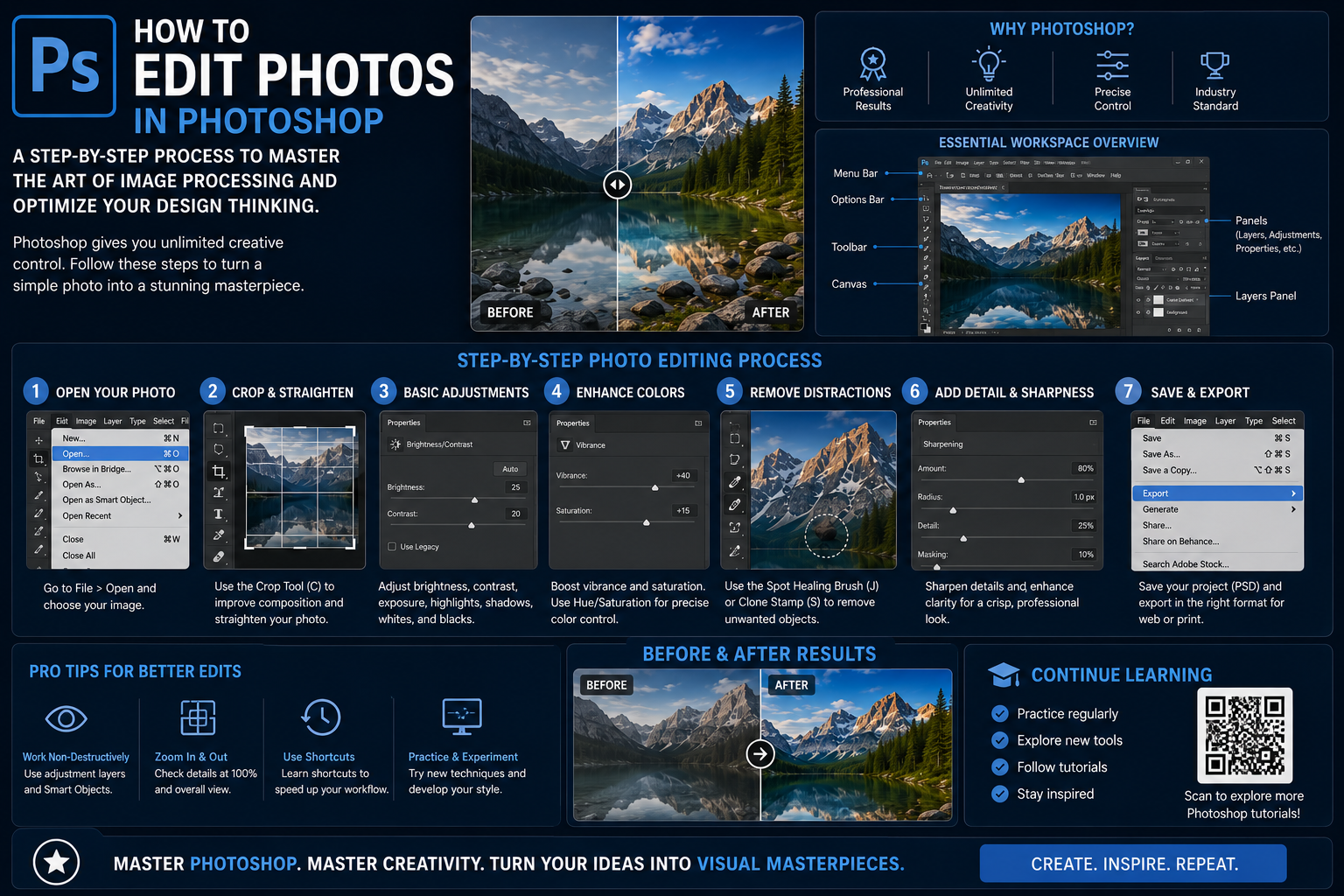
After reaching an agreement, the designers will begin the post-production process using specialized graphic design software. The steps, from cutting and pasting layouts, balancing lighting using Curves and Levels, to artistic color matching using Color Balance, are performed sequentially. All operations adhere to the philosophy of non-destructive editing of the original image structure, based on the intelligent application of the Layer Mask system.
3.3. Internal quality control and handover of the finished product
The finished product undergoes a rigorous inspection by the head of the design department to ensure that even the smallest details are free from edge defects or color bleeding. Images that meet the standards will be published in suitable formats such as JPEG (optimized for website size) or original PSD files for storage purposes. Clients will review the product and have the right to request revisions until they are completely satisfied.
4. Criteria for evaluating and selecting a reputable service provider.
4.1. Professional competence demonstrated through practical projects.
A portfolio is the most accurate reflection of a post-production agency's skill level and style. Businesses should prioritize choosing agencies with practical experience in the same industry segment they operate in. Reviewing before and after edits will help assess the smoothness of background removal techniques and the naturalness of the color blending process.
4.2. Technology infrastructure and information security
A reputable partner needs to possess powerful hardware and high-speed cloud storage systems to ensure uninterrupted workflow. Furthermore, a commitment to absolute confidentiality of image data before market release is mandatory. Leaking images of new products before launch can cause significant media damage to the business.
4.3. Transparent pricing policy and attentive after-sales service.
Service quotations should clearly break down each work item, with no hidden costs arising during implementation. The service provider should have a flexible policy for supporting modifications to details that do not meet customer requirements. Transparency in economic contracts is a solid foundation for a long-term and sustainable partnership.
5. Appvip.ai - A reputable system providing graphic resources and process digitization solutions.

To enhance collaboration between businesses and design firms, the application of smart technology platforms is essential. The website appvip.ai is built as a space for sharing digital process solutions, providing guidance on using cutting-edge software, and offering a wealth of graphic design resources. This website provides the community with up-to-date technology solutions, trendy pre-configured color presets, and a diverse system of design fonts. The effective utilization of high-quality learning resources and supporting tools from this platform helps businesses optimize work efficiency, shorten project approval times, and significantly elevate their aesthetic sense.
6. Breakthrough development trends in the image post-production services industry.
6.1. The rise of artificial intelligence (AI) technology in image processing
Artificial intelligence is not replacing humans, but rather acting as a powerful assistant to accelerate the workflow of graphic design services. Features such as automatic frame expansion (Generative Fill), intelligent object removal, and automatic subject recognition save up to 70% of the time spent on repetitive tasks. Humans can then focus more on creative ideation and shaping a high-quality artistic style for the image.
6.2. The trend towards minimalist layout and respect for natural colors
Consumer preferences are shifting significantly from heavily digitally manipulated photos to more authentic and natural-looking images. The current editing trend prioritizes preserving the original colors of the product, focusing only on cleaning up the background and optimizing ambient lighting. This authenticity increases customer trust in the brand and reduces return rates due to color discrepancies.
7. CONCLUSION
Investing seriously in image quality through professional Photoshop editing services is the golden key to boosting sales in the digital age. This tool is not simply about beautifying photos, but about standardizing visual language to deeply connect with customers' minds. By choosing the right reputable partner, combining it with the application of modern supporting technology platforms, and constantly updating with the latest market aesthetic trends, businesses will build a solid communication foundation, establishing a lasting brand image in the future.












VIP Products


Best Selling Products
Upgrade Duolingo Super
29 USD
Autodesk All App Account Copyright
120 USD
Copyright Adobe Lightroom Account
59 USD
MidJourney Account
29 USD
ChatGPT Plus Account (GPT-4)
16 USD
Windows 10 & 11 Pro Key
36 USD
Adobe Photoshop Copyright - Full App
120 USD
Upgrade genuine Capture One account
120 USD
Genuine Adobe Illustrator account
99 USD
Genuine Cheap Canva Pro
39 USD
Plugin Retouch4me
69 USD
Adobe Premiere Pro Account
99 USD
Upgrade Genuine Office 365
49 USD
Freepik Premium Account
59 USD
Capcut Pro 1 Year
39 USD