Best Selling Products

Genuine Cheap Canva Pro
39 USD

ChatGPT Plus Account (GPT-4)
16 USD

Upgrade Duolingo Super
29 USD

Capcut Pro 1 Year
39 USD

Adobe Premiere Pro Account
99 USD

Genuine Adobe Illustrator account
99 USD

Autodesk All App Account Copyright
120 USD

Copyright Adobe Lightroom Account
59 USD

Freepik Premium Account
59 USD
Upgrade genuine Capture One account
120 USD

MidJourney Account
29 USD

Windows 10 & 11 Pro Key
36 USD

Plugin Retouch4me
69 USD

Upgrade Genuine Office 365
49 USD
Adobe Photoshop Copyright - Full App
120 USD
Auto Focus technology: How it works, AF modes, and tips for achieving perfect focus in any situation.
Nội dung
- 1. What is Auto Focus technology?
- 2. How Auto Focus works
- 3. The role of Auto Focus in photography and videography
- 4. System-specific autofocus technology
- 4.1. Phase Detection AF (PDAF)
- 4.2. Contrast Detection AF
- 4.3. Hybrid AF
- 5. Focus on the subject.
- 5.1. Eye AF / Face AF: Focuses on the eyes and face.
- 5.2. Animal AF: Focus on pets and animals
- 5.3. Subject Tracking: Tracking the movement of a subject
- 6. Tips for achieving perfect focus in different situations.
- 6.1. Portrait photography
- 6.2. Photographing sports and fast-moving subjects
- 6.3. Macro photography (close-up)
- 6.4. Shooting in low light conditions
Auto Focus technology is the foundation that enables modern cameras and camcorders to focus quickly and accurately in a variety of shooting conditions.

1. What is Auto Focus technology?
Auto Focus (AF) is an automatic focusing technology that helps the camera determine the distance between the lens and the subject, then adjusts the lens system to achieve optimal image sharpness without user intervention.
When the user presses the shutter button halfway or taps the focus screen, the camera analyzes data from the sensor, identifies the priority subject, and controls the focusing motor inside the lens to move to the appropriate position. This entire process happens almost instantaneously, allowing the photographer to capture the precise moment even when the subject is moving.
Auto Focus today is not just a simple focusing assistance feature, but also the foundation of many intelligent technologies such as face recognition, eye recognition, AI-powered subject tracking, and continuous focus tracking in video recording. Therefore, it is considered a crucial factor determining the speed, accuracy, and user experience of a modern camera.

2. How Auto Focus works
The Auto Focus system works by coordinating the image sensor, central processor, recognition algorithm, and focusing motor within the lens.
First, the sensor captures the entire frame and transmits the data to the processor. Then, the system analyzes the distance, contrast, or phase shift of the light to determine the subject's location.
Once the distance has been calculated, the processor sends a command to the motor in the lens to move the lens groups forward or backward in order to focus the light precisely onto the sensor.
If the subject changes position, the entire process is repeated continuously at a very high speed. On high-end cameras, the Auto Focus system can perform dozens to hundreds of calculations per second to ensure the subject is always kept in focus.
Thanks to AI support, many cameras are now able to predict the movement of objects, recognize human eyes, faces, animals, birds, or vehicles to maintain stable focus throughout the shooting and recording process.

3. The role of Auto Focus in photography and videography
Auto Focus significantly saves users time in focusing, especially in situations requiring quick reactions such as shooting events, sports, street photography, or wildlife.
For portrait photography, autofocus technology helps to precisely lock focus on the subject's eyes, creating sharp and detailed images.
In product photography, Auto Focus helps to display even the smallest details clearly, resulting in more professional-looking images.
For video recording, modern AF systems can smoothly switch focus between subjects, continuously track moving characters, and significantly reduce out-of-focus moments, contributing to stable and cinematic footage.
4. System-specific autofocus technology
Each camera manufacturer develops its own Auto Focus technologies to optimize focusing speed, subject recognition, and performance in various conditions. While the names may differ between brands, most are built upon three main technological foundations.
4.1. Phase Detection AF (PDAF)
Phase Detection AF (PDAF) is a phase-detection autofocus technology, considered one of the fastest autofocus methods currently available. Initially, PDAF was primarily found in professional DSLR cameras, but it is now widely integrated into mirrorless cameras and even high-end smartphones.
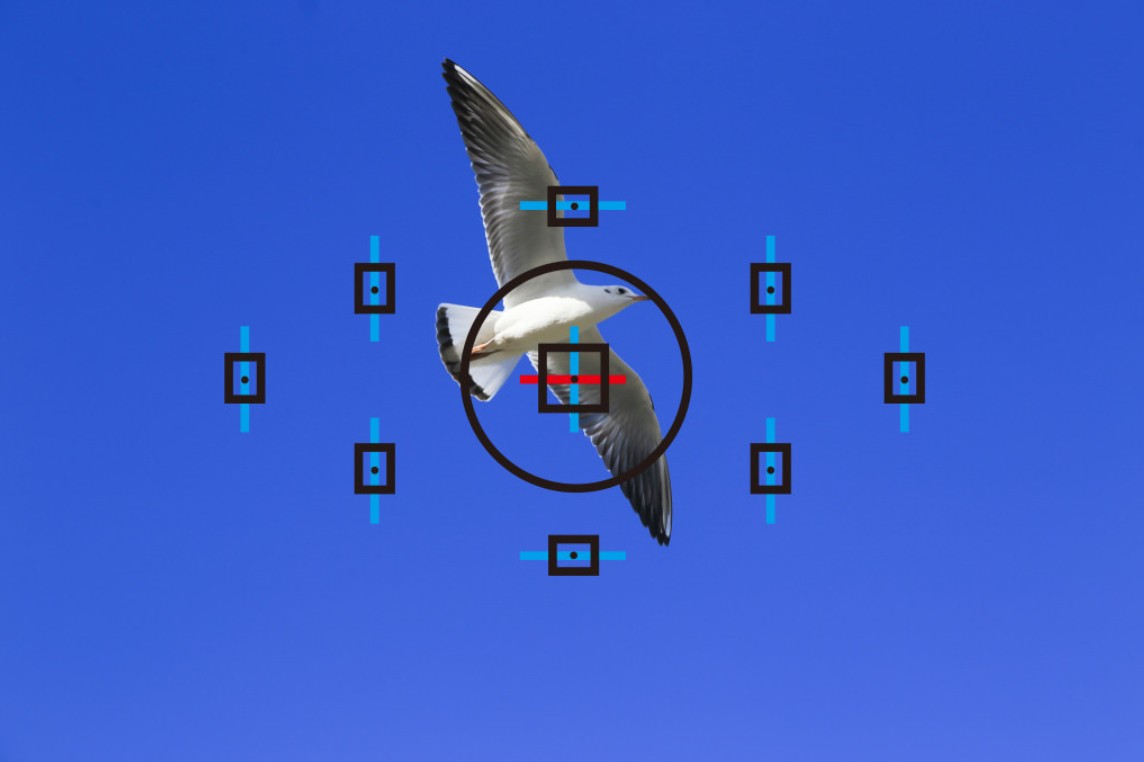
The principle of PDAF is to use specialized sensor points to analyze the phase shift of light rays passing through the lens. Instead of trying multiple different focus positions, the system can instantly determine the direction and distance that needs adjustment. This allows the focusing motor to move precisely to the desired position in a single operation.
The biggest advantage of PDAF is its very fast focus lock speed, excellent continuous tracking capability, and effective performance with moving subjects. This technology is ideal for shooting sports, wildlife, events, children playing, or for video tracking.
However, the effectiveness of PDAF can decrease in very low light conditions or when the subject has low contrast. Therefore, many manufacturers have combined PDAF with other technologies to improve accuracy.
4.2. Contrast Detection AF
Contrast Detection AF is a focusing method based on the contrast of the image captured directly from the sensor.
The system continuously assesses image sharpness and adjusts the position of the lens groups until it finds the point of highest contrast. At that point, the subject is considered to have reached optimal sharpness.

Unlike PDAF, Contrast Detection AF cannot immediately determine the distance to the subject; instead, it performs a step-by-step focus detection process. Therefore, the focusing speed is usually slower, but in return, it offers very high accuracy.
This technology is particularly suitable for shooting portraits, products, still life, landscapes, or videos that require smooth focus transitions. Because the adjustments are made in small increments, focus point inaccuracies are very rare.
In well-lit conditions, Contrast Detection AF delivers sharp images. However, when the subject moves quickly or in low light, the focusing speed can decrease significantly.
4.3. Hybrid AF
Hybrid AF is a hybrid focusing technology that combines Phase Detection AF and Contrast Detection AF in a single system.
Initially, PDAF quickly determines the distance to the subject and controls the lens to move closer to the focus point. Then, Contrast Detection AF further fine-tunes to achieve maximum sharpness.
Thanks to this combination, Hybrid AF has both the fast focusing speed of PDAF and the high accuracy of Contrast Detection AF.
Currently, Hybrid AF is considered standard on most modern mirrorless cameras. This technology improves performance when shooting continuously, vlogging, filming, livestreaming, taking portraits, or tracking moving subjects in varying lighting conditions.
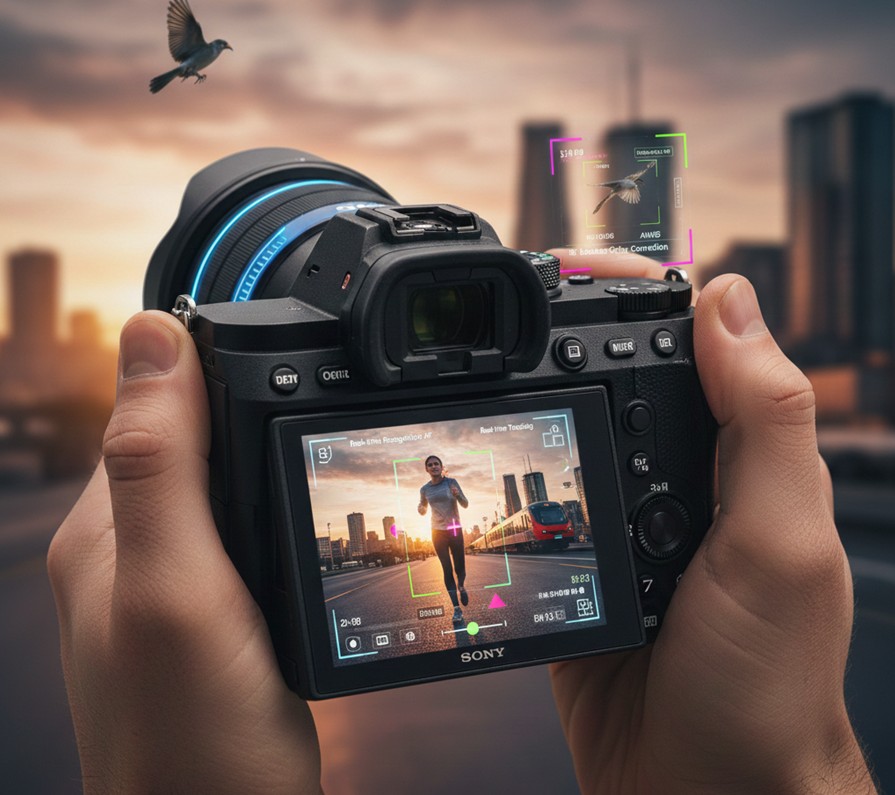
For both casual users and professional content creators, Hybrid AF offers a more stable, flexible, and reliable focusing experience compared to traditional technologies.
5. Focus on the subject.
Alongside improvements to focusing systems, camera manufacturers are also developing many AI-powered subject recognition technologies. These features help cameras not only focus quickly but also accurately identify which subjects should be prioritized in the frame.
5.1. Eye AF / Face AF: Focuses on the eyes and face.
Eye AF and Face AF are two of the most commonly used focusing technologies today, especially on mirrorless cameras.
The system will automatically recognize the subject's face, then prioritize focusing on the eyes over other areas. This is especially important in portrait photography because the eyes are always the first thing viewers notice.
During continuous shooting or video recording, Eye AF can track eye movement even when the subject turns their head, changes posture, or moves within the frame. This ensures that the image remains sharp in the most critical areas.
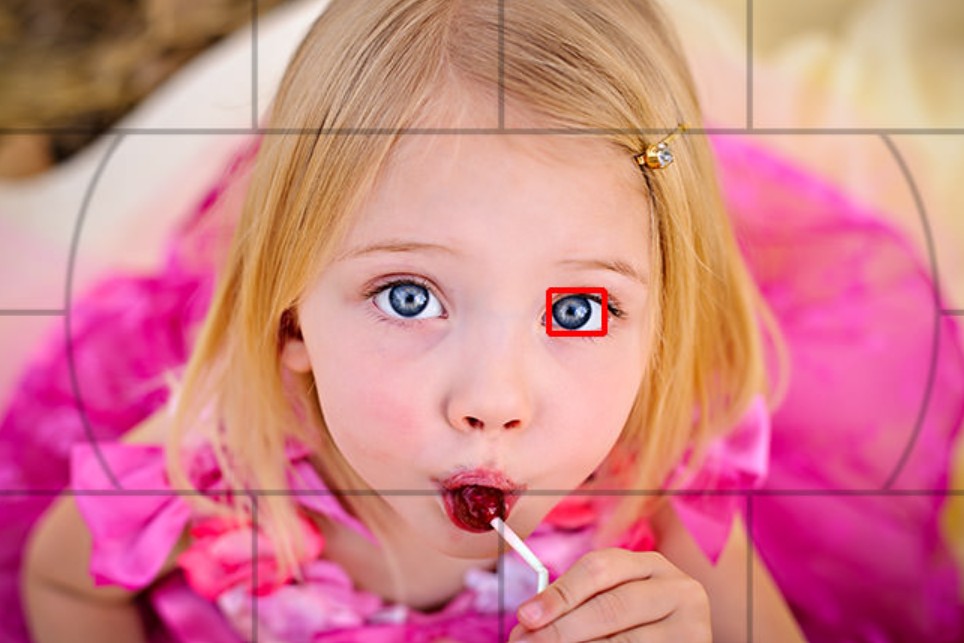
This technology is widely used in portrait photography, fashion photography, wedding photography, events, livestreaming, interviews, and vlogging.
5.2. Animal AF: Focus on pets and animals
Animal AF is the next step in AI-powered subject recognition technology. Instead of just recognizing human faces, the system can also detect the eyes or faces of dogs, cats, birds, and many other animals.
Even when pets are constantly moving or changing their gaze, the camera is able to maintain focus on the eyes with high accuracy. This makes it easier for photographers shooting pets or wildlife to capture natural moments without having to constantly adjust the focus manually.
On high-end cameras, Animal AF can distinguish between many different animal species and automatically switch to the appropriate recognition mode.

5.3. Subject Tracking: Tracking the movement of a subject
Subject Tracking is an intelligent subject tracking technology considered one of the biggest advancements in modern Auto Focus.
After the user selects an object, the system uses AI to analyze the object's shape, color, size, and direction of movement. Even if the object moves quickly, is briefly obscured, or changes position constantly, the camera still attempts to maintain focus.
This feature is especially useful when shooting sports, stage performances, race cars, animals, children, or action videos. Subject Tracking significantly reduces the rate of out-of-focus images and provides stability during recording.

6. Tips for achieving perfect focus in different situations.
To maximize the effectiveness of Auto Focus technology, users need to know how to select the appropriate focus mode for each situation instead of using the same setting for every case.
6.1. Portrait photography
In portrait photography, the eyes are always the priority focus point. If your camera supports Eye AF or Face AF, activate these features so the system automatically detects and locks focus on the model's eyes.
For stationary subjects, AF-S is the suitable choice as it allows for fast and accurate focus locking. If the subject is constantly changing posture or moving slightly, switch to AF-C so the camera maintains focus in real time.
When using a large aperture like f/1.4 or f/1.8, be careful to maintain a stable distance because the area of focus is very shallow. Even slight movement by the photographer or model can cause the image to lose focus.

6.2. Photographing sports and fast-moving subjects
Sports, outdoor activities, or action scenes always require an autofocus system with extremely fast response times.
In these situations, use AF-C in combination with Subject Tracking or Eye Tracking if your camera supports it. Also, select a wide focus area to improve subject recognition.
The shutter speed also needs to be increased sufficiently to minimize motion blur. When AF-C, Tracking AI, and a fast shutter speed are combined, the ability to capture decisive moments is significantly improved.

6.3. Macro photography (close-up)
Macro photography demands extremely high focusing precision due to its very shallow depth of field.
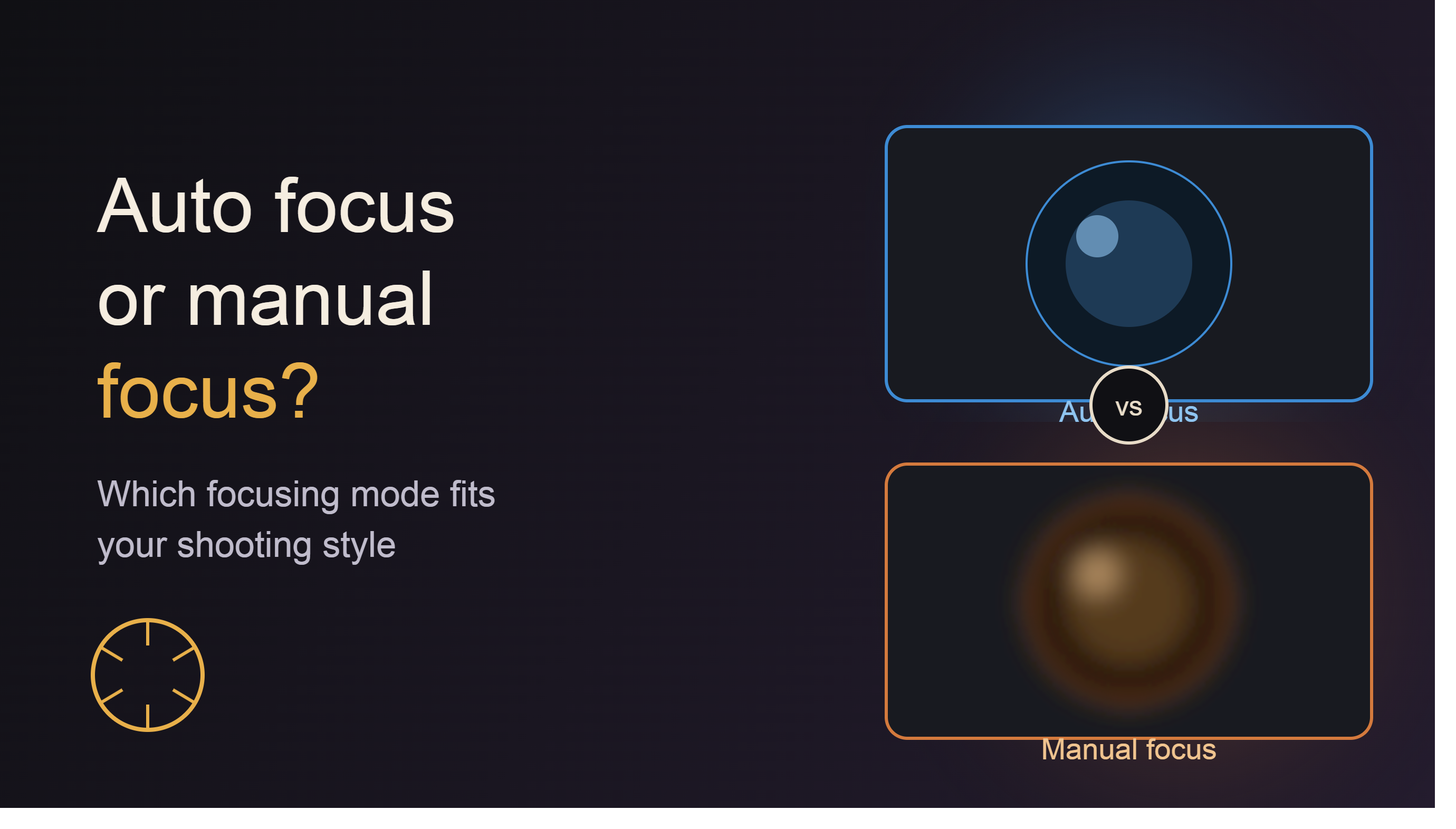
In most cases, manual focus will yield better results than auto focus because the photographer can actively choose the precise point of focus.
If your camera supports Focus Peaking, enable it so that the area in focus is highlighted on the screen. Additionally, using a tripod, remote control, or focus rail can help reduce camera shake and increase accuracy.

6.4. Shooting in low light conditions
Low light is one of the biggest challenges for the Auto Focus system. When contrast decreases, it takes the camera longer to find and lock onto the focus point.
In this case, prioritize focusing on areas with light sources or more detail so the system can recognize them more easily. If the camera is equipped with AF Assist or Focus Assist, activate it to assist with focusing.
For scenes or settings that are too dark, switching to Manual Focus will help maintain a more stable focus point and avoid the distracting effect of continuous autofocus searching for focus.
For beginners, regular practice with Auto Focus modes will help improve image control skills. For professional photographers and content creators, mastering modern AF technologies will be key to creating sharp images, smooth videos, and increasingly high-quality products.



















VIP Products







Best Selling Products
Genuine Cheap Canva Pro
39 USD
ChatGPT Plus Account (GPT-4)
16 USD
Upgrade Duolingo Super
29 USD
Capcut Pro 1 Year
39 USD
Adobe Premiere Pro Account
99 USD
Genuine Adobe Illustrator account
99 USD
Autodesk All App Account Copyright
120 USD
Copyright Adobe Lightroom Account
59 USD
Freepik Premium Account
59 USD
Upgrade genuine Capture One account
120 USD
MidJourney Account
29 USD
Windows 10 & 11 Pro Key
36 USD
Plugin Retouch4me
69 USD
Upgrade Genuine Office 365
49 USD
Adobe Photoshop Copyright - Full App
120 USD