Best Selling Products

Autodesk All App Account Copyright
120 USD

Adobe Premiere Pro Account
99 USD
Adobe Photoshop Copyright - Full App
120 USD

Copyright Adobe Lightroom Account
59 USD

MidJourney Account
29 USD

Upgrade Genuine Office 365
49 USD

ChatGPT Plus Account (GPT-4)
16 USD

Freepik Premium Account
59 USD

Genuine Adobe Illustrator account
99 USD

Upgrade Duolingo Super
29 USD

Windows 10 & 11 Pro Key
36 USD

Genuine Cheap Canva Pro
39 USD

Upgrade genuine Capture One account
120 USD

Plugin Retouch4me
69 USD

Capcut Pro 1 Year
39 USD
Chinoiserie Design: Identifying Characteristics and How to Apply Them in Graphic Design
Nội dung
- 1. Learn about Chinoiserie Design
- 2. History and Development of Chinoiserie
- 3. Outstanding Features of Chinoiserie Design
- 3.1 Nature is at the center.
- 3.2 Storytelling Structure
- 3.3 Asymmetry
- 3.4 Balancing Detail and Empty Space
- 3.5 Inspiration from Handmade Materials
- 3.6 Characteristic Color Palette
- 4. Chinoiserie in Modern Graphic Design
- 4.1 Product Packaging and Labeling
- 4.2 Design, Editing, and Printing
- 4.3 Event Design and Wedding Invitations
- 4.4 Social Media Content
- 4.5 Cases of Incompatibility
- 5. Conclusion
Amidst countless modern design trends, Chinoiserie stands out as an emotionally rich art style, combining Eastern aesthetics with Western creativity. With a history spanning hundreds of years, Chinoiserie is not only a classic decorative style but also a powerful source of inspiration in graphic design, packaging, and brand identity today.
1. Learn about Chinoiserie Design
Chinoiserie is a decorating style that originated in Europe, inspired by Chinese art, architecture, and culture, as well as other East Asian cultures. However, it's important to understand that Chinoiserie is not original Chinese art, but rather a European interpretation and imagination of the East.
The name Chinoiserie originates from the French word "chinois," meaning "Chinese" or "in the Chinese style." From the name itself, we can clearly see the core inspiration of this style.
During the formative period of Chinoiserie, Europeans had very little direct access to Eastern culture. What they knew came mainly from porcelain, silk, lacquerware, and imported products through trade routes. Therefore, the portrayal of the East in Chinoiserie was often more imaginative than realistic.
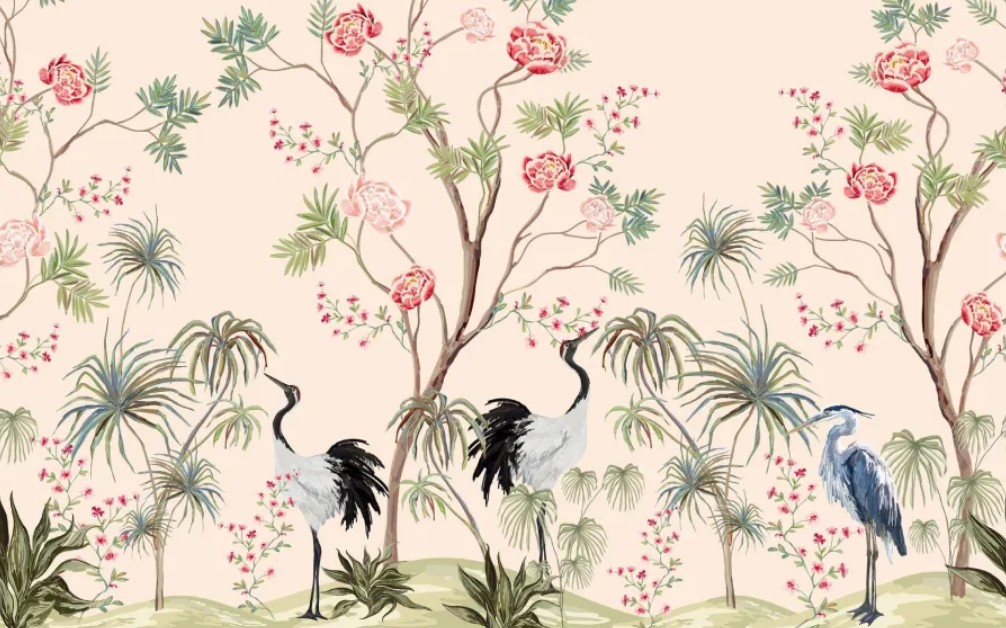
Interestingly, this lack of accuracy has become a unique charm of Chinoiserie. Instead of faithfully reproducing Chinese culture, this style constructs symbolic worlds where birds, flowers, architecture, and landscapes blend together in poetic compositions.
2. History and Development of Chinoiserie
Chinoiserie emerged during the period of booming trade between Europe and the East from the 17th century onwards. Products such as porcelain, silk, and lacquerware from China quickly became luxury items sought after by European nobility.
Initially, European artisans attempted to imitate these imported items. However, due to a lack of direct understanding of Eastern culture, they gradually created versions that bore the distinct imprint of their own imagination.
During the Rococo period in the 18th century, Chinoiserie reached its peak. This was the stage where the style was no longer simply a copy but had become an independent design language. Interiors were decorated with landscape wallpapers, furniture featured elaborate patterns, and layouts became increasingly dynamic and asymmetrical.
It was during this period that many of the core elements of modern Chinoiserie were formed.
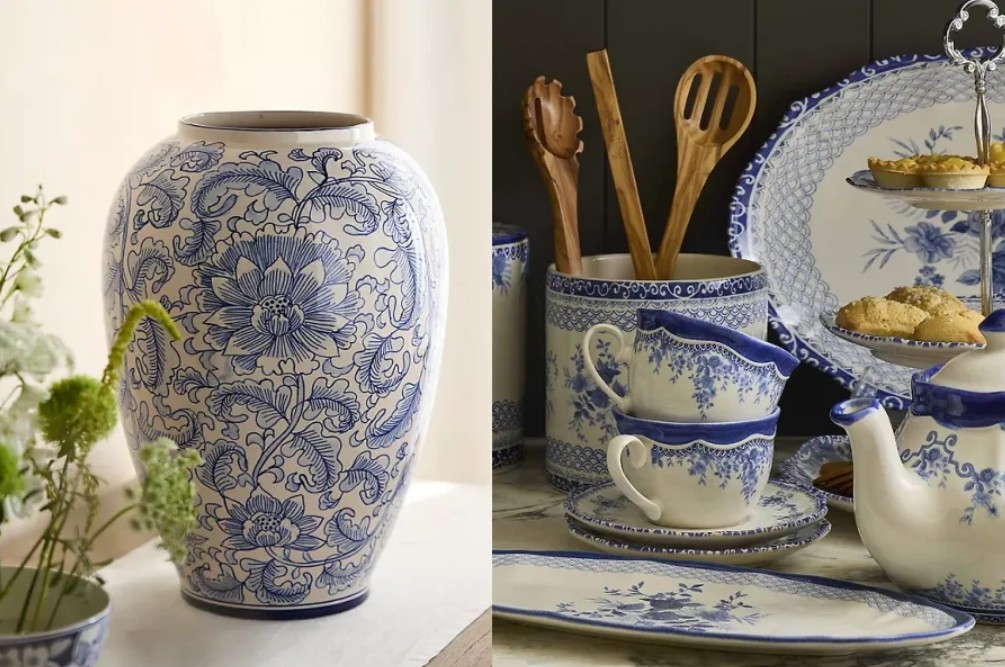
Designers began constructing scenes with depth instead of simply using repetitive patterns. Birds, trees, pavilions, and other natural elements were combined into complete visual narratives.
In the 19th and 20th centuries, Chinoiserie no longer held a dominant position, but it never truly disappeared. Instead, the style repeatedly reappeared in various Renaissance movements.
Each time Chinoiserie returns, it absorbs new influences from contemporary colors, materials, printing techniques, and design thinking. This adaptability is what prevents Chinoiserie from being confined to a particular era.
Today, what we see is not a copy of 18th-century Chinoiserie, but a modern version of a style that has always managed to evolve over time.
3. Outstanding Features of Chinoiserie Design
Chinoiserie is a combination of many visual elements organized according to a very distinctive design language.
3.1 Nature is at the center.
The most frequently appearing element in Chinoiserie is nature.
Blooming flowers, birds, butterflies, bamboo, and the garden always play a central role in the composition. However, nature here is not merely a decorative element.
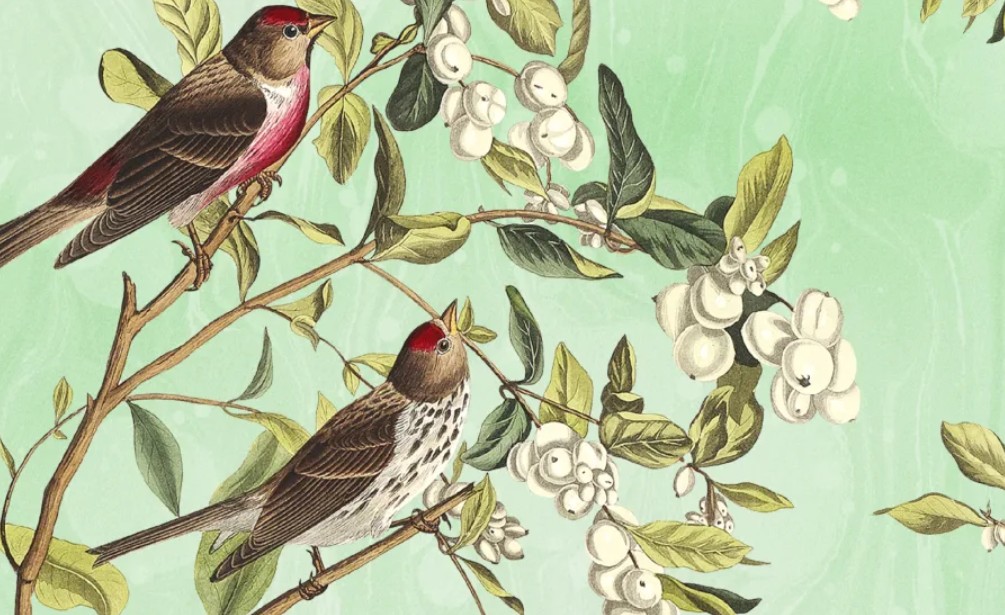
In Chinoiserie, nature is the very structure of the design. Tree branches guide the eye, birds provide focal points, and the entire composition is built around natural movements.
3.2 Storytelling Structure
One major difference between Chinoiserie and many other decorating styles lies in the way the layout is constructed.
Instead of using a continuously repeating motif, Chinoiserie often creates complete scenes. A long, outstretched flower branch, a perched bird, or a glimpse of architecture in the distance all contribute to the feeling of watching a story unfold.
3.3 Asymmetry
While classic Western design often emphasizes perfect balance, Chinoiserie prioritizes deliberate asymmetry.
The elements in the layout are often placed off-center but still create a harmonious overall effect. This gives a more natural, soft, and intimate feel.
This asymmetry is one of the factors that has helped Chinoiserie retain its distinctive charm for centuries.
3.4 Balancing Detail and Empty Space
A successful Chinoiserie design never covers the entire space with patterns.
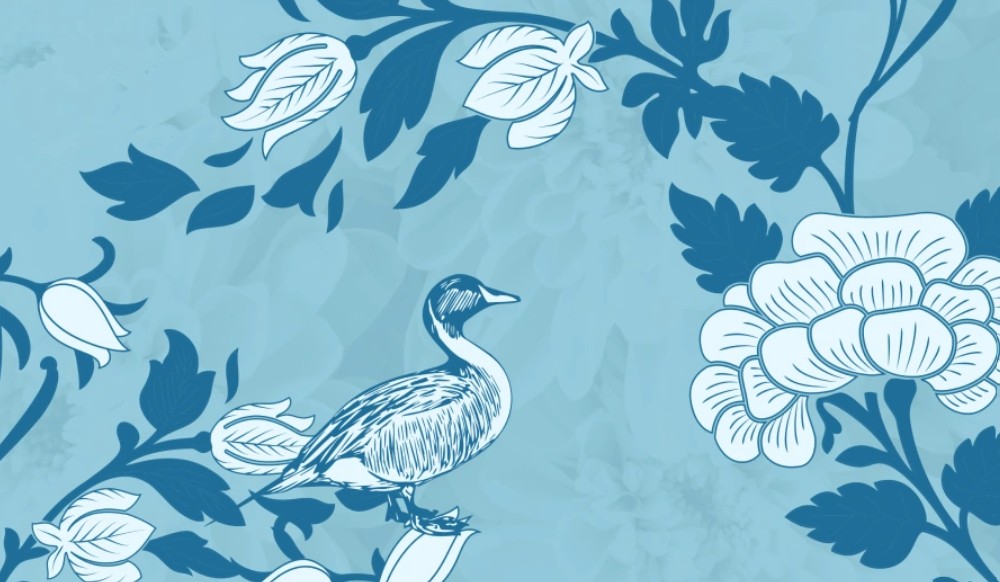
Instead, this style consistently maintains a balance between areas of rich detail and spacious open areas. It is this breathing space that allows the patterns to stand out and provides a sense of elegance similar to that of high-end porcelain.
3.5 Inspiration from Handmade Materials
Traditional Chinoiserie is associated with porcelain, silk, handcrafted wallpaper, and lacquerware. Therefore, even in modern digital design, this style often utilizes soft, brushstroke-like lines, smooth, glossy surfaces, or subtle textures.
3.6 Characteristic Color Palette
Cobalt blue and ivory white are the iconic color palette of Chinoiserie, influenced by Chinese porcelain. However, this style is not limited to just those two colors.
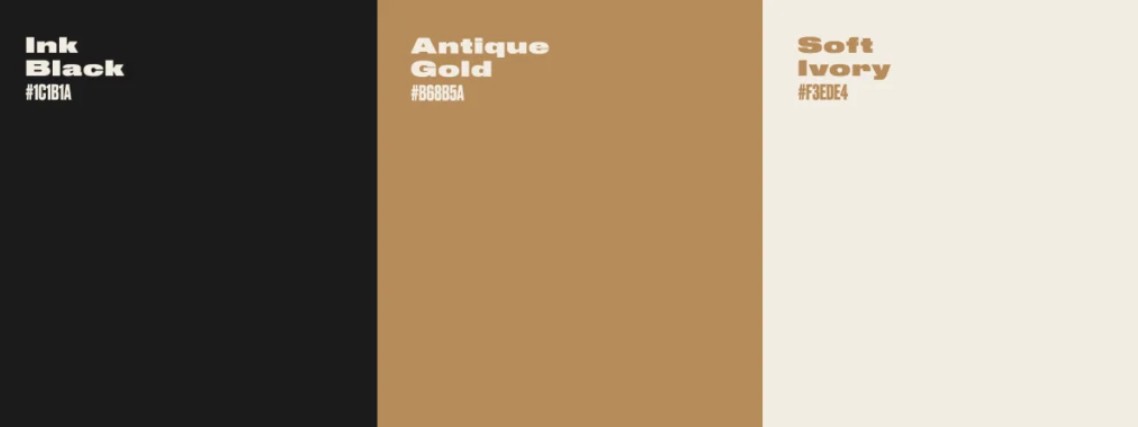
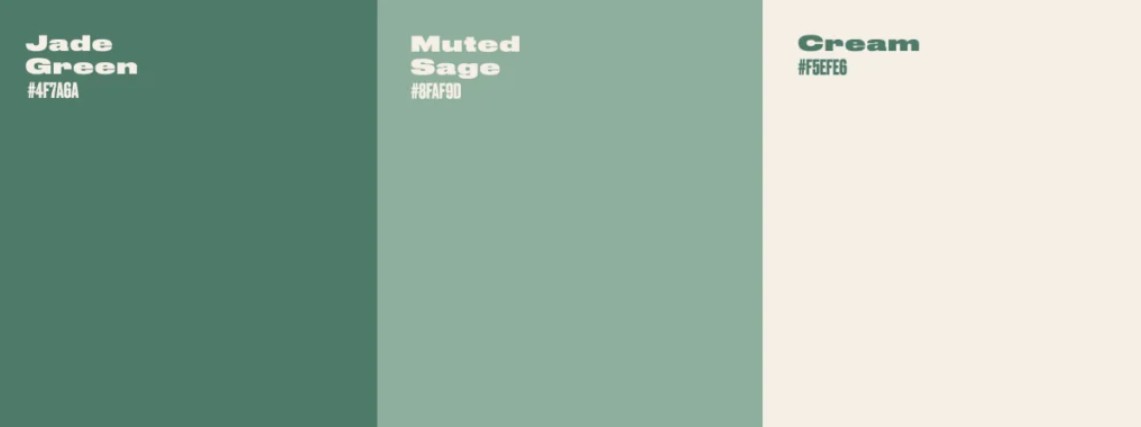
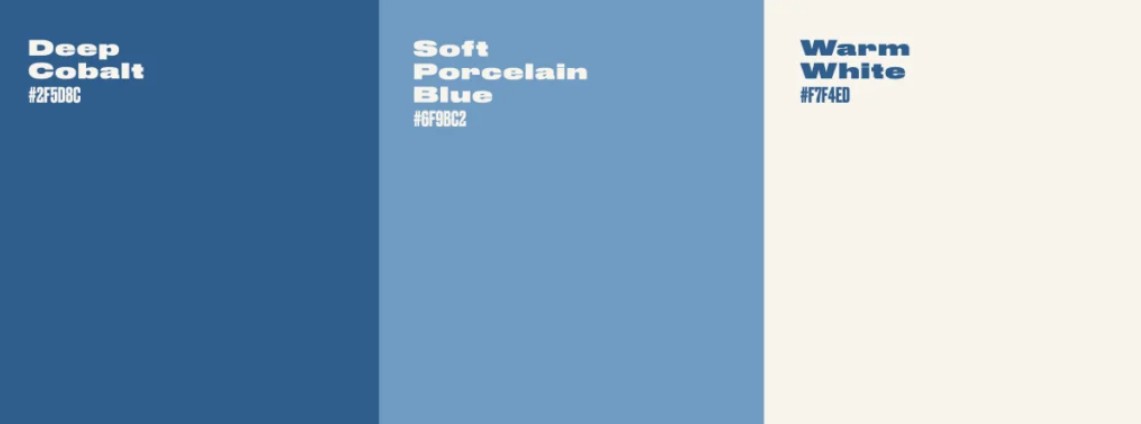
Today, designers also use color palettes such as black and gold, turquoise combined with cream, or neutral tones mixed with ink to create more modern versions of Chinoiserie.
4. Chinoiserie in Modern Graphic Design
One of the reasons for Chinoiserie's strong resurgence is its remarkable adaptability to contemporary design fields.
4.1 Product Packaging and Labeling
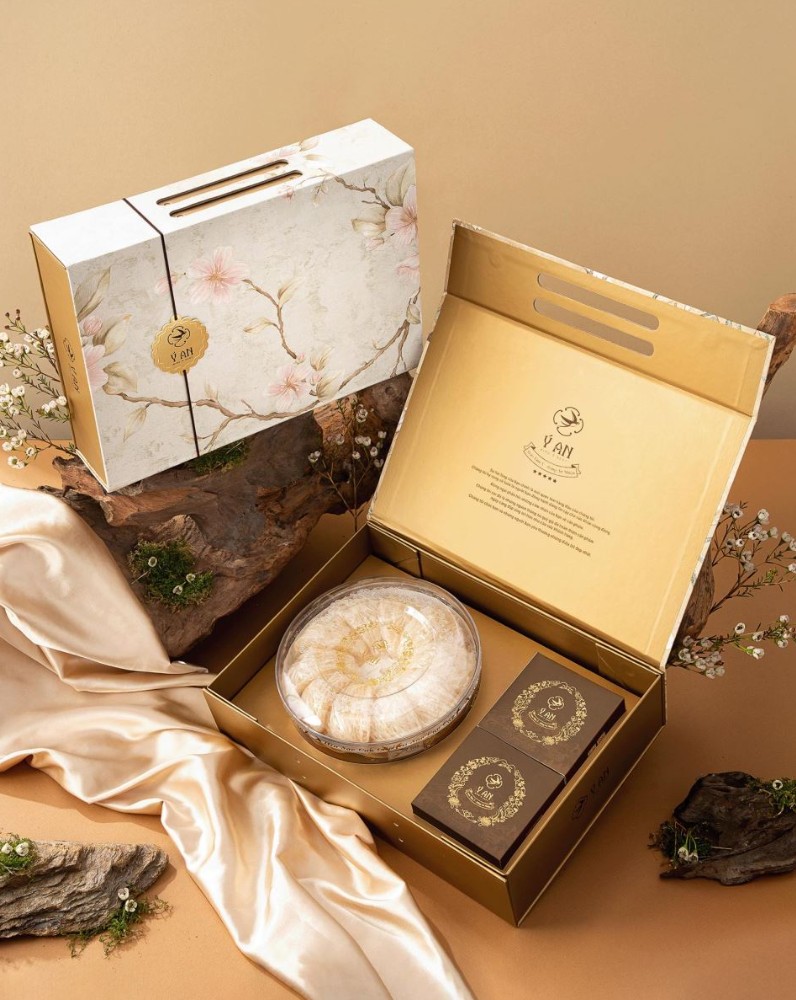
Products such as tea, perfume, cosmetics, scented candles, or high-end food often need to convey a sense of craftsmanship, sophistication, and rich cultural value.
A Chinoiserie-style packaging design can instantly create a sense of luxury and distinction on the shelves. Floral and animal details, along with a composition rich in depth, help the product stand out without the need for overly bright colors.
4.2 Design, Editing, and Printing
Art posters, book covers, magazine covers, and decorative paintings are ideal environments for Chinoiserie to fully showcase its beauty.
Unlike brand identity, which is limited by many conventions, editorial design allows creators to fully exploit layers of texture, materials, and visual depth.
Therefore, Chinoiserie often appears in high-end art or publishing projects.
4.3 Event Design and Wedding Invitations
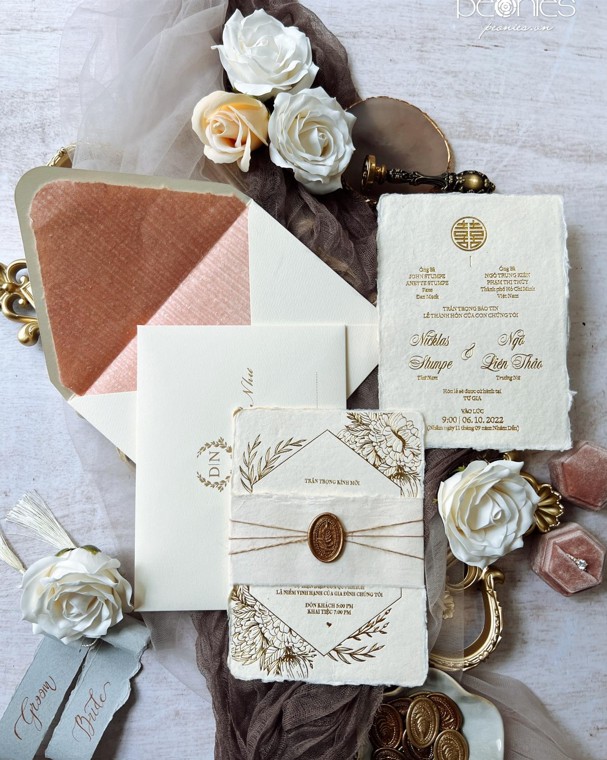
The romantic and nostalgic feel of Chinoiserie makes it a perfect choice for weddings and event planning.
From invitations and menus to signage and promotional materials, Chinoiserie helps create a formal, sophisticated, and emotionally rich atmosphere.
4.4 Social Media Content
Despite its many intricate details, Chinoiserie can still be effective on social media if used appropriately.
Instead of covering the entire layout with patterns, modern designers often use only one main element such as a bird, a flower branch, or a decorative frame, combined with simple typography and plenty of white space. This helps the design stand out on a small screen without being visually overwhelming.
4.5 Cases of Incompatibility
While beautiful, Chinoiserie isn't the solution for every brand.
Technology companies, digital applications, SaaS platforms, or brands pursuing extreme minimalism are often not suited to the high level of decoration of this style.
In such cases, Chinoiserie should only appear as supplementary details such as decorative borders, background patterns, or small accents to avoid affecting the clarity of the interface.
5. Conclusion
In modern design, Chinoiserie is no longer just a historical reinterpretation but has become a powerful source of creative inspiration for packaging, printing, branding, events, and many other fields. When used correctly, this style not only creates visual beauty but also conveys emotion, depth, and atmosphere that few other design trends can achieve.



















VIP Products







Best Selling Products
Autodesk All App Account Copyright
120 USD
Adobe Premiere Pro Account
99 USD
Adobe Photoshop Copyright - Full App
120 USD
Copyright Adobe Lightroom Account
59 USD
MidJourney Account
29 USD
Upgrade Genuine Office 365
49 USD
ChatGPT Plus Account (GPT-4)
16 USD
Freepik Premium Account
59 USD
Genuine Adobe Illustrator account
99 USD
Upgrade Duolingo Super
29 USD
Windows 10 & 11 Pro Key
36 USD
Genuine Cheap Canva Pro
39 USD
Upgrade genuine Capture One account
120 USD
Plugin Retouch4me
69 USD
Capcut Pro 1 Year
39 USD