
Best Selling Products

Adobe Photoshop Copyright - Full App
120 USD

Upgrade Duolingo Super
29 USD

MidJourney Account
29 USD

Capcut Pro 1 Year
39 USD

Adobe Premiere Pro Account
99 USD

Plugin Retouch4me
69 USD

Upgrade genuine Capture One account
120 USD

Upgrade Genuine Office 365
49 USD

Windows 10 & 11 Pro Key
36 USD

ChatGPT Plus Account (GPT-4)
16 USD
Autodesk All App Account Copyright
120 USD

Genuine Adobe Illustrator account
99 USD

Genuine Cheap Canva Pro
39 USD

Freepik Premium Account
59 USD

Copyright Adobe Lightroom Account
59 USD
Exploring Black Box AI: What's going on inside Black Box AI?
Nội dung
AI can predict, analyze, and make decisions quickly. However, in many cases, humans cannot know exactly what processes are going on inside. That's why this technology is called "black box AI."

1. Learn about Black Box AI
Black Box AI is a term used to describe artificial intelligence systems whose internal decision-making processes cannot be explained or understood by humans. In these systems, users can only observe the input data and output results, while the intermediate processing steps within the model are either opaque or too complex to analyze in detail. The concept of a "black box" originates from science and engineering, where a system is called a black box if we only know how it reacts to input data but cannot see or understand its internal mechanisms.
In the field of artificial intelligence, the black box phenomenon often occurs in deep learning models and artificial neural networks. These models consist of multiple data processing layers connected in a complex structure. Each layer performs mathematical transformations on the input data, then transmits the results to the next layer. Through training with large datasets, the model will self-adjust its parameters to optimize its predictive or classification capabilities. Once the model is fully trained, it can produce highly accurate results, but precisely determining the role of each parameter in the decision-making process is extremely difficult.

This makes many AI systems behave like a black box: they receive input data, process the information in some way, and produce a result, but humans cannot easily explain why that result was produced. In some cases, even those who built and trained the model cannot fully explain its internal logic. This is significantly different from traditional algorithms, where each step of data processing can be clearly tracked and explained.
2. How Black Box AI works
To understand why modern artificial intelligence systems become "black boxes," we need to consider how they are built and trained. Most Black Box AI models rely on advanced machine learning techniques, particularly deep learning. In deep learning, the model consists of multiple layers of artificial neural networks, each responsible for processing a portion of the data. The artificial neurons in the network receive input signals, apply mathematical calculations, and transmit the results to other neurons in the network.
During training, the model is provided with a large dataset including input data and desired outcomes. The machine learning algorithm compares the model's predictions with the actual results and adjusts parameters to reduce errors. This process is repeated many times until the model achieves the desired accuracy.
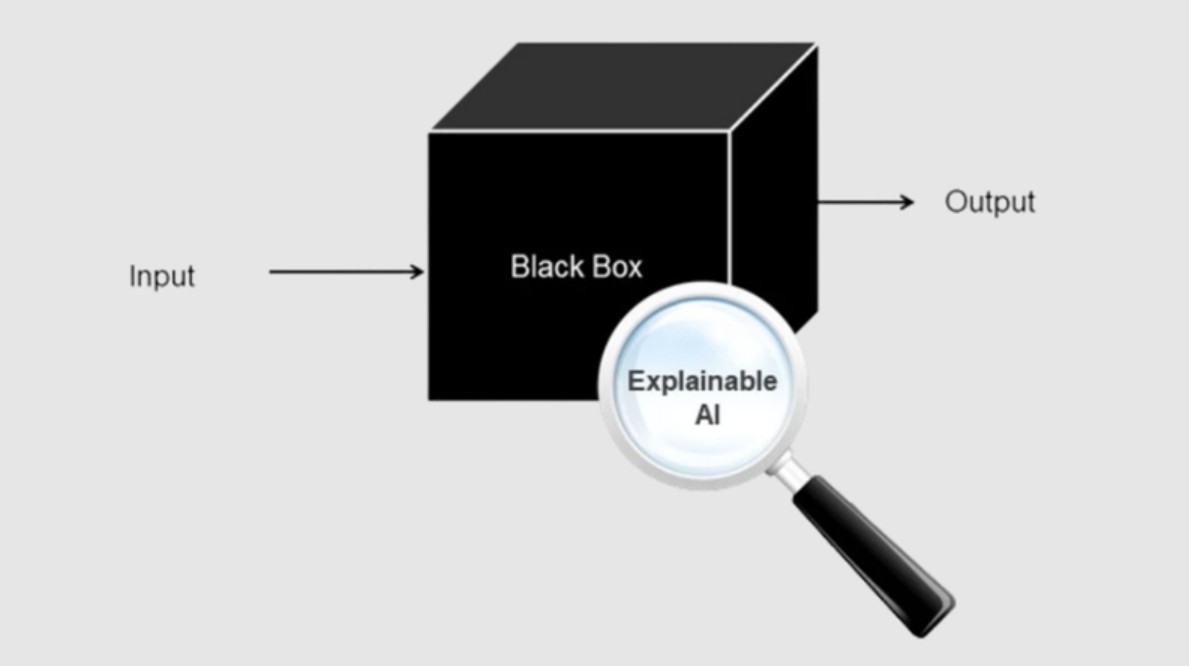
The problem is that the number of parameters in modern deep learning models can reach millions or billions. Each parameter represents a weight in the neural network, and all these parameters together form an extremely complex system. As data travels through the network, it undergoes many different layers of nonlinear transformations, making the relationship between input and output difficult to analyze.
Furthermore, deep learning models have the ability to automatically extract features from data. Instead of requiring humans to pre-identify important factors, the model can automatically find useful features in the data through the learning process. This increases the system's performance and accuracy but also reduces its explainability. As a result, we have a system that can make very accurate predictions but is difficult to explain how it arrived at those conclusions.
3. Why is Black Box AI widely used?
Despite its lack of transparency, Black Box AI is still widely used in many fields. The first and most important reason is its performance. Deep learning models often yield more accurate results than simpler, more easily interpreted models, especially when processing large and complex datasets. In tasks such as image recognition, speech recognition, or natural language processing, Black Box AI systems have achieved superior performance compared to traditional methods.
Another reason is the ability to process unstructured data. In the modern world, the vast majority of data is generated in the form of natural images, videos, audio, or text. These types of data are difficult to process with traditional algorithms but are well-suited to deep learning models. Black Box AI allows organizations to leverage this massive data source to create business value and improve services.
Furthermore, keeping the model's workings secret helps companies protect their technology. In many cases, algorithms and training data are critical assets of the business. If this information were made public, competitors could easily copy the technology and reduce the company's competitive advantage.
4. Practical applications of Black Box AI
Black Box AI is currently being applied in many different areas of life and the economy. In the healthcare field, AI systems can analyze X-ray, MRI, or CT scan images to assist doctors in diagnosing diseases. Thanks to its ability to process large amounts of data and detect complex patterns, AI can recognize abnormalities that humans might miss.

In the financial sector, AI is used to assess credit risk, detect fraud, and predict market trends. Banks and financial institutions use machine learning models to analyze customers' transaction history and determine their ability to repay debts. Simultaneously, AI can also detect unusual transactions with signs of fraud in real time.
The automotive industry is also adopting Black Box AI in the development of self-driving cars. These systems use data from cameras, radar, and sensors to recognize their surroundings and make driving decisions. The fast and accurate processing capabilities of AI enable self-driving cars to react to complex traffic situations in real time.
Furthermore, Black Box AI is also used in e-commerce and marketing to analyze user behavior and personalize customer experiences. Product recommendation systems can predict user preferences based on their shopping history and online behavior. This helps businesses increase sales and improve customer experience.
5. Benefits of Black Box AI
One of the biggest benefits of Black Box AI is its ability to handle complex problems with high accuracy. Thanks to its ability to learn from big data and detect hidden patterns, AI can make predictions that humans would find difficult to achieve using traditional methods.
Furthermore, AI systems can operate continuously at very high processing speeds. This is particularly useful in fields requiring real-time data analysis, such as financial transactions, supply chain management, or security monitoring.
Black Box AI also helps automate many processes within businesses. AI systems can handle repetitive tasks, analyze data, and make recommendations to humans. This saves costs, increases operational efficiency, and allows employees to focus on more creative or strategic work.

6. Limitations and Risks of Black Box AI
Despite its significant benefits, Black Box AI also has many limitations and risks. One of the biggest problems is a lack of transparency. When an AI system makes a decision but cannot clearly explain the reasoning, users may find it difficult to trust its outcome. This is especially important in fields such as healthcare, law, or finance, where decisions can directly impact people's lives.
Furthermore, AI models can contain biases from the training data. If the data does not represent the entire population or contains social biases, the AI system may make unfair decisions. This has become a major problem in deploying AI in recruitment or credit rating systems.
Another challenge is the difficulty in testing and debugging. When an AI system malfunctions, identifying the specific cause among millions of model parameters is extremely difficult. This makes improving or adjusting the model complex and time-consuming.
In the future, balancing AI performance and interpretability will become key factors in the development and application of artificial intelligence. If these challenges are addressed, Black Box AI will continue to play a crucial role in shaping the future of technology and society.




















VIP Products







Best Selling Products
Adobe Photoshop Copyright - Full App
120 USD
Upgrade Duolingo Super
29 USD
MidJourney Account
29 USD
Capcut Pro 1 Year
39 USD
Adobe Premiere Pro Account
99 USD
Plugin Retouch4me
69 USD
Upgrade genuine Capture One account
120 USD
Upgrade Genuine Office 365
49 USD
Windows 10 & 11 Pro Key
36 USD
ChatGPT Plus Account (GPT-4)
16 USD
Autodesk All App Account Copyright
120 USD
Genuine Adobe Illustrator account
99 USD
Genuine Cheap Canva Pro
39 USD
Freepik Premium Account
59 USD
Copyright Adobe Lightroom Account
59 USD