Best Selling Products

Upgrade Genuine Office 365
49 USD

Plugin Retouch4me
69 USD

Autodesk All App Account Copyright
120 USD

Upgrade Duolingo Super
29 USD

Genuine Cheap Canva Pro
39 USD

ChatGPT Plus Account (GPT-4)
16 USD

Adobe Photoshop Copyright - Full App
120 USD

MidJourney Account
29 USD

Capcut Pro 1 Year
39 USD

Copyright Adobe Lightroom Account
59 USD

Adobe Premiere Pro Account
99 USD

Upgrade genuine Capture One account
120 USD

Windows 10 & 11 Pro Key
36 USD

Freepik Premium Account
59 USD

Genuine Adobe Illustrator account
99 USD
Network Security: Important things you need to know about network security.
Nội dung
Network security is fundamental to ensuring the safety of data and internet-connected systems. It encompasses various technologies and methods aimed at preventing threats. Understanding network security helps you protect your information more effectively.

1. Learn about Network Security
Network security is a set of measures, technologies, and policies designed to protect computer networks from threats such as unauthorized access, data theft, cyberattacks, or system sabotage. The primary goal of network security is to ensure that data and resources within the network are only accessed by authorized individuals or devices. This helps prevent unauthorized intrusions and protects the integrity of the information system.
In a modern network system, data is constantly being transmitted between numerous devices and servers. Without proper security measures, data can be intercepted, copied, or altered by malicious actors. Network security helps protect data during transmission and storage within the system.
Network security focuses not only on preventing external attacks but also on controlling internal system activities. In many cases, threats can originate from internal users or from insecure devices connected to the network. Therefore, an effective network security system needs to be able to control access, monitor activity, and detect unusual behavior throughout the entire system.

In addition to technological solutions, the human element also plays a crucial role in network security. Users need to be trained in cybersecurity awareness to avoid mistakes that could create security vulnerabilities. For example, using weak passwords, downloading files from unknown sources, or clicking on malicious links can lead to system attacks. Therefore, network security is a combination of technology, management processes, and user behavior.
2. The Importance of Network Security
Network security plays a crucial role in protecting data and ensuring the stability of information technology systems. In the modern business environment, data is considered a vital asset for businesses. Information such as customer data, business strategies, financial records, and research data all need to be protected from theft or misuse.
One of the biggest threats to network systems is hacker attacks. Attackers can exploit security vulnerabilities to gain access to systems and steal critical data. In some cases, they may install malware on systems to control devices or destroy data.
Furthermore, cyberattacks can disrupt system operations. For example, denial-of-service attacks can overload servers and render systems unable to serve users. This can cause significant damage to businesses that rely on online services.
In addition to protecting data and systems, network security helps businesses maintain their reputation and customer trust. When an organization experiences a data leak or cybersecurity incident, its reputation can be severely damaged. Customers may lose faith in the company's ability to protect their personal information.

Furthermore, many industries today must comply with strict regulations regarding data protection and cybersecurity. Implementing a network security system not only helps protect businesses but also ensures compliance with relevant legal regulations.
3. How does Network Security work?
Network security systems operate on the principle of multi-layered defense to protect the system against various threats. Each security layer is responsible for controlling and monitoring a part of the network system, from external access points to internal devices and applications.
One of the most important components of network security is the firewall. A firewall acts as a protective barrier between the internal network and the internet. It inspects data packets entering and leaving the network, then applies security rules to determine whether that data is allowed to access the system.
In addition to firewalls, intrusion detection and prevention systems also play a crucial role in network security. These systems monitor network traffic and analyze activity to detect anomalies. When suspicious activity is detected, the system can send alerts to the administrator or automatically block the connection.
Data encryption is also a crucial part of network security. When data is encrypted, even if it is intercepted during transmission, an attacker cannot read the data's contents without the decryption key. This helps protect sensitive information when transmitted over the internet.
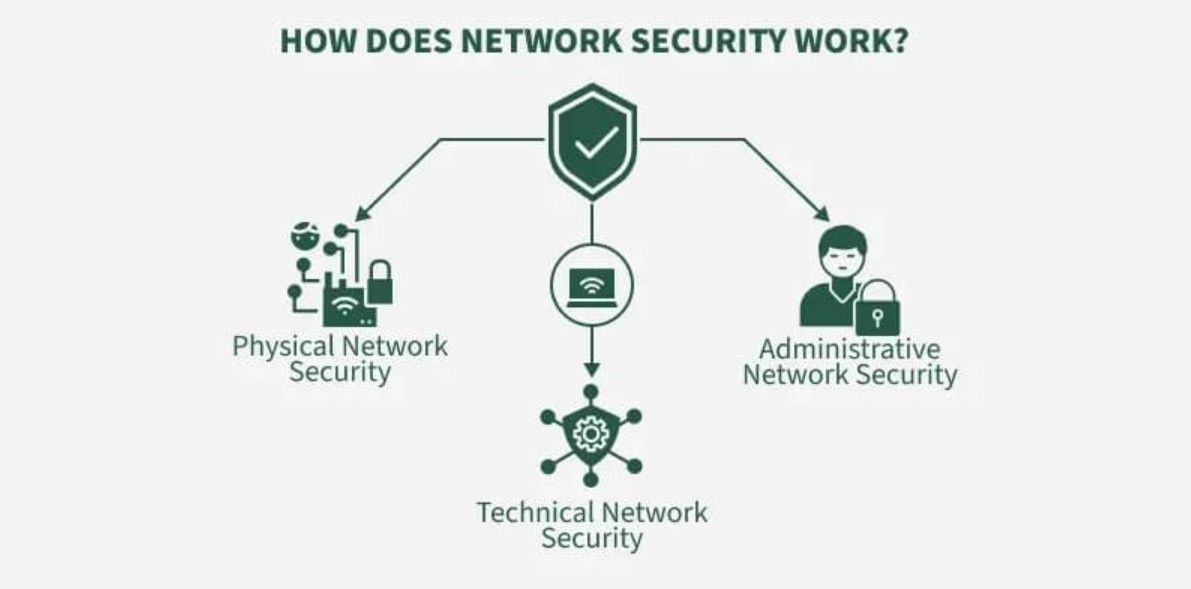
Furthermore, authentication and access management systems help ensure that only authorized individuals can access network resources. Modern authentication methods such as multi-factor authentication enhance the system's security.
4. Common types of Network Security
In practice, network security encompasses a wide range of technologies and solutions aimed at protecting systems from diverse threats. One of the most common is network access control. This system allows administrators to determine which devices are permitted to connect to the network and which are denied access.
Another crucial component is application security. Web applications and enterprise software are often targets of cyberattacks. Testing and patching vulnerabilities in applications helps reduce the risk of attack.
In addition, data loss prevention technology is also used to protect sensitive information. This technology monitors data during use and transmission to ensure that sensitive data is not leaked from the system.
Intrusion detection and prevention systems also play a crucial role in network security. They help detect attacks and prevent them before they cause damage to the system.
In addition, solutions such as virtual private networks, email security, and antivirus software are also important components of a network security system. When combined, these solutions form a comprehensive protection system for a computer network.

5. Benefits of Network Security
Implementing a network security system offers numerous benefits to businesses and organizations. First, it helps protect data from cyberattacks and unauthorized access. This is especially important for businesses that store customer information or critical business data.
Network security also helps reduce the risk of cybersecurity incidents. When a system is well protected, the likelihood of being attacked or infected with malware is significantly reduced. This helps businesses avoid financial losses and operational disruptions.
Furthermore, network security helps businesses manage their systems more effectively. Security monitoring tools allow administrators to track network activity and detect problems before they become serious threats.

6. Limitations and Challenges of Network Security
Despite its many benefits, implementing network security also presents several challenges. One of the biggest difficulties is the investment cost for a security system. Businesses need to invest in hardware, software, and personnel to build and maintain an effective security system.
Furthermore, managing security systems requires a high level of expertise. Organizations need a team of cybersecurity professionals to monitor the systems and handle security incidents.
Another challenge is the continuous evolution of cyber threats. Hackers are constantly seeking new methods to bypass security systems. Therefore, security solutions need to be updated regularly to counter new forms of attack.
Furthermore, the human element is also a weakness in network security. User errors can create security vulnerabilities and provide opportunities for attackers to infiltrate the system.
In the future, as technology continues to evolve and cyber threats become increasingly sophisticated, the role of network security will become more crucial than ever. Organizations need to develop comprehensive security strategies that combine technology, management processes, and user awareness training. When all these elements are properly implemented, the network system will become more secure and reliable, creating a solid foundation for sustainable growth in the digital environment.





















VIP Products








Best Selling Products
Upgrade Genuine Office 365
49 USD
Plugin Retouch4me
69 USD
Autodesk All App Account Copyright
120 USD
Upgrade Duolingo Super
29 USD
Genuine Cheap Canva Pro
39 USD
ChatGPT Plus Account (GPT-4)
16 USD
Adobe Photoshop Copyright - Full App
120 USD
MidJourney Account
29 USD
Capcut Pro 1 Year
39 USD
Copyright Adobe Lightroom Account
59 USD
Adobe Premiere Pro Account
99 USD
Upgrade genuine Capture One account
120 USD
Windows 10 & 11 Pro Key
36 USD
Freepik Premium Account
59 USD
Genuine Adobe Illustrator account
99 USD