Best Selling Products
Upgrade genuine Capture One account
120 USD
Adobe Photoshop Copyright - Full App
120 USD
Copyright Adobe Lightroom Account
59 USD

Freepik Premium Account
59 USD
Genuine Adobe Illustrator account
99 USD

ChatGPT Plus Account (GPT-4)
16 USD
Upgrade Duolingo Super
29 USD
Adobe Premiere Pro Account
99 USD
Upgrade Genuine Office 365
49 USD

Capcut Pro 1 Year
39 USD
Genuine Cheap Canva Pro
39 USD

Autodesk All App Account Copyright
120 USD
Windows 10 & 11 Pro Key
36 USD

MidJourney Account
29 USD
Plugin Retouch4me
69 USD
For beginners, Canon or Nikon: which is more economical and effective?
Nội dung
Canon and Nikon are two names that have been associated with photography for decades. When entering the world of cameras, whether you''re a beginner or looking to upgrade, most of us face a familiar question: should I choose Canon or Nikon? Both brands have products across all segments, from entry-level cameras for beginners to professional cameras for journalism and sports. Therefore, the differences often lie in small details of user experience, lens ecosystem, and budget. This article compares the two brands across seven important aspects, helping you find the truly right choice.
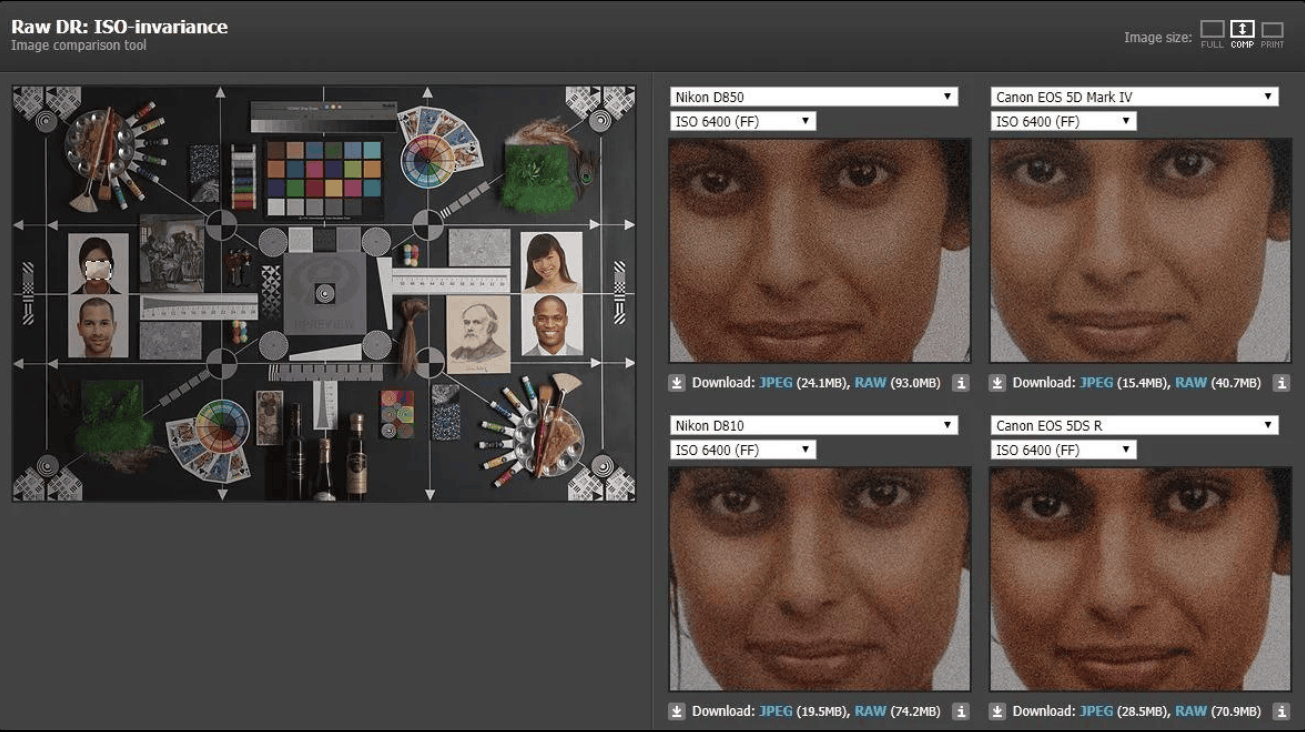
1. Comparing Canon and Nikon across 7 criteria
1.1 Body design and product range
In terms of product variety, Canon has an edge over Nikon, especially in the crop sensor camera segment for general users. From compact entry-level models to semi-professional lines, Canon has built a very extensive product catalog, making it easy for buyers to find a camera that matches their budget and needs. In the mirrorless segment, Canon has the EOS R series with many product tiers, ranging from compact APS-C models to full-frame bodies for professional photographers.
In terms of design, Canon cameras are known for their user-friendliness. The button layout is logical, the menus are clear, and the touchscreen is intuitive, allowing even beginners to quickly get used to them. Nikon takes a different approach. Nikon cameras often feel solid and sturdy in the hand, with a traditional mechanical style and many physical control buttons for those who prefer quick adjustments. However, you may need more time to fully understand the button and menu system on Nikon cameras, especially when switching from another brand. Some of Nikon's modern mirrorless models have a very attractive classic look, suitable for those who love retro style and want a camera with a unique personality.
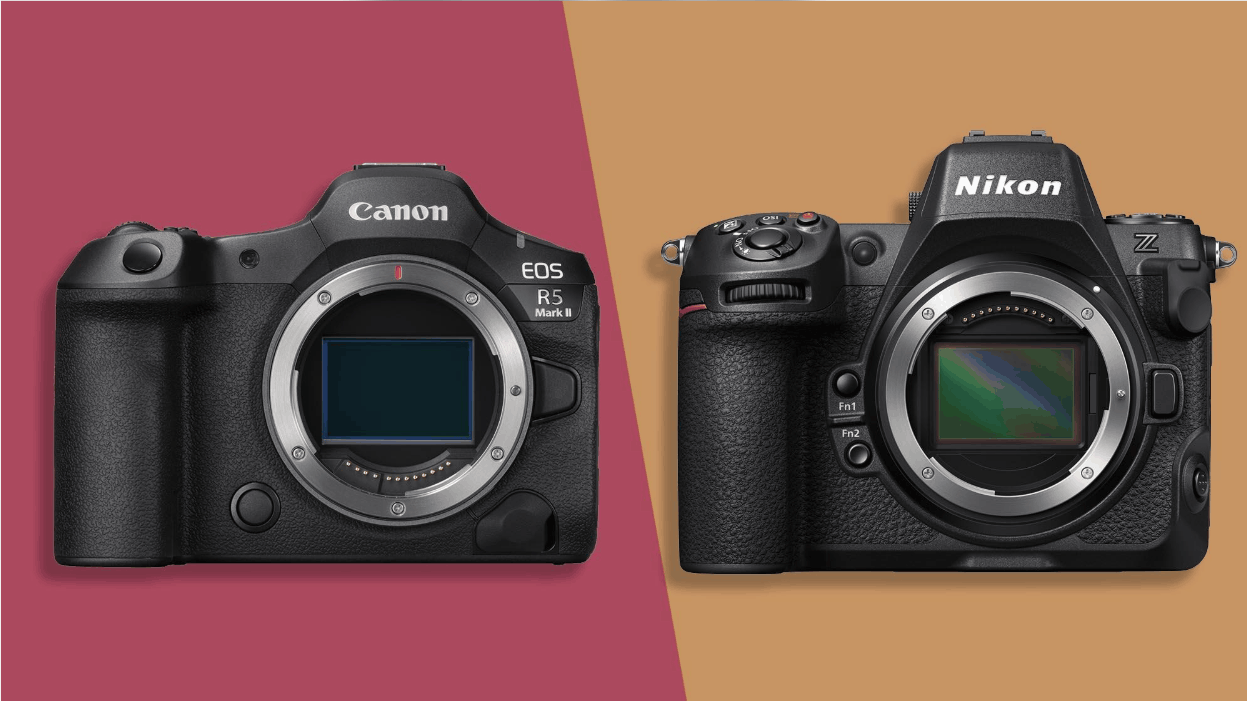
1.2 Image Sensor
In terms of sensor size, the two manufacturers offer nearly identical options: APS-C for the mainstream segment and full-frame for the high-end segment. The difference lies in how each manufacturer optimizes the sensor.
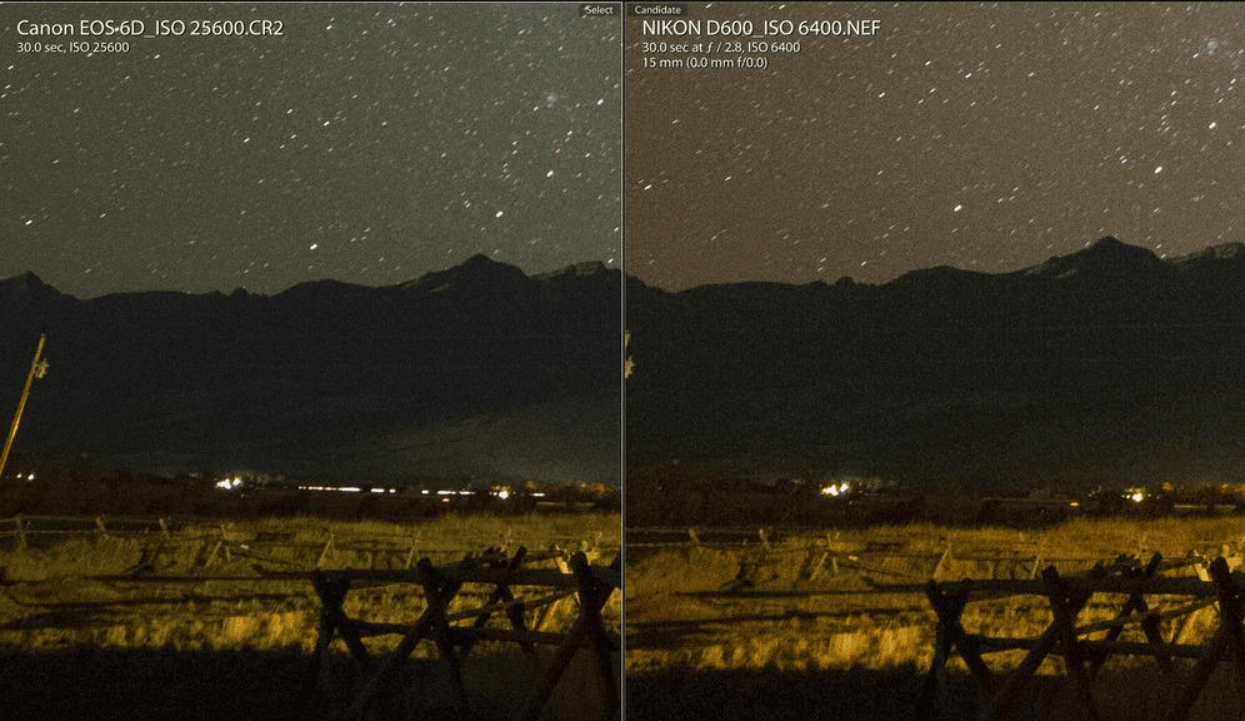
Nikon is often highly regarded for its ability to retain detail and dynamic range. Nikon's photos taken in low light or scenes with large contrast allow for the enhancement of dark areas in post-processing while maintaining minimal noise, resulting in clean and deep images. Canon, on the other hand, focuses on balancing resolution, data readout speed, and integrated autofocus technology on the sensor, exemplified by Dual Pixel CMOS AF. This technology allows Canon sensors not only to capture images but also to effectively track subjects, proving very useful for video recording and portrait photography.
For the average user, sensor differences rarely determine the success or failure of a photograph. Composition, lighting, and post-processing skills still play a much larger role. However, if you frequently shoot low-light scenes or high-contrast landscapes, Nikon's advantage in detail is worth considering.
1.3 Lens System
Lenses are a long-term investment, often worth more than the camera body itself, so this is perhaps the most important criterion when choosing a brand. Both Canon and Nikon possess vast collections of lenses accumulated over decades, including dozens of models ranging from wide-angle and standard to telephoto, along with many high-end lines boasting excellent optical quality.
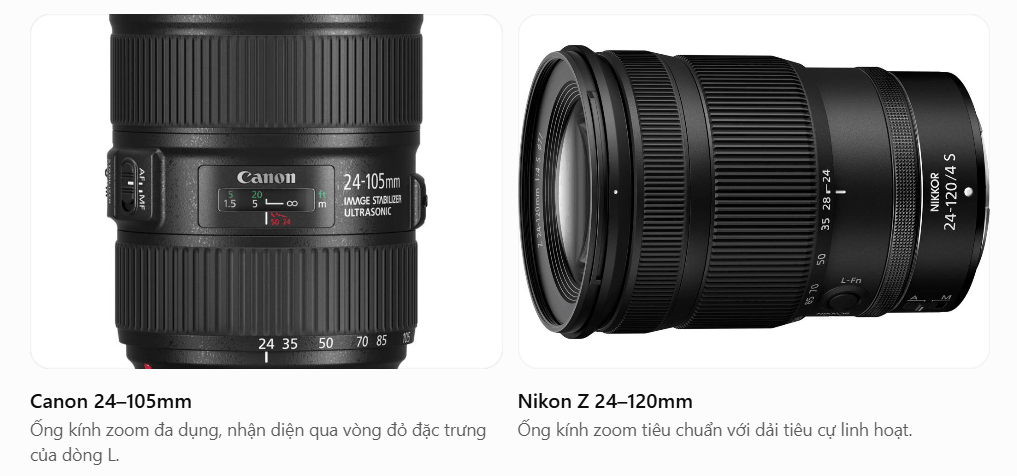
Canon has an advantage in terms of price and the wide variety of interchangeable lenses. Many Canon lens models, even used ones, are affordably priced, making it easier for beginners to build a setup without excessive financial pressure. In the RF system, Canon boasts high-end L series lenses with bold optical designs, although they are quite expensive. Furthermore, Canon maintains strict control over third-party production of autofocus lenses for the RF mount, limiting third-party options in this system.
Nikon boasts a Z mount with a large diameter and short mount distance, allowing for the design of high-quality lenses, especially the S line, which is highly regarded for its sharpness from the center to the edges of the frame. Nikon is also more open to third-party manufacturers like Viltrox, Tamron, and Sigma, offering users many affordable options. Furthermore, both manufacturers offer adapters to reuse older DSLR lenses on mirrorless camera bodies, significantly saving upgrade costs for users.
1.4 Focusing performance and continuous shooting speed
In this respect, the two brands are almost on par. The autofocus capabilities of both Canon and Nikon have reached a very high level, especially on newer mirrorless camera bodies with the ability to recognize eyes, faces, people, animals, and even moving vehicles.
Canon excels in the smoothness and precision of its Dual Pixel AF, especially when shooting video or portraits with large apertures. This system tracks subjects very stably, with minimal subject hunting. Nikon also responds strongly with intelligent subject recognition algorithms, and its high-end models boast impressive continuous shooting speeds, making them well-suited for sports and wildlife photography. On older DSLR models, the continuous shooting specifications of both brands are comparable within the same segment.
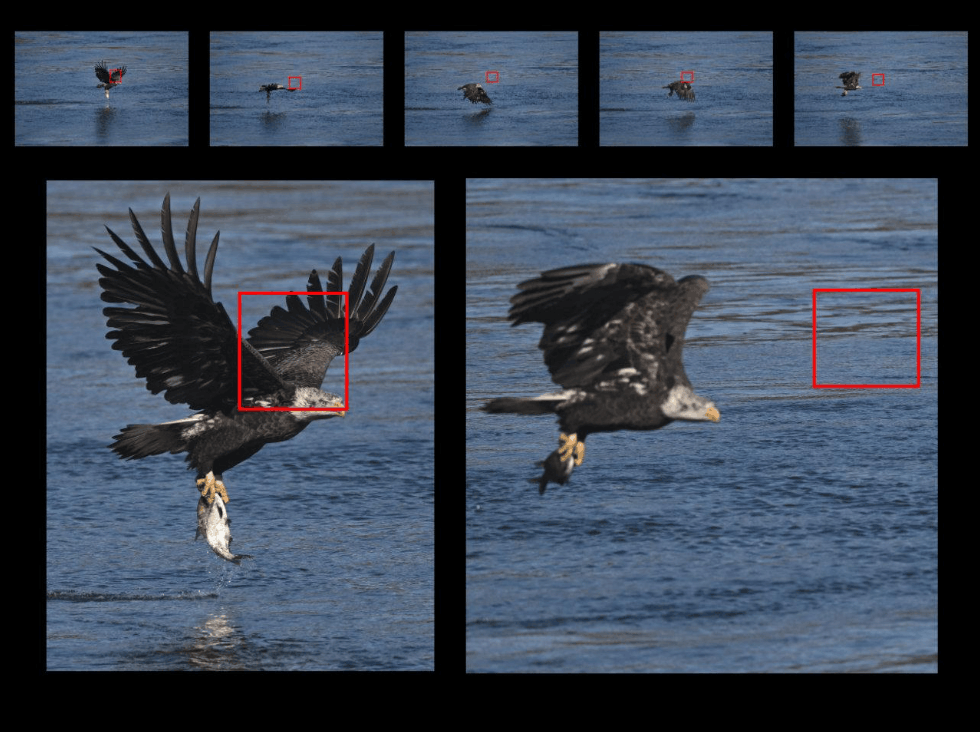
So instead of comparing every number, you should try holding the camera and taking a test shot of the subjects you encounter most often. A real-world feel is usually more reliable than the specifications listed on the label.
1.5 Image Quality
Each brand has its own way of expressing color, and this is often what makes users loyal to the brand. Photos from Canon cameras are known for their bright tones, beautiful, warm, and eye-catching skin tones right from the original file. This allows many people to use the photos immediately after shooting, significantly reducing editing time, making them very suitable for portraits, weddings, events, and landscapes that require vibrant colors.
Nikon pursues a more realistic approach. Colors from Nikon cameras are often true to the scene, with neutral tones and rich detail, giving editors plenty of room for creativity. If you're familiar with post-processing in Lightroom or Capture One and want complete control over your image style, this characteristic will be very useful. Conversely, if you prefer to have beautiful photos right out of the box, Canon's color tones will satisfy you more.
1.6 Battery life
In terms of battery life, Nikon is generally rated slightly higher than Canon, especially in its DSLR models. Some Nikon DSLR models offer significantly more shots per charge than competitors in the same segment, making them ideal for long trips or extended shooting sessions without access to a charging station.
It's worth noting that when switching to mirrorless cameras, both brands have shorter battery life than DSLRs due to the need to continuously power the electronic viewfinder and screen. However, newer generations of batteries and camera bodies have improved considerably. Regardless of the brand, a spare battery is almost a must-have accessory, especially for event photographers, travelers, or videographers.
1.7 Price
With the same budget, Canon generally offers more options, especially in the entry-level and semi-professional segments. Canon lenses are generally easier to buy, and the used market is also vibrant, making it convenient for those who want to start on a low budget. In the professional segment, Canon also tends to be more competitive in terms of price.
Nikon doesn't offer much differentiation in the amateur segment, and in the mid-range, Nikon often provides excellent value for money, with high-quality bodies and consistent image quality. Nikon also benefits from having many third-party lenses on the Z mount. When budgeting, you should factor in the cost of lenses, memory cards, batteries, and accessories, rather than just looking at the price of the camera body.
2. Conclusion: Which is the right choice for you, Canon or Nikon?
After comparison, it's clear that no single brand is the absolute winner. Each brand has its own strengths and is suited to different user groups.
You should consider Canon if you prioritize ease of use, a wide product range, diverse lenses at reasonable prices, and beautiful colors right from the original file. Canon is especially suitable for beginners, portrait photographers, event and travel photographers, and those who shoot video frequently thanks to its smooth autofocus system.
You should consider Nikon if you value realistic image detail, good dynamic range, a solid body, and long battery life. Nikon is also appealing to those who enjoy doing their own post-processing, landscape and street photography enthusiasts, and those who want to utilize a wide range of third-party lenses.
The most practical advice is to clearly define what you usually photograph, your overall budget, and then go to a store to try out both brands. The feel in your hand, the layout of the buttons, and the actual image colors will help you make a more accurate decision than any comparison chart. Whether you choose Canon or Nikon, you'll own a reliable system capable of accompanying you on your creative journey for many years to come.















VIP Products



Best Selling Products
Upgrade genuine Capture One account
120 USD
Adobe Photoshop Copyright - Full App
120 USD
Copyright Adobe Lightroom Account
59 USD
Freepik Premium Account
59 USD
Genuine Adobe Illustrator account
99 USD
ChatGPT Plus Account (GPT-4)
16 USD
Upgrade Duolingo Super
29 USD
Adobe Premiere Pro Account
99 USD
Upgrade Genuine Office 365
49 USD
Capcut Pro 1 Year
39 USD
Genuine Cheap Canva Pro
39 USD
Autodesk All App Account Copyright
120 USD
Windows 10 & 11 Pro Key
36 USD
MidJourney Account
29 USD
Plugin Retouch4me
69 USD