Best Selling Products

Plugin Retouch4me
69 USD

Upgrade Genuine Office 365
49 USD

Upgrade genuine Capture One account
120 USD

Freepik Premium Account
59 USD

Adobe Photoshop Copyright - Full App
120 USD

Windows 10 & 11 Pro Key
36 USD

Upgrade Duolingo Super
29 USD

Adobe Premiere Pro Account
99 USD

Genuine Cheap Canva Pro
39 USD

Genuine Adobe Illustrator account
99 USD

Capcut Pro 1 Year
39 USD

Copyright Adobe Lightroom Account
59 USD

MidJourney Account
29 USD

ChatGPT Plus Account (GPT-4)
16 USD

Autodesk All App Account Copyright
120 USD
GPT-6 Revealed: A Super AI Model Capable of "Thinking" and "Remembering" Like Humans
Nội dung
- 1. What features will the upcoming GPT-6 have?
- 1.1. Long-term memory and personalization
- 1.2. Agent capabilities and task automation
- 1.3. Multimodal expansion to real-world video and continuous sensing.
- 1.4. Detail customization experts and field specialists
- 1.5. Performance, latency, and on-device or edge capabilities
- 1.6. Better theory, practice, and a better "thinking" system.
- 2. What architecture will GPT-6 use?
- 2.1. Is GPT-6 still a Transformer or something new?
- 2.2. Modular, sparse design with an emphasis on efficiency.
- 3. How does GPT-6 compare to Google's Gemini 3.0?
- 3.1. Capability Posture
- 3.2. Differentiating Factors
GPT-6 is not only more powerful but also smarter, with its long-term memory system and contextual self-learning capabilities.
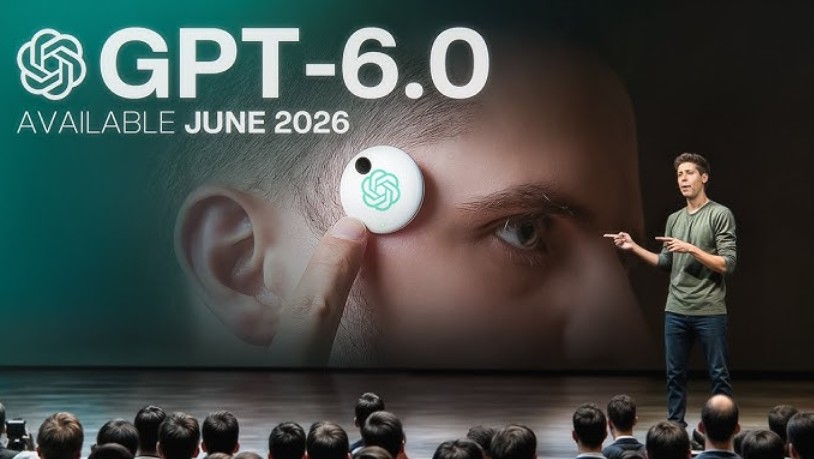
From GPT-4 to GPT-5, each version brought breakthroughs in language comprehension, content creation, and multimodal integration. Now, all attention is focused on the increasingly talked-about GPT-6 , the successor being quietly developed by OpenAI and expected by the community to usher in a new era of artificial intelligence capable of thinking, remembering, and collaborating like real humans.
Not only OpenAI, but its competitors are also accelerating their progress. DeepMind has almost completed Gemini 3.0 , the successor to the popular Gemini model. While GPT-6 is expected to focus on representation and personalization, Gemini 3.0 emphasizes deep reasoning, multimodal thinking, and integration into the Google Workspace ecosystem. These two approaches, though different, both aim for the same goal: to move AI from the stage of "answering questions" to "acting and thinking alongside humans."
1. What features will the upcoming GPT-6 have?
GPT-6 will not only be a larger model but a system capable of adapting, learning, and remembering over time, providing an experience closer to how humans think and communicate.
1.1. Long-term memory and personalization
One of the most anticipated features of GPT-6 is its long-term memory system: a mechanism capable of remembering and reusing information from previous interaction sessions. While previous generations of GPT could only "remember" within the contextual window of a few tens of thousands of tokens, GPT-6 is expected to surpass this limitation by integrating stable state memory that can be accessed dynamically.
This means GPT-6 will not only remember what the user says in the current conversation, but also store long-term information such as preferences, communication style, ongoing projects, or interaction history. For example, if you frequently ask GPT to help write design content in a minimalist style, it will remember this preference and automatically apply it in subsequent instances, without you having to remind it.
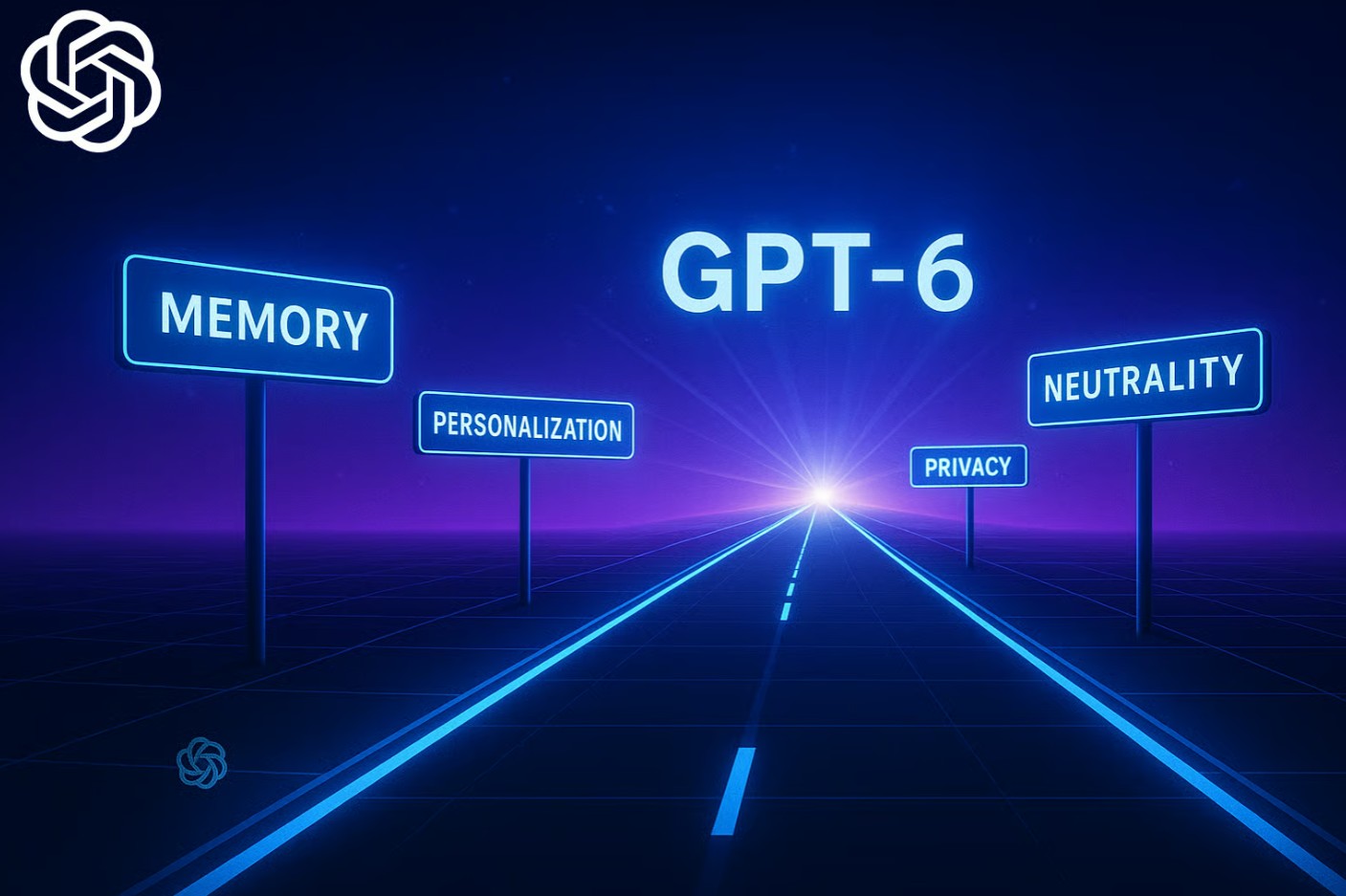
However, OpenAI also seems to place a strong emphasis on the privacy and transparency of this system. Users can view, edit, or delete items in memory at any time. The goal of this feature is not to collect data, but to help AI become a true collaborative partner with a reliable memory, capable of accompanying users long-term while ensuring absolute trust and control.
When memory is combined with personalization, GPT-6 will not only provide correct answers but also appropriate answers, reflecting each individual's unique style and context. This represents a shift from "AI answering questions" to "AI understanding and accompanying humans."
1.2. Agent capabilities and task automation
If there's one phrase that summarizes GPT-6's vision, it's Agent AI. Instead of simply responding to individual questions, GPT-6 is expected to act as an "intelligent agent" capable of breaking down tasks, planning, and taking action to achieve user-defined goals.
This means that instead of asking "write a brand strategy report," users can assign GPT-6 a more complex task: "conduct market research, synthesize current brand trends, and propose a suitable positioning plan for the coming year." GPT-6 will automatically perform steps such as searching for documents, analyzing data, summarizing results, and even generating a complete presentation.
This capability relies not only on language power but also on GPT-6's ability to connect with external tools and APIs. OpenAI has tested this through its ecosystem of plugins and APIs in ChatGPT, and GPT-6 may be the first generation where "tool orchestration" capabilities are directly integrated into the model architecture. In other words, GPT-6 not only "knows how to speak" but also "knows how to do."
This shift marks a progression from simple digital assistants to comprehensive action assistants, where AI can perform processes from start to finish.
1.3. Multimodal expansion to real-world video and continuous sensing.
Another aspect that particularly excites researchers is the multimodal capabilities of GPT-6. While GPT-4 pioneered the integration of text and images, and GPT-5 added support for audio and source code, GPT-6 is expected to expand to include real-time video, continuous sensing, and real-time data.
Imagine you could upload a video of a meeting and GPT-6 not only summarizes the content but also understands who is speaking, their attitudes, and even provides strategic recommendations based on the context of the discussion. Or, in the industrial sector, GPT-6 could analyze data from security cameras and sensors, detect anomalies, and provide timely alerts.
To achieve this, GPT-6 needs the ability to process continuous data streams and maintain temporal awareness. The advent of GPT-6 will be a significant milestone, helping AI move from a static world (text, fixed images) to a dynamic world (video, audio, real-time sensors), unlocking enormous application potential in fields such as education, healthcare, manufacturing, and media.
1.4. Detail customization experts and field specialists
One of the clear directions of GPT-6 is specialization. Instead of trying to be a "know-it-all" model, GPT-6 can allow users and businesses to customize AI experts to specific fields.
Businesses can train GPT-6 to become legal experts who understand the regulations of each country, or healthcare professionals who are proficient in clinical procedures. Developers can create small modules that operate within the same system but have their own rules and data, ensuring security and accuracy.
1.5. Performance, latency, and on-device or edge capabilities
A common practical problem for AI users is latency, the time it takes to receive a response after each request. GPT-6 is expected to address this issue by dynamically routing between lightweight and heavy models, depending on the complexity of the request.
Simple tasks like casual conversations will be handled by a lightweight model, resulting in near-instantaneous responses. Meanwhile, requests requiring deeper reasoning or multi-step processes will automatically shift to a heavier model. This approach not only speeds up response times but also optimizes computational costs.
Furthermore, OpenAI is also aiming to enable GPT-6 to operate in either on-device or edge computing modes, allowing users to experience powerful AI without constant cloud connectivity. This opens up the potential for devices such as phones, tablets, autonomous vehicles, and intelligent robots to operate more independently, faster, and more securely.
1.6. Better theory, practice, and a better "thinking" system.
Ultimately, what interests researchers most is GPT-6's reasoning ability and clarity of thought. OpenAI has learned from previous versions, and this time the goal is not only to increase its creativity but also to ensure that the AI truly understands what it is saying.
GPT-6 will likely be equipped with a “transparent reasoning” mode, allowing users to see the steps the model takes to arrive at an answer. This feature not only increases transparency but also helps users monitor and adjust the AI's thinking process. This is a crucial step towards making AI an explainable tool.
2. What architecture will GPT-6 use?
Although OpenAI hasn't revealed details, based on technical documents and industry trends, it can be predicted that GPT-6 will no longer be a monolithic model like its predecessors. Instead, it will be a hybrid modeling system, organized according to a three-tier architecture: model routing, access memory, and module experts.
GPT-6 is believed to still be based on the Transformer platform, but with significant improvements to support sparse computation, dynamic routing, and integration between specialized modules.
2.1. Is GPT-6 still a Transformer or something new?
Current trends show that Transformer remains the central architecture of large language models, but is increasingly being combined with more flexible subsystems. GPT-6 can utilize a large Transformer core, combined with specialized submodules for each data type such as text, images, audio, or video.
Additionally, the system will be supplemented with a tool orchestrator: an intermediary layer that helps the model communicate with external software and APIs. Some experts predict that GPT-6 may utilize "neurosymbolic" components, allowing the model to combine symbolic logic with probabilistic deep learning capabilities.
2.2. Modular, sparse design with an emphasis on efficiency.
To achieve performance and scalability, GPT-6 will most likely adopt a Mixture of Experts (MoE) architecture. In this model, each group of experts processes only a small portion of the input data, making the model sparser but more efficient.
Instead of activating the entire neural network, GPT-6 only calls the specific experts needed for each task. This significantly reduces computational costs while maintaining or even improving accuracy. Furthermore, the modular design allows for easy scaling or updating of individual components without retraining the entire system, resulting in faster and more flexible deployment.
3. How does GPT-6 compare to Google's Gemini 3.0?
As GPT-6 and Gemini 3.0 approach their respective launch dates, the tech world inevitably compares the two. While both are designed to represent the pinnacle of multimodal artificial intelligence, OpenAI and Google's approaches reflect two distinct philosophies.
OpenAI focuses on personalization, memory, and collaboration capabilities, while Google emphasizes deep reasoning, integration capabilities, and cloud infrastructure power.
3.1. Capability Posture
With GPT-6, OpenAI aims to build a model that can serve both individual and enterprise users, with long-term memory, high customizability, and data security. GPT-6 will be the heart of the ChatGPT ecosystem and enterprise APIs, helping organizations create their own AI agents tailored to their internal workflows.
Meanwhile, Google's Gemini 3.0 demonstrates its strength in integration. Gemini benefits from being directly connected to Google's vast ecosystem, from Search and Docs to Workspace and Cloud. This makes Gemini easily become a daily work tool for hundreds of millions of users worldwide.
Both aim for enhanced reasoning capabilities, multimodal approaches, and automation, but OpenAI focuses on "collaborative experiences," while Google prioritizes "infrastructure and integration capabilities."
3.2. Differentiating Factors
The first noticeable difference is the deployment environment. GPT-6 is built as an open platform, allowing developers to connect via APIs, plugins, or extension tools. Gemini 3.0, on the other hand, will be optimized to work seamlessly within Google products, from documents and spreadsheets to web browsers.
In terms of reasoning ability, OpenAI focuses on making the model "explainable," while Gemini aims for "automated deep thinking": a model that can analyze, test, and refine its answers on its own without human intervention.
The final difference lies in data and privacy. GPT-6 can provide granular, personalized memory control, suitable for businesses that need to ensure security. Conversely, Google has the advantage of data scale and instant retrieval, but this also makes privacy a more critical area to monitor.
If GPT-4 opened the door to the era of big language modeling and GPT-5 demonstrated that AI can understand, analyze, and create content at a human level, then GPT-6 could be the turning point that transforms AI into a true partner with memory, the ability to act, and adapt to each individual.





















VIP Products








Best Selling Products
Plugin Retouch4me
69 USD
Upgrade Genuine Office 365
49 USD
Upgrade genuine Capture One account
120 USD
Freepik Premium Account
59 USD
Adobe Photoshop Copyright - Full App
120 USD
Windows 10 & 11 Pro Key
36 USD
Upgrade Duolingo Super
29 USD
Adobe Premiere Pro Account
99 USD
Genuine Cheap Canva Pro
39 USD
Genuine Adobe Illustrator account
99 USD
Capcut Pro 1 Year
39 USD
Copyright Adobe Lightroom Account
59 USD
MidJourney Account
29 USD
ChatGPT Plus Account (GPT-4)
16 USD
Autodesk All App Account Copyright
120 USD