Best Selling Products

MidJourney Account
29 USD
Windows 10 & 11 Pro Key
36 USD
Autodesk All App Account Copyright
120 USD

Freepik Premium Account
59 USD
Upgrade genuine Capture One account
120 USD

ChatGPT Plus Account (GPT-4)
16 USD
Adobe Photoshop Copyright - Full App
120 USD
Adobe Premiere Pro Account
99 USD
Upgrade Genuine Office 365
49 USD
Copyright Adobe Lightroom Account
59 USD
Capcut Pro 1 Year
39 USD
Plugin Retouch4me
69 USD
Genuine Cheap Canva Pro
39 USD
Genuine Adobe Illustrator account
99 USD
Upgrade Duolingo Super
29 USD
Nano Banana 2: Image creation speed under 10 seconds, 4K resolution, and layer-based editing.
Nội dung
- 1. What exactly is Nano Banana and why is it important?
- 2. Why is this important for creators and businesses?
- 3. Is there any evidence that Nano Banana 2.0 is coming soon?
- 4. What features will Nano Banana 2 have?
- 4.1. Faster and higher output resolution
- 4.2. Improving the accuracy of editing and transformation of layer recognition.
- 4.3. Merging multiple images, transitioning styles, and maintaining consistency over time.
- 4.4. Professional tools: metadata, watermarks, and source code.
- 4.5. Faster iteration and lower latency.
- 5. What architecture will Nano Banana 2.0 use?
- 5.1. Main architectural features
- 5.2. How is it different from Nano Banana 1?
Nano Banana 2 is not just a minor upgrade, but a complete architectural overhaul. The new system promises near-instantaneous processing speeds and unprecedented image detail.

In 2025, when the first version of Nano Banana (also known by its technical codename Gemini 2.5 Flash Image) was released, the technology industry immediately recognized that it was not just an image creation tool, but a conversational image editing and creation system built on the Gemini language model.
Now, Google is preparing for the next chapter of that journey: Nano Banana 2 , or internally known as GEMPIX2. Hints of the new model have begun to appear in Gemini's user interface, along with suggestions of enhanced image processing capabilities, higher resolution, and near-instantaneous editing workflows. With Nano Banana 2, Google seems to be redefining the concept of a digital image studio in the era of multimodal AI.
1. What exactly is Nano Banana and why is it important?
In its initial version, Gemini 2.5 Flash Image (internally known as Nano Banana) introduced the ability to create, edit, and merge images based on natural conversation. Users could send multiple input images, request that characters be kept, change styles, or even blend scenes simply through text prompts.
Nano Banana's breakthrough lies in its ability to maintain object consistency. If you create a specific character or scene, the model can "remember" the subject's form, lighting characteristics, facial structure, or color tone and maintain them throughout subsequent edits. This is a stark contrast to previous biomimetic models, which treated each creation as independent, without the concept of a "continuous character."
With Nano Banana, Gemini has shifted from being just a conversational tool to an integrated creative environment that can replace much of the idea generation, character design, or scene simulation steps in tools like Photoshop, Midjourney, or Stable Diffusion.
2. Why is this important for creators and businesses?
For content creators and producers, Nano Banana represents a true democratization of visual design. It doesn't require users to have professional image processing skills, yet it produces commercially viable results. Imagine a marketer needing to create hundreds of image variations for an advertising campaign, or a game developer needing to sketch worlds and characters during the pre-production phase.
Previously, this process involved many steps: taking the picture, color correcting, and post-processing. Now, they only need to describe: "Give me an image of that person in a Tokyo cityscape at night, with neon lights reflecting on the wet ground." Nano Banana will understand the context, recreate the person from the previous image, change the background accordingly, and still maintain the image's tone.
For businesses, this is a tool to reduce creative costs while increasing content production speed. Google has positioned Nano Banana as an intermediary layer between language modeling and visual design, while also understanding human creative intent.
Furthermore, by maintaining visual consistency, businesses can create more consistent brand assets, ensuring that the image across campaigns, social media platforms, and advertisements remains unified.
3. Is there any evidence that Nano Banana 2.0 is coming soon?
The tech community started paying attention when a strange notification card appeared in the Gemini interface, mentioning an update codenamed “GEMPIX2”. Following Google’s previous naming pattern, this is most likely the next generation of Nano Banana.
Early Gemini testers also noticed changes in the structure of the "Images" section, including options for "Resolution presets," "multi-image blend," and "local edit regions." These are all features only mentioned in the leaked GEMPIX2 technical specifications.
More importantly, this isn't the first time Google has released a new model through a "controlled leak." When Gemini 2.5 launched, the company also included small test cards in the interface before the official announcement. Therefore, these signals carry particular weight, indicating that Nano Banana 2 has entered the internal testing phase and could be announced in the next few months.
4. What features will Nano Banana 2 have?
Nano Banana 2 (GEMPIX2) is expected to be a significant technological leap over its predecessor. According to internal sources and expert analysis, this model will focus on five pillars: resolution, editing precision, multi-image merging capabilities, professional tools, and processing performance.
4.1. Faster and higher output resolution
GEMPIX2 is said to support native 4K output, a significant step up from the 1024px or 2048px limitations of current models. This is especially important for professional designers who need output images that can be used directly in print, presentations, or video post-production.
However, what makes Nano Banana 2 even more noteworthy is not just its resolution, but its extremely low latency. According to internal tests, GEMPIX2 can complete image generation in under 10 seconds, thanks to latent compression pipelines combined with parallel decoding modules. This is a crucial factor in transforming AI-powered image editing into a truly interactive process, rather than one that requires waiting.

4.2. Improving the accuracy of editing and transformation of layer recognition.
A fundamental weakness of image generation models is misinterpretation of editing context: for example, when a user requests "change the jacket of the person in the foreground," the model might inadvertently change the background or other elements. GEMPIX2 overcomes this with layer-aware editing.
Thanks to its ability to analyze image space by combining vision transformers and descriptive language, the system can precisely "locate" the area needing editing, preserving lighting, materials, and overall composition. This allows creators to make subtle changes that were previously only possible manually in Photoshop.
4.3. Merging multiple images, transitioning styles, and maintaining consistency over time.
Nano Banana 2 takes multi-image fusion capabilities to a whole new level. While the first generation allowed users to blend two images, GEMPIX2 enables the merging of entire scenes from multiple sources. For example, combining characters from three different images in the same setting, or creating a sequence of scenes with consistent temporal consistency.
This opens the door to short video production and AI animation. While GEMPIX2 doesn't officially support video yet, its "style-temporal alignment" capability is the technical foundation for what Google could implement in Nano Banana 3: generating contextually relevant frame-based video.
4.4. Professional tools: metadata, watermarks, and source code.
Google has always been a pioneer in ensuring the transparency of AI content. Similar to Nano Banana 1, the new version will integrate SynthID more deeply: DeepMind's invisible watermark technology. GEMPIX2 not only attaches information to image pixels, but also exports provenance metadata so that platforms or agencies can verify the authenticity of the images.
This is an important step towards complying with the European AI Act standards and global AI ethical frameworks, which require biomimetic models to be transparent about the origin of their content.
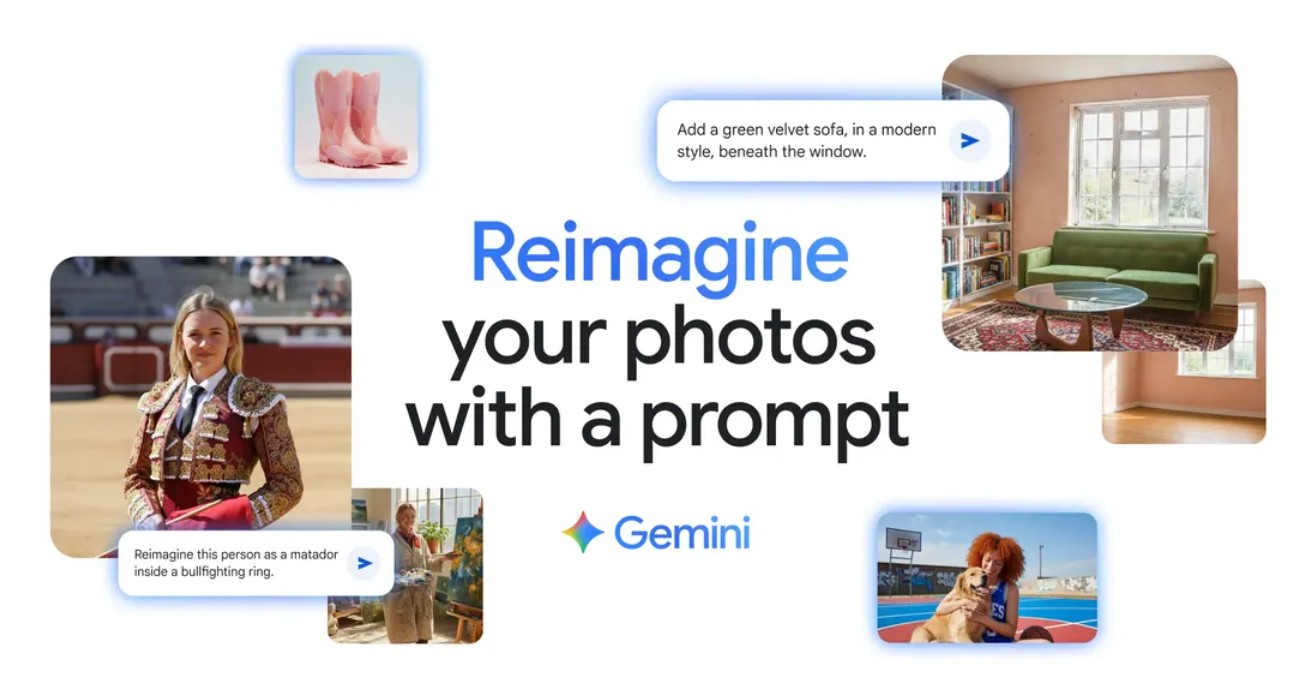
4.5. Faster iteration and lower latency.
Speed is what sets Nano Banana apart. In GEMPIX2, each new edit or variation is processed within 5–8 seconds, roughly the response time of a conversation.
To achieve this, Google uses parallel inference layers and a sparse inference path, which helps focus computation on the image region that needs changing instead of having to recreate the entire frame.
5. What architecture will Nano Banana 2.0 use?
Beneath its user-friendly interface, Nano Banana 2 is built on a completely new architecture within the Gemini system: the Gemini 3 Pro Image Stack. This is a dedicated branch for image processing, deeply integrated into the core language-vision of Gemini 3.
5.1. Main architectural features
At the heart of GEMPIX2 is the Unified Multimodal Transformer Backbone, which allows the model to simultaneously process language and image tokens. This means Nano Banana not only “understands” text descriptions but also infers directly within the image space, preserving the semantic relationship between the prompt and the pixel.
Specialized image encoding/decoding modules (encoder/decoder) ensure high-resolution pixel quality, while latent compression and TPU acceleration enable large-scale operation with extremely low latency.
Specifically, GEMPIX2 integrates the source code embedding layer directly into the pipeline: a SynthID watermark insertion mechanism at the model level, rather than requiring post-processing. This approach optimizes the workflow and ensures that all generated images are verifiable at the source code level.

5.2. How is it different from Nano Banana 1?
If Nano Banana 1 was a “decoupled” model, Nano Banana 2 is a natural part of the language-vision model. This enhances the interoperability between the models: a textual story can continuously generate images, or conversely, an image can be described, edited, and its context expanded using language.
Furthermore, GEMPIX2 expands the multimodal parameter, allowing for deeper learning of the relationships between words and light, shapes, and layout. The sparse attention mechanism and expert routing enable the model to only activate the necessary computations, thereby saving energy and increasing response speed without compromising output quality.
When the first Nano Banana launched, it demonstrated that conversation and visual creation could intersect in the same space, and now with Nano Banana 2, Google is preparing to make that the norm for the future of digital creativity






VIP Products
Best Selling Products
MidJourney Account
29 USD
Windows 10 & 11 Pro Key
36 USD
Autodesk All App Account Copyright
120 USD
Freepik Premium Account
59 USD
Upgrade genuine Capture One account
120 USD
ChatGPT Plus Account (GPT-4)
16 USD
Adobe Photoshop Copyright - Full App
120 USD
Adobe Premiere Pro Account
99 USD
Upgrade Genuine Office 365
49 USD
Copyright Adobe Lightroom Account
59 USD
Capcut Pro 1 Year
39 USD
Plugin Retouch4me
69 USD
Genuine Cheap Canva Pro
39 USD
Genuine Adobe Illustrator account
99 USD
Upgrade Duolingo Super
29 USD