Best Selling Products

ChatGPT Plus Account (GPT-4)
16 USD

Capcut Pro 1 Year
39 USD

Genuine Adobe Illustrator account
99 USD

Plugin Retouch4me
69 USD

Copyright Adobe Lightroom Account
59 USD

MidJourney Account
29 USD

Freepik Premium Account
59 USD

Autodesk All App Account Copyright
120 USD

Upgrade Duolingo Super
29 USD

Windows 10 & 11 Pro Key
36 USD

Upgrade genuine Capture One account
120 USD

Upgrade Genuine Office 365
49 USD

Adobe Premiere Pro Account
99 USD

Adobe Photoshop Copyright - Full App
120 USD

Genuine Cheap Canva Pro
39 USD
How Should Designers Use AI? 5 Tips to Optimize the Design Workflow
Nội dung
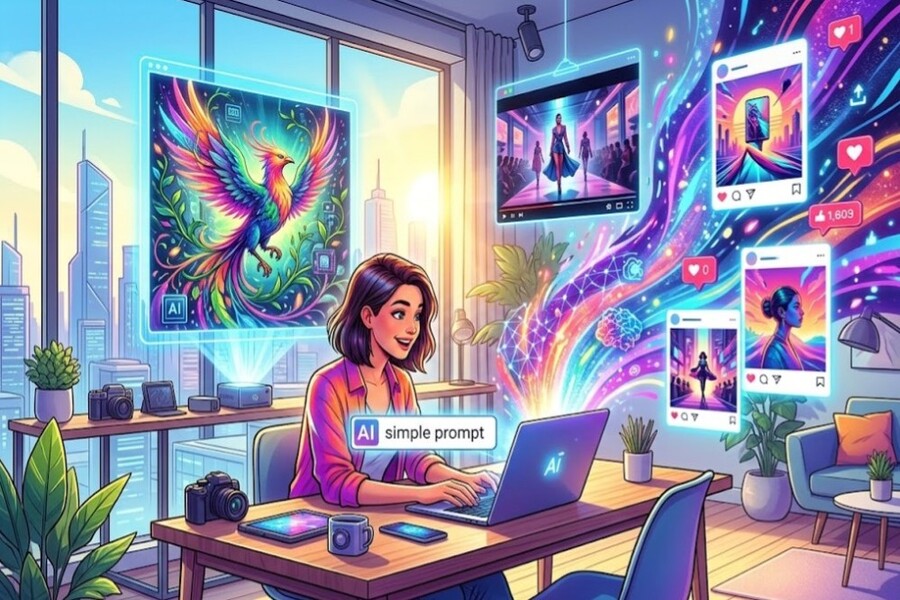
AI brings many benefits to the creative industry, but not everyone knows how to use it effectively. Combining technology with creative thinking can significantly improve work efficiency.
1. Use Automation Wisely
As workloads continue to grow and the demand for faster content production increases, AI is becoming an essential support tool that helps marketing and design teams optimize workflows. Instead of spending time on repetitive tasks, designers can use AI to automate technical processes, allowing them to focus more on creative and strategic work.
In the past, tasks such as image editing, background removal, content categorization, or data processing often required manual effort and consumed significant time. With AI support, these tasks can now be completed within seconds with increasingly high accuracy. Modern intelligent image-editing tools can identify subjects within photos, automatically adjust lighting and colors, and even suggest suitable compositions for different types of content.
.jpg)
A typical example is isolating a product from its background. Previously, designers had to use selection tools and manually refine edges to ensure accuracy. This process was time-consuming and required professional expertise. Today, AI-powered tools can accomplish the same task with a single click, saving designers substantial time and effort.
The greatest benefit of automation is not only faster task completion but also the ability to free up creative resources. When technical work is handled quickly by AI, design teams can dedicate more attention to idea development, brand storytelling, and creating meaningful visual experiences for users.
According to many marketing industry surveys, more and more creative professionals are actively adopting AI to automate recurring tasks. This demonstrates that automation is not a temporary trend but is becoming an integral part of modern content production workflows. In the near future, many operational decisions within businesses may even be fully automated through AI systems.
However, the key is knowing how to use automation strategically. AI should be viewed as a support tool for technical tasks, while humans remain responsible for guiding ideas and ensuring the creative quality of the final product.
2. Preserve Artistic Integrity
In the technology era, maintaining the human element of artistry remains a core principle that differentiates exceptional design work. While AI can assist in generating images, layouts, and even design suggestions, aesthetic judgment and creative intuition are still qualities that technology cannot fully replicate.
One of AI’s greatest strengths is its ability to process images rapidly. AI-powered upscaling tools can improve image quality within seconds. However, applying these enhancements still requires human oversight to ensure the final visuals align with the intended design style and brand language.
.jpg)
Design is not simply about creating visually appealing graphics. It is also about conveying emotions, messages, and brand stories. Every detail—from colors and layouts to visual styles—contributes to the overall user experience. This is where artistic intuition and the designer’s expertise become indispensable.
Many studies indicate that AI can help create personalized customer experiences by analyzing data and recommending relevant content. However, for that content to genuinely resonate emotionally with audiences, designers must refine every detail based on their understanding of culture, psychology, and consumer behavior.
Therefore, instead of allowing AI to drive the entire creative process, designers should treat technology as a supporting tool. Humans should remain the final decision-makers regarding style, emotion, and the story a design seeks to communicate.
3. Stay Consistent with Brand Identity
In today’s multi-platform communication environment, maintaining brand consistency has become more important than ever. Brand visuals are no longer limited to websites but extend across social media, digital advertising, email marketing, and numerous other communication channels. Every visual touchpoint contributes to how customers recognize and remember a brand.
AI can become a powerful ally in helping designers maintain consistency throughout a brand identity system. Intelligent image-editing tools can modify backgrounds, adjust lighting, remove unwanted objects, or generate multiple variations of the same image while preserving a unified design style.
.jpg)
Additionally, many AI tools can now learn a company’s brand guidelines. By analyzing color palettes, typography, and visual styles, AI can suggest edits that align with the brand’s identity from the beginning. This reduces the need for extensive manual adjustments and ensures all design assets adhere to the same visual framework.
As a result, design teams can produce large volumes of content in a short period while maintaining consistent brand imagery. This consistency is essential for building trust and creating a lasting impression in customers’ minds.
4. Apply AI Responsibly
As AI becomes increasingly widespread in design and marketing, using the technology responsibly is essential to ensure sustainable creativity. AI can automate many processes, from content tagging to generating image descriptions for SEO. However, its use must follow ethical and transparent principles.
One of the most discussed issues today is intellectual property and how data is used to train AI systems. Designers should understand the origin of the data and imagery used in content generation processes, ensuring that all design outputs comply with legal requirements and respect the creative rights of others.
.jpg)
In addition, AI should be implemented within a clear governance framework. Organizations should establish internal guidelines for technology usage, including reviewing AI-generated content and ensuring that all outputs are evaluated by human professionals before publication.
When implemented properly, AI not only enhances productivity but also contributes to building a transparent and trustworthy creative environment.
5. Create a Balanced Partnership Between Humans and Technology
AI should be viewed as a catalyst for creativity, helping designers work faster and more efficiently. In the design industry, combining technological capabilities with human creative intuition can produce far better results than relying solely on one element. When applied thoughtfully, AI optimizes workflows and opens up new opportunities for creative experimentation.
AI tools can quickly handle technical tasks such as image editing, size optimization, background removal, and layout suggestions. As a result, designers save considerable time on repetitive work and can focus more on high-value activities such as idea development, concept creation, and brand storytelling.
.jpg)
AI can also assist during the inspiration phase by generating sketches or suggesting design styles based on data and keywords. However, choosing the right creative direction, refining details, and ensuring overall aesthetic quality still depend on human experience and judgment.
Therefore, the relationship between humans and AI should not be viewed as one of replacement but of collaboration. When technology takes care of technical operations and data processing, people can focus on the core aspects of creativity, including emotion, ideas, and communication strategy. This partnership enables the creation of designs that are both technically effective and rich in artistic value and individuality.
Designers who successfully combine technology with artistic thinking will gain a significant advantage in the creative marketplace. AI does not diminish human value; instead, it helps people work smarter, faster, and more creatively. Ultimately, the synergy between technology and human imagination will shape the future of the design industry in the digital age.





















VIP Products








Best Selling Products
ChatGPT Plus Account (GPT-4)
16 USD
Capcut Pro 1 Year
39 USD
Genuine Adobe Illustrator account
99 USD
Plugin Retouch4me
69 USD
Copyright Adobe Lightroom Account
59 USD
MidJourney Account
29 USD
Freepik Premium Account
59 USD
Autodesk All App Account Copyright
120 USD
Upgrade Duolingo Super
29 USD
Windows 10 & 11 Pro Key
36 USD
Upgrade genuine Capture One account
120 USD
Upgrade Genuine Office 365
49 USD
Adobe Premiere Pro Account
99 USD
Adobe Photoshop Copyright - Full App
120 USD
Genuine Cheap Canva Pro
39 USD