
Best Selling Products

Copyright Adobe Lightroom Account
59 USD

Upgrade genuine Capture One account
120 USD

ChatGPT Plus Account (GPT-4)
16 USD
Upgrade Genuine Office 365
49 USD

Autodesk All App Account Copyright
120 USD

Genuine Cheap Canva Pro
39 USD

Capcut Pro 1 Year
39 USD

Plugin Retouch4me
69 USD

Upgrade Duolingo Super
29 USD
Adobe Photoshop Copyright - Full App
120 USD

Genuine Adobe Illustrator account
99 USD

Freepik Premium Account
59 USD

Adobe Premiere Pro Account
99 USD

MidJourney Account
29 USD
Windows 10 & 11 Pro Key
36 USD
MacBook Air M5 Makes MacBook Pro Look Outclassed in One Unexpected Area
Nội dung
- 1. MacBook Air M5 and a Notable Upgrade in Storage Speed
- 2. SSD Performance Sees a Major Boost Compared to Previous MacBook Air Generations
- 3. How Storage Speed Impacts Real-World Experience
- 4. Why MacBook Air Can Surpass MacBook Pro
- 5. The M5 Chip and Apple’s Performance Upgrade Trend
- 6. Can MacBook Air M5 Become an Alternative to MacBook Pro?
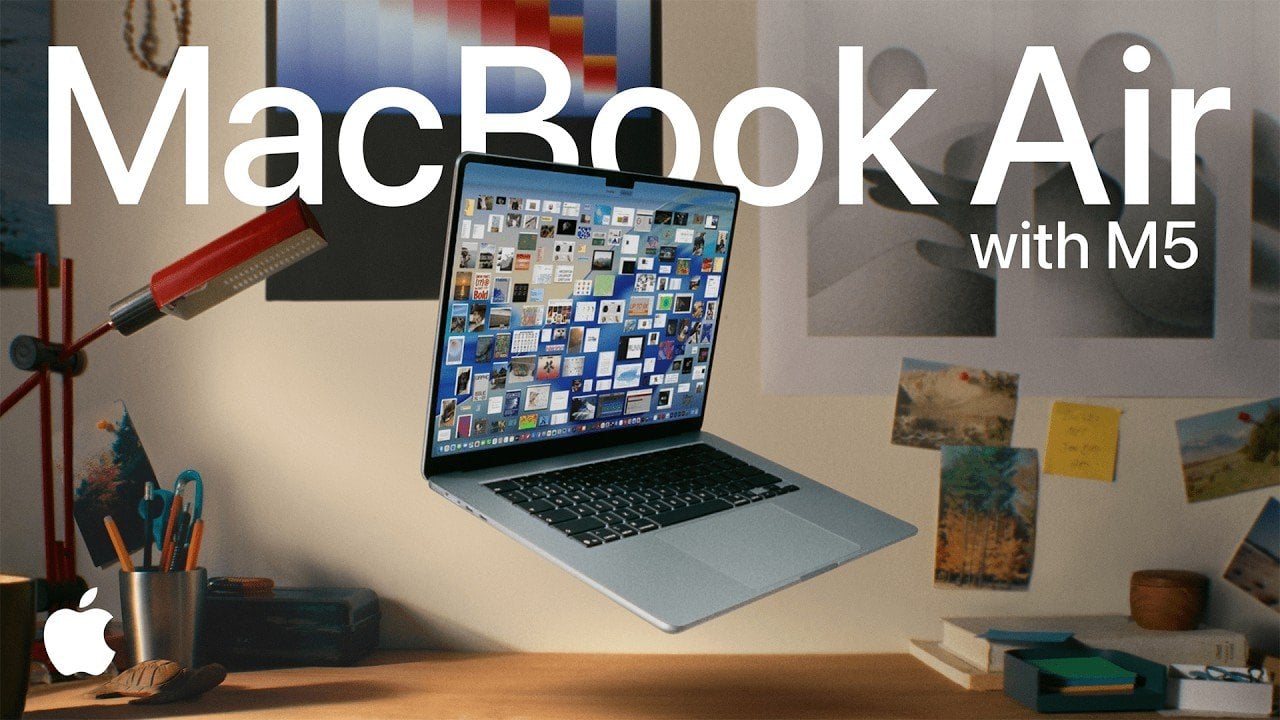
The MacBook Air lineup has traditionally been considered a lighter and more affordable option compared to the Pro series. However, with the M5 generation, the Air is drawing attention by surpassing the MacBook Pro in one important specification. This change could influence how users choose a MacBook in the future.
1. MacBook Air M5 and a Notable Upgrade in Storage Speed
One of the most significant changes in the MacBook Air M5 is its upgraded SSD storage system. Apple has equipped this generation with new NAND flash memory combined with a high-speed interface standard, significantly increasing data transfer bandwidth compared to previous MacBook Air generations. This allows the machine to read and write data faster while improving performance across many everyday tasks.
In storage performance benchmarks conducted using specialized drive testing software, the MacBook Air M5 achieved read speeds of over 6,400 MB per second. This is an impressive figure for such a thin and lightweight laptop. In fact, it is nearly 20% faster than some MacBook Pro models equipped with previous-generation chips. The result surprised many technology experts because the Air lineup has rarely featured storage performance that surpasses the Pro series.
Not only has read speed improved significantly, but the MacBook Air M5’s write speed also reaches an impressive level. In many real-world tests, the device achieved write speeds of over 6,500 MB per second, nearly matching MacBook Pro and trailing by only a very small margin. In practical usage, this difference is almost impossible to notice.
.jpg)
These figures demonstrate that Apple has made a substantial investment in the MacBook Air’s storage system. Rather than focusing solely on upgrading the processor, the company has improved the entire system architecture to ensure that all components operate faster and more efficiently together. As a result, the MacBook Air M5 is not only more powerful than its predecessor but also capable of competing with certain MacBook Pro models in data-intensive tasks.
2. SSD Performance Sees a Major Boost Compared to Previous MacBook Air Generations
Beyond surprising users by outperforming MacBook Pro in certain benchmarks, the MacBook Air M5 also shows a remarkable improvement compared to previous MacBook Air generations. In testing, the MacBook Air M5’s read speed was more than 120% faster than the MacBook Air M4. Write speed also increased by nearly 117%, representing a substantial leap in storage performance.
This improvement may result from several hardware design changes. One widely discussed possibility is that Apple has modified the internal NAND memory structure, either by using more memory chips or increasing data bandwidth between system components. This allows the SSD to process larger amounts of data simultaneously at significantly higher speeds.
For users, this upgrade brings many benefits to everyday usage. During startup, the operating system loads more quickly, allowing users to begin working almost immediately. Large applications such as photo editing or video editing software can also launch faster because data is retrieved from storage at much higher speeds.
.jpg)
In addition, transferring large files becomes noticeably quicker. For content creation tasks such as video editing or RAW image processing, moving data between storage and system memory often consumes a significant amount of time. With faster SSD speeds, this process is shortened, resulting in a substantial improvement in overall workflow efficiency.
3. How Storage Speed Impacts Real-World Experience
For many everyday users, SSD speed may not seem as important as CPU or RAM specifications. However, in reality, storage performance has a major impact on the overall user experience of a computer.
When an SSD offers high read and write speeds, the system can access data more quickly, allowing applications to run more smoothly. For example, when launching demanding software such as video editing or graphic design applications, the machine must load a large amount of data from storage into RAM. If the SSD is slow, this process takes longer and users spend more time waiting.
With the MacBook Air M5, the high SSD speed significantly reduces waiting times in many situations. Importing large video files from cameras, copying thousands of RAW photos, or working with large project files can all be completed more quickly. This is especially valuable for content creators, where data processing speed can directly influence productivity.
.jpg)
Fast storage performance also plays an important role in modern artificial intelligence applications. When running AI models locally on a computer, the system often needs to access large amounts of data from storage. If the SSD is fast enough, processing becomes smoother and latency is reduced when working with AI-powered tools.
4. Why MacBook Air Can Surpass MacBook Pro
The fact that MacBook Air surpasses MacBook Pro in one important metric does not necessarily mean the Air is more powerful overall. This difference primarily comes from Apple introducing newer storage technology in the MacBook Air M5, while some earlier MacBook Pro models continue to use older SSD architectures.
Within Apple’s product ecosystem, different product lines are upgraded on different schedules. This means a newly released MacBook Air can feature more advanced technology than a MacBook Pro launched earlier. This difference in hardware refresh timing has created the interesting situation where Air can outperform Pro in specific benchmarks.
.jpg)
However, MacBook Pro still maintains several important advantages. Thanks to its active cooling system with internal fans, the Pro lineup can sustain high performance for extended periods during demanding workloads. This is particularly important for tasks such as 4K video editing, large-scale software development, or 3D graphics processing.
Therefore, the MacBook Air M5 outperforming MacBook Pro in SSD speed simply demonstrates Apple’s strong improvements to the Air lineup rather than a complete shift in the positions of these two product families within Apple’s ecosystem.
5. The M5 Chip and Apple’s Performance Upgrade Trend
The MacBook Air M5’s improvements are also closely linked to the evolution of Apple Silicon. Since Apple transitioned to designing its own chips, MacBook performance has increased significantly thanks to tighter integration between hardware and software.
The M5 chip continues to be built on a unified architecture where the CPU, GPU, memory, and many other components are integrated into a single system. This design reduces latency when transferring data between components and improves overall system efficiency.
By combining the M5 chip with a high-speed SSD, the MacBook Air M5 can deliver impressive performance while maintaining its slim and lightweight design. This demonstrates how Apple is gradually narrowing the gap between product categories and bringing greater power to laptops aimed at mainstream users.
6. Can MacBook Air M5 Become an Alternative to MacBook Pro?
The improvements introduced in the MacBook Air M5 have led many people to wonder whether it can replace the MacBook Pro. In reality, the answer depends heavily on individual usage needs.
For students, office workers, and users seeking a lightweight yet powerful laptop, the MacBook Air M5 can be a highly attractive option. It is fast enough to handle most everyday tasks, from office work and photo editing to basic video production.
However, for professional workloads that require sustained high performance over many hours, the MacBook Pro remains the more suitable choice. Its superior cooling system and more powerful configurations enable the Pro lineup to maintain stable performance over long periods.
That said, this does not mean the MacBook Air has completely replaced the MacBook Pro. The two product lines still serve different user groups with different requirements. Nevertheless, these new improvements show that the boundary between Air and Pro is gradually shrinking. In the future, as Apple continues refining Apple Silicon chips and storage technology, users may see even more powerful MacBook Air models capable of handling workloads that were once considered exclusive to the Pro lineup.
















VIP Products







Best Selling Products
Copyright Adobe Lightroom Account
59 USD
Upgrade genuine Capture One account
120 USD
ChatGPT Plus Account (GPT-4)
16 USD
Upgrade Genuine Office 365
49 USD
Autodesk All App Account Copyright
120 USD
Genuine Cheap Canva Pro
39 USD
Capcut Pro 1 Year
39 USD
Plugin Retouch4me
69 USD
Upgrade Duolingo Super
29 USD
Adobe Photoshop Copyright - Full App
120 USD
Genuine Adobe Illustrator account
99 USD
Freepik Premium Account
59 USD
Adobe Premiere Pro Account
99 USD
MidJourney Account
29 USD
Windows 10 & 11 Pro Key
36 USD