Best Selling Products

Upgrade genuine Capture One account
120 USD

Windows 10 & 11 Pro Key
36 USD

Copyright Adobe Lightroom Account
59 USD

Autodesk All App Account Copyright
120 USD

Freepik Premium Account
59 USD

Upgrade Duolingo Super
29 USD

Plugin Retouch4me
69 USD

Upgrade Genuine Office 365
49 USD

MidJourney Account
29 USD

Adobe Photoshop Copyright - Full App
120 USD

Adobe Premiere Pro Account
99 USD

Genuine Cheap Canva Pro
39 USD

Genuine Adobe Illustrator account
99 USD

ChatGPT Plus Account (GPT-4)
16 USD

Capcut Pro 1 Year
39 USD
The little-known truth about surge protectors for computers.
Nội dung
- 1. Surge protectors and their true role in protecting computers.
- 2. Two common types of surge protection devices currently available.
- 3. Dangers that surge protectors cannot protect against.
- 4. Alternatives to surge protection devices
- 5. UPS: A more comprehensive layer of protection for your computer.
Advertisements often emphasize "comprehensive protection," but in reality, there are many technical limitations. This article helps readers identify the weaknesses of surge protection devices that are rarely mentioned.
1. Surge protectors and their true role in protecting computers.
Surge protectors are designed to handle sudden, short-lived voltage surges. These surges typically occur during lightning strikes, when high-power devices are switched on or off unexpectedly, or when the power grid experiences switching failures. In that brief moment, the voltage can spike far beyond the safe limits of electronic equipment.
For computers, this is a particularly serious hazard. Components such as motherboards, CPUs, RAM, graphics cards, and hard drives all operate within a very narrow and stable voltage range. Even a single high voltage surge lasting only a very short time can destroy microelectronic circuits, causing short circuits or reducing component lifespan without the user immediately noticing.
Surge protectors work by "blocking" or "redirecting" excess voltage surges to the ground wire, instead of letting them go directly into the device. This protects the computer from sudden power surges, which are a common cause of power supply failure or motherboard burnout.
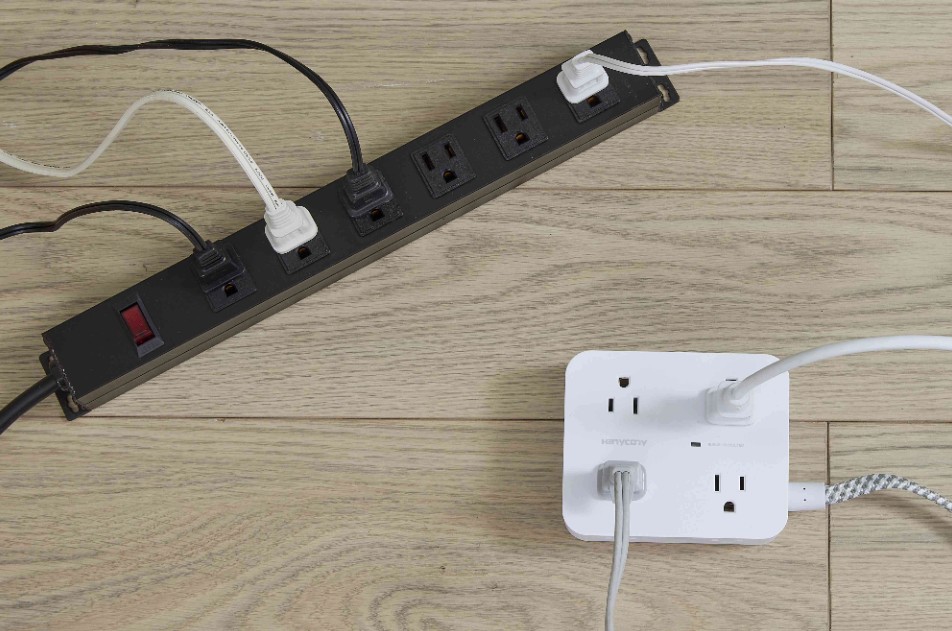
However, it is important to emphasize that surge protectors only react to sudden voltage spikes lasting for very short periods. They are not capable of continuously regulating voltage or maintaining a stable voltage level for equipment. This is the key point that leads many people to misunderstand the protective capabilities of this type of device.
2. Two common types of surge protection devices currently available.
Currently, surge protectors for computers on the market are generally divided into two main groups: those that plug directly into the power outlet and those that protect the entire house.
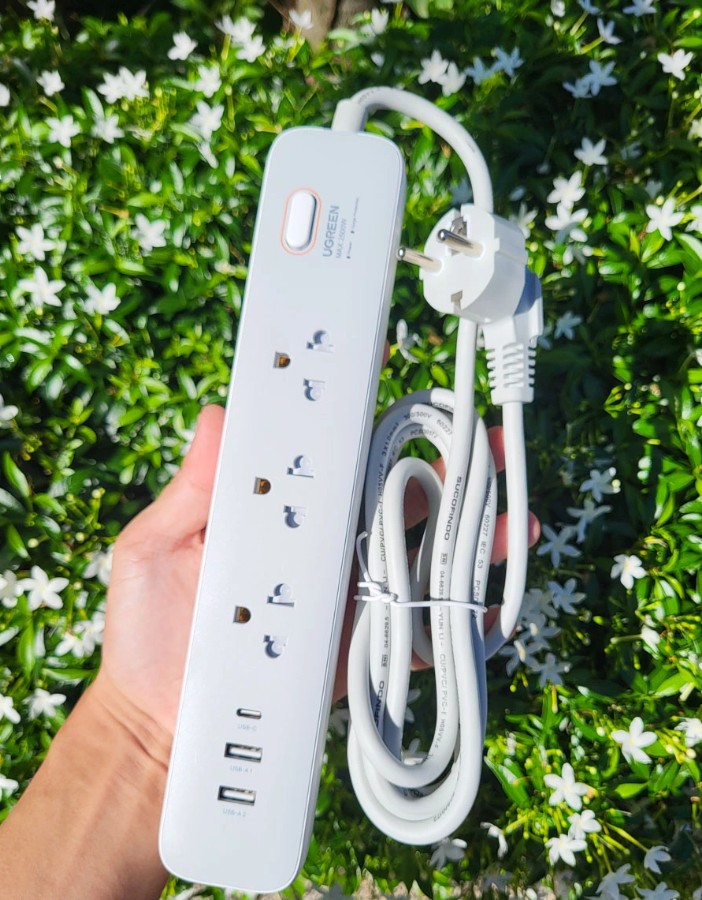
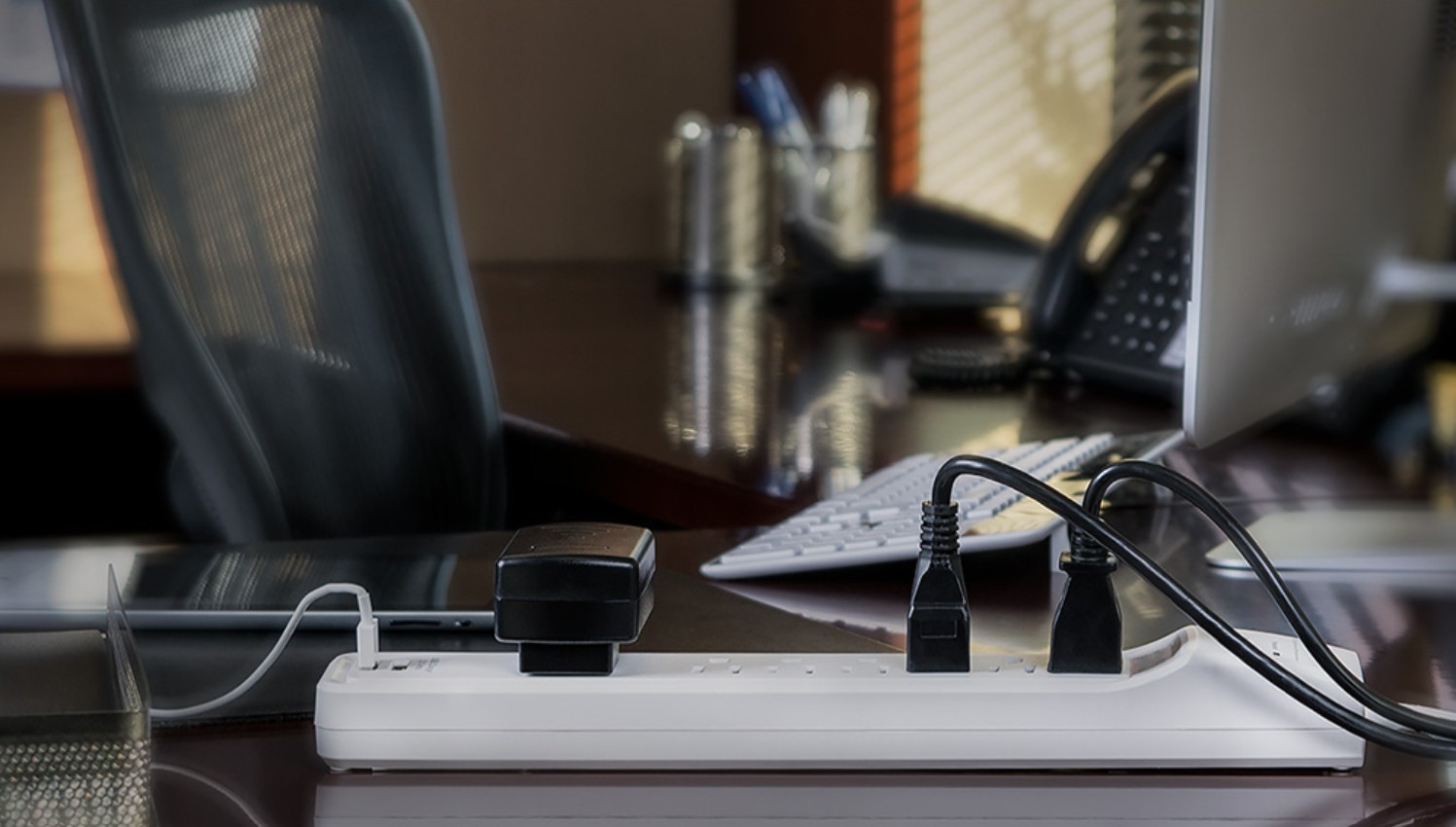
The plug-in type is the most familiar form for individual users. They are usually integrated into multi-pin power strips, often with a switch and sometimes an indicator light. The advantages of this type are its reasonable price, ease of use, and the fact that it doesn't require modifications to the main electrical system. In areas with a relatively low risk of lightning strikes, this provides a relatively effective first line of protection for computers and other electronic devices.
Meanwhile, whole-house surge protectors are installed directly at the main electrical panel, between the grid power and the household electrical system. This type is capable of handling larger voltage surges and simultaneously protecting all electrical appliances in the home. For areas prone to thunderstorms or with unstable power grids, whole-house surge protection offers a higher level of safety compared to using only individual surge protectors.
Despite differences in scale and cost, both types of devices share a common operating principle and a crucial limitation: they only handle instantaneous voltage surges, not sustained voltage issues.
3. Dangers that surge protectors cannot protect against.
One of the biggest misconceptions among users is that surge protectors can protect computers from all electrical problems. In reality, there are two phenomena that are just as dangerous as lightning surges but are beyond the capabilities of these devices: voltage drops and prolonged voltage surges.
Voltage drop occurs when the supply voltage is lower than the standard level for a sufficiently long period. This phenomenon often occurs in areas with weak power grids, during peak hours, or when many high-power devices are operating simultaneously. In computers, voltage drop can cause the power supply to malfunction, leading to system freezes, sudden restarts, or reduced component lifespan.
Conversely, a sustained surge is a condition where the voltage is higher than the permissible level for an extended period, but not sudden enough to trigger the surge protection device. This is a particularly dangerous scenario because it silently "batters" components, heats up the power supply, and causes aging of capacitors and internal circuitry in the computer.
Furthermore, electrical interference is also an often overlooked factor. Interference can originate from other electronic devices, electric motors, elevators, or nearby industrial electrical systems. While not causing immediate damage, electrical interference reduces system stability, impacting computer performance and longevity, especially for systems running continuously or processing critical data.
4. Alternatives to surge protection devices
To address the risks that surge protectors cannot handle, many experts recommend that users invest in voltage stabilizers. These devices can automatically regulate the input voltage, ensuring that the output voltage always remains within a safe range for electronic equipment.
The voltage stabilizer operates continuously, monitoring and adjusting the voltage in real time. When the voltage drops or rises slightly, the device automatically compensates to maintain a stable voltage level. This ensures the computer receives a clean and consistent power supply, minimizing the risk of damage due to voltage fluctuations.
Not only useful for computers, voltage stabilizers are also popular in high-end audio systems, recording studios, design studios, or workspaces requiring high stability. Although the initial investment cost is higher than that of regular surge protectors, the long-term benefits in terms of equipment durability and peace of mind are undeniable.
5. UPS: A more comprehensive layer of protection for your computer.
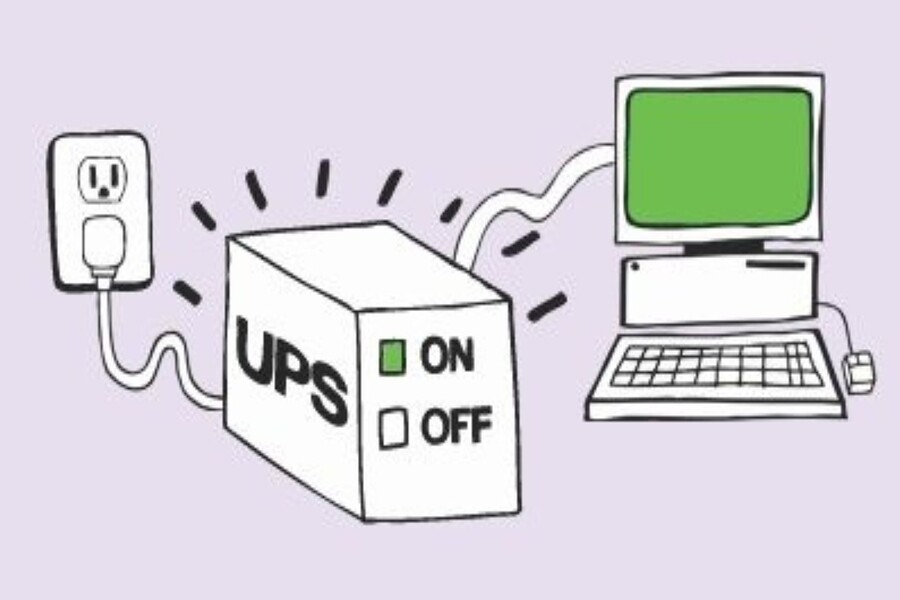
While voltage stabilizers address the problem of fluctuating voltage, UPS (Uninterruptible Power Supply) systems offer a higher level of protection, especially crucial for computers. UPS systems not only stabilize voltage but also provide backup power during power outages, allowing computers to continue operating for a certain period.
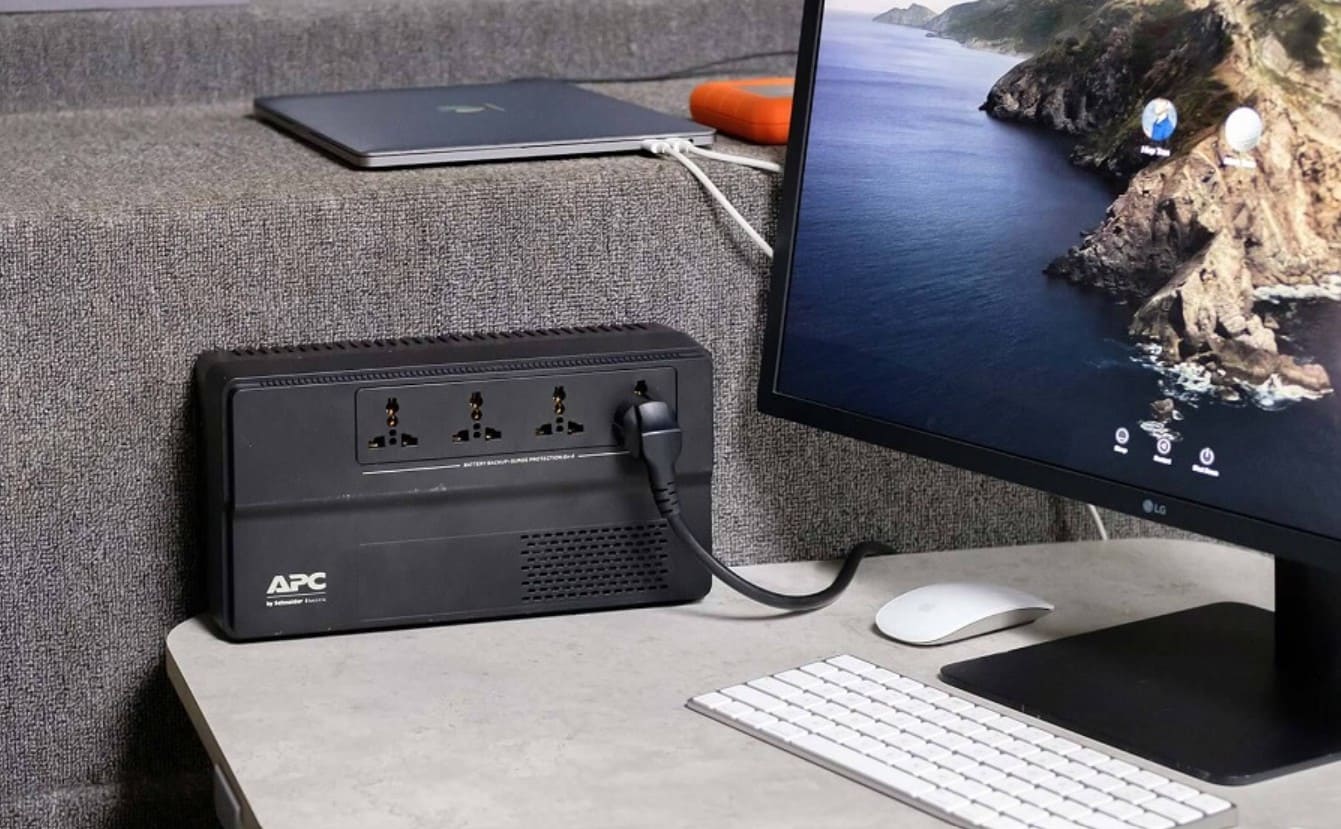
The most important role of a UPS is not to keep the computer running for extended periods during a power outage, but rather to give users time to save data and safely shut down their computer. A sudden power outage can cause data corruption, operating system errors, or even hard drive damage. A UPS effectively prevents these risks.
Currently, the market offers many types of UPS with varying levels of protection. Basic UPS systems are suitable for individual users, while line-interactive UPS and double-conversion UPS systems provide better voltage stability and noise filtering, making them suitable for workstations, small servers, or professional work systems.
Among these, double-conversion UPS (Uninterruptible Power Supply) is considered the most optimal protection solution. This type continuously converts alternating current (AC) to direct current (DC) and then outputs it, creating a completely stable output power source isolated from the grid. However, its high cost means it is usually only used in professional or business environments.
6. Common misconceptions when using surge protection devices.
A common misconception is that surge protectors can last "forever." In reality, the internal components of these devices gradually degrade after each voltage surge they absorb. At some point, the device will be almost incapable of providing protection, even if it appears to function normally externally.
In addition, many people plug too many high-power devices into the same surge protector, exceeding its load capacity. This not only reduces the effectiveness of the surge protector but also poses a potential fire hazard.
The lack of proper grounding also renders surge protectors largely ineffective. Without a safe escape route for voltage surges, surge protectors are almost incapable of fulfilling their function.
Instead of relying on a single device, the correct approach is to build a multi-layered protection system. Surge protectors act as the first line of defense against sudden voltage surges. Voltage stabilizers ensure a stable power supply throughout use. UPS (Uninterruptible Power Supply) is the final layer of protection, keeping the computer safe from power outages and severe voltage fluctuations.
Investing properly in your electrical system not only protects your computer but also safeguards your data, time, and effort. This is especially worthwhile for those working in design, content creation, or technology, where computers are essential tools for earning a living.
Surge protectors are an important part of a computer protection system, but they are not a "magic shield" as many people mistakenly believe. Understanding the limitations of this device helps users avoid false sense of security and make more informed investment decisions.





















VIP Products








Best Selling Products
Upgrade genuine Capture One account
120 USD
Windows 10 & 11 Pro Key
36 USD
Copyright Adobe Lightroom Account
59 USD
Autodesk All App Account Copyright
120 USD
Freepik Premium Account
59 USD
Upgrade Duolingo Super
29 USD
Plugin Retouch4me
69 USD
Upgrade Genuine Office 365
49 USD
MidJourney Account
29 USD
Adobe Photoshop Copyright - Full App
120 USD
Adobe Premiere Pro Account
99 USD
Genuine Cheap Canva Pro
39 USD
Genuine Adobe Illustrator account
99 USD
ChatGPT Plus Account (GPT-4)
16 USD
Capcut Pro 1 Year
39 USD