Best Selling Products

Windows 10 & 11 Pro Key
36 USD

Upgrade Genuine Office 365
49 USD
Copyright Adobe Lightroom Account
59 USD

Autodesk All App Account Copyright
120 USD

Plugin Retouch4me
69 USD
Adobe Photoshop Copyright - Full App
120 USD
Genuine Cheap Canva Pro
39 USD

ChatGPT Plus Account (GPT-4)
16 USD

Upgrade Duolingo Super
29 USD
Upgrade genuine Capture One account
120 USD

MidJourney Account
29 USD

Freepik Premium Account
59 USD

Adobe Premiere Pro Account
99 USD

Genuine Adobe Illustrator account
99 USD

Capcut Pro 1 Year
39 USD
The Secret to Choosing the Right Aperture for Landscape Photography to Keep Your Photos Sharp
Nội dung
What is the best aperture for landscape photography?" is a question that many beginners ask, and it is also a question that many experienced photographers still weigh regularly out in the field. The real answer is more complicated than you think, because there is no single aperture that suits every situation.
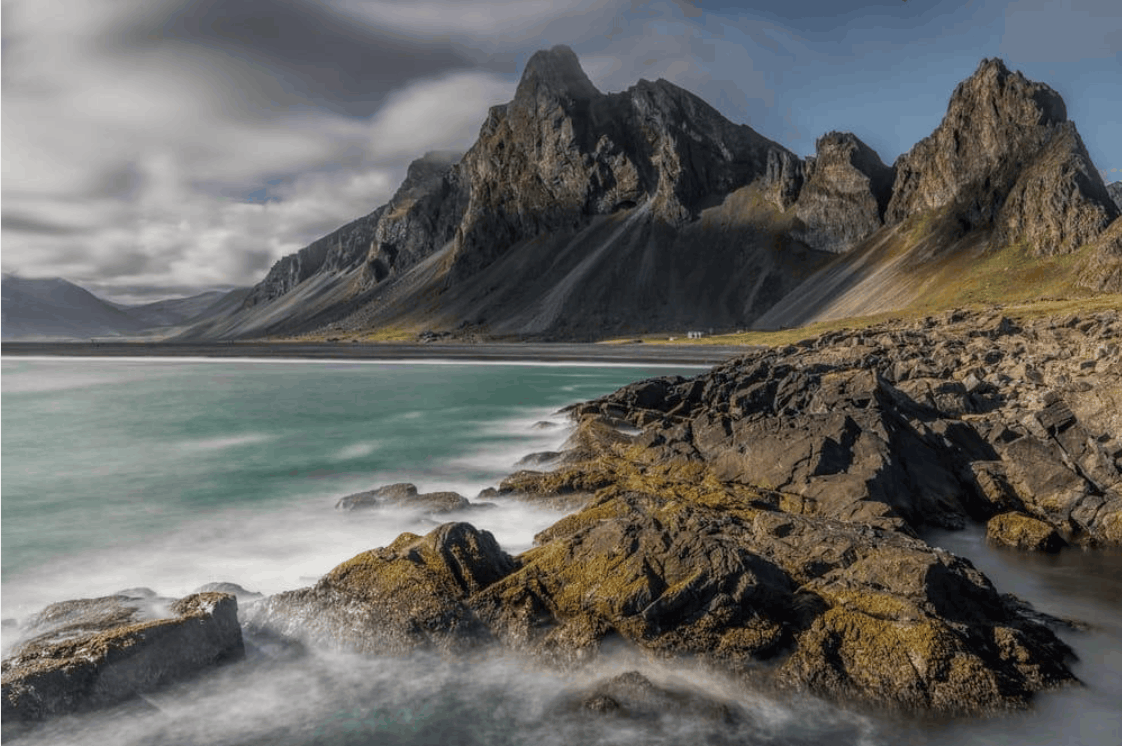
1. What is a lens's sweet spot
If you are new to the concept of aperture, you may find it a bit confusing to learn that the sharpest aperture depends on the lens you are using. The best aperture on your gear is not necessarily the same as on someone else's, because each optical design has its own characteristics.
You need to clearly distinguish between two concepts. Here, we are talking about the overall sharpness of the entire frame, not depth of field. When we refer to the sharpest aperture, we mean the aperture level at which the image reaches its highest optical quality, from the center to the corners of the frame. Depth of field is a different matter, relating to the zone that is within acceptable focus.
A lens's sweet spot is the aperture that produces the greatest sharpness, and it is usually located about two to three stops from the lens's maximum aperture. The reason lies in two opposing phenomena. When you open the aperture wide, optical aberrations, reduced sharpness in the corners, and vignetting tend to show up more clearly. When you stop down too far, diffraction appears, causing light to scatter as it passes through the narrow opening and reducing detail. The sweet spot lies in the middle, where both effects are at their lowest.
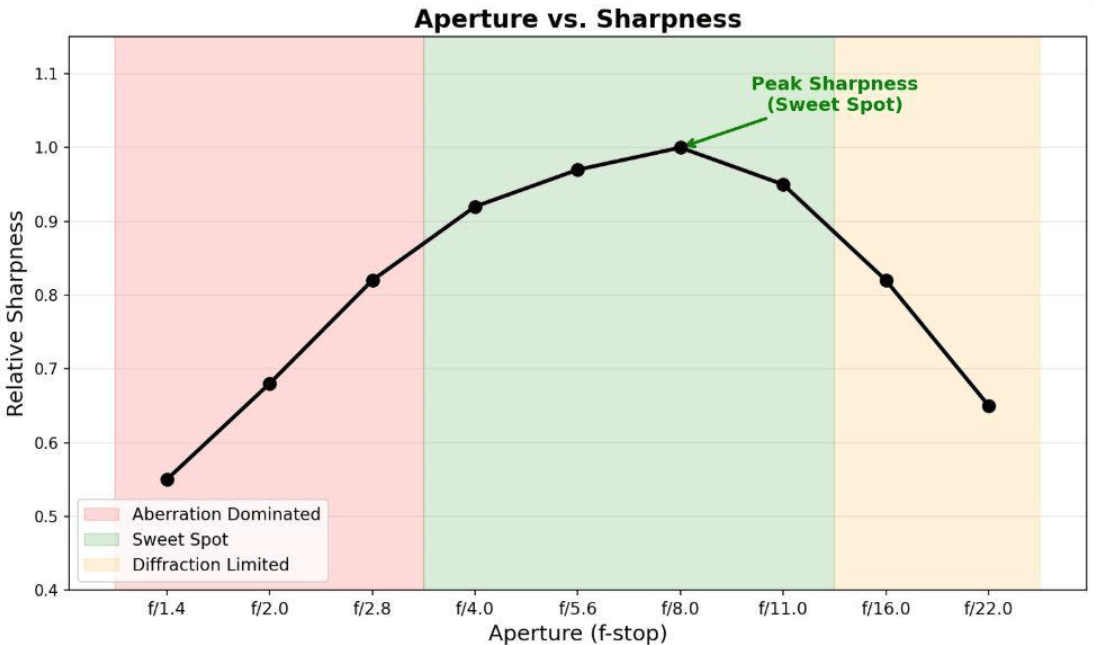
For example, a wide-angle zoom lens with a maximum aperture of f/4 usually delivers its best sharpness at around f/8 to f/11. A faster lens with an f/2.8 aperture reaches its sweet spot at around f/5.6 to f/8. Because most professional lenses have a maximum aperture of f/2.8 or f/4, you will often hear many people say that the best aperture is f/8 or f/11.
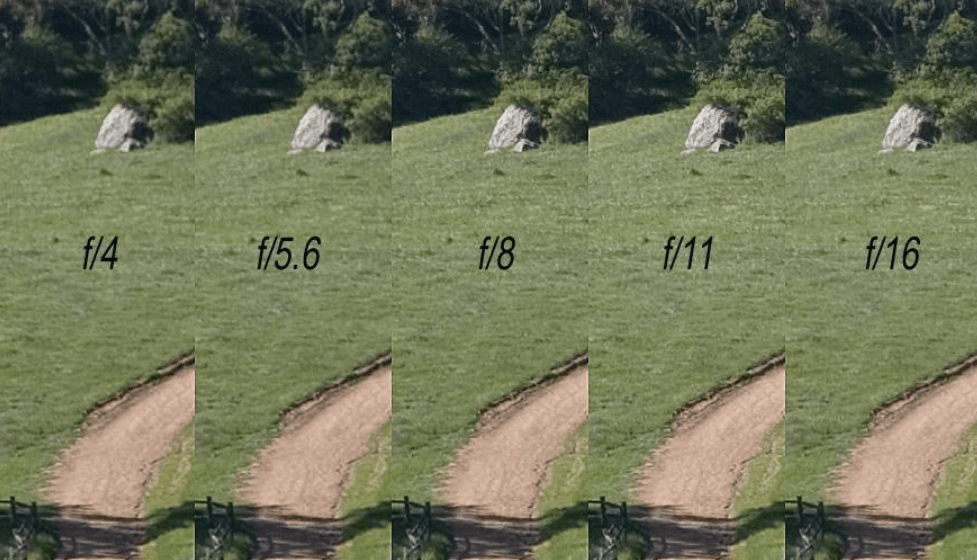
To apply this, look at your lens's maximum aperture and add two to three stops to estimate the sweet spot range. Then put the camera on a tripod, take a few test shots at different aperture levels with the same composition, and compare them at 100 percent magnification, paying special attention to the corners of the frame. This method is more reliable than any spec sheet, because each individual copy of a lens can differ slightly.
It should also be noted that with zoom lenses whose aperture changes with focal length, the sweet spot also shifts depending on the focal length you use. Therefore, you should test at a few of your most familiar focal lengths instead of checking only one.
2. What is a wide aperture and when should you use it
A wide aperture, or open aperture, is the general term for small f-values such as f/1.4, f/2.8, or f/4. This type of aperture lets more light into the sensor and creates a very shallow depth of field, meaning only a small part of the frame is in focus while the rest gradually blurs.
There is a very common question from many people learning photography: why do professional landscape photographers invest in extremely fast lenses such as f/2.8 or f/1.4 when most landscape photos are taken at around f/8 to f/22, with the sweet spot often around f/11? The answer is that wide apertures serve very specific purposes that small apertures cannot fulfill.
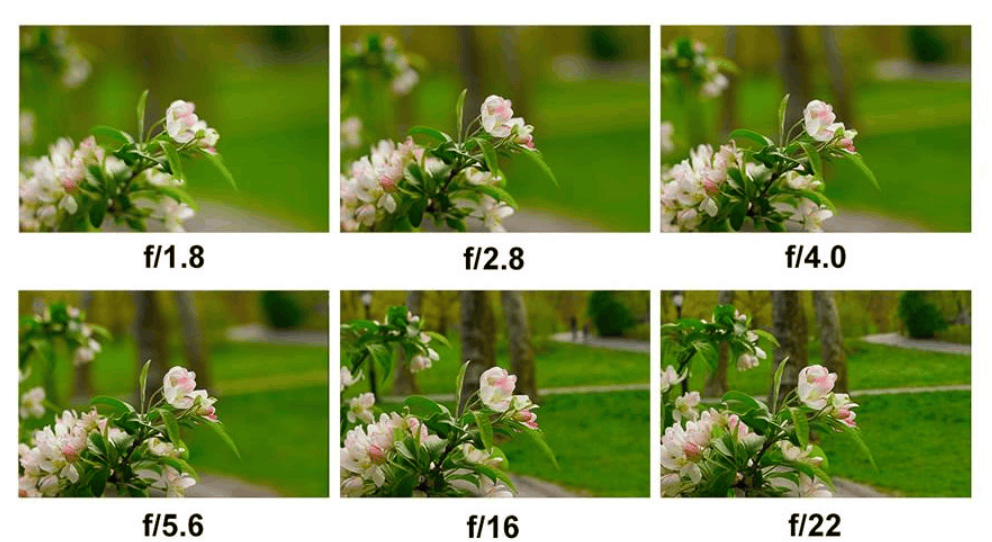
The first purpose is to blur the foreground or background for an artistic effect. For example, you place a flower right next to the lens, focus on the flower, and use f/2.8. The flower will be sharp, while the landscape behind it dissolves into soft patches of color. This technique helps separate the subject from the background, guide the eye, and create a poetic sense of depth. The amount of blur also depends on where you focus, the distance from the foreground to the lens, and the focal length in use, since a telephoto lens gives a more noticeable blur than a wide-angle lens at the same aperture.
The second purpose is night photography, especially Milky Way and aurora photos. At night, there is very little natural light, so you usually have to raise the ISO, lengthen the shutter speed, and open the aperture as wide as possible. The difference between f/2.8 and f/4 in this case is truly the difference between night and day, because f/2.8 gathers nearly twice as much light, helping reduce grain and shorten the exposure time so that stars are not stretched into trails.
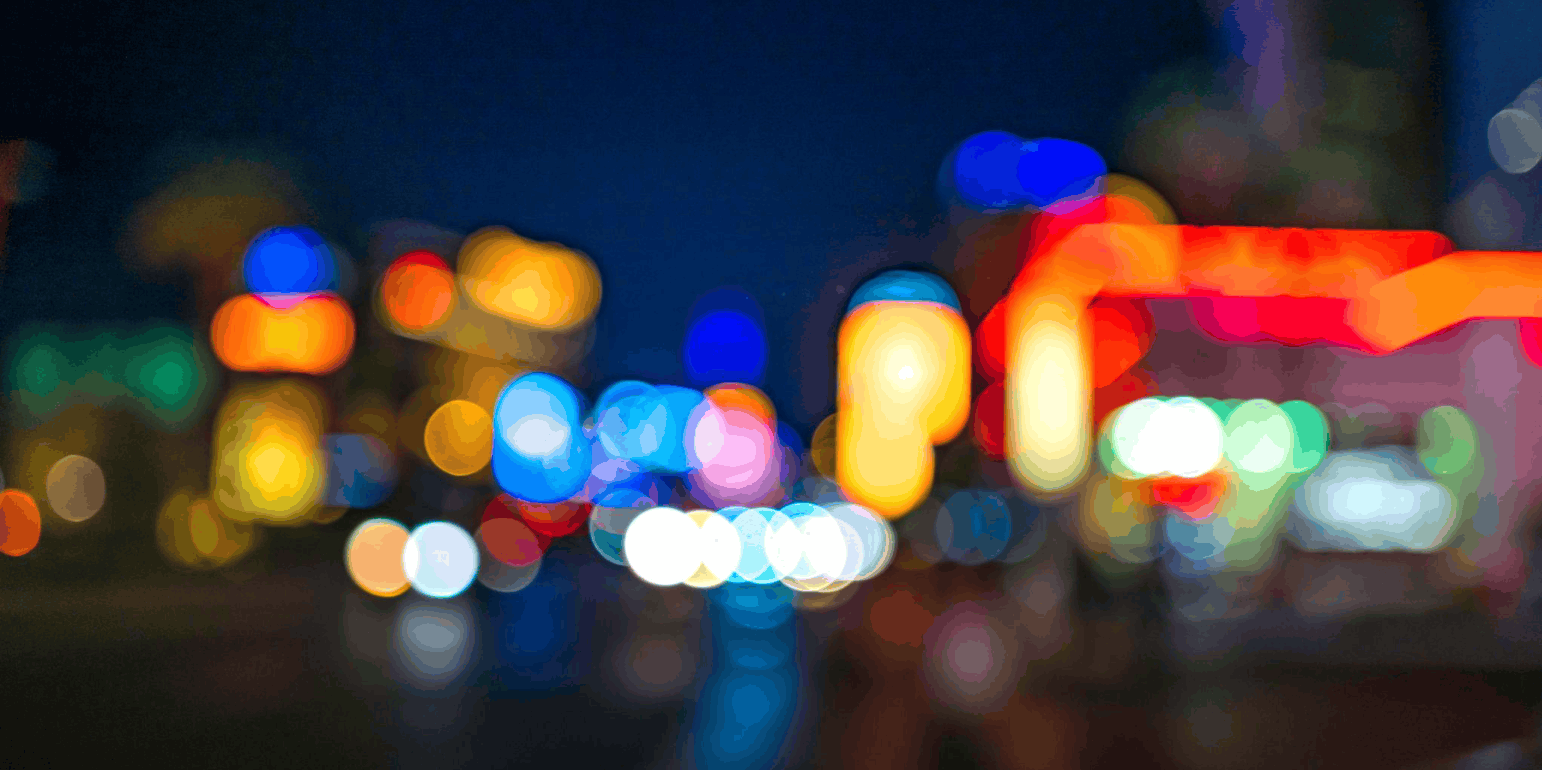
The third purpose is shooting in low-light conditions, such as a dense forest at dawn or dusk when you don't have a tripod. A wide aperture helps keep the shutter speed fast enough to avoid hand shake. You only have to accept the trade-off that the depth of field is shallow and the sharpness in the corners may drop.
3. What is a small aperture and when should you use it
A small aperture, or narrow aperture, is the opposite case, with large f-values such as f/16 or f/22. At this aperture level, less light enters the sensor, while the depth of field increases significantly. You might guess that more parts of the photo will be sharp, with no blurred areas left. It sounds perfect, and you may wonder why this isn't the optimal aperture.
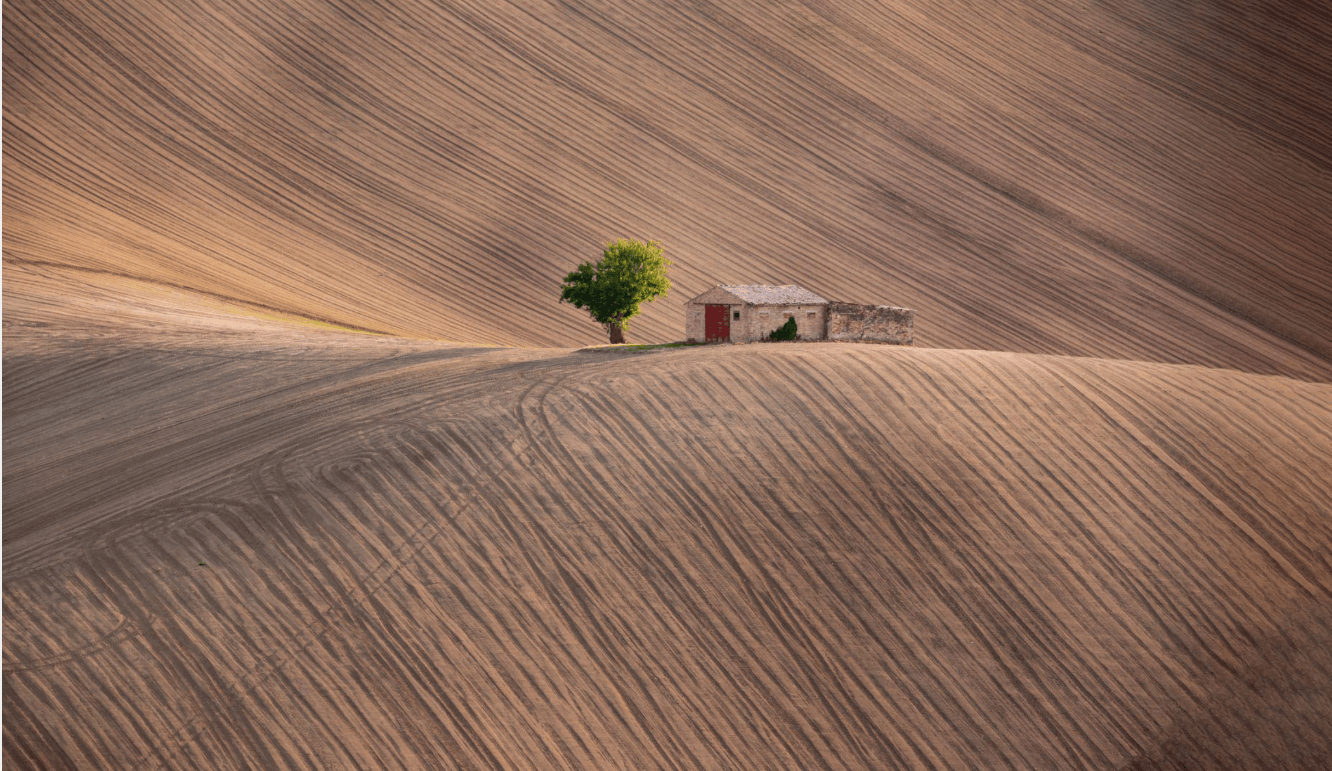
The reason is that although more of the frame is within the zone of focus, the actual sharpness is not as high. Both the foreground and background are "sharp", but the level of detail is reduced because of diffraction, making the image a little softer than desired. In other words, you trade absolute sharpness for a wider range of focus.
A small aperture is still very useful in certain situations. The first is when the distance between the foreground and background is large, for example a rock right at your feet and a mountain range far off on the horizon, and you want everything to be sharp. The second is when you need a slow shutter speed, for example to smooth out a waterfall or the sea without an ND filter on hand, in which case stopping down is a simple way to reduce the amount of light.

The third is creating a sunstar effect when the sun is partly blocked by a mountain peak, tree canopy, or the horizon. Using an aperture of about f/16 to f/22 will produce crisp rays of light, creating an impressive highlight for the photo.
Because sharpness at small apertures is not as good as in the sweet spot range, many photographers choose the focus stacking technique. They take several shots at an aperture near the sweet spot, each focused at a different distance, then merge them in processing software. The result is a photo that is both sharp throughout from foreground to background and retains maximum detail. With scenes that have a lot of movement, such as trees swaying in the wind, this technique requires extra care.
4. So what is the best aperture for landscape photography
As you have seen, the best aperture depends on the photo you intend to take and the lens you are using. A wide aperture such as f/2.8 only allows part of the image to be in focus, but that part will be sharper than when shooting at f/22. Conversely, a small aperture such as f/22 keeps the whole scene in focus but cannot reach the sharpness of the sharpest zones at larger apertures.
For standard landscapes, the most effective principle is to find the lens's sweet spot, located about two to three stops from the maximum aperture. In most cases, this means an aperture of f/8 to f/11. This is a good balance between a sufficiently wide depth of field, high sharpness, and low diffraction.
From that foundation, you can flexibly adjust for each situation. Open the aperture when you want to blur the foreground, shoot astrophotography, or work in weak light. Stop down when you need a sunstar, a slow shutter speed, or maximum depth of field. For complex scenes that need both depth and sharpness, consider shooting at the sweet spot and using the focus stacking technique.
Finally, treat the numbers in this article as a starting point rather than rigid rules. The best way to truly understand your lens is to spend an afternoon shooting the same scene at many different apertures, comparing the results, and remembering the particular characteristics of your gear. Once you have mastered this, choosing an aperture will become a deliberate creative decision instead of a game of chance.
















VIP Products





Best Selling Products
Windows 10 & 11 Pro Key
36 USD
Upgrade Genuine Office 365
49 USD
Copyright Adobe Lightroom Account
59 USD
Autodesk All App Account Copyright
120 USD
Plugin Retouch4me
69 USD
Adobe Photoshop Copyright - Full App
120 USD
Genuine Cheap Canva Pro
39 USD
ChatGPT Plus Account (GPT-4)
16 USD
Upgrade Duolingo Super
29 USD
Upgrade genuine Capture One account
120 USD
MidJourney Account
29 USD
Freepik Premium Account
59 USD
Adobe Premiere Pro Account
99 USD
Genuine Adobe Illustrator account
99 USD
Capcut Pro 1 Year
39 USD