Best Selling Products

Capcut Pro 1 Year
39 USD
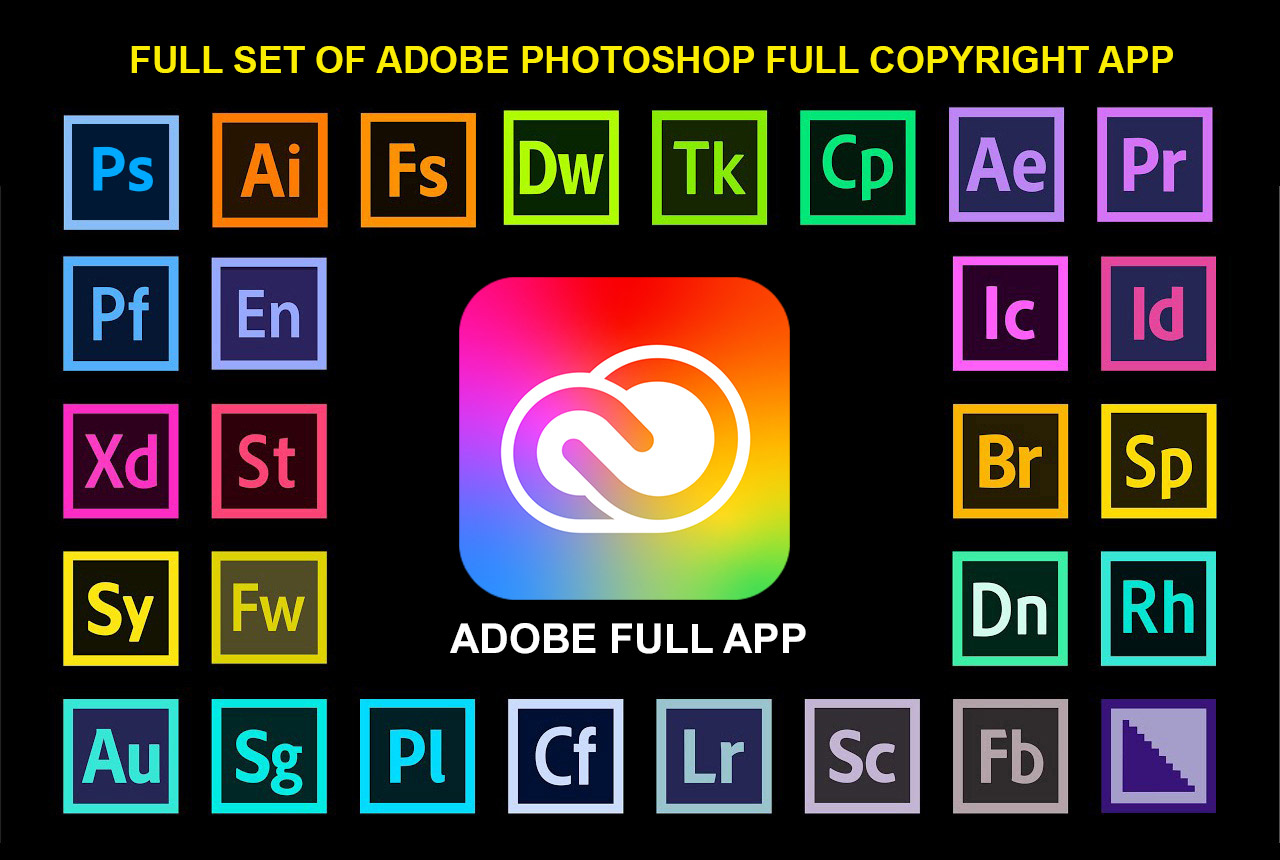
Adobe Photoshop Copyright - Full App
120 USD
Plugin Retouch4me
69 USD
Windows 10 & 11 Pro Key
36 USD
Copyright Adobe Lightroom Account
59 USD

MidJourney Account
29 USD
Autodesk All App Account Copyright
120 USD
Adobe Premiere Pro Account
99 USD
Upgrade Duolingo Super
29 USD
Genuine Cheap Canva Pro
39 USD

Freepik Premium Account
59 USD
Upgrade genuine Capture One account
120 USD
Genuine Adobe Illustrator account
99 USD

ChatGPT Plus Account (GPT-4)
16 USD
Upgrade Genuine Office 365
49 USD
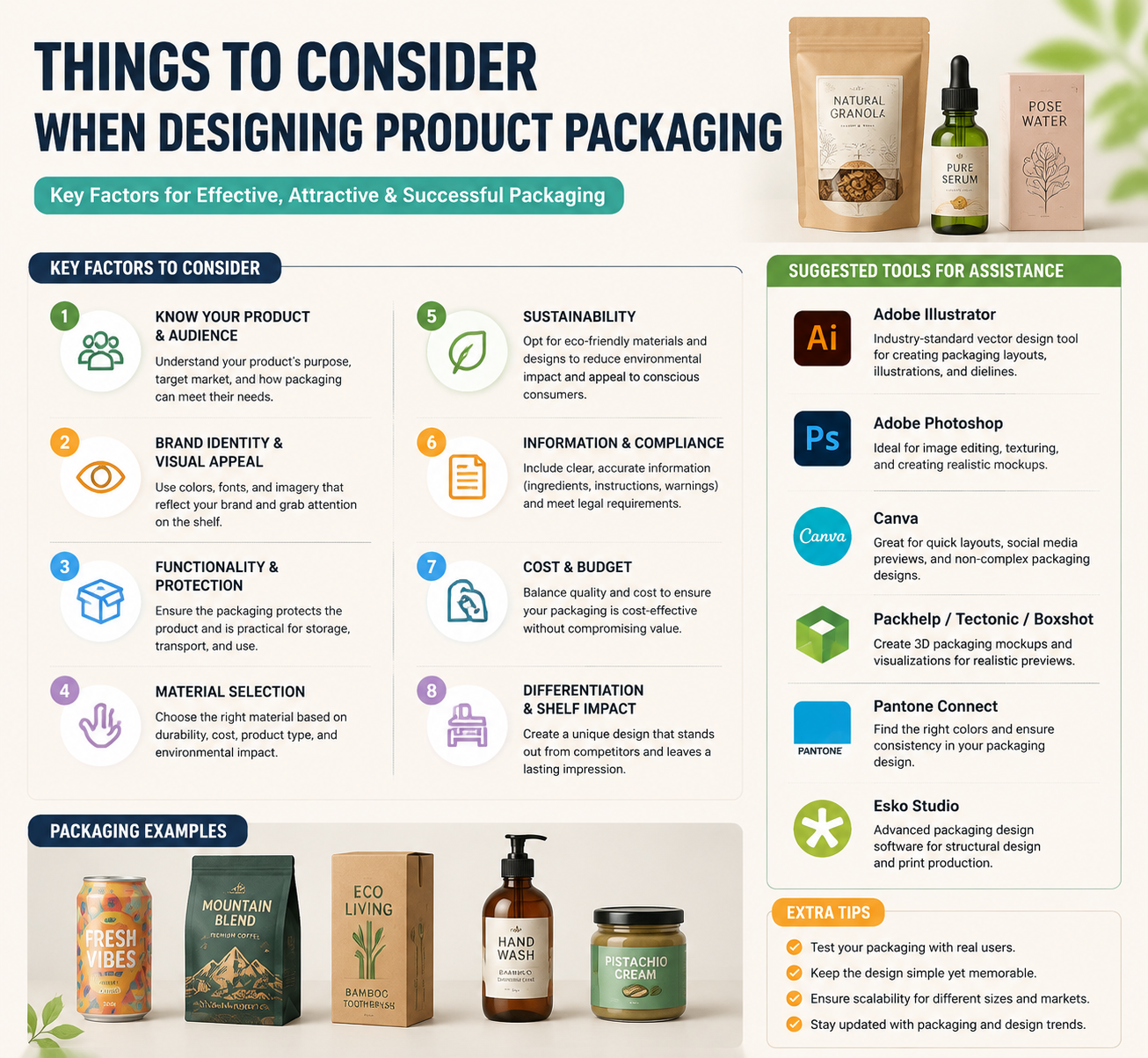
Things to Consider When Designing Product Packaging, Suggested Tools for Assistance
Nội dung
- 1. What is brand and product packaging des i g n ?
- Beautiful, sophisticated, and professional packaging can make a product stand out among a multitude of choices, creating a compelling first impression even before consumers have experienced it. From familiar cake boxes, beer cans, and water bottles to high-end cosmetic lines, all are meticulously researched in terms of design to ensure both functionality and the transmission of brand identity.
- 2. Why is brand and product packaging design important?
- 2.1 Packaging design reflects the brand identity system.
- 2.2 Packaging creates prominence and makes an impression.
- 2.3 Packaging serves the function of protecting the product.
- 2.4 Packaging provides essential information
- 2.5 Packaging that evokes emotions and sensory experiences
- 3. Guide you through the packaging design process in 7 basic steps.
- 3.1 Step 1: Understanding Packaging Layers
- 3.2 Step 2: Choosing the packaging design
- 3.3 Step 3: Calculate the packaging printing plan
- 3.4 Step 4: Organize the information structure
- 3.5 Step 5: Re-evaluate the packaging design
- 3.6 Step 6: Gather customer feedback
- 3.7 Step 7: Finalize the design file and hand it over for printing.
- 4. Suggestions for tools to design beautiful packaging.
- 4.1 Adobe Illustrator: The leading professional design tool.
- 4.2 Canva: A quick and easy solution for beginners
- 4.3 Figma: Packaging design with superior collaboration capabilities
- 5. Conclusion
In modern business, packaging is not just a protective "coat" for the product, but also a "brand ambassador" that directly touches the emotions of customers.
1. What is brand and product packaging des i g n ?
Beautiful, sophisticated, and professional packaging can make a product stand out among a multitude of choices, creating a compelling first impression even before consumers have experienced it. From familiar cake boxes, beer cans, and water bottles to high-end cosmetic lines, all are meticulously researched in terms of design to ensure both functionality and the transmission of brand identity.
Packaging and labels are the "face" of a product, containing the story, message, and values that a business wants to convey to its customers. They not only evoke emotions and curiosity but also directly influence purchasing decisions. When professionally designed, packaging becomes a bridge that brings the product closer to consumers, building trust and contributing to enhancing the brand's position in the market.
2. Why is brand and product packaging design important?
2.1 Packaging design reflects the brand identity system.
Packaging is one of the core elements that helps a brand establish its identity in the market. A product with packaging that is consistent in color, logo, font, and style will help customers easily remember and recognize it even before seeing the brand name. This is the "visual language" that reflects the professionalism and credibility of the business.
Beyond simply creating visual appeal, packaging design also helps convey core values and brand positioning. When packaging is built upon a consistent brand identity system, the product will have a strong connection with other communication channels such as advertising, brochures, or websites, thereby comprehensively strengthening the brand image.
2.2 Packaging creates prominence and makes an impression.
In a shopping environment with hundreds of options, packaging is the "silent salesperson" that attracts customer attention. An impressive design with eye-catching colors, unique styles, and creative presentation will make a product stand out from the competition. This visual element can create a strong first impression, making consumers want to stop and learn more.
The distinctiveness of packaging comes not only from its external appearance but also from the emotional experience it evokes. When a product has unique packaging that reflects its individuality, it sparks curiosity and a desire to try it in the customer's mind. This is a crucial advantage for businesses to win over buyers at first glance
2.3 Packaging serves the function of protecting the product.
One of the most important functions of packaging is to protect products from external environmental factors. Quality packaging helps products avoid impacts, mold, deformation, or damage during transportation and storage. If the packaging is dented or damaged, customers will tend to doubt the product's quality, thereby affecting the brand image.
Therefore, when designing packaging, businesses need to choose suitable materials and ensure durability. In addition, the shape and structure of the packaging also need to be carefully studied to meet both aesthetic requirements and optimize protection. Beautiful and durable packaging will give customers more confidence and increase trust in the brand.
2.4 Packaging provides essential information
Packaging is not just the outer shell; it's also a place to convey important product information. The product name, ingredients, manufacturing date, expiration date, storage instructions, and nutritional information must be presented clearly, legibly, and accurately. This forms the basis for customers to make purchasing decisions more quickly and confidently.
Furthermore, the information on the packaging must be adapted to suit each market. For example, products distributed in Europe are often printed in multiple languages, while goods in Canada must include both English and French. Packaging that clearly and comprehensively displays information helps build trust and enhances the brand's professionalism.
2.5 Packaging that evokes emotions and sensory experiences
A successful packaging design not only attracts attention visually but also creates an emotional experience for consumers. From color and material to style, everything can influence the senses and purchasing psychology. When customers feel delighted from the first touch, the likelihood of them choosing to buy the product is much higher.
The emotions that packaging evokes also contribute to building long-term loyalty between customers and brands. Friendly, luxurious, or lifestyle-oriented packaging makes consumers feel understood. This is a key factor in helping businesses build strong relationships and maintain customer loyalty.
3. Guide you through the packaging design process in 7 basic steps.
3.1 Step 1: Understanding Packaging Layers
To design professional packaging, you first need to understand the basic layers of packaging. Typically, a product may require three layers: outer packaging, inner packaging, and the product itself. Each layer plays an important role, not only in protecting the product but also in contributing to the visual and emotional experience for the customer.
- Outer packaging : This is the first layer that customers see, usually used during transportation or display.
- Inner packaging : Keeps the product secure and minimizes impact, ensuring its integrity upon arrival at the consumer.
- Direct packaging : This is the layer that is directly attached to the product, such as candy boxes, water bottles, or paper wrappers. This is the part that creates the clearest brand impression.
A thorough understanding of packaging layers helps businesses optimize product protection while simultaneously seizing every opportunity to tell their brand story.
3.2 Step 2: Choosing the packaging design
Packaging design is the "face" that determines whether a product stands out and is memorable. Each type of product is suited to a specific packaging format, such as paper boxes, plastic bags, glass jars, or wooden boxes. Choosing the right design not only provides convenience for customers but also accurately reflects the brand's positioning in the market.
A packaging design is considered successful when it combines the following elements:
- Suitable for the product's characteristics.
- Easy to transport, display, and use.
- Create a clear distinction from your competitors.
- Highly aesthetic and supportive of brand recognition, businesses should carefully consider the balance between production costs and visual value to find the most impressive and optimal solution.
3.3 Step 3: Calculate the packaging printing plan
The printing process is a crucial step in transforming design ideas into tangible products. Without proper preparation, the printed packaging can be completely different from the computer-generated design, impacting quality and professionalism.
Some factors to consider in this step include:
- File format : Printers typically require vector files such as .ai, .pdf, or .eps.
- Color : It is necessary to agree on the Pantone or CMYK color system from the beginning to avoid discrepancies.
- Molds : If packaging is mass-produced, standard molds are required to ensure accurate dimensions.
- Printing technology : Choose offset or digital printing depending on the quantity and budget.
Working closely with the printing company from the start will help businesses save time, reduce risks, and ensure consistent quality.
3.4 Step 4: Organize the information structure
Information on packaging is a direct link that helps customers understand the product. However, presenting too many details can easily make the packaging look cluttered. It's crucial for businesses to identify which information is most important and highlight it.
Smart packaging typically arranges information in the following order:
- Brand name and logo.
- Product name and main uses.
- Information on ingredients, weight, manufacturing date, and expiration date.
- Instructions for use or storage.
When these elements are presented clearly and visually, customers will easily remember the product, and the brand image will also become more professional.
3.5 Step 5: Re-evaluate the packaging design
Before mass production begins, a design review is an essential step. This is when businesses need to put themselves in the customer's shoes to see if the packaging conveys the right message.
The questions you need to check yourself on include:
- Can customers immediately understand what the product is just by looking at it?
- Is the packaging easily recognizable when displayed alongside competitor products?
- Do the colors, images, and designs accurately reflect the brand's spirit?
A design is only truly complete when it is aesthetically pleasing, easy to understand, memorable, and stands out on the store shelves.
3.6 Step 6: Gather customer feedback
Consumer feedback is the most objective measure to verify the effectiveness of packaging design. Businesses can send samples to potential or loyal customers to gather feedback.
Real-world feedback will help you determine if the design is appealing, easy to read, and easy to understand. If the majority of customers find the product difficult to identify or confuse it with another brand, this is a sign that adjustments are needed. This process, while time-consuming, will help minimize errors before mass production begins.
3.7 Step 7: Finalize the design file and hand it over for printing.
Once all steps have been verified, the final step is to prepare the design file to the correct specifications for delivery to the printing company. This stage ensures that your creative work will be accurately represented in reality.
Businesses need to check carefully:
- Standard vector files are available in .ai, .pdf, or .eps formats.
- The printing color system is consistent, using Pantone or CMYK instead of RGB.
- Complete specifications, dimensions, and high-quality images.
A well-designed file will help the printing company accurately reproduce the original idea, while also delivering packaging products that meet aesthetic and functional standards.
4. Suggestions for tools to design beautiful packaging.
4.1 Adobe Illustrator: The leading professional design tool.
Adobe Illustrator has long been the number one choice for professional designers when creating unique product packaging. With its vector processing capabilities, this software makes it easy to design everything from logos and images to overall layouts without worrying about pixelation during printing. In particular, Illustrator supports many standard print color systems, ensuring that the printed product is 99% identical to the design.
But that's not all; Illustrator also offers a diverse range of creative tools such as 3D modeling, gradient color schemes, and typography customization. As a result, packaging designs always achieve a high level of detail, sophistication, and professionalism, suitable for both large corporations and developing brands.
4.2 Canva: A quick and easy solution for beginners
If you're not a professional designer but still want to create beautiful packaging designs, Canva is the ideal tool. Its intuitive drag-and-drop interface, extensive library of ready-made templates, and easy customization allow anyone to start designing in just minutes. With Canva, you can flexibly edit fonts, colors, images, and arrange information on the packaging.
In addition, Canva integrates many modern design elements such as image filters, illustrative icons, and a library of high-quality stock photos. Therefore, even without specialized training, you can still create attractive and cost-effective packaging designs.
4.3 Figma: Packaging design with superior collaboration capabilities
Figma is a design tool favored by many businesses due to its ability to facilitate effective online teamwork. No complex installation is required; you can work directly in your browser and share files with teammates for real-time editing. This is especially useful for packaging design projects that require input from marketing, production, or brand management departments.
In addition, Figma supports a diverse plugin system, allowing users to add effects, icons, illustrations, or automatically adjust layouts with just a few clicks. Thanks to this flexibility, Figma not only saves time but also creates modern, easy-to-implement, and production-optimized packaging designs.
5. Conclusion
Product packaging design is a creative process that requires meticulous attention to detail, a scientific approach, and a clear strategy. Beautiful packaging not only makes a product more appealing but is also key to building a sustainable brand. The above are some basic considerations in the product label/packaging design process that you need to remember, combined with appropriate tools to create packaging that is both visually appealing and highly functional. Start investing in your product's "outfit" today to solidify your position in the market!









VIP Products


Best Selling Products
Capcut Pro 1 Year
39 USD
Adobe Photoshop Copyright - Full App
120 USD
Plugin Retouch4me
69 USD
Windows 10 & 11 Pro Key
36 USD
Copyright Adobe Lightroom Account
59 USD
MidJourney Account
29 USD
Autodesk All App Account Copyright
120 USD
Adobe Premiere Pro Account
99 USD
Upgrade Duolingo Super
29 USD
Genuine Cheap Canva Pro
39 USD
Freepik Premium Account
59 USD
Upgrade genuine Capture One account
120 USD
Genuine Adobe Illustrator account
99 USD
ChatGPT Plus Account (GPT-4)
16 USD
Upgrade Genuine Office 365
49 USD