Best Selling Products
Adobe Premiere Pro Account
99 USD
Upgrade genuine Capture One account
120 USD
Adobe Photoshop Copyright - Full App
120 USD
Genuine Adobe Illustrator account
99 USD
Genuine Cheap Canva Pro
39 USD
Autodesk All App Account Copyright
120 USD

ChatGPT Plus Account (GPT-4)
16 USD

Windows 10 & 11 Pro Key
36 USD

MidJourney Account
29 USD
Upgrade Duolingo Super
29 USD
Plugin Retouch4me
69 USD
Upgrade Genuine Office 365
49 USD

Freepik Premium Account
59 USD

Capcut Pro 1 Year
39 USD
Copyright Adobe Lightroom Account
59 USD
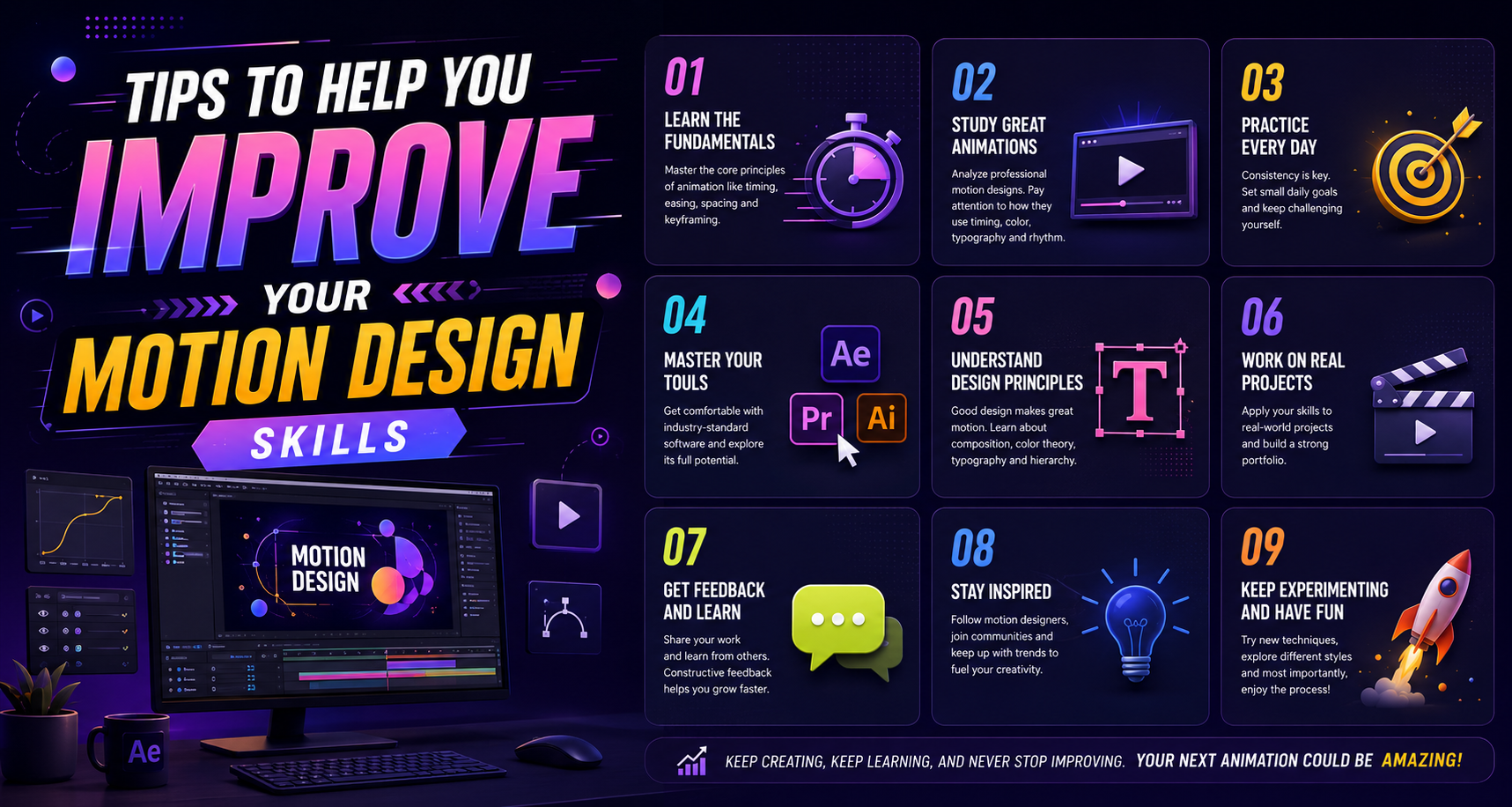
Tips to Help You Improve Your Motion Design Skills
Nội dung
- 1. What is Motion Design?
- 2. Why is Motion Design important?
- 3. 8 Tips to Help Designers Improve Their Motion Design Skills
- 3.1 Clearly define the core message
- 3.2 Explore and learn from what's happening around you.
- 3.3 Leveraging the power of the team
- 3.4 Design for the entire system, not for individual projects.
- 3.5 Adjust movement to suit the context
- 3.6 Ensure that the movement can be implemented on a large scale.
- 3.7 Avoid excessive movement
- 3.8 Note-taking and systematizing instructions
- 4. Conclusion
In today's digital age, motion design has become an indispensable part of conveying messages and enhancing user experience.
1. What is Motion Design?
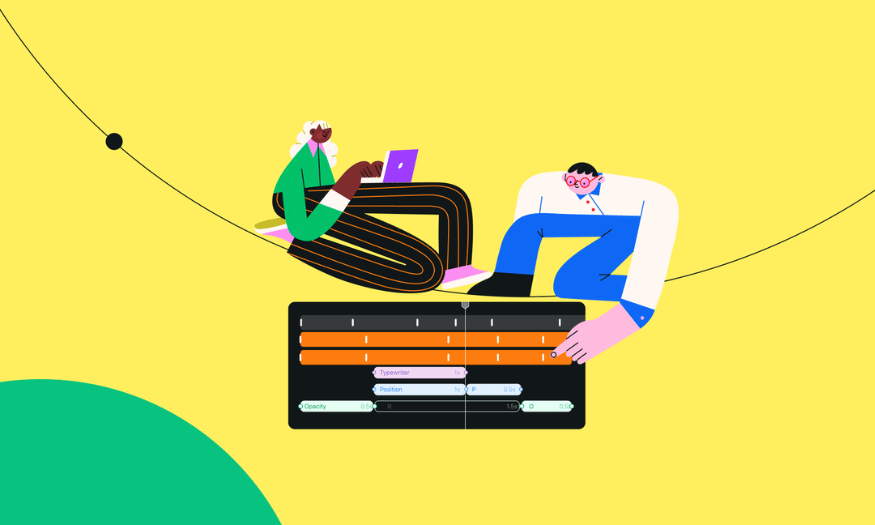
Motion design is the art of bringing graphic elements to life, transforming static images into engaging and captivating experiences. According to Misha Sundukovskiy, Video Creative Director at Webflow, motion design is “the way you make non-actual footage elements move in a video.” This can be as simple as how a logo appears on screen, from gradually fading in to moving from a certain angle. These effects are not just small details but are core to capturing the viewer's attention.
Beyond simple effects, motion design plays a crucial role in shaping how we receive information. For example, in interview videos, the banner displaying the speaker's name is often not static but accompanied by motion effects, creating a more professional and engaging feel. Similarly, in instructional videos, the use of zoom effects helps viewers easily identify important details, thereby improving their ability to remember and perform necessary actions.
Motion design isn't just found in videos; it's ubiquitous in modern life. From animated images on websites and social media posts to presentations, motion graphics are constantly evolving and have become an indispensable part of how we communicate and convey messages.
2. Why is Motion Design important?
In today's digital world, motion design is not just an aesthetic element but also a powerful tool for enhancing the user experience. Upon closer observation, you'll notice motion everywhere, from responsive buttons to smooth scrolling effects when switching pages. These elements not only create visual appeal but also make it easier for users to interact with the product.
However, to achieve optimal effectiveness, motion needs to be intentionally designed. This means that each effect must not only be visually appealing but also valuable in guiding and engaging the user. A well-designed effect can help direct attention to important information and make interactions more intuitive, thereby providing a seamless and natural user experience.
Furthermore, motion design plays a crucial role in brand building. Movement has the ability to convey emotion and brand personality more effectively than static images. A logo with a gentle sliding effect can create a sophisticated feel, while a playful, shaking icon can convey youthfulness and dynamism. According to Patrick Szot, Senior Brand Designer at Webflow, movement not only helps convey the message but also brings a more intimate and "human" feel to the brand.
3. 8 Tips to Help Designers Improve Their Motion Design Skills
3.1 Clearly define the core message
In motion design, identifying the core message is the first and most important step. According to Misha Sundukovskiy, the main message is not only the foundation for all creative decisions but also accounts for 80% of the motion design development process. An effect may look visually appealing, but if it's not connected to a clear message, it will lack the power to convey the intended message.
Start by asking yourself these essential questions: What story do you want the motion to convey? What is the primary purpose of this motion effect—is it to guide the user, create a focal point, or evoke emotion? What do you want viewers to feel when they interact with the design? And finally, how does this motion help the brand express its identity? These questions will give you deeper insight into how to strategically use motion, ensuring that each effect not only engages but also enhances the user experience and reinforces the brand identity.
3.2 Explore and learn from what's happening around you.
One of the most effective ways to develop motion design skills is to observe and find inspiration from the world around you. During our research at Webflow, the creative team frequently asked questions like: “What are other companies doing?” or “How do the designers I admire apply motion design?” Studying trends and the methods of those who came before not only broadens your thinking but also provides valuable ideas, helping you discover new directions for your design.
A mood board is a useful tool for systematizing inspiration. You can gather images, motion styles, and design techniques from various sources, creating an overview of visual elements that align with your brand. Through experimentation and refinement, you'll gradually find a harmonious blend of modern trends and your own identity, developing a unique motion style that truly reflects your brand's values.
3.3 Leveraging the power of the team
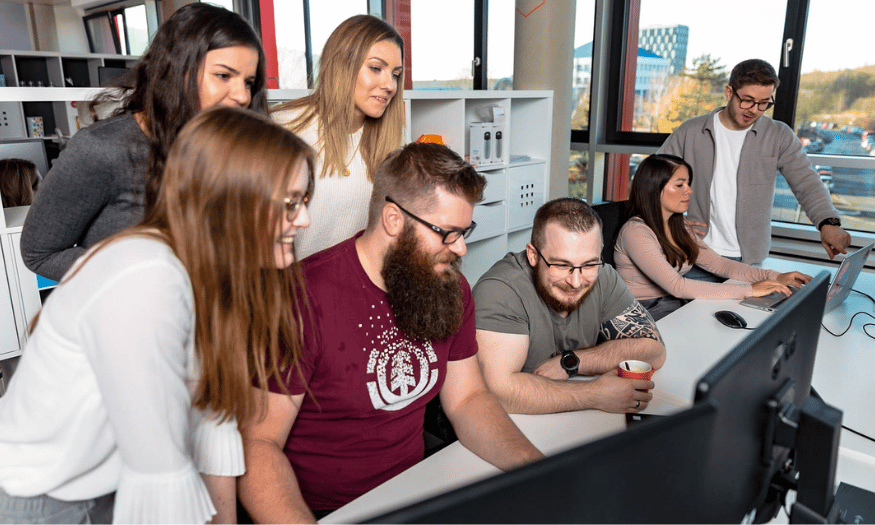
Motion design is not the work of a single individual but the result of collaboration among multiple team members. To create smooth and purposeful motion effects, close collaboration between professionals is essential. At Webflow, the motion design development process is a collective effort, where team members work together and collaborate with agencies to ensure consistency and design quality.
Szot emphasized the importance of teamwork: “This isn’t one person’s job; it’s a collective effort.” Discussing and receiving feedback from colleagues helps the team quickly identify details that need refinement, experiment with different options, and find the best solution. When multiple perspectives are involved, you not only improve the quality of the design but also foster creativity, opening up new avenues for motion design and making it an integral part of your brand story.
3.4 Design for the entire system, not for individual projects.
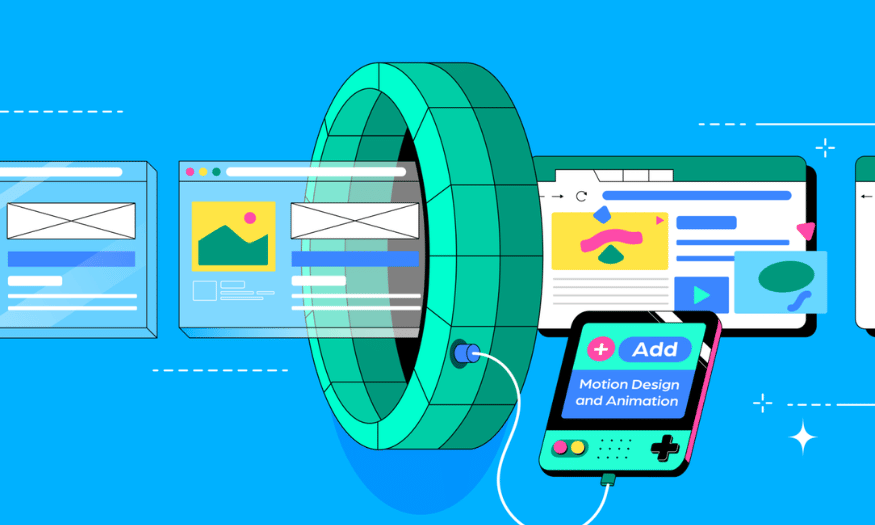
Motion design shouldn't be approached as standalone projects, but rather built upon a unified system to ensure consistency in brand identity. Each design project may bring fresh, creative elements, but without a common guideline, the brand will lose consistency, making the user experience disjointed and confusing.
According to Misha Sundukovskiy, the development of motion design begins not with a single element, but with holistic research. The design team needs to identify key touchpoints—elements that will appear repeatedly and have a significant impact on how the brand is perceived. To ensure that these moving elements create a harmonious whole, designers need to constantly ask themselves: “When put together, do these moving elements accurately reflect the brand spirit?” This is a systematic approach that helps ensure each movement serves a clear and positive purpose for the brand.
Conducting a comprehensive assessment before embarking on motion design is essential. This not only helps systematize design principles but also ensures that each movement is executed consciously and purposefully. A robust motion design system helps brands maintain consistency and longevity across all platforms and customer touchpoints. When consumers recognize the brand through consistent movements, they feel more familiar and trusting.
3.5 Adjust movement to suit the context
Each animation effect needs to be designed to match the scale and importance of the content it represents. The design team must always consider the impact of the animation to create effects that are appropriate for each context. This not only creates a suitable focal point but also helps maintain consistency in the brand experience.
Szot shared that when introducing a major event—like launching a new feature—motion effects can be more cinematic, powerful, and impactful to grab attention and create a sense of importance. Conversely, for smaller interface elements like buttons or icons, effects need to be designed to be subtle and natural, avoiding distracting the user. This balance is crucial in creating a seamless and pleasant user experience.
Contextually adapting motion not only makes design elements more appealing but also accurately reflects the brand's essence and values. A good motion design system is one that can adapt flexibly, providing a sense of dynamism when needed without sacrificing overall sophistication and harmony. This is especially important in the modern digital environment, where users frequently interact with a wide variety of content.
3.6 Ensure that the movement can be implemented on a large scale.
An impressive motion effect can grab attention, but if it's too complex and time-consuming to create, it can put immense pressure on the design and production process. Artistic motion styles may require more fine-tuning, slowing down progress or making it difficult to apply consistently across the entire system.
Before deciding to invest in a complex visual effect, ask yourself: “Is this worth the extra effort?” Evaluating the feasibility of implementation shouldn't just be based on how impressive the effect is, but also on considering the brand's development roadmap in both the short and long term. An effect might be beautiful, but if it can't be implemented effectively on a large scale, it will become a burden instead of providing value.
An effective motion design system needs to be scalable, easily applicable across multiple platforms while maintaining consistency and quality. This allows the design team to maintain flexibility in adjustments and improvements without compromising aesthetics and user experience. When designs can be implemented easily and efficiently, the team can focus on developing more creative content, thereby sustainably enhancing brand value.
3.7 Avoid excessive movement
Motion in design can be a powerful tool for increasing engagement and guiding users, but if used incorrectly, it can have the opposite effect. Overuse of motion can distract users and diminish their overall experience. Instead of adding effects simply because they look appealing, always return to the core questions: What is the primary goal of this motion? What story is it telling? Is it truly necessary to improve the user experience?
Misha Sundukovskiy emphasizes that “like any creative field, motion design requires discipline.” Creating complex effects isn't the ultimate goal; what's more important is that each movement is meaningful and supports the content rather than creating unnecessary clutter. An effective motion design is one where each movement is carefully calculated, has a clear purpose, and makes the information easily accessible to the user.
Patrick Szot agrees with this view, emphasizing that “subtle, controlled movement is key.” A small but cleverly designed effect can feel natural, guiding the user gently without distracting them. Instead of using many flashy effects, focus on creating smooth movements that make it easy for users to interact with the interface.
3.8 Note-taking and systematizing instructions
Documenting and systematizing design guidelines is a crucial part of maintaining consistency in motion design. A clear documentation system not only ensures that design elements are applied consistently but also supports the team, especially new members, when they need to apply motion design to their work. When principles are standardized and communicated clearly, the implementation process becomes faster and more efficient, while avoiding unintended deviations.
To maintain an organized motion design system, all critical resources, from templates and fonts to original design files and rendered assets, need to be stored and organized. These resources should be presented in a visually intuitive and accessible way so that anyone on the team can quickly search, use, or further develop based on the available resources. This not only saves time but also ensures that all design outputs adhere to brand standards.
Furthermore, documenting and systematizing instructions also improves the training capabilities of new team members. When they can refer to clear documentation, they will find it easier to grasp the brand's design style and apply it to specific projects. This system not only creates an efficient work environment but also contributes to building a strong culture of innovation within the organization.
4. Conclusion
To enhance motion design skills, choosing the right software is crucial. Tools like Photoshop, After Effects, and Adobe Illustrator provide a solid foundation for designers.
Sadesign offers powerful software integrated with artificial intelligence (AI) technology to automate many aspects of the design process. This saves designers time and energy, allowing them to focus on creativity and content development. With its ability to create smooth and sophisticated animation effects, Sadesign is an ideal choice for those who want to enhance the quality of their products.











VIP Products


Best Selling Products
Adobe Premiere Pro Account
99 USD
Upgrade genuine Capture One account
120 USD
Adobe Photoshop Copyright - Full App
120 USD
Genuine Adobe Illustrator account
99 USD
Genuine Cheap Canva Pro
39 USD
Autodesk All App Account Copyright
120 USD
ChatGPT Plus Account (GPT-4)
16 USD
Windows 10 & 11 Pro Key
36 USD
MidJourney Account
29 USD
Upgrade Duolingo Super
29 USD
Plugin Retouch4me
69 USD
Upgrade Genuine Office 365
49 USD
Freepik Premium Account
59 USD
Capcut Pro 1 Year
39 USD
Copyright Adobe Lightroom Account
59 USD